
 Email Us
 Contact us
 Whats App
Single family home

Choosing between an all-in-one ESS and a stackable battery depends less on which system has the better specification sheet and more on how the home will use, expand, and maintain its energy storage. An integrated system can simplify installation and save space, while a modular battery can provide a more practical path when storage capacity may need to increase later.
The difference also affects inverter matching, usable capacity, installation space, replacement strategy, and long-term service. A household with stable electricity demand may have little reason to pay for extensive modularity. A home expecting an EV, additional solar generation, or higher electricity consumption may benefit from a system that can grow with demand.
An all-in-one ESS combines major energy-storage components into one coordinated system. Depending on the model, this may include the battery, battery management system (BMS), inverter, protection devices, monitoring functions, and communication interfaces. The manufacturer handles much of the system integration before the equipment reaches the installation site.
A stackable battery uses individual battery modules that can be connected to build the required storage capacity. The battery modules operate through a BMS and connect with a compatible inverter and protection system. Instead of treating the storage unit as one fixed package, the architecture allows capacity to be configured around the installation and, in some systems, expanded later.
Factor | All-in-One ESS | Stackable Battery |
System architecture | Integrated | Modular |
Installation complexity | Generally lower | Requires module configuration |
Initial capacity | Usually predefined | Configurable within system limits |
Future expansion | Product-dependent | Usually a key design feature |
Space arrangement | Compact enclosure | Flexible modular arrangement |
Replacement | More integrated | Individual modules may be replaceable |
Best fit | Stable energy demand | Changing or growing demand |
The important point is that neither architecture is automatically better. The right choice depends on the home's current load, expected future demand, available installation space, inverter configuration, and service requirements.
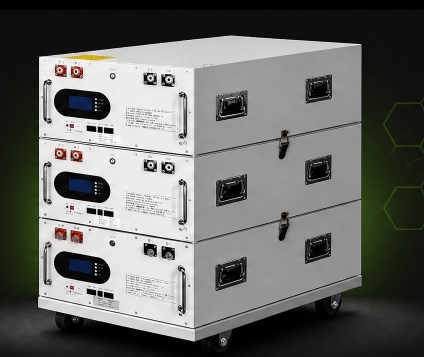
An all-in-one system is built around integration. Instead of asking an installer to match several major components separately, the manufacturer designs the battery, BMS, inverter, protection and control functions as one system. This can reduce the amount of equipment that has to be coordinated during installation and make the finished setup more compact.
For a homeowner, the biggest advantage is often simplicity. If the household already knows that it needs a particular storage capacity and does not expect major changes in electricity consumption, a fixed integrated system can avoid paying for expansion capability that may never be used. It can also be easier to organize in a garage, utility room, or dedicated energy-storage area where floor space is limited.
The limitation is flexibility. Some all-in-one systems have fixed battery configurations, while others support only specific expansion options. The word “integrated” should therefore not be interpreted as “expandable.” The product documentation needs to state exactly how additional storage can be connected, if expansion is supported at all.
Factory integration can also reduce compatibility problems. When the battery and inverter are designed and tested as a system, the manufacturer can define the supported voltage range, current limits, BMS communication, protection settings, and operating parameters before shipment.
That matters because residential storage is not simply a battery connected to a wall. The battery must communicate correctly with the inverter and operate within its electrical limits. A compact system can make the installation cleaner, but professional electrical design and commissioning are still required.
A stackable battery separates storage capacity into compatible modules. Instead of purchasing one large battery enclosure, the homeowner can configure the system around the required capacity and, where supported, add modules later.
This approach is particularly useful when the home's electricity demand is changing. A household might initially require around 10 kWh of storage but later install an EV charger or increase solar generation. A modular system may allow the owner to increase capacity without replacing the original battery installation.
A stackable home battery provides a useful example of this modular approach.
However, modularity does not mean unlimited expansion. Every system has electrical and mechanical limits. The inverter may restrict maximum output, the BMS may limit the number of modules, and the manufacturer may specify an approved capacity range. Module compatibility can also become an issue if additional batteries are purchased several years after the original installation.
Before choosing a stackable system, buyers should confirm:
· Maximum number of supported modules
· Maximum system capacity and operating current
· Approved inverter and BMS combinations
· Availability of compatible modules for future expansion
These details are more important than simply seeing “expandable” on a product page.
For a typical residential project, an all-in-one ESS is generally easier to manage because several major components have already been integrated into one system. The installer still needs to complete electrical connections, protection, configuration, and commissioning, but there are fewer independent units to arrange and match.
A stackable system requires more attention to module configuration and communication between the battery and inverter. That additional work can be worthwhile when the installation site has unusual dimensions or difficult access. A large integrated cabinet may be difficult to move through a narrow doorway or stairway, whereas smaller battery modules can be transported individually and assembled at the final location.
The physical installation should therefore consider more than cabinet footprint. Access routes, wall or floor space, clearance, cable routing, and room for future expansion all affect the practical suitability of the system.
For a household with stable capacity requirements and a straightforward installation area, an integrated system may be the simpler solution. For a home with restricted access or a clear plan to increase capacity, modular storage deserves closer consideration.
Battery requirements rarely remain completely static over a home's entire service life. Electricity consumption can increase after an EV is added, solar generation can be expanded, or more appliances can be converted from gas to electric power. These changes can make a previously adequate battery undersized for the homeowner's new objectives.
A stackable system can address this by allowing storage capacity to grow in stages. For example, a homeowner might begin with 10 kWh and add modules to reach 15 or 20 kWh later. This can avoid purchasing unused capacity from the beginning while keeping a defined expansion path.
An all-in-one ESS can also support expansion in some product designs, but this must be confirmed for the specific model. The buyer should check whether the inverter can handle the additional capacity, whether the BMS supports the new configuration, and whether the manufacturer permits modules from different production periods to operate together.
Future expansion should be considered before installation, even when the additional batteries will not be purchased immediately. Space should be reserved, the electrical architecture should be checked, and the supplier should confirm the intended future configuration.
One of the most important points when comparing home storage systems is the difference between energy capacity and power output.
Battery capacity is normally expressed in kWh and determines how much energy the system can store. Inverter output is expressed in kW and determines how much electrical power the system can deliver at a given time.
A larger battery does not automatically mean that a home can operate more high-power appliances simultaneously. If the inverter remains limited to the same output, adding battery modules can increase backup duration without increasing the maximum instantaneous load.
For example, a home may need more stored energy because of long evening usage, but it may not need higher inverter power. Another home may have a high peak load from air conditioning, pumps, induction cooking, or an EV charger. In that case, the inverter rating becomes just as important as battery capacity.
This is why a 51.2V home battery should be evaluated together with the inverter and the home's load profile rather than as an isolated battery product.
The choice between integrated and modular storage becomes easier once the household's energy pattern is understood.
A home with relatively stable consumption, a defined solar array, and no major plans for additional electrical loads may benefit from an all-in-one configuration. The homeowner can size the system around the current requirement and avoid unnecessary complexity.
A home expecting significant changes may benefit from modular storage. An EV, larger photovoltaic system, electric heating, or increasing household consumption can all change the required storage capacity over time.
For example, a homeowner who currently needs around 10 kWh but expects to add an EV may prefer a modular system rather than purchasing a much larger battery immediately. Conversely, if the home already has high electricity demand and the required capacity is clear, purchasing the complete system from the beginning may be more practical.
For projects considering a defined residential capacity, a 15kWh home battery can be compared with modular configurations to determine whether fixed or expandable storage makes more sense.
Battery systems are normally designed for years of operation, so buyers should think about serviceability before installation rather than waiting until the first component fails.
An all-in-one ESS provides a clean integrated package, but the level of integration can affect how individual components are accessed and replaced. Depending on the design, a fault may involve service work on the integrated unit rather than replacement of a single battery module.
A stackable system can provide more flexibility when its architecture supports independent module monitoring and replacement. If one battery module develops an abnormal condition, the service team may be able to identify and replace that module rather than replacing the entire battery bank.
The trade-off is that modular systems have more individual connections and components. Correct installation and communication between modules are therefore essential.
When comparing suppliers, ask about:
· Individual module replacement
· Availability of spare modules and electronic components
· Warranty handling and technical support
· Compatibility of replacement batteries with older installations
A warranty period matters, but long-term parts availability can matter just as much for a residential system expected to operate for many years.
Battery price alone is a poor way to compare two residential storage systems. A battery with attractive specifications may still be unsuitable if its voltage range, current rating, communication protocol, or BMS is incompatible with the inverter.
This becomes especially important with stackable systems. Adding another battery module can increase stored energy, but the inverter may still limit the system's total output. The battery bank and inverter must therefore be evaluated as one electrical system.
The supplier should be able to provide clear information about the supported inverter models, communication method, maximum battery configuration, charge and discharge current, and system protection.
A lower-priced battery that requires additional equipment or creates compatibility limitations may ultimately cost more than a properly matched system.
The best architecture depends on the household's priorities rather than a universal ranking.
Home Requirement | More Suitable Option | Main Reason |
Stable energy consumption | All-in-One ESS | Simple integrated configuration |
Limited installation space | All-in-One ESS | Compact equipment layout |
No expected capacity growth | All-in-One ESS | Less need for modular expansion |
Future EV installation | Stackable Battery | Easier capacity planning |
Increasing electricity demand | Stackable Battery | Capacity can potentially grow |
Difficult equipment access | Stackable Battery | Smaller modules can simplify handling |
Gradual investment | Stackable Battery | Storage can be expanded in stages |
Strong preference for simple commissioning | All-in-One ESS | Fewer major components to coordinate |
The distinction is not absolute. A particular all-in-one model may support expansion, while a particular stackable product may have strict configuration limits. The product's actual architecture and documentation should always take priority over the category name.
A good purchasing decision starts with the home's requirements and then works backward to the battery architecture.
First, determine the required usable energy capacity and peak power demand. Look at daily electricity consumption, evening loads, backup priorities, solar generation, and any planned loads such as EV charging. There is little value in choosing a battery architecture before knowing what the system actually needs to deliver.
Next, check the complete system rather than the battery alone. The inverter, BMS, protection devices, communication interface, battery voltage, and expansion limits should form one compatible configuration.
Finally, consider what happens several years after installation. A supplier should be able to explain how additional modules are added, which components can be replaced, and whether compatible batteries will remain available.
For procurement, these are the most useful questions to put directly to the supplier:
· What is the usable battery capacity, rather than only the nominal capacity?
· What inverter models are officially compatible?
· What is the maximum expandable capacity?
· Can individual battery modules be replaced?
· How are batteries from different production batches handled?
· What technical support and spare parts are available after the warranty period?
These questions provide a much better basis for comparison than purchase price alone.
Not necessarily. An all-in-one ESS suits homes with stable energy needs and limited space, while a stackable battery is more suitable when future expansion is important.
The main advantage is capacity flexibility. Compatible modules can potentially be added later as household energy demand increases.
Usually. More components are integrated into one system, reducing the amount of equipment that needs to be matched and arranged during installation.
Often, but not always. The maximum number of modules, inverter capacity, BMS configuration, and product compatibility must be confirmed with the manufacturer.
It provides more stored energy and can extend backup duration, but maximum simultaneous load also depends on the inverter's power rating.
An all-in-one ESS is often practical for a small home with stable energy demand. A stackable system is worth considering if future capacity growth is expected.
The all-in-one ESS vs stackable battery decision should be based on how the home is expected to use energy, not simply on the number printed on the battery label.
An integrated system is a strong option when the required capacity is clear, installation space is limited, and the homeowner values a compact configuration with fewer major components. A stackable system becomes more compelling when electricity demand may increase, installation access is difficult, or the homeowner wants to build storage capacity in stages.
The most reliable approach is to evaluate capacity, inverter power, compatibility, expansion limits, installation conditions, and long-term service together. Once those factors are clear, choosing between an all-in-one ESS and a stackable battery becomes a system-design decision rather than a simple product comparison.


Compact, quiet, and powerful, it keeps your essentials running during outages and lets you charge anywhere with solar power or grid power.
Perfect for renters who need flexibility without compromise.
Our estimator is only set up to provide preliminary estimates and installer information to residents of single family homes.