
 Email Us
 Contact us
 Whats App
Single family home

The choice between a 300Ah home battery and a 280Ah model looks straightforward until the capacity is converted into actual stored energy. For a typical 51.2V lithium battery, 280Ah corresponds to approximately 14.34kWh, while 300Ah provides about 15.36kWh. The larger battery therefore adds around 1.02kWh of nominal storage, rather than a dramatic increase in overall capacity.
Battery | Voltage | Capacity | Nominal Energy |
280Ah | 51.2V | 280Ah | 14.34kWh |
300Ah | 51.2V | 300Ah | 15.36kWh |
Difference | 51.2V | 20Ah | 1.02kWh |
That extra 1.02kWh can be useful, but its value depends on when and how the battery is discharged. A household drawing an average of 1kW could theoretically get about one additional hour from the extra stored energy. A home running a 2kW average load would use the same amount in roughly 30 minutes. Actual runtime will be lower because the battery does not normally operate across its entire theoretical voltage range and the inverter also consumes energy.
This is why the 20Ah difference should be viewed as additional operating margin, rather than simply as a reason to select the larger model.
For a homeowner using solar during the day and relying on stored energy after sunset, the question is particularly practical. If the existing battery still has plenty of energy when the home's evening demand ends, another 20Ah may make little difference. If the battery regularly reaches its lower operating limit before the household's evening loads are finished, that additional capacity can be worthwhile.
The most useful way to compare the two batteries is to forget the Ah rating for a moment and look at what the stored energy is actually doing.
Consider a house that uses solar generation during daylight hours and charges its battery with the surplus. After sunset, the battery may be supplying refrigeration, lighting, networking equipment, televisions, air conditioning and other household loads. The demand is rarely constant. A home might draw only a few hundred watts at one moment and several kilowatts when multiple appliances operate together.
In that environment, 1kWh does not have a fixed meaning. It might keep essential loads running for several hours, or disappear relatively quickly during a period of heavy air-conditioning use.
A 300Ah battery becomes more attractive when the household's normal operating pattern sits close to the practical limit of a 280Ah system. For example, if the battery is routinely nearly empty before the end of the evening, the larger capacity gives the system more room without requiring a completely different battery architecture.
There is another situation where the difference matters: backup power. A homeowner may deliberately reserve part of the battery for outages rather than using the full capacity for daily solar self-consumption. In that case, the additional energy in a 300Ah battery can provide more flexibility between daily cycling and emergency reserve.
By contrast, a household with relatively low consumption may gain little from the extra capacity. If the battery is normally sitting at a high state of charge because the home does not use much electricity after sunset, paying more for 300Ah does not necessarily produce a better return.
Capacity is easy to compare because it is printed prominently on almost every battery specification sheet. The less obvious specifications often have a greater effect on how the battery performs.
Take discharge capability as an example. A battery can have 15kWh of stored energy but still be unsuitable for a home if its output current is insufficient for the inverter and household loads. Starting currents from compressors, pumps and other equipment can also place demands on the battery that are not reflected by the total energy requirement.
This means a 300Ah battery is not automatically a better choice for a high-load home. If its BMS imposes a lower continuous discharge limit than a comparable 280Ah model, the extra stored energy may not solve the problem the homeowner actually has.
Usable energy is another important distinction. Rated capacity is measured under specified conditions, while the energy available to the user depends on the permitted depth of discharge and other operating parameters. A battery rated at 300Ah may not deliver 7.1% more usable energy than a 280Ah model if the two products have different operating windows.
Cycle life also deserves attention. A supplier quoting 6,000 or 8,000 cycles should specify the conditions behind that figure, including depth of discharge, charge and discharge rate, temperature and end-of-life capacity threshold. Without that information, cycle-life figures from two manufacturers are difficult to compare fairly.
The same applies to the cells themselves. Two batteries can carry similar capacity labels while using different cell grades, manufacturing processes and pack designs. Cell consistency affects balancing requirements and long-term pack behavior, while busbar design, thermal management and enclosure construction influence how the battery handles current and heat.
For a residential installation, BMS and inverter communication are equally important. The battery needs to report its state correctly and operate within the inverter's charging and discharging limits. A nominally larger battery that communicates poorly with the system can create more practical problems than a slightly smaller battery with proven compatibility.
A useful procurement comparison therefore looks more like this:
Specification | What It Tells the Buyer |
280Ah / 300Ah | Nominal charge capacity |
Usable kWh | Energy available within the specified operating window |
Continuous discharge current | Sustained load capability |
Peak discharge current | Ability to handle short high-power demand |
Cycle life | Expected longevity under stated test conditions |
Cell chemistry and grade | Fundamental battery characteristics |
BMS | Protection, balancing and control functions |
Inverter communication | System compatibility |
Warranty | Long-term commercial protection |
For customers comparing a 51.2V home battery, these specifications should be reviewed together rather than using capacity as the sole selection criterion.
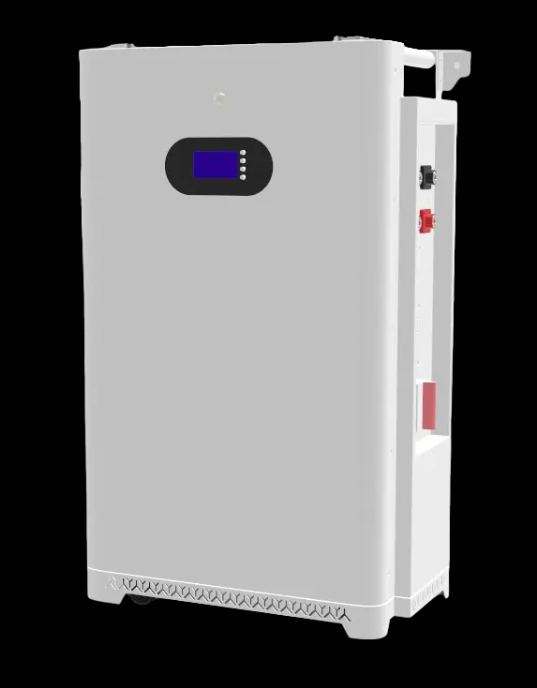
There is a practical manufacturing reason why residential battery suppliers offer several capacity levels instead of producing one maximum-capacity battery for every application.
Battery capacity is affected by the cells selected for the pack, the physical arrangement of those cells, current requirements, enclosure dimensions and thermal design. Moving from 280Ah to 300Ah may involve a different cell configuration or a different cell format rather than simply increasing a number in the BMS.
The manufacturer also has to balance energy capacity with power capability. A residential battery needs to deliver energy over several hours, but it may also need to support short periods of high current. The internal electrical paths, protection components and BMS settings have to accommodate both requirements.
Physical installation is another consideration. Residential battery systems are often installed in garages, utility rooms or dedicated equipment areas where available floor and wall space is limited. A higher-capacity battery that becomes substantially larger or heavier may not be a practical replacement for a smaller model.
This is one reason a 300Ah home battery should not be judged solely by its nominal energy advantage. The engineering behind the additional capacity matters.
A professional manufacturer should be able to explain how the battery achieves its rated capacity, what cells are used, how the cells are matched, how the BMS is configured and how the finished pack is tested. Capacity testing, insulation checks, BMS communication tests and charge-discharge verification are all relevant to the consistency of the finished product.
For buyers purchasing multiple units, production consistency becomes even more important. A 1kWh difference on paper has limited value if actual capacity varies significantly between packs.
The 300Ah option is easiest to justify when the additional storage corresponds to a specific operating requirement.
A home with substantial evening consumption is one example. If the household routinely exhausts a 280Ah battery before the next solar charging period, moving to 300Ah can reduce the frequency with which the system has to draw electricity from the grid.
The same applies to customers who want a larger emergency reserve. A battery that is used for daily solar shifting may need to retain a portion of its capacity for unexpected outages. The extra energy gives the homeowner more freedom to use the battery during normal operation without sacrificing as much backup reserve.
A 300Ah configuration also fits naturally into systems targeting approximately 15kWh of nominal storage. At 51.2V, its 15.36kWh rating is close to that target. Customers looking at this range can also compare it with a dedicated 15kWh home battery storage solution to determine whether a single larger battery or another system configuration is more appropriate.
The calculation becomes less favorable when the 300Ah model carries a significant price premium but the additional energy is rarely used. In that situation, the homeowner is effectively paying for storage that remains unused for much of the year.
There is also no advantage in increasing capacity when the real limitation is inverter output. If a household needs 8kW of instantaneous power but the system's inverter or battery discharge limit cannot provide it, adding another 20Ah will not address that constraint.
A serious comparison between 280Ah and 300Ah batteries should begin with the supplier's technical quotation rather than the marketing page.
Ask for the rated capacity and usable energy under clearly stated test conditions. If a supplier provides only an Ah number, the buyer still cannot determine how much energy can actually be accessed during normal operation.
The discharge specification should include both continuous and peak current, along with the conditions and duration associated with peak output. This is especially important for installations with air conditioning, pumps or other equipment with high starting demand.
Cycle-life information should be read in the same way. A cycle count without a specified DoD and end-of-life threshold tells the buyer very little about expected service life.
For larger residential projects, the following information is worth requesting before placing an order:
· Cell information and matching criteria
· Usable capacity and DoD specification
· Continuous and peak discharge limits
· BMS protection and inverter communication
· Cycle-life test conditions
· Warranty and capacity-retention terms
Price should then be compared against the complete specification. A 300Ah battery that costs only modestly more and offers comparable or better performance can be a sensible upgrade. A large price increase for an additional 1.02kWh may be difficult to justify if the rest of the specification is essentially identical.
For manufacturers and distributors, this is also where product positioning becomes important. A 280Ah home battery does not necessarily compete with a 300Ah model simply by being cheaper. It can be positioned around installation flexibility, expansion capability, discharge performance or overall system value, depending on the actual product specifications.
There is no universal point at which 300Ah becomes “better” than 280Ah. The difference is measurable, but whether it matters depends on the load profile and the way the energy storage system is operated.
A household with moderate evening consumption may find that 280Ah already provides sufficient storage and that the additional 20Ah produces little practical improvement. Another household may be repeatedly reaching its battery's lower operating limit, making the extra capacity useful every evening.
The decision should therefore begin with actual electricity consumption, particularly the hours when solar generation is unavailable. If the battery is intended primarily for self-consumption, look at how much energy is normally needed between sunset and the next charging period. If backup is a priority, calculate the essential loads and the required outage duration separately.
The inverter and battery discharge capability then need to be checked against those loads. Only after those requirements are understood does the 280Ah-versus-300Ah comparison become meaningful.
For systems that may expand later, compatibility deserves equal attention. A battery should not be assumed to be expandable merely because it operates at 51.2V. Parallel operation needs compatible BMS communication, electrical specifications and manufacturer approval.
At 51.2V, a 300Ah battery stores about 1.02kWh more nominal energy than a 280Ah battery.
It can be sufficient for homes whose daily consumption and backup requirements fit comfortably within its usable capacity.
Yes, assuming comparable voltage, usable-energy limits and discharge conditions. The actual runtime depends on the household load.
Neither should be considered alone. Energy capacity determines how long the battery can operate a load, while discharge power determines how much load it can support at a given moment.
The difference between 280Ah and 300Ah is ultimately a question of how much extra usable energy the household can actually put to work. At 51.2V, the 300Ah configuration provides about 15.36kWh nominally compared with 14.34kWh for 280Ah, giving the larger battery a useful but relatively modest increase in storage.
For a home that regularly needs that additional energy, the upgrade can be worthwhile. For a home that rarely uses its existing battery capacity, the extra cost may deliver little benefit.
That makes the purchase decision less about choosing the largest number and more about comparing the complete battery: usable energy, discharge capability, cell quality, BMS design, inverter compatibility, cycle life and price. Once those factors are considered alongside the home's actual load profile, the difference between 280Ah and 300Ah becomes much easier to evaluate.


Compact, quiet, and powerful, it keeps your essentials running during outages and lets you charge anywhere with solar power or grid power.
Perfect for renters who need flexibility without compromise.
Our estimator is only set up to provide preliminary estimates and installer information to residents of single family homes.