
 Email Us
 Contact us
 Whats App
Single family home

The residential energy market is evolving in a way that is easy to underestimate if you only look at product specifications.
Most residential energy storage system products still look similar: lithium battery packs, hybrid inverters, and solar integration capability. On paper, the differences between systems are relatively small.
But in real deployment scenarios, something important has changed. The way these systems are used inside homes is no longer fixed or predictable.
Instead of being installed as a static backup solution, modern systems are increasingly becoming part of a dynamic household energy structure that evolves over time.
This is where stackable battery systems begin to matter.
Not because they introduce a new battery chemistry or breakthrough inverter technology, but because they match how residential energy behavior is actually changing.
The core assumption behind older energy storage designs was stability. Household energy consumption was assumed to follow predictable daily patterns with minor seasonal variation.
That assumption no longer holds.
Today, residential energy profiles are shaped by multiple overlapping variables that do not remain constant over time.
The most important ones include:
1. electric vehicle charging behavior
2. rooftop solar generation variability
3. dynamic electricity pricing models
4. increasing HVAC load intensity
5. smart appliance background consumption
Each of these factors alone is manageable. Together, they create a system that is constantly shifting.
A traditional residential energy storage system designed around fixed assumptions struggles to remain optimal under these conditions.
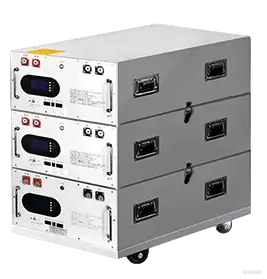
Fixed-capacity systems were designed under a different energy environment. The expectation was that a household could estimate long-term consumption at the time of installation and size the system accordingly.
In practice, this rarely works over a multi-year cycle.
Field deployment data from installers shows a consistent pattern:
● Households expand energy usage after installation
● Solar systems are often upgraded after initial deployment
● EV adoption introduces sudden load spikes
● Electricity tariffs change more frequently than expected
This creates a gap between design assumptions and real-world operation.
The result is not system failure, but system inefficiency.
A residential energy storage system that is correctly sized at installation can become mismatched within 2–4 years of operation.
Stackable battery systems are often presented as a modular upgrade option. In reality, they represent a correction to a limitation in traditional design logic.
Instead of requiring full system sizing at the beginning, stackable systems allow capacity to evolve over time.
This changes the entire investment and deployment model.
| Factor | Fixed system model | Stackable system model |
|---|---|---|
| Capacity planning | One-time prediction | Incremental adjustment |
| Investment structure | Full upfront cost | Phased investment |
| Expansion capability | Not possible | Modular expansion |
| Risk of mismatch | High over the lifecycle | Gradually adjustable |
| System lifespan alignment | Fixed | Adaptive |
This structural difference explains why stackable systems are increasingly deployed alongside modern residential energy storage system installations.
Solar energy is one of the strongest drivers of residential storage adoption, but it also exposes the weaknesses of rigid system design.
The issue is not generation capacity. The issue is timing.
Solar energy is generated during daytime hours, while residential consumption typically peaks in the evening.
Without intelligent storage coordination, this creates a persistent mismatch.
A solar battery storage system is meant to solve this gap, but traditional fixed systems often struggle to fully optimize energy shifting over time.
To understand why stackable systems are gaining adoption, it is useful to compare energy behavior before and after solar integration.
| Dimension | Without solar | With solar integration |
|---|---|---|
| Energy source | Grid only | Hybrid (solar + grid) |
| Consumption pattern | Stable daily curve | Weather-dependent variation |
| Storage role | Emergency backup | Energy time-shifting tool |
| System optimization | Minimal | Multi-variable optimization |
Once solar is introduced, the residential energy storage system is no longer operating in a stable environment. It becomes part of a fluctuating energy loop.
In earlier generations of storage systems, larger capacity was often considered better.
However, real-world deployment data shows a more complex reality.
Oversized systems tend to be underutilized, while undersized systems become obsolete as household demand grows.
Stackable systems address this by decoupling initial investment from long-term capacity requirements.
Three practical outcomes are consistently observed in installations:
● Households start with smaller systems and expand later
● Solar expansion is followed by storage expansion
● EV adoption triggers additional battery modules
This makes the residential energy storage system more aligned with real household evolution patterns.
Installers are among the first to observe system inefficiencies in real-world conditions.
Traditionally, installation was a sizing problem. Today, it is increasingly a lifecycle management problem.
The key challenge is no longer how to design a system for day one, but how to ensure it remains relevant over time.
Stackable systems reduce this pressure by allowing post-installation adjustments without full system replacement.
This is particularly important in markets where solar adoption is rapid, but storage adoption lags behind.
The financial model behind stackable systems is fundamentally different from traditional storage deployment.
Instead of requiring a single large investment, the cost is distributed across multiple phases.
This aligns more closely with how residential energy decisions are actually made.
Three common investment behaviors appear in real markets:
● initial deployment for backup security
● secondary expansion after solar performance validation
● Further scaling after EV integration
This phased approach improves accessibility of a residential energy storage system, especially in mid-income residential segments.
Battery systems are long-life assets, but household energy environments evolve continuously.
Stackable architecture introduces adaptability into a system that was previously static.
| Stage | Fixed system outcome | Stackable system outcome |
|---|---|---|
| Year 1 | Full system installed | Partial deployment possible |
| Year 2–3 | Efficiency begins to diverge | Expansion improves alignment |
| Year 4–5 | Risk of mismatch increases | System re-optimization |
| End of cycle | Replacement required | Incremental upgrade |
This lifecycle flexibility is becoming a defining factor in modern residential energy storage system deployment strategies.
The rise of stackable systems is not only driven by market demand. It is also enabled by technical convergence.
Modern systems increasingly integrate:
1. modular lithium battery architecture
2. distributed battery management systems
3. AI-based energy scheduling logic
4. predictive load optimization
This convergence allows storage systems to move from static hardware into adaptive energy platforms.
As a result, stackable systems are no longer just a packaging choice. They are becoming a system architecture standard.
One of the most important observations in residential storage deployment is the difference between expected behavior and actual behavior.
Systems are designed under controlled assumptions, but operate in uncontrolled environments.
| Scenario | Design expectation | Real-world behavior |
|---|---|---|
| Solar surplus | Stored uniformly | Variable optimization based on usage |
| Peak demand | Fixed discharge | Adaptive discharge timing |
| EV charging | External load | Integrated energy scheduling |
| Weather changes | No system impact | Continuous adjustment required |
This gap is one of the main reasons why residential energy storage system design is moving toward adaptive architectures.
Stackable systems scale better, not because they are technically more powerful, but because they reduce decision risk.
Energy systems are long-term investments, but household behavior is not predictable over long periods.
Stackable design distributes both technical and financial risk across time.
This makes system planning more resilient under uncertainty.
The industry is gradually shifting from product-centric thinking to system-behavior thinking.
Instead of asking "how big is the battery," the more relevant question is becoming "how does the system behave over time?"
This shift is subtle but important.
It changes how manufacturers design products, how installers configure systems, and how users evaluate value.
In this context, the residential energy storage system is evolving from a standalone device into a behavioral energy infrastructure layer.
The growth of stackable battery systems is not driven by a single breakthrough.
It is the result of multiple structural changes in residential energy behavior: solar variability, EV adoption, pricing volatility, and consumption unpredictability.
Stackable architecture does not solve one problem. It solves the mismatch between fixed systems and dynamic environments.
And in modern residential energy markets, adaptability is becoming more valuable than capacity alone.
This is why stackable systems are growing fast—not because they are new, but because they fit the direction in which the entire residential energy storage system market is moving.


Compact, quiet, and powerful, it keeps your essentials running during outages and lets you charge anywhere with solar power or grid power.
Perfect for renters who need flexibility without compromise.
Our estimator is only set up to provide preliminary estimates and installer information to residents of single family homes.