
 Email Us
 Contact us
 Whats App
Single family home

The residential energy sector is entering a phase where the traditional boundaries between energy production, storage, and consumption are dissolving. Over the past decade, home battery systems were primarily positioned as backup devices designed to provide emergency power during outages or store excess solar energy for later use. That model was sufficient when energy demand was stable, grid pricing was predictable, and household electrical loads followed relatively consistent patterns.
However, the situation in 2026 is fundamentally different.
Electricity pricing in many regions has shifted toward dynamic time-of-use structures, rooftop solar penetration has increased significantly, and household energy consumption has become more complex due to the rapid adoption of electric vehicles, smart appliances, HVAC automation systems, and distributed IoT devices. These changes have introduced variability that traditional energy storage systems were never designed to handle.
In this evolving environment, AI home energy storage is emerging as a new category of residential energy infrastructure. It is not simply an upgraded version of lithium battery storage, but a shift toward systems that actively interpret, predict, and optimize energy behavior at the household level.
Instead of functioning as passive energy buffers, these systems are increasingly acting as distributed energy intelligence nodes within the home.
To understand why AI home energy storage is becoming a dominant trend, it is important to examine the structural transformation occurring within residential energy systems.
Historically, home energy systems were built on a linear model:
energy is generated → energy is consumed → excess energy is stored → stored energy is later discharged
This model assumes that energy flows can be managed through static rules. However, this assumption is no longer valid in modern residential environments.
Three major structural changes are responsible for breaking this model:
1. Electricity pricing has become dynamic rather than fixed, introducing temporal cost variability
2. Renewable energy sources, such as rooftop solar, introduce intermittent and non-linear generation patterns
3. Residential energy demand is no longer predictable due to the electrification of transport and heating systems
Each of these factors introduces uncertainty into the system. When combined, they create a condition where static control logic becomes inefficient.
This is where AI home energy storage begins to play a critical role. It replaces static decision rules with predictive control logic that continuously adapts to changing conditions.
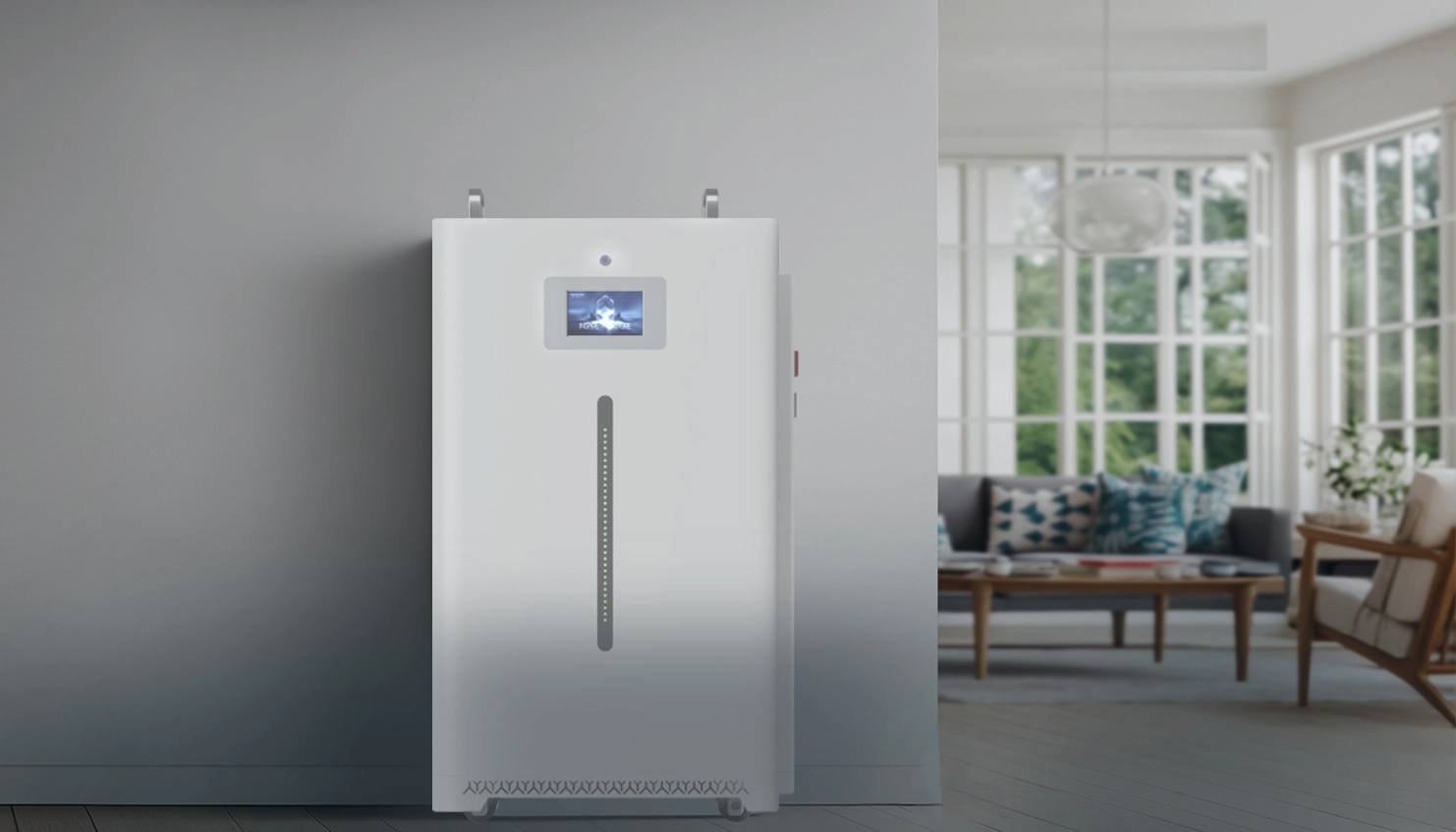
The most important conceptual shift introduced by AI home energy storage is the transition from energy storage to energy decision-making.
Traditional systems focus on one primary function: storing electricity and releasing it when needed. In contrast, AI-based systems operate as decision engines that evaluate multiple competing priorities simultaneously.
These priorities typically include:
●minimizing electricity cost
●maximizing solar self-consumption
●maintaining backup energy reserves
●extending battery lifecycle
●optimizing grid interaction efficiency
Unlike rule-based systems, which assign fixed priorities, AI home energy storage systems continuously adjust the weighting of these objectives based on environmental and behavioral data.
For example, during periods of high electricity price volatility, cost optimization becomes the dominant objective. During periods of grid instability or severe weather, backup energy preservation takes priority. During seasons with high solar generation, self-consumption optimization becomes more important.
This dynamic prioritization is a key reason why AI home energy storage is increasingly seen as a control system rather than a simple storage device.
Although different manufacturers implement varying architectures, most advanced AI home energy storage systems share a similar structural framework composed of three interdependent layers.
This layer is responsible for continuously collecting real-time and historical energy-related data. The quality and granularity of this data directly influence system performance.
Typical inputs include:
●photovoltaic generation data
●household load consumption profiles
●grid pricing signals and tariff schedules
●battery state-of-charge (SOC) and state-of-health (SOH)
●environmental factors such as temperature and weather forecasts
Unlike traditional monitoring systems, this data is not simply displayed to the user. It is continuously fed into optimization models that influence system behavior in real time.
This is the core of AI home energy storage systems. It functions as a multi-objective optimization engine that evaluates energy decisions in real time.
Rather than following predefined rules, the system evaluates probabilistic outcomes. For example, it may delay battery discharge if future conditions indicate a higher usage window.
The decision layer typically incorporates:
1. predictive load forecasting models
2. Solar generation prediction algorithms
3. tariff optimization models
4. battery degradation prediction models
5. real-time constraint management systems
This layer is also responsible for balancing short-term efficiency with long-term system health, which is a critical differentiator from conventional storage systems.
The execution layer translates AI-generated decisions into physical system operations. This includes control of inverters, battery charge/discharge cycles, EV charging coordination, and grid interaction behavior.
Although this layer appears mechanical, it operates under strict timing constraints. Any delay or inconsistency in execution can reduce system efficiency or stability.
In advanced implementations of AI home energy storage, execution systems are designed with high-frequency control loops to ensure near real-time responsiveness.
The economic advantage of AI home energy storage does not come from increased storage capacity. Instead, it comes from optimization of timing, sequencing, and system behavior.
Traditional storage economics are based on simple arbitrage:
buy electricity at low cost → store energy → use electricity at high cost
While this model still applies, it is no longer sufficient in dynamic pricing environments.
AI-based systems introduce predictive economic optimization through three mechanisms:
First, they reduce exposure to peak pricing periods by forecasting demand and adjusting energy flow before price spikes occur.
Second, they optimize battery cycling behavior to reduce unnecessary degradation, which extends usable lifespan and reduces replacement cost over time.
Third, they improve solar energy utilization efficiency by aligning storage behavior with generation patterns rather than reacting to them.
These mechanisms collectively create long-term economic benefits that are not visible in short-term energy consumption metrics.
In practical deployments, the differences between traditional systems and AI home energy storage systems become more apparent over time.
Unlike static systems, AI-based systems evolve as they accumulate operational data. This means system performance improves continuously rather than remaining fixed after installation.
| Operational Scenario | Traditional Storage Behavior | AI Home Energy Storage Behavior |
|---|---|---|
| Morning solar generation | Immediate storage until full capacity | Predictive charging based on forecasted demand |
| Midday energy surplus | Passive absorption of excess energy | Dynamic allocation across future load windows |
| Evening peak demand | Reactive discharge response | Preemptive load shifting strategy |
| EV charging events | Independent energy consumption | Coordinated multi-load scheduling |
| Weather fluctuations | No adaptive response | Forecast-based energy reconfiguration |
| Battery aging effects | Passive degradation management | Active lifecycle optimization |
This behavioral divergence explains why system intelligence has become more important than system capacity in modern residential energy design.
The integration of solar energy systems with AI home energy storage represents one of the most impactful improvements in residential energy efficiency.
Solar generation is inherently variable and difficult to synchronize with household demand. Without intelligent coordination, this leads to energy waste during periods of excess generation and grid dependency during periods of low generation.
AI-based systems address this challenge by introducing predictive alignment between generation and consumption.
Rather than treating solar energy as a static input, AI home energy storage systems continuously evaluate expected generation curves and adjust storage and consumption behavior accordingly.
This results in smoother energy flow distribution and significantly improved self-consumption ratios without requiring hardware expansion.
The performance and behavior of AI home energy storage systems vary significantly depending on deployment context.
In urban residential environments, the primary objective is often cost optimization through tariff-aware scheduling. In suburban or detached homes, the focus shifts toward maximizing solar utilization and reducing grid dependency. In off-grid environments, system stability and autonomy become the dominant design constraints.
In households with electric vehicles, load coordination between home consumption and EV charging becomes a critical factor. In high-consumption households, predictive demand management often has a greater impact than raw storage capacity.
This variability highlights an important principle: system intelligence is more important than system size in determining performance outcomes.
The emergence of AI home energy storage reflects a broader industry transition from hardware-centric systems to software-defined energy infrastructure.
In traditional energy storage systems, performance was primarily determined by physical specifications such as battery capacity, inverter rating, and cycle life. While these factors remain important, they are no longer sufficient to define system performance.
In AI-based systems, software intelligence plays an equally important role. Energy outcomes are increasingly determined by algorithms rather than hardware alone.
This shift has profound implications for system design, procurement, and long-term operation. It suggests that future energy systems will be evaluated not only on physical specifications, but also on predictive intelligence capability and optimization efficiency.
The future evolution of AI home energy storage is expected to follow several key directions.
One of the most significant developments will be the increase in system autonomy. Future systems are likely to operate with minimal user intervention, making energy decisions independently based on learned behavior and predictive models.
Another important direction is integration with distributed energy networks, including virtual power plants and smart grid systems. This will allow residential systems to contribute to broader energy balancing functions beyond the household level.
Additionally, predictive energy budgeting systems are expected to emerge, enabling households to manage energy consumption in a manner similar to financial planning.
The rise of AI home energy storage represents a fundamental shift in how residential energy systems are designed and operated. It marks a transition from static energy storage toward dynamic energy intelligence systems capable of adapting to complex and changing environments. Rather than simply storing electricity, these systems are increasingly responsible for interpreting energy conditions, predicting future demand, and optimizing energy flow across multiple time horizons. As residential energy ecosystems continue to evolve, AI-driven storage systems are expected to become a foundational component of modern energy infrastructure, reshaping how households generate, store, and consume electricity in the years ahead.


Compact, quiet, and powerful, it keeps your essentials running during outages and lets you charge anywhere with solar power or grid power.
Perfect for renters who need flexibility without compromise.
Our estimator is only set up to provide preliminary estimates and installer information to residents of single family homes.