
 Email Us
 Contact us
 Whats App
Single family home

A 15kWh battery sits in a useful range for homes that need more than basic overnight storage but do not necessarily require a very large battery bank. The right capacity still depends on how much electricity the household uses, when that electricity is consumed, the size of the solar array, and which loads need backup during an outage. 15kWh battery storage can work particularly well when the battery is expected to handle evening consumption, store excess solar power, and provide backup for essential household circuits.
The appeal of a 15kWh system has less to do with the number itself than with the way many homes consume electricity. Solar generation tends to peak during the day, while household demand often rises in the late afternoon and evening. A battery bridges that gap.
A home may generate more solar power than it needs at noon but have its highest demand several hours later. Without sufficient storage, the household either exports the excess electricity or purchases power from the grid when solar production falls. A larger battery gives the homeowner more room to shift that energy from one part of the day to another.
The same capacity can also serve a backup role. A household that only wants to keep a refrigerator, lighting, networking equipment, and a few essential circuits operating during an outage has very different requirements from a homeowner who expects to run multiple air conditioners and high-power appliances.
That is why a 15kWh battery storage system should be viewed as a system-sizing decision rather than a standard package that automatically suits every house.
One of the most important distinctions when comparing residential batteries is the difference between energy capacity and power output.
A battery rated at 15kWh describes the amount of energy it can store under specified conditions. It does not mean that the battery can continuously supply 15kW to the house. The maximum load depends on the battery's discharge capability, inverter rating, BMS settings, and system architecture.
Specification | What It Means for the Homeowner |
15kWh nominal capacity | The amount of stored energy under the rated conditions |
Usable capacity | The portion of stored energy available for normal operation |
Continuous output | The load the system can support continuously |
Peak output | The short-duration power available for higher starting or surge loads |
Inverter rating | Determines how much AC power can actually reach household circuits |
This distinction becomes particularly important with equipment such as air conditioners, pumps, and other motor-driven appliances. A battery can have plenty of stored energy and still be unable to operate a large load if the inverter or discharge power is insufficient.
For procurement, therefore, capacity should never be evaluated separately from continuous and peak output power.
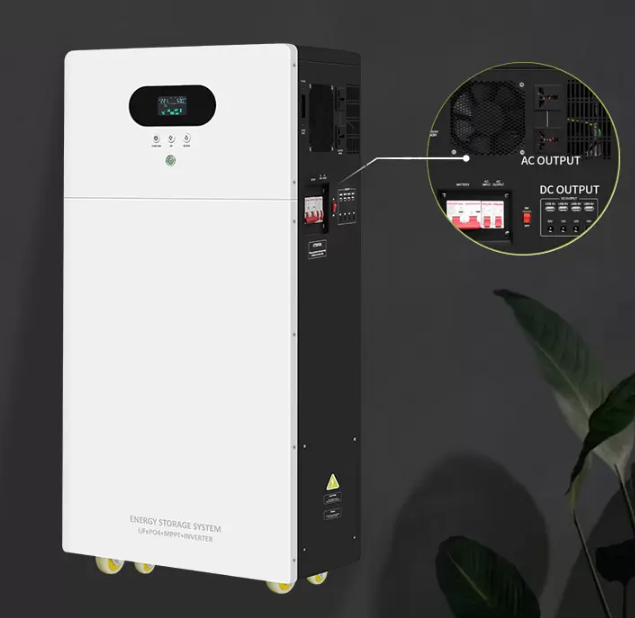
There is no single household load profile that defines a "typical" home. Two properties with similar floor areas can have very different electricity consumption because of climate, heating or cooling equipment, occupancy, cooking habits, and electric vehicles.
A more useful way to judge a 15kWh home battery is to look at four factors:
· Daily electricity consumption and how much of it occurs after sunset
· Essential loads that need to remain powered during an outage
· Peak loads created by air conditioners, pumps, ovens, or other high-power equipment
· Required backup duration, such as several hours overnight or a full day
For example, a home that uses around 18kWh per day does not necessarily need an 18kWh battery. Some of that electricity may be consumed directly from solar during the daytime. The battery may only need to cover the evening and overnight portion of the load.
The opposite is also true. A household with moderate average consumption but several large loads can require more battery power than its daily energy figure initially suggests.
Floor area is a poor shortcut for battery sizing. A smaller home with electric heating or cooling can consume more electricity than a larger property with efficient appliances.
The most useful starting point is an actual electricity bill or smart-meter record. Ideally, the installer or system designer should examine consumption by time of day rather than relying only on monthly totals.
That information helps determine whether the battery will mainly be used for solar self-consumption, peak-rate management, backup power, or a combination of these applications.
For households comparing battery voltage as part of the sizing process, a 51.2V home battery provides a useful reference for understanding how voltage, capacity, inverter compatibility, and backup requirements fit together.
The answer depends heavily on the load being supplied.
A simple theoretical calculation illustrates the relationship:
Average Load | Theoretical Runtime From 15kWh* |
500W | About 30 hours |
1kW | About 15 hours |
2kW | About 7.5 hours |
3kW | About 5 hours |
*Actual runtime will be lower because usable battery capacity, inverter efficiency, temperature, battery operating limits, and load changes affect the result.
This is why saying that a 15kWh battery will "last X hours" without knowing the load can be misleading. A refrigerator cycling on and off is very different from a 2kW air conditioner running continuously.
For backup applications, homeowners often get better results by identifying essential circuits instead of trying to power every appliance at once. Refrigeration, lighting, communications equipment, security systems, and selected outlets may be prioritized, while high-consumption appliances are managed according to available battery power.
A home with a suitable inverter and sufficient discharge capability can still use a 15kWh system for substantial loads, but the battery's energy capacity and the inverter's output rating need to be matched.
A battery connected to solar panels does more than provide emergency electricity. It changes when the household can use the electricity generated during the day.
Consider a common operating pattern. Solar production is highest around midday, when household demand may be relatively modest. The battery charges with the excess generation. Later, when solar output falls and household demand increases, stored energy can supply the home.
This gives a 15kWh battery storage system two different jobs: daily energy shifting and backup power. Excess solar can be moved from the middle of the day to evening consumption, while part of the available energy can be reserved for use when grid power is unavailable.
The balance between these two functions matters. A battery that is sized only around daily solar production may not provide the backup duration the homeowner expects. Conversely, a very large battery may remain underutilized if the solar system cannot regularly recharge it.
The battery and solar array should therefore be considered as one system rather than two independent purchases.
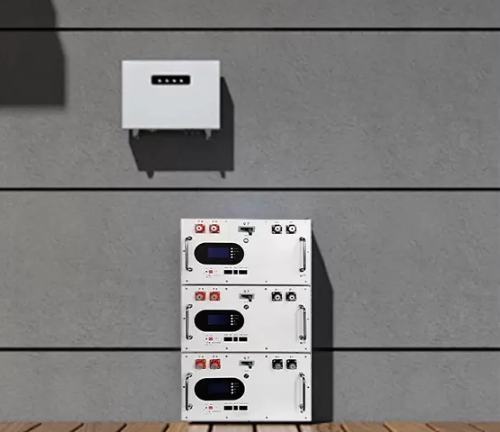
Moving from a 10kWh battery to 15kWh does not automatically make sense for every household. The additional capacity becomes valuable when it solves a specific problem, such as insufficient evening storage or inadequate backup duration.
Battery Size | Typical Use | When It Makes Sense |
10kWh | Smaller residential storage | Lower consumption and shorter backup requirements |
15kWh | Medium-to-large residential storage | Higher evening consumption and more substantial backup needs |
20kWh | Larger energy reserve | Higher household loads or longer backup expectations |
For many households, 15kWh provides a reasonable compromise. It offers considerably more stored energy than a smaller system without immediately moving into the cost and space requirements of a much larger battery bank.
However, the correct choice depends on usable capacity, not simply the number printed on the product label.
A 15kWh battery may have less than 15kWh available for normal use depending on the manufacturer's operating window. Battery management settings, reserve requirements, temperature, and inverter losses all influence the energy that ultimately reaches household loads.
From a manufacturing perspective, producing a 15kWh battery is not simply a matter of connecting enough cells to reach a target number.
The cells must work consistently as a pack, and the electrical and thermal behavior of the complete system has to remain within its design limits. This is where battery manufacturing quality begins to matter more than the nominal capacity printed on the specification sheet.
Cells with significant differences in voltage, internal resistance, or capacity can create balancing problems as the battery ages. A well-designed pack therefore starts with appropriate cell selection and matching before assembly.
The BMS then monitors parameters such as cell voltage, pack current, and temperature. Protection thresholds must be coordinated with the battery's intended operating range rather than treated as generic settings.
At the finished-product stage, testing should verify more than whether the battery turns on. Depending on the product design and applicable requirements, manufacturers may evaluate:
· Cell and pack voltage consistency
· Charge and discharge performance
· BMS protection functions
· Communication with the inverter
· Insulation and electrical safety
· Final assembly and functional performance
These checks become particularly important for residential systems because a battery may operate every day for years, repeatedly charging and discharging under changing temperatures and loads.
For buyers comparing a 15kWh home battery, asking how the manufacturer verifies capacity and consistency is often more useful than simply comparing the advertised cycle count.
More capacity is not always better.
There are several situations where installing a 15kWh system may provide little practical benefit:
· Low household consumption: If the home uses relatively little electricity and has limited evening demand, much of the additional capacity may remain unused.
· Limited solar generation: A large battery is less useful if the solar array rarely produces enough surplus energy to recharge it.
· Short backup requirements: A household that only wants to maintain refrigeration, lighting, and communications for a few hours may not need 15kWh.
This is also where future expansion becomes relevant. Some homeowners may prefer to start with a smaller battery and add modules later if electricity consumption increases or backup requirements change.
That approach can be particularly useful for properties where the future load is uncertain, provided the original inverter, BMS, and battery architecture support expansion.
Price per kWh is an easy number to compare, but it is not enough to make a sound purchasing decision.
For a residential project, the specification review should include at least:
· Usable capacity rather than nominal capacity
· Continuous and peak output power
· Battery chemistry, cycle-life conditions, and operating temperature
· Inverter compatibility and communication protocols
The last point is easy to overlook. A battery can have suitable voltage and capacity on paper while still requiring specific communication between the BMS and inverter for proper operation.
Warranty terms also deserve close attention. Buyers should check what the warranty actually covers, how cycle or throughput limits are defined, and whether the manufacturer's support network can handle troubleshooting after installation.
For projects involving multiple battery units, installation space, module expansion, cable configuration, and communication architecture should also be confirmed before the order is placed.
For buyers considering an integrated solution, an all-in-one residential energy storage system can simplify the relationship between the battery, inverter, control system, and installation requirements.
Consider a home that consumes approximately 18kWh of electricity per day. Its daytime solar generation covers a meaningful part of daytime demand, while evening consumption accounts for roughly 8–10kWh.
The homeowner also wants backup power for refrigeration, lighting, internet equipment, and selected household circuits during an outage.
In this case, a 15kWh battery can provide a useful energy reserve because its capacity is not being used to cover the entire 18kWh daily consumption. Solar energy handles part of the daytime demand directly, while stored energy covers a portion of the evening and backup requirements.
The final result still depends on the battery's usable capacity and inverter efficiency. If the homeowner expects to run a large air conditioner continuously during an outage, the system also needs enough continuous output power to support that load.
This example shows why battery sizing should begin with an electricity-use profile rather than starting with a preferred battery capacity.
A 15kWh system makes the most sense when the household has enough electricity demand to use the additional stored energy and enough solar generation or grid access to keep the battery charged.
It is particularly relevant for homes where the battery needs to perform more than one job: shifting solar energy into the evening, reducing grid consumption during expensive periods, and maintaining essential loads during outages.
For households with lower consumption, a smaller system may be more economical. For properties with heavy electrical loads or long backup expectations, 20kWh or a modular configuration may be more appropriate.
The important comparison is therefore not simply 10kWh vs 15kWh vs 20kWh. The better question is whether the battery's usable capacity, output power, inverter compatibility, and expansion options match the home's actual load profile.
For homeowners looking at a product that combines residential capacity with a wall-mounted design and integrated controls, the AI touchscreen wall battery is another relevant option to compare within this capacity range.
It can be, but the answer depends on the home's load and the battery system's output capability. A 15kWh battery can provide substantial energy for normal residential loads, but high-power appliances such as air conditioners, electric water heaters, ovens, or pumps can consume stored energy quickly. Whole-house backup also requires an inverter capable of handling the expected simultaneous load. For some homes, it is more practical to back up essential circuits rather than every appliance. The best approach is to review actual electricity consumption and identify which loads need to remain operational during an outage.
Runtime depends on the average load. As a simple theoretical example, 1kW of continuous consumption would use 15kWh in 15 hours, while a 2kW load would use it in about 7.5 hours. Real operating time will be shorter because the full nominal capacity may not be usable and the inverter consumes some energy. Household loads also change throughout the day. A refrigerator, for example, does not normally consume its rated power continuously. For accurate planning, buyers should use the home's actual load profile rather than relying on a single runtime figure.
There is no fixed panel count because solar output depends on panel wattage, sunlight conditions, roof orientation, shading, location, and the home's daytime consumption. The more useful calculation is to determine how much surplus solar energy is available to charge the battery on a typical day. A 15kWh battery does not necessarily need 15kWh of surplus solar every day because the household may also use solar power directly. The solar array, inverter, battery, and household load should be sized as a complete energy system.
Only when the additional capacity provides a practical benefit. A 15kWh system can offer more evening energy and longer backup than a 10kWh battery, but the extra capacity also increases system cost and may be unnecessary for a low-consumption home. The comparison should include usable capacity, output power, battery chemistry, warranty, inverter compatibility, and future expansion. If a household regularly reaches the limits of a 10kWh battery, moving to 15kWh may solve a real capacity problem. If the smaller battery already meets the home's needs, additional storage may not provide enough value to justify the upgrade.
Some systems can be expanded by adding battery modules, while others are designed around a fixed capacity. Expansion depends on the battery architecture, BMS, inverter, communication system, and manufacturer's specifications. If future expansion is important, it should be discussed before purchase rather than assumed. Buyers should confirm whether additional modules can be installed later, whether the modules need to match the original units, and whether the inverter has enough capacity to support the larger battery bank. A modular design can be useful for households whose electricity consumption is expected to increase over time.


Compact, quiet, and powerful, it keeps your essentials running during outages and lets you charge anywhere with solar power or grid power.
Perfect for renters who need flexibility without compromise.
Our estimator is only set up to provide preliminary estimates and installer information to residents of single family homes.