
 Email Us
 Contact us
 Whats App
Single family home

A home energy storage all-in-one system provides a single solution for managing and storing electricity in residential settings. This all-in-one energy storage combines the battery pack, hybrid inverter, energy management system, and backup gateway into one compact unit. Homeowners experience greater convenience and reliability with an all-in-one home energy storage system. The table below outlines the main components found in most all-in-one energy storage designs:
| Component | Nickname | Primary Job |
|---|---|---|
| Hybrid Inverter | Brain | Converts DC↔AC and routes energy between PV, battery, loads, and grid. |
| Battery Pack | Heart | Stores daytime surplus; discharges when solar or grid is unavailable or expensive. |
| Energy Management System (EMS) | Nervous System | Reads forecasts + tariffs, then schedules charge and discharge for best savings. |
| Backup Gateway / ATS | Safety Switch | Disconnects from the grid in < 10 ms during an outage, keeping critical loads alive. |
A home energy storage all-in-one system works seamlessly with a home solar system, making all-in-one energy storage a smart choice for modern homes. The all-in-one energy storage system stands out for its simple installation and user-friendly operation. All-in-one energy storage also supports homeowners seeking to reduce dependence on the grid.
●All-in-one energy storage systems combine batteries, inverters, and management tools into one unit, simplifying installation and reducing space needs.
●These systems provide reliable backup power during outages, ensuring essential appliances remain operational when the grid fails.
●Homeowners can save on electricity bills by using stored energy during peak pricing periods, promoting cost savings and energy independence.
●Smart features like remote monitoring and energy usage analytics help users optimize their energy consumption and make informed decisions.
●Consider your household's energy needs and future demands when choosing a system to ensure it meets your requirements for efficiency and scalability.
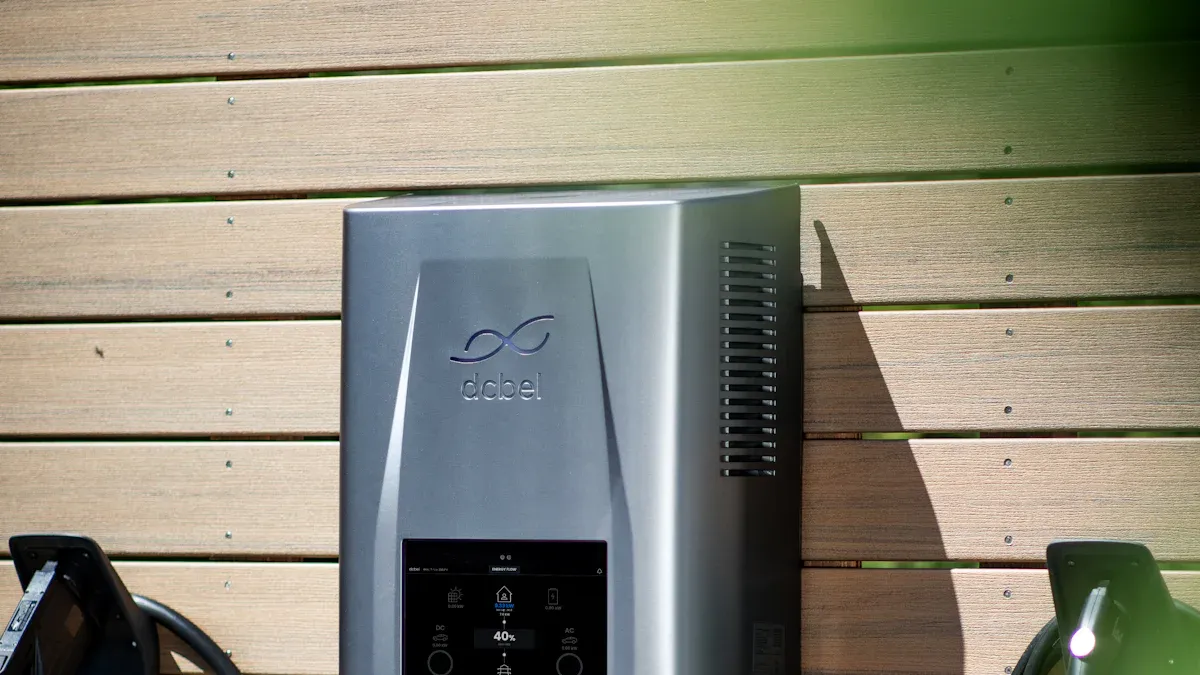
An all-in-one energy storage system integrates several advanced technologies into a single, compact unit. The main components include:
●Battery Module: This part stores energy for later use. Most systems use lithium-ion technology, which offers high energy density and long life.
●Inverter: The inverter converts direct current (DC) from the storage battery into alternating current (AC) for home appliances and grid interaction.
●Energy Management System (EMS): The EMS monitors and controls energy flow, providing real-time data and optimizing usage.
●Battery Management System (BMS): The BMS checks battery health, manages charging and discharging, and protects against overcharging or overheating.
●Charge Controller: This device regulates electricity flow from solar panels to the battery, maximizing energy capture and protecting the battery.
●Control Interface: Users can monitor and adjust system settings through apps or dashboards.
●Safety Features: These include thermal management, fire suppression, and durable casing for safe operation.
A typical residential all-in-one system includes a lithium-ion battery bank with a capacity of 5-15 kWh. This range suits most homes, providing enough backup power for essential loads during outages or peak demand.
The integration of all these components into one unit improves efficiency and reliability. The charge controller plays a key role by regulating the flow of electricity from solar panels to the battery. Advanced MPPT (Maximum Power Point Tracking) charge controllers adjust input voltage to maximize energy capture, even when sunlight varies throughout the day. The BMS monitors the state of charge and temperature, preventing damage and ensuring balanced charging across all battery modules.
The inverter converts stored DC electricity into AC, which powers household devices. Hybrid inverters manage both battery and solar power, allowing the system to switch between sources as needed. The EMS oversees the entire process, making smart decisions about when to store energy, when to release it, and when to draw from the grid. This coordination ensures that the energy storage system delivers backup power when needed and maximizes savings by using stored energy during expensive grid periods.
The process of storing and releasing energy works as follows:
| Component | Function |
|---|---|
| Battery Unit | Stores electrical energy using lithium-ion technology, with capacity measured in kilowatt-hours. |
| Battery Management System | Monitors battery health, ensuring safe operation and longevity. |
| Power Conversion System | Converts stored DC power into usable AC power for home appliances. |
| Energy Management System | Provides insights into energy storage and usage, aiding in smart energy decisions. |
| Safety Features | Includes durable casing, thermal management, and structural integrity for safe operation. |
Modern all-in-one energy storage systems offer a range of smart features. Remote monitoring allows users to check system status and control parameters from anywhere using a smartphone app. Energy usage analytics help homeowners understand their consumption patterns and make informed decisions. Automatic energy management can prioritize battery use during peak pricing or schedule appliance operation when solar energy is plentiful.
Many systems support multiple communication options, such as USB, Wi-Fi, and Modbus, making integration with home automation platforms easy. Built-in MPPT trackers and scalable battery expansion allow for future upgrades. The compact design eliminates the need for separate batteries, inverters, or controllers, making installation straightforward. Users can simply plug in the system, which saves time and reduces complexity. The space-saving design also makes these systems ideal for homes with limited installation areas.
An all-in-one energy storage system offers several practical benefits for homeowners. The integrated design makes installation simple and reduces the need for multiple components. Homeowners can enjoy a cleaner look and a more organized setup in their garage or utility space. The system acts as an uninterruptible power supply, providing reliable backup power during outages. This feature ensures that essential devices and appliances keep running even when the grid fails.
The following table highlights the main benefits reported by users:
| Benefit | Description |
|---|---|
| Cost Savings | Homeowners can significantly reduce their electricity bills by using stored energy during peak-demand periods. |
| Environmental Sustainability | Promotes the use of solar energy and reduces reliance on fossil fuels, lowering the carbon footprint. |
| Simplified Installation | A pre-integrated unit simplifies the installation process, reducing complexity and compatibility issues. |
| Space-Saving Design | Compact design takes up less space, ideal for homes with limited space. |
| Scalability | Systems can be expanded as energy needs grow, providing flexibility for homeowners. |
All-in-one energy storage system users also report greater convenience. The system requires fewer cables and parts, which means less maintenance and fewer compatibility problems. Homeowners can monitor and control their energy storage system through user-friendly apps. This setup supports energy independence by allowing families to use more solar power and less grid electricity. The system also helps with energy cost savings, especially when electricity prices rise during peak hours.
Despite many advantages, an all-in-one energy storage system has some drawbacks. The compact design can limit scalability. Homeowners may find it difficult to expand storage capacity without replacing the entire unit. If one part fails, the whole system may need repair or replacement, which can increase costs.
The table below outlines common limitations:
| Limitation | Description |
|---|---|
| Limited scalability | Hard to upgrade or expand storage capacity without replacing the entire unit. |
| Potential overheating | Heat accumulation may affect performance over time due to all components being housed together. |
| All-or-nothing repairs | If one part fails, the entire unit may need repair or replacement. |
Some systems may not be compatible with every solar panel or inverter brand. Homeowners should verify compatibility before installation. The system may also have difficulty dissipating heat during extended periods of high use. This can impact performance and lifespan. Although the initial cost is often lower than that of split systems, the limited flexibility and upgrade options may not be suitable for all households.
Homeowners can choose between an all-in-one energy storage system and a split system when planning their home energy setup. The main difference is how the components are packaged and installed. An all-in-one energy storage system integrates the battery, inverter, and management systems into a single unit. Split systems use separate components for each function.
The table below highlights the main differences:
| Feature | All-in-One Systems | Split Inverter-Battery Systems |
|---|---|---|
| Component Pricing | Generally higher due to integrated components | More competitive due to individual component selection |
| Upgrade Flexibility | Limited; the entire system may need replacement | High; individual components can be replaced or upgraded |
| Installation Complexity | Simpler; fewer connections and less planning required | More complex; requires careful planning and management |
| Electrical Safety Compliance | May have internal features that complicate compliance | Easier compliance due to accessible components |
| Monitoring Capabilities | Streamlined but less granular control | Detailed monitoring of individual components |
| Space Considerations | Better for space-constrained installations | More flexible for larger spaces and future expansion |
Split systems allow users to select each part based on their needs. This approach gives more flexibility for upgrades and repairs. All-in-one units save space and reduce installation time, which benefits homes with limited space.
Each energy storage system type has its own strengths and weaknesses. The following table summarizes the main pros and cons:
| Feature | All-in-One Systems | Split Systems |
|---|---|---|
| Advantages | 1. High integration, easy to install | 1. Large storage capacity and strong scalability |
| 2. Beautiful appearance, small space | 2. Good heat dissipation performance | |
| 3. Save procurement costs, relatively cheap | 3. Upgradable operating system | |
| 4. Highly integrated, reducing soft costs | 4. Good flexibility for personalized needs | |
| Disadvantages | 1. Insufficient expansion capacity | 1. Installation and maintenance are cumbersome |
| 2. Poor heat dissipation performance | 2. Bulky appearance, occupies a large space | |
| 3. Non-upgradable operating system | 3. Higher price | |
| 4. Low adjustability and flexibility | 4. N/A |
All-in-one systems offer easier installation and maintenance. If one part fails, the entire unit may need replacement. Split systems require more planning and wiring, but users can replace or upgrade individual components. Performance also differs. All-in-one systems often achieve higher round-trip efficiency and longer cycle life, while split systems provide more options for expansion and customization.
Homeowners use all-in-one energy storage systems in various ways. These systems store excess solar energy, reducing reliance on the grid and providing a stable power supply during outages. They also enable homes to charge batteries during low-tariff periods and discharge stored energy when electricity prices are high. Many families select these systems as a comprehensive solution that combines multiple components for improved energy efficiency and reliability.
| Application | Benefit |
|---|---|
| Store excess solar energy | Reduces dependence on the grid and ensures a stable power supply during outages. |
| Charge during low-tariff periods | Allows households to save on energy costs by discharging during peak hours. |
| Comprehensive solution | Integrates multiple components into a single unit for improved energy efficiency and reliability. |
All-in-one systems also support backup power during emergencies. When the grid goes down, these systems automatically switch to stored energy. Essential appliances and security systems keep running, which helps families maintain comfort and safety. Without battery storage, homes with solar panels lose power during outages. Energy storage systems solve this problem by storing solar energy for later use.
Choosing the right system requires careful assessment of household energy needs. Homeowners should review recent utility bills to identify peak usage times and calculate total kilowatt-hours consumed. They should consider how many appliances need power during outages and examine daily energy consumption patterns. High usage typically occurs in the evening, so understanding these patterns helps determine the necessary capacity.
Key factors to consider include:
●Evaluating efficiency and battery technology, focusing on high-efficiency systems and preferred battery types.
●Considering long-term value, such as system lifespan and scalability for future needs.
●Assessing compatibility with existing solar panels and the quality of installation.
●Reviewing installation and maintenance requirements for reliability.
Homeowners should also anticipate future energy demands, such as electric vehicle charging or new appliances. They may opt for a custom home energy storage solution to meet specific needs. Integrating renewable energy sources is crucial for achieving energy independence, so selecting a system that supports these goals is essential.
All-in-one home energy storage systems combine batteries, inverters, and smart controls into a single unit. These systems optimize energy management, provide backup power, and support renewable energy use. Homeowners benefit from simplified installation, space-saving design, and increased resilience.
| Advantage | Explanation |
|---|---|
| Carbon Footprint Reduction | Storing excess solar power lowers reliance on grid electricity. |
| Increased Resiliency | Battery storage ensures power during outages and supports off-grid systems. |
Smart home technology continues to evolve. Modular designs and AI integration will make energy storage more accessible and efficient. Electric vehicles and smart grids will shape future energy solutions. All-in-one systems will play a key role in building smarter, more sustainable homes.
Most systems last 10–15 years. Battery technology and usage patterns affect lifespan. Regular maintenance and proper installation help extend service life.
Yes. The system can store electricity from the grid. It provides backup power during outages and helps manage energy costs, even without solar panels.
Most units fit in a small area, such as a garage or utility room. The compact design saves space compared to split systems.
Professional installation ensures safety and optimal performance. Certified installers handle wiring, setup, and system integration with existing home equipment.


Compact, quiet, and powerful, it keeps your essentials running during outages and lets you charge anywhere with solar power or grid power.
Perfect for renters who need flexibility without compromise.
Our estimator is only set up to provide preliminary estimates and installer information to residents of single family homes.