
 Email Us
 Contact us
 Whats App
Single family home

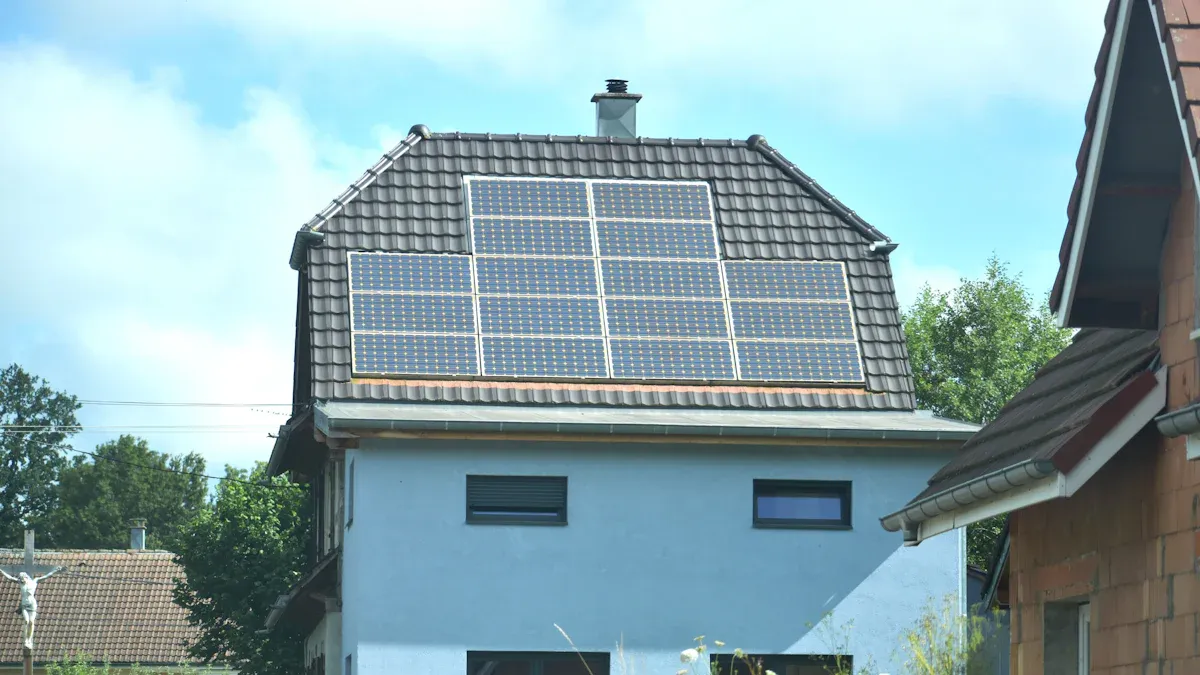
Are you thinking about which solar power home battery systems work for you? You are not the only one. Many people choose solar each year. About 15-20% of new solar setups now use solar power home battery systems. People want to save money on energy bills. They also want lights to stay on during power outages. This is true for 69% and 56% of people who pick solar power home battery systems for these reasons. The best solar power home battery systems depend on your solar system size. It also depends on how much energy you use each day. You should think about how much backup you need. Picking the right solar power home battery systems means finding the battery that fits your life.
Solar power home battery systems can lower your energy bills. They also give backup power when the lights go out.
Pick a battery that fits how much energy you use each day. Think about how much backup power you want.
Find systems with strong warranties and long lifespans. This helps make sure they work well and are worth the money.
Check for state incentives and rebates. These can help you pay less at first for solar battery systems.
Make sure the system works with your current solar setup. This helps it run better and gives you more power.
You may wonder how home battery storage works at home. Solar panels collect sunlight and make electricity. Sometimes, your panels make more power than you use. Home battery storage lets you save this extra power for later. You can use it at night or if the grid stops working. Most homes use lithium-ion batteries. Some homes use lead-acid or flow batteries. These batteries keep energy in battery banks.
Smart home battery storage systems can switch power sources. They can use solar, battery, or grid power. This helps you save money and always have power. If clouds block the sun, the system uses battery or grid power. When you have extra solar power, you can store it or send it to the grid.
Here is a quick look at the main parts of a home battery storage system:
Component | Description |
|---|---|
The Battery | Stores electrical energy from solar panels; its size and type affect how well it works. |
The Inverter | Changes DC power from batteries to AC power for your home; controls power from different sources. |
The Battery Management System | Watches and manages battery cells for safety and good use; stops overcharging and overheating. |
The Charge Controller | Controls voltage and current from solar panels to batteries; stops overcharging. |
System Monitoring | Shows real-time data; helps you manage energy and find problems. |
Racking and Enclosures | Protects parts from damage; gives good airflow for best use. |
Cabling and Safety Components | Makes safe and good connections; has safety switches and protective devices. |
Home battery storage gives you more control over your energy. You can use stored power when electricity costs more. You can keep your lights on during blackouts. You can charge your electric car with stored solar power. Home battery storage helps you use more of your own solar energy. You do not need the grid as much.
You get these benefits with home battery storage:
Save money by using stored power when prices are high.
Keep your home running during outages.
Use clean solar energy day and night.
Watch your energy use with smart apps.
Protect your appliances from power surges.
With home battery storage, your home gets smarter and greener. You also feel safe knowing you have backup power when you need it.
When you pick a solar battery, you want to know how much energy it can store and how much power it can give at once. Battery capacity tells you the total energy you can store for later. Power output shows how many appliances you can run at the same time. Most home solar batteries in 2025 have a battery capacity between 10 kWh and 13.5 kWh. If you want backup for a day or two, you need to check both the battery capacity and the continuous power output. Usable capacity is important because it tells you how much energy you can actually use. Depth of discharge matters too. If you use more of your battery each time, it may not last as long. Here’s a quick look at how battery types compare:
Battery Type | Total Capacity | Usable Capacity | Cost ($) | Cost per Usable kWh ($) |
|---|---|---|---|---|
Lead-Acid AGM | 100 KWh | 50 KWh | 78,000 | 0.42 |
Lithium-Ion | 50 KWh | 50 KWh | 23,000 | 0.15 |
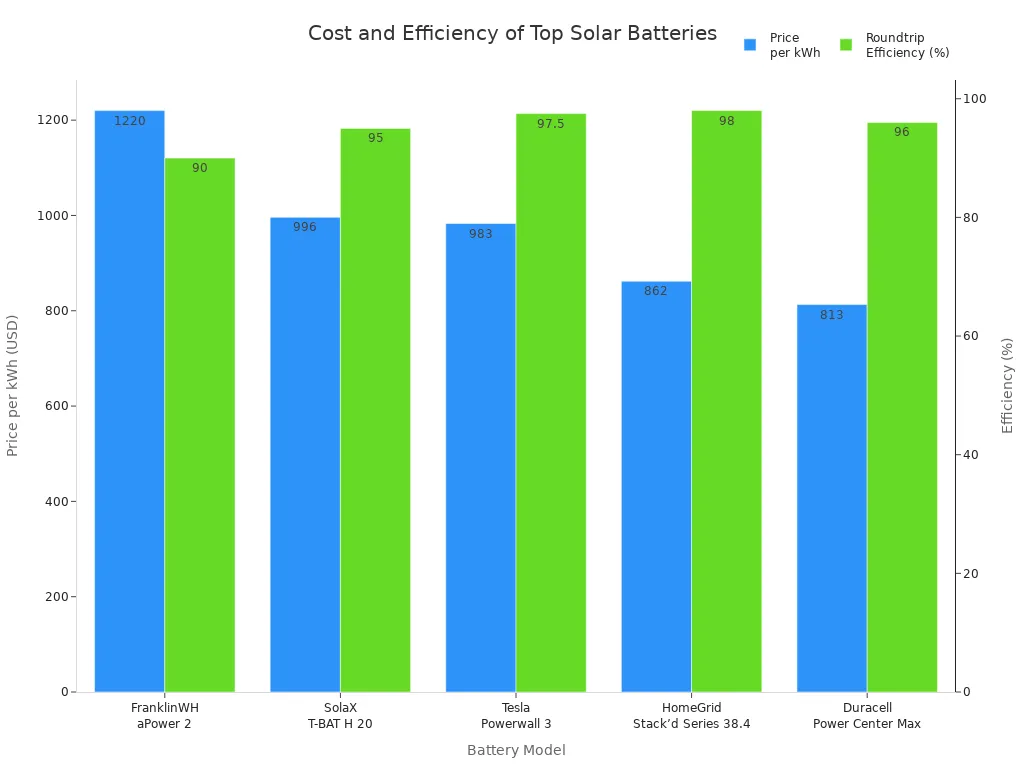
Solar battery systems can cost a lot up front, but they help you save money over time. In 2025, a 10kW solar battery system costs between $5,950 and $11,900 after tax credits. The price depends on storage size, brand, and solar battery features. Some states offer rebates that can save you thousands more. You should look at the price per kWh and the value you get for your money. Here’s a chart that compares price and efficiency for top models:
You want your solar battery to keep your home running during outages. Many solar battery systems offer backup power for 1 to 7 days. Some can even work off-grid if you live far from town. Look for solar battery features like smart home integration and high reliability. Lithium iron phosphate batteries give you better safety and longer life. Some new batteries can even last 100 hours or more.
Your solar battery should work well with your solar panels and other home systems. Check if the storage system matches your solar inverter and electrical setup. Good design and build quality matter for safety and long life. Make sure the battery is easy to install and fits with your home’s wiring. Look for solar battery features that help you monitor and control your energy.
You want your solar battery to last. Most lithium-ion batteries come with a 10-year warranty and last 10 to 15 years. Some brands offer even longer coverage. Always check the warranty and expected lifespan before you buy. A good warranty means you can trust your storage system for years.
Battery Type | Warranty Period | Expected Lifespan |
|---|---|---|
Lithium-ion | ~10 years | 10-15 years |
Tesla Powerwall | 10 years | 10-15 years |
Enphase IQ Battery | 10 years or 7,300 cycles | N/A |
Tip: Always ask about safety features and how the battery handles power output during emergencies.
Picking the right solar battery can be hard. You want a battery that matches your life and saves you money. The top 10 solar batteries for 2025 each have something special. We will show what makes each one different. This can help you find the best one for your home.
The BEINENG Home ESS is a great all-in-one battery. It lets you control your energy. You can store solar power and use it later. You can even charge your electric car. This system works with old and new batteries. You can add up to six modules for more storage. The myBeineng app helps you check your energy on your phone. The setup is simple and smart. The system grows with your family. It is good for saving money and having power during outages. You can use clean energy every day.
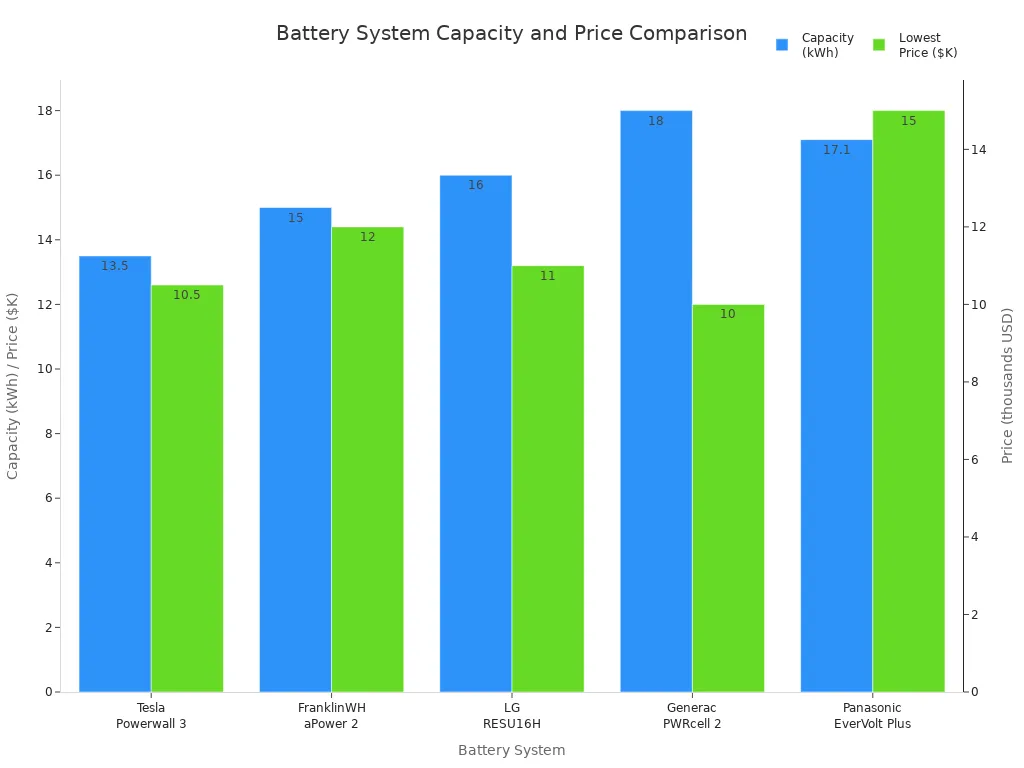
The Tesla Powerwall 3 is very popular. It gives you 13.5 kWh of storage and 11.5 kW power output. You can run many things at once. It does not work with generators. It comes with a 10-year warranty. The price is $10,500 to $15,000. It works well with solar panels. It gives backup power during outages. Here is a table to compare it with other batteries:
System | Capacity | Power Output | Generator Support | Warranty | Price Range |
|---|---|---|---|---|---|
Tesla Powerwall 3 | 13.5 kWh | 11.5 kW | No | 10 years | $10,500-15,000 |
FranklinWH aPower 2 | 15 kWh | 10 kW | Yes | 15 years | $12,000-18,000 |
LG RESU16H | 16 kWh | 5 kW | No | 10 years | $11,000-14,000 |
Generac PWRcell 2 | 9-18 kWh | 7.6 kW | Yes | 10 years | $10,000-20,000 |
Panasonic EverVolt Plus | 17.1 kWh | 5.5 kW | No | 10 years | $15,000-20,000 |
The Bluetti EP900 is easy to install. You can set it up like a home generator. You can add more batteries if you need more storage. It has high capacity, up to 9 kW. It works inside or outside. If you want a small and flexible battery, this is a good choice.
Advantages | Disadvantages |
|---|---|
Not all disadvantages detailed | |
Stackable batteries for more storage | |
High capacity for efficient energy use | |
Compact design for indoor/outdoor use |
The Villara VillaGrid is special because it uses lithium titanate. This means it lasts longer and is safe. You get 11.5 kWh of usable capacity. It is very efficient and has a 20-year warranty. It can give up to 30 kW of power. It works well in tough weather. You can avoid peak hour charges. You do not need the grid as much. This battery is good for long life and backup power.
Feature | Villara VillaGrid |
|---|---|
Battery Chemistry | Lithium Titanate (LTO) |
Usable Capacity | 11.5 kWh |
Roundtrip Efficiency | 98.5% |
Peak Power | 30 kW |
Continuous Power | 10 kW |
Warranty | 20 years at 70% |
Safety | Non-flammable, carbon-free anode |
Longevity | Longest lasting home battery |
The VillaGrid helps you avoid peak charges, lowers your grid use, and works well during power outages—even in harsh environments.
The Enphase IQ Battery is good for people who want to grow their system. You can start small and add more storage later. The battery is modular and easy to expand. It uses lithium iron phosphate for safety and long life. Storm Guard gives you backup during storms. It works well with solar panels and microinverters. You can see your energy use with the Enphase App.
Feature | Description |
|---|---|
Lets you add more storage as needed | |
Low-Voltage DC Power | Improves safety and reliability |
Solar Integration | Works well with solar panels and microinverters |
Real-time Monitoring | Enphase App shows energy production, use, and storage |
Safety Features | Meets top safety standards for home batteries |
You can expand your system over time.
Storm Guard keeps your home powered during bad weather.
The Panasonic EverVolt is a good choice for backup and storage. The EverVolt Standard gives you 11.4 kWh and 4.6 kW. The EverVolt Plus gives you 17.1 kWh and 5.5 kW. You can connect up to four units for 72 kWh. The battery can use up to 90% of its power. You can add more modules as you need them.
Model | Usable Capacity | Continuous Power | Round Trip Efficiency | Average Backup Duration |
|---|---|---|---|---|
EverVolt Standard | 11.4 kWh | 4.6 kW | 86%/90%* | 6 hours |
EverVolt Plus | 17.1 kWh | 5.5 kW | 86%/90%* | 9 hours |
One cabinet can hold up to 18 kWh.
Four units can give 30 kW of power.
You can add more storage as your needs change.
The LG Chem RESU is a good battery for saving money. The RESU 10H gives you 9.3 kWh and 5 kW. The RESU 16H gives you 16 kWh and 7 kW. Both have high efficiency and deep discharge. This means you get more energy. The price is good for families who want backup and savings.
Model | Cost Range | Usable Capacity | Power Rating | Roundtrip Efficiency | Depth of Discharge |
|---|---|---|---|---|---|
RESU 10H | $9,500 - $13,000 | 9.3 kWh | 5 kW | 94.5% | 95% |
RESU 16H | $11,000 - $15,000 | 16 kWh | 7 kW | 94.5% | 100% |
The Generac PWRcell is good for homes that need lots of power. You can make the storage bigger, from 9 kWh to 18 kWh. It gives strong energy management and high power. It works best if you already have solar panels. You can add more storage as you need it.
Selling Points | Drawbacks |
|---|---|
Not as user-friendly as some competitors | |
Scalability | One of the more expensive options |
Effective energy management | Requires solar panels for installation |
If you care about the planet, the Sonnen Eco is a good pick. It uses strong materials and smart battery management. This helps the battery last longer and work better. The Sonnen Eco lets you use more renewable energy. It also helps the environment. The battery lasts a long time, so you do not need to replace it often.
Aspect | Description |
|---|---|
Durable materials for longer battery life | |
Advanced Battery Management | Optimizes charge/discharge for efficiency and reliability |
Environmental Sustainability | Helps you use more renewable energy and cut fossil fuel use |
It cuts greenhouse gas emissions.
It is made for long life and sustainability.
The SimpliPhi Power system is good for many uses. You can use it for small backup or big energy needs. The system fits different home sizes and goals. If you want a battery that works in many ways, SimpliPhi Power is a smart pick.
Here is a table to help you compare the main features of each battery:
Model | Usable Capacity | Power Output | Scalability | Warranty | Best For |
|---|---|---|---|---|---|
BEINENG Home ESS | Up to 6 modules | High | Yes | Long-term | All-in-one, smart homes |
Tesla Powerwall 3 | 13.5 kWh | 11.5 kW | No | 10 years | Whole-home backup |
Bluetti EP900 | Up to 9 kW | High | Yes | 10 years | Easy install, flexible homes |
Villara VillaGrid | 11.5 kWh | 10 kW | No | 20 years | Longevity, harsh environments |
Enphase IQ Battery | Modular | Varies | Yes | 10 years | Expandable, smart integration |
Panasonic EverVolt | 11.4-17.1 kWh | 4.6-5.5 kW | Yes | 10 years | Reliable backup, modular homes |
LG Chem RESU | 9.3-16 kWh | 5-7 kW | No | 10 years | Cost-effective, family homes |
Generac PWRcell | 9-18 kWh | 7.6 kW | Yes | 10 years | High power, large homes |
Sonnen Eco | 10-20 kWh | 4.6 kW | Yes | 10 years | Sustainability, long life |
SimpliPhi Power | Varies | Varies | Yes | 10 years | Versatile, backup or off-grid |
Tip: Think about your home size, how much energy you use, and if you need backup before you choose a solar battery for your family.
If you live in a small home or apartment, you use less energy. You need a solar battery that fits your space and covers your needs. Here is how you can pick the right system: First, check how much electricity you use each day. Next, choose a battery size that matches your use. Pick a system that saves money or gives backup for things like lights and your fridge. Look for a solar battery that is easy to put in and does not take up much space.
Large families use more energy every day. You have more appliances and need more power. When you choose a solar battery, look for high capacity and strong power output. Pick a battery with high depth of discharge so you can use more stored energy. Good efficiency means you do not lose much energy. A long lifespan helps you avoid buying new batteries often. Safety features protect your home. Choose a system you can make bigger as your family grows.
If you live off-grid, you need a strong solar setup. Your battery should last through cloudy days. Here is what your system should have:
Component | Description |
|---|---|
Solar panels | Make electricity from sunlight. |
Charge controller | Protects the battery and helps it last longer. |
Battery bank | Stores energy for night and bad weather. |
Inverter | Changes battery power for home use. |
Balance-of-system | Includes wiring and safety parts. |
Battery Chemistry | Lithium iron phosphate works best for long life. |
Autonomy | Enough battery for 1–3 days without sun. |
You can find solar batteries that do not cost a lot. Some types are cheaper but may need more care or do not last as long.
Battery Type | Key Features |
|---|---|
Lead-Acid Deep Cycle Batteries | Low cost, needs maintenance, shorter lifespan |
Flow Battery Technology | Lasts long, stable, good for off-grid homes |
Saltwater-Based Batteries | Safe, eco-friendly, easy to recycle |
Solar battery backup systems keep your home running during blackouts. They turn on when the power goes out and run your lights, fridge, and security system. These systems charge up every day with solar power. You get a quiet, clean backup instead of a noisy generator. The battery connects to a special panel for important circuits. This setup keeps your family safe and your home powered during emergencies.
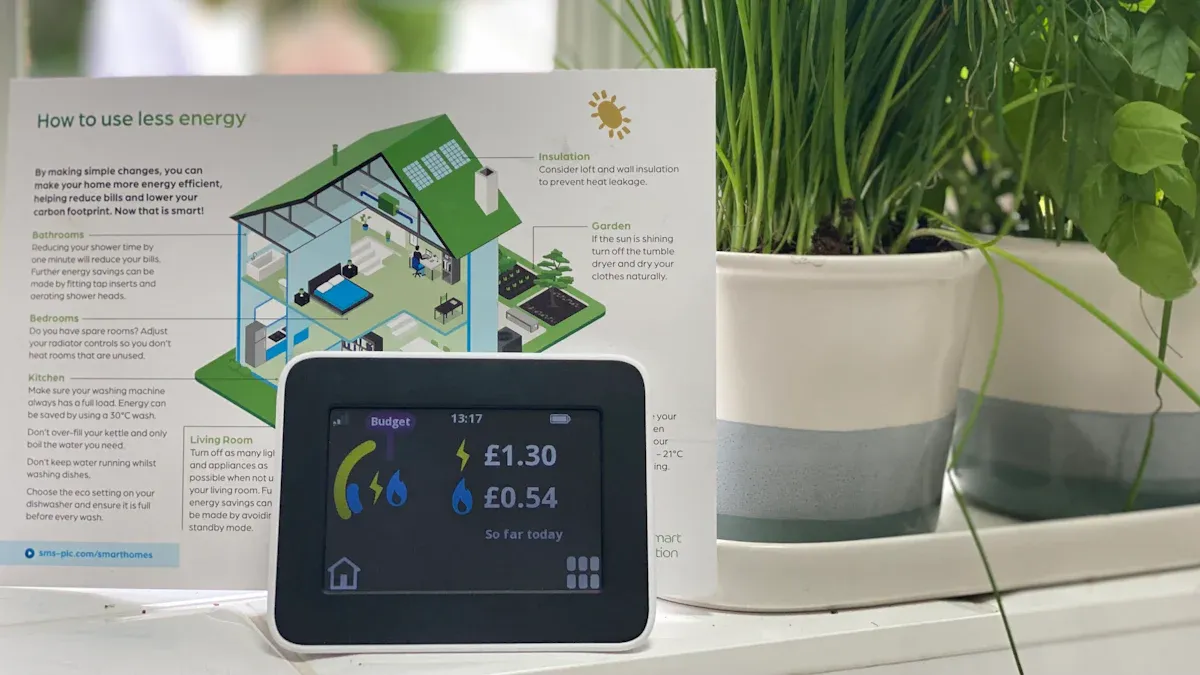
When you think about solar, you see the price first. A solar system with a battery costs between $5,950 and $11,900 after tax credits. The price changes based on how much energy you want to store and the brand you choose. You pay more at the start, but you save money each month. You use less power from the grid, so your bills get smaller. Over time, these savings grow. Some families save thousands of dollars in ten years. If you live where power is expensive, you can save even more. You also get backup power during blackouts. This keeps your home safe and comfortable.
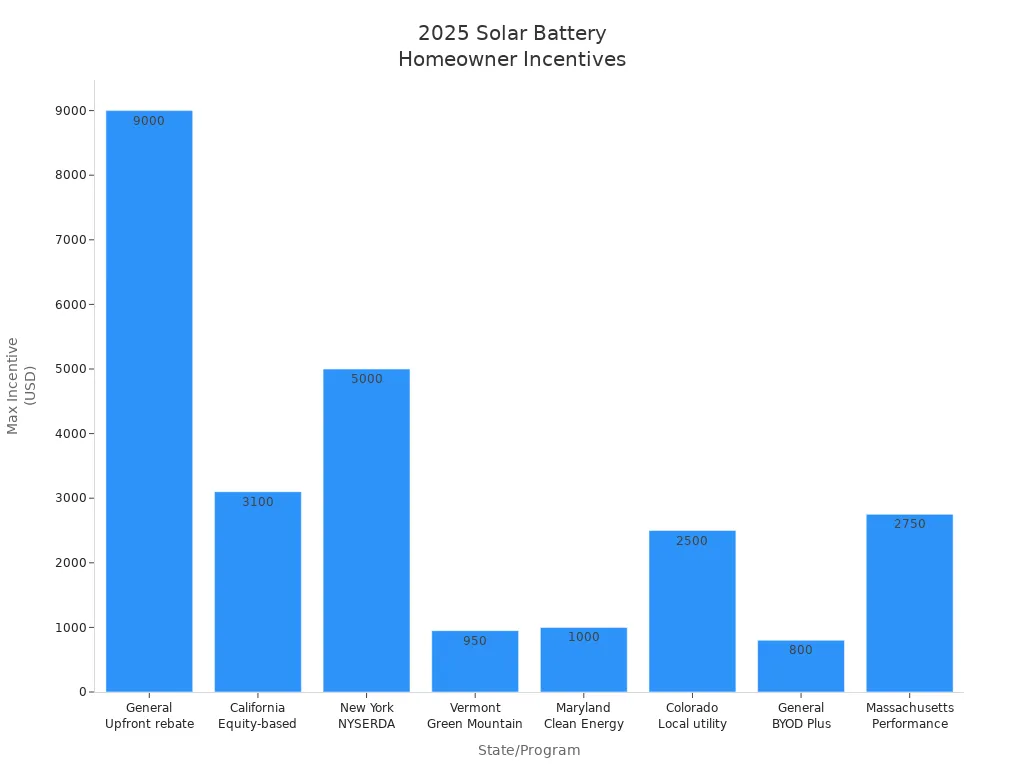
You can make solar cheaper with rebates and incentives. Many states and programs give you money back when you add a solar battery system. Some rebates pay for both your solar panels and your battery. Here is a quick look at what you might get:
State | Incentive Type | Amount/Details |
|---|---|---|
General | Upfront rebate | Up to $9,000 for solar-plus-battery systems (approx. $3,600 for solar, $5,400 for battery) |
California | Equity-based incentive | $1,100/kWh for battery, $3,100/kW for solar installations starting June 2025 |
New York | NYSERDA program | $200/kWh for residential battery storage systems (up to 25 kWh) |
Vermont | Green Mountain Power | Up to $950 per kW of usable battery power for limited access during peak demand |
Maryland | Residential Clean Energy Rebates | $1,000 rebate for new solar system installations |
Colorado | Local utility incentives | Rebates ranging from $400 to $2,500 depending on the area |
General | BYOD Plus program | $400/kW for committed battery capacity, $800/kW for low-to-moderate income households |
Massachusetts | Performance payments | $275/kW average summer performance, up to $2,750 per year for a 10 kW system |
Tip: Look at your state’s programs before you buy. You could save thousands on your solar setup.
Getting a solar battery system put in is not hard. First, you talk to a solar expert. They check your home and help you pick the best system. Next, the installer puts in your solar panels and battery. Most jobs take one or two days. The installer connects everything and tests the system. You get a short lesson on how to use your new solar setup. After that, you can watch your energy use with an app. If you have questions, your installer can help. You get clean energy, lower bills, and peace of mind.
You want the best solar setup for your home, so focus on what matters most. Think about your energy needs, home size, and budget. Check if the battery fits your solar system and gives enough backup. Here’s a quick checklist:
How much solar power do you use each day?
Does the battery match your solar panels?
Will it keep your lights on during outages?
Can you afford the system?
If you feel unsure, talk to a solar expert or use online tools to compare options.
Most home solar batteries last 10 to 15 years. You can check the warranty for details. Good care helps your battery last longer.
Yes, you can add more batteries to many systems. Look for models with modular designs. This lets you grow your setup as your needs change.
Your solar battery turns on and keeps your lights, fridge, and key devices running. You stay comfortable and safe, even if the grid goes down.
Start by checking your daily energy use. Think about what you want to power during an outage. Ask your installer for help or use online tools.
Tip: Make a list of must-have devices for backup. This helps you pick the right battery size.


Compact, quiet, and powerful, it keeps your essentials running during outages and lets you charge anywhere with solar power or grid power.
Perfect for renters who need flexibility without compromise.
Our estimator is only set up to provide preliminary estimates and installer information to residents of single family homes.