
 Email Us
 Contact us
 Whats App
Single family home

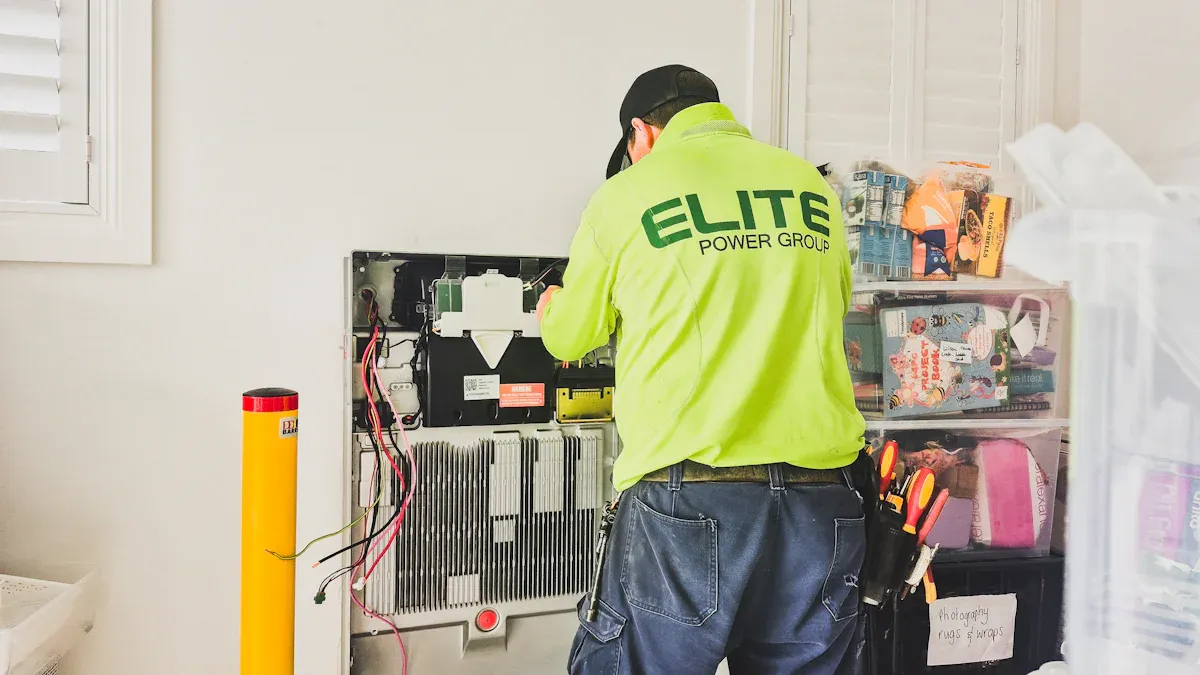
Have you ever thought about how to make your home energy system smarter and more dependable? When you look at Solar Battery Home Integration, you want to know about how it works with your system, how to set it up, how much energy you need, how to check it, and how much it costs. Homeowners usually want these things:
Use clean energy every day
Keep the house running during blackouts
Make the house worth more
A lot of people also worry about the power grid not being steady and bad weather. You need a system that fits your life. The BEINENG Home ESS gives you choices, lets you control things right away, and helps you feel safe.
Figure out how much energy your home uses. Watch your energy use for at least one month. This helps you make smart choices.
Find out which appliances need backup power if the lights go out. Add up the energy these appliances need. Make sure your battery system can handle it.
Pick a battery type and size that fits your daily energy use. Think about what you need for backup. Lithium-ion batteries work well and last a long time.
Check your solar battery system often. Do regular checkups to keep it working well and lasting longer.
Look for ways to save money when you install a solar battery. Search for federal and state programs. These can help lower your costs a lot.
Before you start with Solar Battery Home Integration, you need to know how much energy your home uses. This step helps you choose the right system size and avoid surprises later. You can use your utility bills or a smart meter to track your energy use. The table below shows the main things you should look at:
Description | |
|---|---|
Household Energy Needs | Find out how much energy your family uses each day and each month. |
Weather Conditions | Check how much sunlight your area gets and how weather affects your solar panels. |
Market Energy Costs | Look at local electricity prices to see how much you can save with solar and storage. |
Tip: Track your energy use for at least one month to get a clear picture of your needs.
You want your Solar Battery Home Integration to keep your home running during outages. To do this, you must figure out which appliances need backup power and how much energy they use. Follow these steps:
List the appliances you want to keep running during a power outage, like your fridge, lights, and Wi-Fi.
Find out how much power each appliance uses and how long you need them to run.
Add up the total energy needed for all these appliances to get your backup power requirement.
For example, if your home needs 12.24 kWh to last through a 24-hour outage, you can pick a battery system that matches this number.
If you have an electric vehicle, you should plan for charging as part of your Solar Battery Home Integration. Think about these points:
System Sizing: Make sure your solar panels and battery can handle your EV’s charging needs. Check your daily driving distance and how much energy your car uses.
Integration with Existing Infrastructure: Your inverter and EV charger must work together. Your home’s wiring should support the extra load.
Maintenance Requirements: Clean your solar panels and check your system often to keep everything working well.
Incentives and Rebates: Look for local programs that can help lower your costs.
Payback Period and Long-Term Savings: Calculate how long it will take to recover your investment and how much you will save over time.
Note: Many families start with a 10 kWh battery, but if you have two EVs or high energy use, a 20 kWh battery may fit better.
Check your solar panel specs before adding a battery. The type and quality of your panels matter. They can change how well your battery works. Look at the table below to see how specs affect your battery:
Specification Type | Impact on Battery Choice |
|---|---|
Efficiency | Higher efficiency may reduce battery capacity needs. |
Temperature Coefficient | Poor performance in high temperatures may require larger batteries. |
Load Ratings | Affects overall system design and battery integration. |
You want your battery to last a long time. Make sure it has enough storage for your energy needs. This helps you get the most from your Solar Battery Home Integration. It also protects your money.
Your electrical panel and wiring must follow safety rules. This makes installation smooth and safe. Check these important points:
NEC Requirement | Description |
|---|---|
Disconnecting means | Needed for safe system isolation. |
Overcurrent protection | Use the right size and place for protective devices. |
Grounding | Proper grounding for all equipment and the system. |
Labeling | Clear warnings for multiple power sources. |
Feed the subpanel from the main panel. Put the inverter breaker in the subpanel.
Keep neutral and ground bars apart in subpanels. Only bond them at the main service disconnect.
Label your system to show it has more than one power source. This keeps people safe. It also helps electricians work on your system.
You need to pick AC-coupled or DC-coupled systems. Each one has good points. AC-coupled systems are easy to add to most homes. They work well if you already have solar panels. DC-coupled systems are best for new setups. They give you higher efficiency.
AC COUPLING | DC COUPLING |
|---|---|
Easy to add to existing solar systems. | Best for new installations. |
Needs more parts and may lose a little energy in conversion. | Fewer parts and higher efficiency. |
Flexible for upgrades and changes. | Harder to upgrade and needs matching parts. |
The BEINENG Home ESS works with both AC and DC coupling. You can pick the setup that fits your home best. This gives you flexibility. You can upgrade your system as your needs change.
You want your solar battery to fit your home's needs. First, look at how much energy you use each day. Check if you use more energy in summer or winter. This helps you pick the right battery size. Think about how long you want power during an outage. If you want to use less grid power, you may need a bigger battery.
Here are some steps to help you choose:
Look at your daily and seasonal energy use.
Decide how much backup power you want for outages.
Think about how much you want to use the grid.
For example, if a device uses 2.0kW and you have a 4-hour outage, you need a battery that gives at least 8kWh.
Most homes use lithium-ion batteries today. These batteries are used in 42.1% of homes. They last longer and work well with new solar systems.
Your inverter links your solar panels, battery, and home. You need to pick one that works with your system. There are two main ways to connect your battery: DC coupling and AC coupling.
Method | Description | Compatibility Considerations |
|---|---|---|
DC Coupling | Connects the battery right to the DC side of the solar array. | Needs a hybrid inverter for good solar and battery control. |
AC Coupling | Uses a separate battery inverter on the AC side of the system. | Works with most solar inverters, so upgrades are easier. |
A normal grid-tied inverter does not work with batteries. A hybrid inverter lets you use both solar and battery power. This makes Solar Battery Home Integration much easier.
Stackable battery modules give you more choices. You can start small and add more batteries later. This helps if your energy use changes.
Stackable packs let you grow your system easily.
You can add or take away modules without big changes.
These batteries fit in small spaces because you can stack them.
Benefit | Description |
|---|---|
Scalability | Change storage size as you need and add more later. |
Space Utilization | Stack modules to save room in your home. |
Flexibility | Add or remove modules if your energy use changes. |
Easy Maintenance | Replace or upgrade one unit without changing the whole system. |
The BEINENG Home ESS uses stackable modules. You can change your system as your family grows or your energy needs go up.

Picking the right spot for your solar battery is important. The place you choose can help your battery work better. It also keeps your home safe. Think about these things:
Make sure there is enough space for the battery and inverter. Most systems are as big as a washing machine.
Keep the battery away from water. Check the IP rating to see if it can handle moisture.
Put the battery inside if you can. Garages, utility rooms, or dry basements are good places. These spots have steady temperatures and less humidity.
Do not use lofts or attics. These places are not safe for batteries.
If you need to put it outside, use weatherproof covers. Keep the battery out of sunlight and rain.
Ask an expert to look at your spot. This helps you follow safety rules.
Tip: Garages are great because they help stop fires and follow safety codes.
Your battery needs good airflow and the right temperature. This helps it last longer and work well. Too much heat can hurt the battery and make it wear out faster. Cold can slow it down and cause problems.
Make sure air can move around the battery. This helps get rid of heat when charging or using power.
Keep the temperature between 68°F and 86°F (20°C to 30°C). This is best for your battery.
Use fans, vents, or HVAC if you need to control the temperature.
Do not put the battery near things that make heat, like furnaces or water heaters.
A space with good airflow and the right temperature helps your BEINENG Home ESS stay safe and work well.
You need to follow safety steps when you install a solar battery. These steps keep your home and family safe:
Follow the newest National Electrical Code (NEC) for solar batteries. Test the system after you install it.
Use battery boxes that meet UL 9540 rules and have fire protection.
Put the battery on a wall that does not burn easily. Keep it away from windows and doors.
Put smoke alarms in the battery room.
Check your local building codes and fire department rules.
Always follow the instructions from the BEINENG Home ESS maker.
Note: The BEINENG Home ESS has safety features built in and can be installed in different ways. This makes it easier to follow these rules.
It is important to watch your solar battery system. Monitoring tools help you know how much energy you use and store. Many systems, like BEINENG Home ESS, let you check energy on your phone or computer. You can see your solar panels and battery in one app.
You get updates that show battery charge and energy made.
Mobile apps help you control your system from anywhere.
Alerts tell you if something is wrong, like low battery or less power.
Pick a system that gives you easy-to-read data and lets you download it. Watch numbers like State of Health (SoH), Depth of Discharge (DoD), and Round-Trip Efficiency (RTE). These numbers show if your battery works well. You can set alerts for big changes, like low State of Charge (SoC), so you can fix problems fast.
Tip: Look at old data to find when you use the most energy. Move big energy use to cheaper times to save money.
Checking your solar battery system often keeps it safe and working longer. Make a schedule and follow it for best results.
Description | |
|---|---|
Thermal Management System Maintenance | Check the cooling system to keep the battery cool. |
Battery Enclosure and Protective Device Check | Clean off dust and look for any damage. |
Software Updates | Add updates to keep your system working well. |
Battery Status Monitoring | Check battery health and look for problems. |
Inspect the BMS | Make sure the Battery Management System is healthy. |
Inspect Cables and Connectors | Check that all wires are tight and clean. |
Monthly Check | Do simple checks on battery and cooling every month. |
Quarterly Check | Look at wires, connectors, and the battery box every few months. |
Annual Check | Do a deep check of battery health and how it works once a year. |
Note: Doing these tasks helps your system last longer and work better.
You can save money with rebates and tax credits for solar batteries. Many programs help at the federal and state level.
Incentive Type | Description |
|---|---|
Get 30% back on your solar and battery costs until 2025 ends. | |
Get up to $9,000 one time for new solar and battery systems. | |
EnergyWise Home program | Get up to $92 each month in credits if your utility uses your battery. |
NYSERDA Program | Get $200 for each kWh in rebates for batteries in New York, up to 25 kWh. |
California Equity-Based Incentive | Starting June 2025, get $1,100 per kWh for batteries and $3,100 per kW for solar. |
You can use some incentives together, like the Federal Tax Credit and PowerPair rebate, to save more. Some programs give extra help to low-income families or people in risky areas.
Tip: Check local and state programs to find the best savings for your home.
When you think about all five important things for solar battery integration, you help your home work better. Battery storage is useful for backup power, saving money, and smart energy use. Picking a system like BEINENG Home ESS lets you change and control your setup. To make everything work smoothly, follow these expert tips:
Description | |
|---|---|
System Testing | Make sure all parts work together and safety is on. |
Configuration | Set up your battery and tools to watch it. |
Homeowner Training | Learn how to use, check, and take care of your system. |
Start now. Look at your choices or ask a solar expert for help.
You check your solar panel specs, electrical panel, and wiring. You ask a certified installer to inspect your setup. You make sure your home meets safety codes.
Yes, you can add BEINENG Home ESS to most solar setups. The system works with AC and DC coupling. You choose the best option for your home.
You clean the battery area, check wires, and update software. You inspect the system monthly and yearly. You follow the schedule in your user manual.
You use the myBeineng app on your phone or computer. You see real-time data, battery status, and alerts. You track your energy flow and make smart choices.
You get federal tax credits, state rebates, and local incentives. You check programs in your area. You save money by combining different offers.


Compact, quiet, and powerful, it keeps your essentials running during outages and lets you charge anywhere with solar power or grid power.
Perfect for renters who need flexibility without compromise.
Our estimator is only set up to provide preliminary estimates and installer information to residents of single family homes.