
 Email Us
 Contact us
 Whats App
Single family home

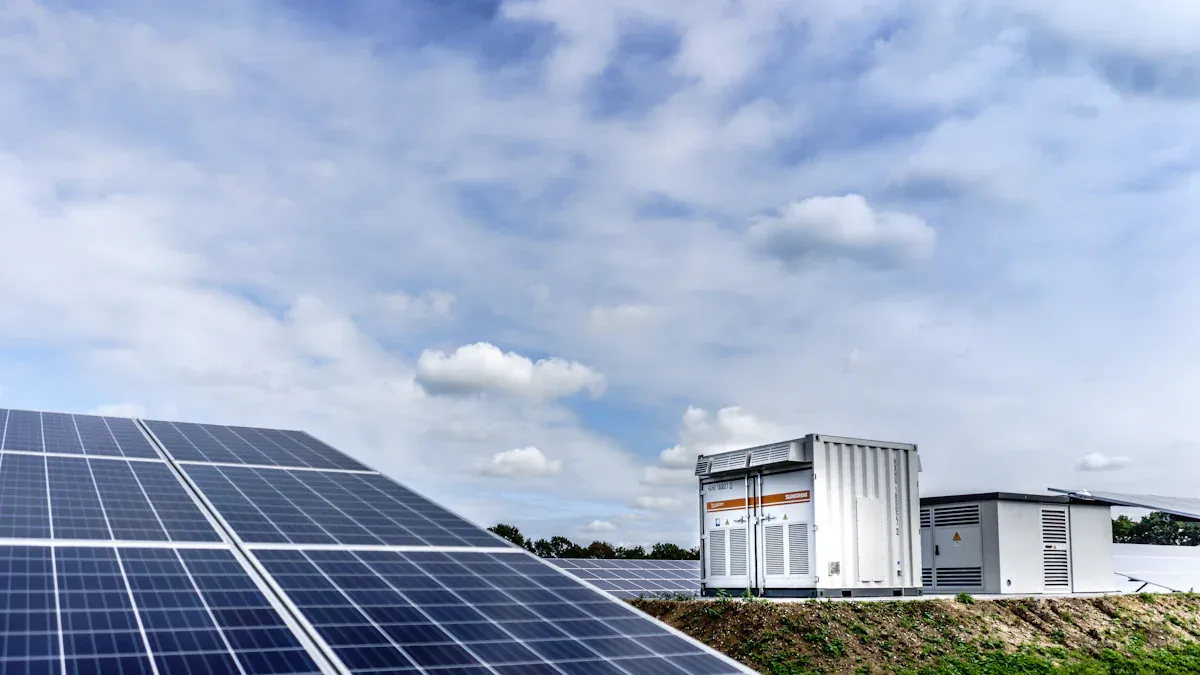
You want the best solar battery for your house. The top 10 models in 2026 give you more power. They help lower your bills. You get more control over your energy. Picking the right battery helps you use your own energy. It also helps you save money. This is very helpful when the power goes out. Look for performance, price, and reliability. Check for smart features and compatibility too. This Solar Batteries Review helps you see which battery fits your needs. It gives you useful advice.
Pick a solar battery that matches your energy needs. Think about how much power it can store, how well it works, and its warranty. This helps you save money for a long time.
Find batteries with smart features. These let you check and control your energy use on your phone. This makes things easier for you.
Check prices closely. Sometimes paying more at first saves you more later. Look at the total value of each battery.
Think about how to install the battery and if it fits your solar system. Make sure it works with what you already have and is simple to set up.
Use incentives and rebates. Government programs can lower the price of solar batteries. This makes them easier to buy.
You want to know which batteries are the best in the solar batteries review for 2026. Let’s check out the top models and see how they compare. First, you get a quick table to look at. Then, you can read more about each battery. This helps you choose the right one for your house.
Here is a table that shows the main things used to rank the top 10 batteries. You can see how each model does in usable capacity, efficiency, warranty, and power output.
Battery Model | Usable Capacity | Depth of Discharge | Warranty | Round-Trip Efficiency | Peak Power | Continuous Power |
|---|---|---|---|---|---|---|
BEINENG Home ESS | 10 kWh+ | 90%+ | 10 years | 97% | 12 kW | 10 kW |
Tesla Powerwall 3 | 13.5 kWh | 100% | 10 years | 97.5% | 11.5 kW | 11.5 kW |
Enphase IQ Battery | 10.5 kWh | 95% | 15 years | 96% | 7.68 kW | 7.68 kW |
Panasonic EverVolt | 9-17 kWh | 90% | 10 years | 96% | 7.6 kW | 7.6 kW |
Canadian Solar EP Cube | 10-20 kWh | 90% | 10 years | 96% | 15.2 kW | 15.2 kW |
FranklinWH aPower 2 | 13.6 kWh | 100% | 15 years | 97% | 10 kW | 10 kW |
SolaX T-BAT H 20 | 20 kWh | 90% | 10 years | 96% | 10 kW | 10 kW |
PointGuard BatteryPack-8.0 | 8 kWh | 90% | 10 years | 95% | 8 kW | 8 kW |
LG Chem RESU10H-Prime | 9.6 kWh | 90% | 10 years | 95% | 7 kW | 7 kW |
Generac PWRcell | 14.4 kWh | 90% | 10 years | 96% | 9 kW | 9 kW |
You can use this table to compare the batteries quickly. It makes the solar batteries review simple to follow.
You want a battery that does more than just store energy. The BEINENG Home ESS gives you solar power, energy storage, and EV charging in one system. You can add more if you need it later. The myBeineng app lets you check and control your energy on your phone. You can use your energy better and save money. It is easy to install and safe to use. BEINENG also has smart accessories like the EV AC Charger and Hybrid Inverter. This battery is good for homes that want smart control and easy upgrades.
Tip: If you want a battery that fits your life and helps with EV charging, BEINENG Home ESS is a great choice in the solar batteries review.
Tesla Powerwall 3 is a top pick in the solar batteries review. You get 13.5 kWh of usable capacity and strong power. The system is tough and uses safe lithium iron phosphate batteries. You can add up to four units if you need more. The Powerwall 3 works with up to 20 kW of solar input. You can check your energy in real time with the Tesla app. Certified installers set it up fast.
Pros:
All-in-one system that needs little care
High power output (11.5 kW)
Can add up to four units
Weather-resistant (IP67)
Smart monitoring
Cons:
The fan can be noisy
Heavy (about 130 kg)
Only single-phase power
Not for Powerwall 2 setups
Best for homes that want backup power and easy use with solar panels.
You want a battery that is reliable and flexible. The Enphase IQ Battery stands out in the solar batteries review because you can add more units as you need. It uses microinverters, so if one part fails, the rest still work. You get a 15-year warranty, which is longer than most. The battery is very efficient and lets you check your energy anytime. Enphase IQ Battery is good for homes that want a system that grows and lasts.
Pros:
Easy to add more units
15-year warranty
High efficiency (up to 96%)
Real-time checks
Cons:
Not as much peak power as some others
Costs more at first
Panasonic EverVolt is a strong choice in the solar batteries review. You get a system that fits many home sizes. The battery works well with solar panels and gives backup power if the lights go out. You can make it bigger, from 9 kWh to 17 kWh. The system lets you keep extra solar energy for later. EverVolt is best for homes that want choices and backup power.
Pros:
Can add more batteries
Good for backup
Works with solar panels
Cons:
Might need a pro to install
Bigger systems cost more
Canadian Solar EP Cube gives you strong power and can grow with your needs. You can pick from 3 to 12 battery modules. The system works with up to 18.55 kW of solar and gives up to 15.2 kW of power. You can set up the inverter in different ways and put it on the wall. The EP Cube has surge protection and other safety parts. This battery is best for homes that use a lot of energy or want to add more solar later.
Pros:
Can grow with your needs
Strong power
Good safety features
Cons:
May be too much for small homes
Needs extra equipment for full setup
FranklinWH aPower 2 is a smart battery in the solar batteries review. You get a 15-year warranty and the battery keeps its power well. The FranklinWH app lets you see how much energy you make, use, and store. You can change how it works for backup, saving, or using energy at the best time. Smart circuits help you pick what gets power first. This battery is good for homes that want smart features and long-lasting power.
Pros:
15-year warranty
Smart energy tools
Real-time checks and control
Cons:
Costs more
Might need a pro to install
SolaX T-BAT H 20 gives you a big usable capacity of 20 kWh. You get high efficiency and strong power. The system lets you add more if you need. It is good for homes that use a lot of energy or want to go off-grid. The battery is reliable and comes with a 10-year warranty.
Pros:
Big capacity
Can add more units
High efficiency
Cons:
Too much for small homes
Costs more at first
PointGuard BatteryPack-8.0 is a small choice in the solar batteries review. You get 8 kWh of usable capacity and good efficiency. The system is easy to put in and works for homes with medium energy needs. It has a 10-year warranty and gives backup power you can count on.
Pros:
Small and easy to put in
Reliable backup
Good efficiency
Cons:
Not as much capacity
Not for big homes
LG Chem RESU10H-Prime gives you 9.6 kWh of usable capacity. The battery is reliable and has a 10-year warranty. It works with many solar inverters and is easy to add to your system. The battery is best for homes that want a trusted brand and medium energy storage.
Pros:
Trusted brand
Works with many inverters
Reliable
Cons:
Not as much capacity as some
Might need a pro to install
Generac PWRcell gives you a big usable capacity of 14.4 kWh. You get high efficiency and strong power. The system lets you add more as you need. Generac PWRcell is best for homes that use a lot of energy and want a top system.
Pros:
Big capacity
Can add more units
High efficiency
Cons:
Costs more
Might need a pro to install
Note: You can find batteries at different prices. Basic systems start at $990. Middle-priced batteries cost between $2,999 and $8,500. Top systems can cost up to $18,000. Pick the battery that matches your budget and energy needs.
Picking the right battery can be hard. You want a battery that fits your needs. It should give you good value for your money. Here are the most important things to think about in 2026.
Check how well the battery works. Performance means how much power you get. It also means how fast it charges or gives power. Efficiency shows how much energy you keep after using it. If you want to save money, pick a battery with high efficiency. Look at round-trip efficiency and depth of discharge. These numbers tell you how much energy you can use each day.
Price is important, but value matters more. You want a battery that saves you money over time. Compare the first cost to the savings you get later. Some batteries cost more but last longer. Think about how much energy you use every day. Make sure the battery fits your budget and your needs.
You need a battery that works for many years. Look for a strong warranty and a trusted brand. A good warranty helps if something breaks. Check the cycle life and safety features. Reliable batteries keep your home powered during blackouts. They help you feel safe.
New batteries have smart features. You can check your energy on your phone. Some use AI to help manage your power. Some systems let you add more batteries later. Modular designs and hybrid inverters make upgrades easy. Smart integration helps you use energy when it costs less.
Tip: Choose a battery that fits your life and lets you control your energy.
Pick a battery that works with your solar panels. It should fit your home now and later. Modular systems let you start small and add more. Hybrid inverters handle solar, battery, and grid power together. Easy installation saves you time and money. Make sure your battery fits your setup and future plans.
Trend | What It Means for You |
|---|---|
Modular Design | Add more batteries as your needs grow |
Hybrid Inverter | Manage solar, battery, and grid easily |
Smart Features | Control and monitor energy remotely |
If you use these tips, you can find the best battery for your home.
You might wonder how much solar batteries cost in 2026. Prices can be high, but knowing them helps you plan. Here’s what most people pay:
Most upfront costs are between $6,000 and $18,000 before discounts.
The average price for each usable kWh is $700 to $1,000 installed.
You may pay more for labor, inverter upgrades, or other setup needs.
If you want a bigger system or more features, you pay more. Smaller batteries cost less money. Always check what comes with the price.
Tip: Ask your installer for a full list so you don’t miss any extra fees.
Solar batteries help you save money over time. You use your own energy instead of buying from the grid. Let’s see how savings compare to using regular energy:
Solar Battery Systems | Traditional Energy Sources |
|---|---|
Payback period: 5-10 years | Costs keep going forever |
Free electricity for 20-30 years | Rates go up over time |
You pay for your battery system once. After that, you get free or cheap energy for many years. Utility bills keep going up, but your savings grow.
Note: How fast you save money depends on your energy use and local prices.
You can pay less with government programs and rebates. These deals make solar batteries cheaper. Here are some choices in 2026:
Program Name | Description | Benefit |
|---|---|---|
Home Renovation Savings Program | Rebates for energy upgrades, including solar installations | Big rebates on upgrades |
Battery Storage | Save money on battery storage systems | Up to $5,000 or $300 per kWh |
Canada Greener Homes Loan | Interest-free loan for energy retrofits | Up to $40,000 for upgrades |
Check which programs you can use. You could save thousands and pay less at the start.
???? Don’t forget to ask about local deals. They can help you save even more!
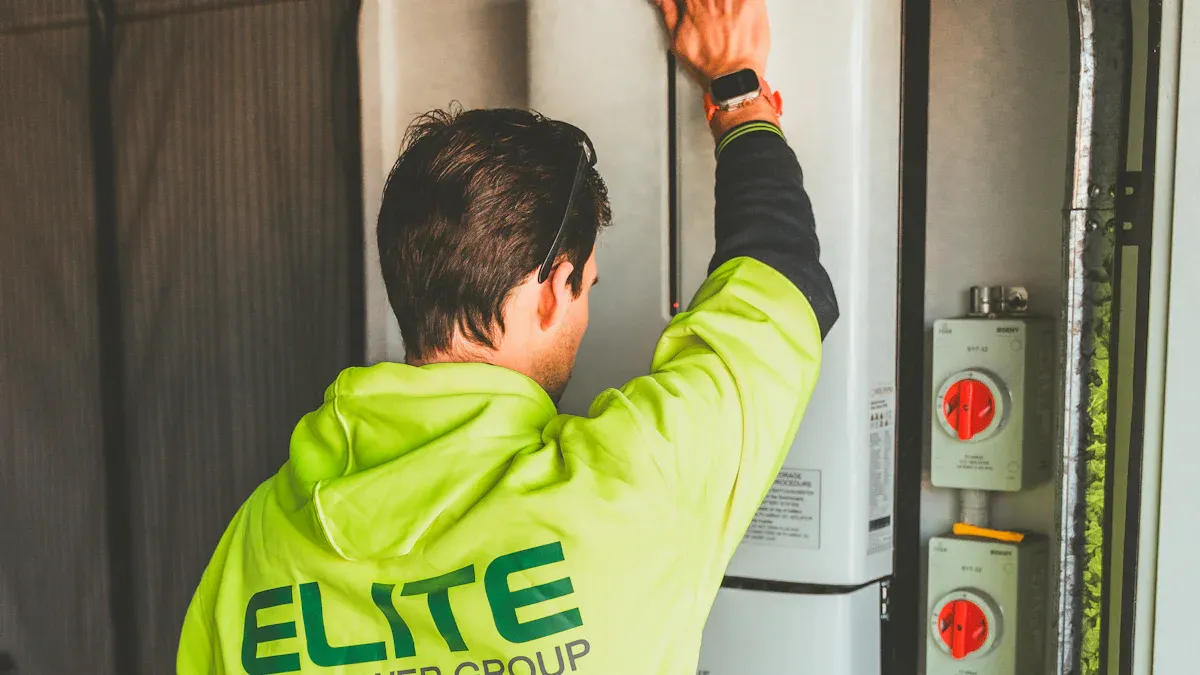
You might think installing a solar battery sounds hard, but it gets easier when you know the steps. Here’s what usually happens:
Pick the Right Spot: You need a strong wall for your battery. Avoid weak walls like stud walls or breeze blocks.
Mount the Battery: Use L brackets to hold the battery in place. Make sure the wall can handle the weight, even if you add more batteries later.
Connect to the Inverter: Place the battery close to your inverter. This helps you lose less electricity. You can connect it as DC-coupled or AC-coupled, depending on your system.
Start Up and Connect: Turn on the battery. Make sure it connects to the internet and your solar app. Now you can control your energy from your phone.
???? Tip: Always ask a certified installer to handle the setup. This keeps your system safe and working right.
Solar batteries do not need much care, but you should know what to expect. Here’s a quick look at different battery types and their needs:
Battery Type | Maintenance Requirements |
|---|---|
Lead-Acid | Check and refill electrolyte levels. Use safety gear when handling. |
Nickel-Cadmium | Check electrolyte levels often. Store in the right place if not in use. |
Lithium-Ion | Needs very little care. Watch for battery aging. The system’s BMS keeps things safe. |
Flow Batteries | Get a yearly checkup. Top off the electrolyte. Works well even in cold weather. |
Most new home batteries use lithium-ion. You just need to check the app sometimes and watch for alerts.
You want your battery to work well and last long. Picking the right installer helps a lot. Look for these things:
Certified and trained for your battery brand
Good reviews from other homeowners
Offers support after installation
Ask your installer about their experience and if they handle permits. A good installer makes the whole process smooth and stress-free.
You want your lights to stay on if the power goes out. Home battery systems connect to your breaker panel. They keep your circuits running and your home safe. You can use backup batteries with solar panels. This means you get power even when it is cloudy. These batteries work every day, not just during outages. Some systems, like Delta Pro Ultra, have both an inverter and battery. You can make them bigger, from 6kWh up to 90kWh. This gives your whole house backup power. Backup batteries are a long-term fix for power outages. You can count on them for your fridge, lights, and devices.
Home battery systems connect to your breaker panel for backup.
They keep your circuits running and your home safe.
Backup batteries work with solar panels for more reliability.
You can make your backup system bigger for more power.
Backup batteries are a long-term fix for outages.
Tip: If you want to feel safe, pick a battery system that gives backup power to your most important devices.
You might want to live off the grid. Solar batteries help you store energy for later. You get energy independence and save money over time. Here are some benefits and challenges:
Benefits | Challenges |
|---|---|
Energy Independence | Careful planning is needed |
Environmental Sustainability | Costs a lot at first |
Long-Term Cost Savings | Maintenance costs |
Reliable in Remote Places | Need backup power sources |
Promotes Energy Efficiency |
You need backup batteries for cloudy days or extra energy needs. Careful planning stops you from running out of power. You can live green and rely on backup systems for your home.
You can use solar batteries with grid-tied systems. This lets you use solar energy during the day and save extra for later. You depend less on the grid and pay lower bills. Net metering helps you pay only for what you use. You can store extra energy as credits and cover your usage at retail prices. Homes with solar batteries often sell faster and for more money. You get backup power and save money at the same time.
Note: Grid-tied systems with backup batteries help you use solar energy and keep your home running during outages.
You can make your home smarter with solar batteries. Smart systems let you check and control your energy from your phone. You get real-time energy management and automation. Here is a table showing some features:
Feature | Description |
|---|---|
Intelligent Inverters | Built-in monitoring and optimization abilities. |
Power Optimizers or Microinverters | Boost each panel’s performance. |
Energy Management Systems (EMS) | Manage energy flow in your home. |
IoT Connectivity | Lets you monitor and control with smartphone apps. |
AI-Powered Analytics | Learns energy patterns and helps you use energy better. |
Works with Home Automation | Connects with Google Home, Amazon Alexa, and Apple HomeKit. |
Real-time Energy Management | Sends solar energy to power your home and big systems. |
Smart EMS Capabilities | Automates energy use based on solar production and home needs. |
You can use backup batteries to power smart devices and automate your home. Smart integration helps you get the most from your backup power and energy system.
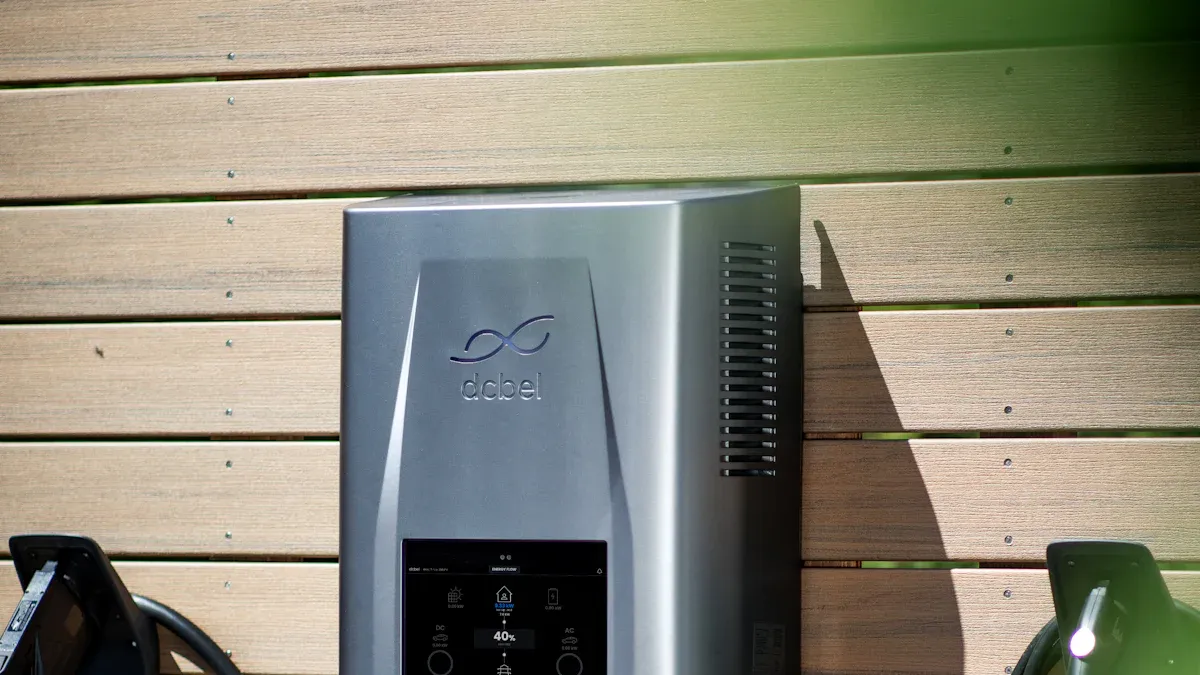
A 10 kWh battery is a good size for most homes. It gives you enough power for important things. You can save money and keep your house on during blackouts. Let’s see why a 10 kWh battery matters for your home.
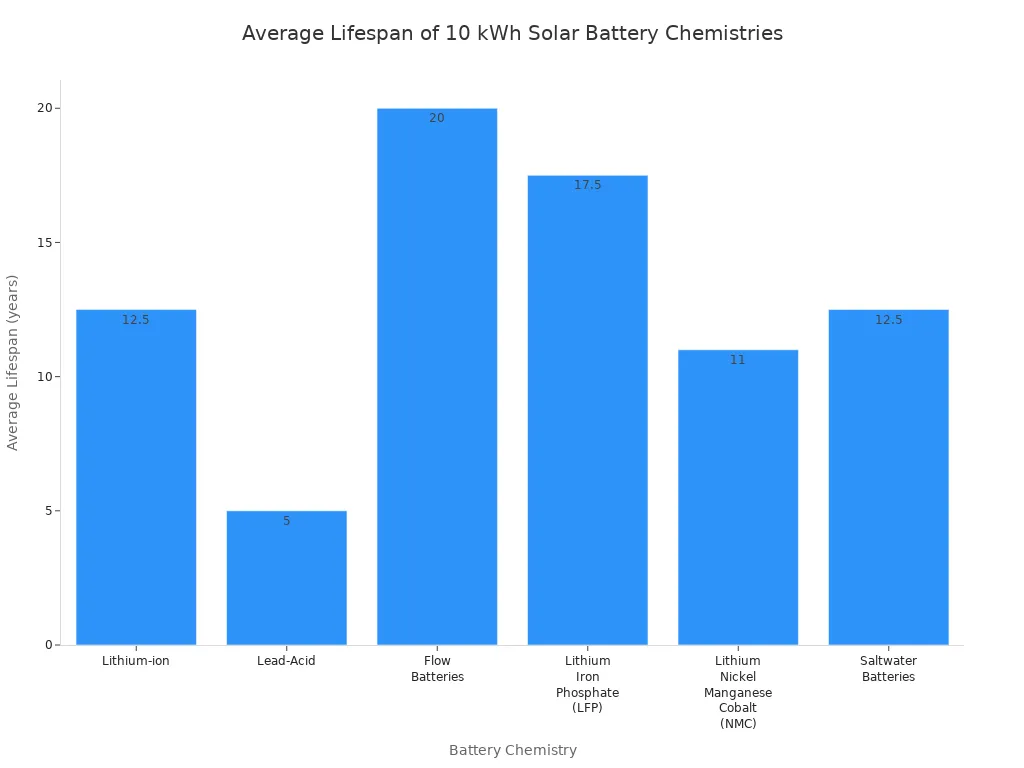
You want your 10 kWh battery to last a long time. The type of battery inside is very important. Most top batteries use lithium-ion or lithium iron phosphate. These types last many years and hold lots of energy. Here’s a table with the most common types:
Battery Chemistry | Average Lifespan | Cycle Life | Depth of Discharge | Notes |
|---|---|---|---|---|
Lithium-ion | 10-15 years | 6,000-10,000 | 80-100% | Dominates residential solar market |
Lead-Acid | 3-7 years | 1,500-3,000 | 50% | Traditional choice, budget-friendly |
Flow Batteries | 20+ years | 10,000+ | 100% | Future of long-duration storage |
Lithium Iron Phosphate (LFP) | 15-20 years | 6,000-10,000 | N/A | Exceptional durability and safety |
Lithium Nickel Manganese Cobalt (NMC) | 10-12 years | 3,000-5,000 | N/A | Balanced performance |
Saltwater Batteries | 10-15 years | N/A | N/A | Eco-friendly option |
You want your 10 kWh battery to be safe at home. The best batteries have features that protect you and your house. These features also help your battery last longer. Here are some important ones:
Safety Feature | Description |
|---|---|
High safety and long cycle life | LFP batteries are known for their safety and durability. |
Thermal stability and deep discharge | These batteries keep working under tough conditions. |
Reduced risk of thermal runaway | LFP batteries have no cobalt, so they are safer. |
UL-9540A certification | Meets strict safety standards for battery systems. |
Built-in safety features in models | Brands like Enphase add extra safety to their batteries. |
Your 10 kWh battery needs to follow the latest rules. This keeps your battery safe and legal. Here are some things to check:
Requirement | Specification |
|---|---|
Inverter capacity | Up to 30 kVA for standard homes |
Inverter compliance | AS/NZS 4777.2:2020, grid code for Australia Region B |
Remote management | Must support remote disconnection or limit export to 1.5 kW |
Configuration responsibility | Set up remote control at installation |
Compliance standard | All inverters must meet AS/NZS 4777.2:2020 |
A 10 kWh battery can help you in many ways. Here’s why this size works for most people:
Store extra solar energy for night or blackouts.
Charge your battery when power is cheap, use it later.
Keep your fridge, lights, and devices on if the grid fails.
Be more independent and pay less for energy.
Use the right amount for backup, daily use, or smart homes.
A 10 kWh battery gives you choices, strong power, and peace of mind. It fits your life and keeps your home working.
You want a solar battery that fits your home and your needs. Start by looking at the main factors. Check the battery capacity. This tells you how much energy you can store and use. Think about lifespan. You want a battery that lasts for years. Look at the type of battery. Some need more care than others. Peak power output shows how much power you get at once. Round-trip efficiency tells you how much energy you keep after charging and using the battery. Make sure the battery works well in your climate. Brand and warranty matter too. Pick a trusted brand with a strong warranty. Cost is important. Compare prices and check the cost per kWh.
Here’s a quick table to help you:
Factor | What It Means for You |
|---|---|
Battery Capacity | How much energy you can store and use |
Lifespan | How long the battery will last |
Type of Battery | Maintenance needs and durability |
Peak Power Output | Maximum power you can get at one time |
Round-trip Efficiency | How much energy you keep after charging and using |
Ambient Working Temperature | Works well in your climate |
Brand and Warranty | Trusted brand and strong warranty |
Cost | Price and cost per kWh |
Tip: Write down your energy needs before you shop. This helps you pick the right battery.
You need answers before you buy. Ask these questions:
How much energy do I use each day?
What is the battery’s usable capacity?
How long is the warranty?
Does the battery work with my solar panels?
What is the round-trip efficiency?
Can I add more batteries later?
Who will install the battery?
What is the total cost, including installation?
Note: Good questions help you avoid surprises and get the best value.
You want to avoid mistakes when buying a solar battery. Here are some common ones:
Picking a battery that is too small or too big for your needs
Ignoring the warranty or brand reputation
Forgetting to check compatibility with your solar system
Not asking about installation costs
Overlooking maintenance needs
Remember: Take your time and compare options. You will make a smarter choice.
You saw how each battery brings unique value to your home energy setup. If you want the best value, start by listing your home energy needs. Compare value, warranty, and features. Ask yourself which battery gives the most value for your budget. Think about future upgrades and value from smart controls. You get more value when you match your home energy goals to the right battery. Ready to find more value? Reach out to a pro or check more reviews for extra value.
You use a home battery backup to keep your lights on when the power goes out. It stores energy from your solar panels or the grid. You can run your fridge, lights, and devices with this battery backup system.
A home battery storage system collects energy from solar panels or the grid. You store this energy for later use. When you need power, the system sends energy to your home. You get reliable energy even during outages.
Yes, you can use solar energy to charge your home battery backup. Solar panels make energy during the day. Your battery storage system saves this energy. You use it at night or when the grid fails.
Most home batteries store between 8 kWh and 20 kWh of energy. You pick the size based on your home’s needs. A bigger battery storage system gives you more energy for backup and daily use.
You save money with a battery backup system. You use stored energy when rates are high. You rely less on the grid. Your home battery backup helps you get more from your solar energy and lowers your bills.
Tip: Check your energy use before choosing a home battery. You get the best value when your battery matches your home’s needs.


Compact, quiet, and powerful, it keeps your essentials running during outages and lets you charge anywhere with solar power or grid power.
Perfect for renters who need flexibility without compromise.
Our estimator is only set up to provide preliminary estimates and installer information to residents of single family homes.