
 Email Us
 Contact us
 Whats App
Single family home

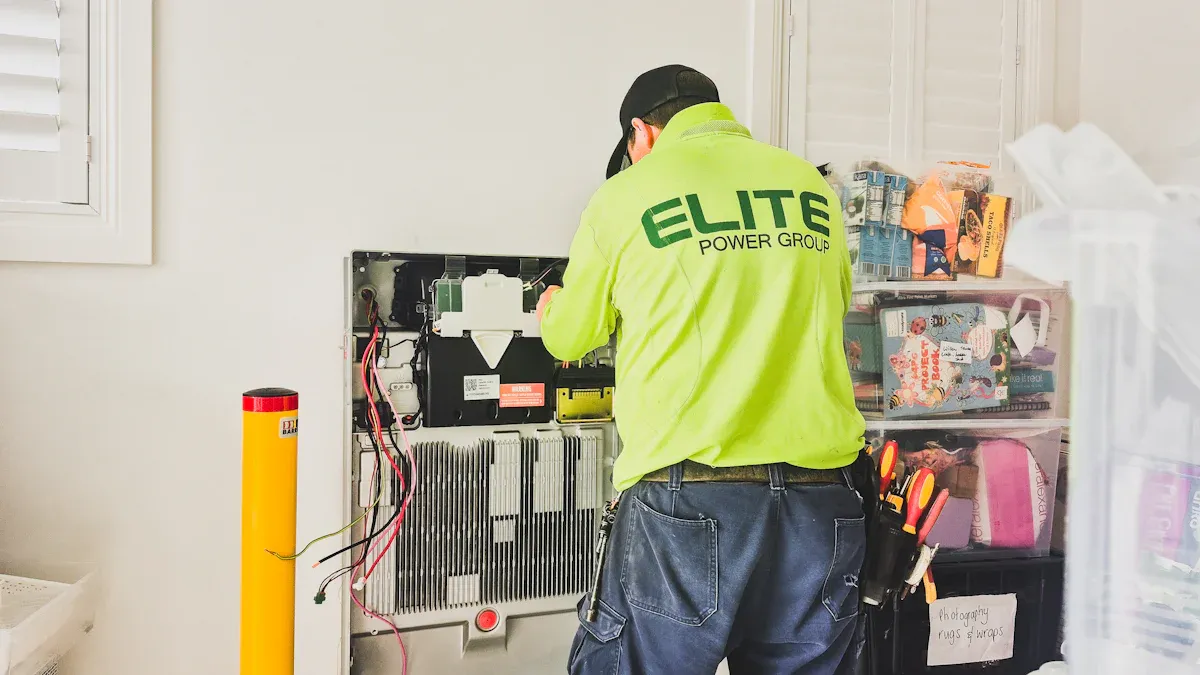
When you want the best residential solar batteries for your home in 2026, you look for good performance, long life, and great value. Tesla Powerwall 3 is special because it has everything in one and is easy to use. There are also new choices like BEINENG Home ESS, which gives smart solar features and more ways to use it. The table below lists the top residential solar batteries for homes. It shows their main features and who they are best for:
Battery Model | Key Features | Ideal For |
|---|---|---|
Tesla Powerwall 3 | All-in-one, proven software, easy to use | Homeowners wanting a trusted, app-driven solar battery |
Enphase IQ Battery | Modular, advanced safety, future-ready | Those planning for expansion and safety |
FranklinWH aPower | Robust, reliable backup, smart management | Homes in outage-prone areas |
COOLI | High power, great value | Whole-house backup on a budget |
With this chart, you can pick the best residential solar batteries for your solar setup.
Pick a solar battery by looking at how well it works, how long it lasts, and how much it costs. This will help you get the right one for your home.
Think about the Tesla Powerwall 3 because it has many features in one. It can hold a lot of energy and has an easy app to use.
Look at different battery types. Lithium-ion batteries last a long time. Lead-acid batteries cost less money. Choose what fits your budget best.
Always ask for a price that shows how much installation costs. This helps you know the full price of your solar battery system.
Think about what energy you will need later, like for electric cars. This makes sure your battery system can get bigger if you need it to.
When you look at solar batteries, check performance and lifespan first. Performance means how much energy a battery can store and give. Here are some things to check:
Capacity shows how much solar energy the battery holds. It is measured in kilowatt-hours (kWh).
Power Output tells how much energy the battery gives at one time.
Cycle Life means how many times you can charge and use the battery before it stops working well.
Roundtrip Efficiency shows how much solar energy you get back after storing it.
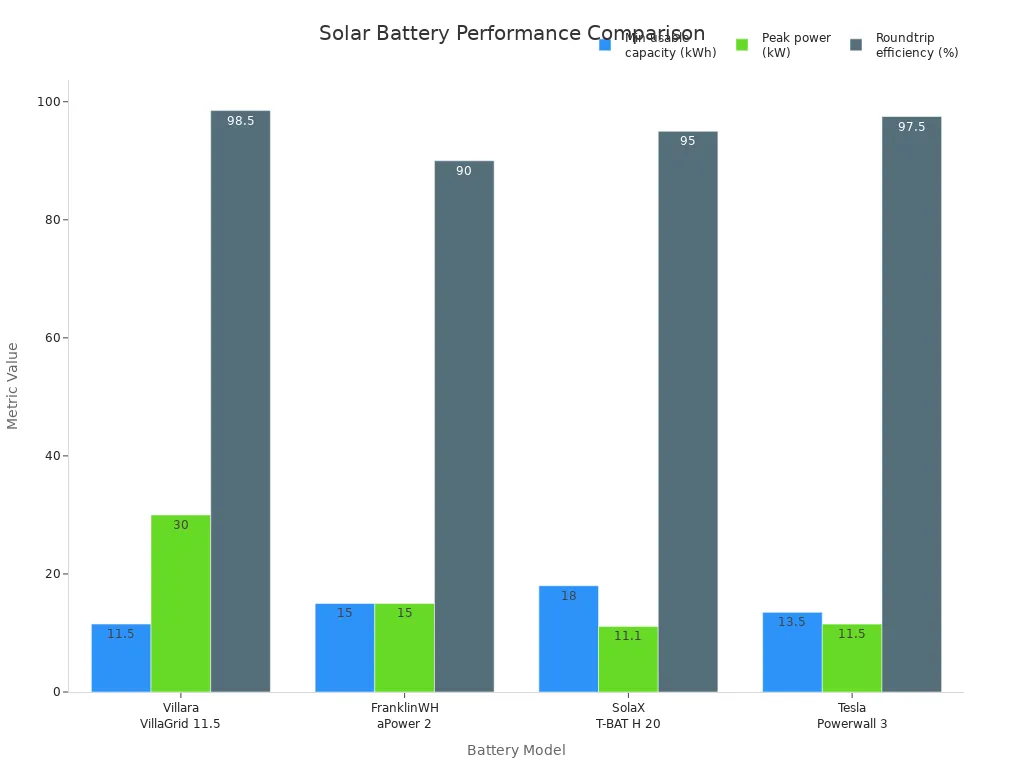
Here is a table that compares some top battery models:
Battery | Min usable capacity (one battery) | Max usable capacity (full system) | Peak power | Continuous power | Roundtrip efficiency |
|---|---|---|---|---|---|
Villara VillaGrid 11.5 | 11.5 kWh | 11.5 kWh | 30 kW | 10 kW | 98.5% |
FranklinWH aPower 2 | 15 kWh | 225 kWh | 15 kW | 10 kW | 90% |
SolaX T-BAT H 20 | 18 kWh | 72 kWh | 11.1 kW | 11.1 kW | 95% |
Tesla Powerwall 3 | 13.5 kWh | 54 kWh | 11.5 kW | 11.5 kW | 97.5% |
Most lithium-ion batteries last between 10 and 15 years. Lead-acid batteries last about 3 to 5 years. Flow batteries can last more than 20 years.
You want a solar battery that gives you good value. In 2026, solar batteries cost between $6,000 and $18,000. The price depends on the battery’s size and features. A full system may cost around $15,000. Installation fees can add $1,000 to $2,000 more. You may pay extra if you need more panels or labor. If you install the battery with your solar panels, you might save money on labor.
Tip: Always ask for a quote that includes installation. This helps you know the real value of your solar battery.
Solar batteries come in different types. Each type has its own features, price, and safety level. Here is a table to help you compare:
Battery Type | Capacity (kWh) | Depth of Discharge (%) | Warranty (Years) | Price Range ($) |
|---|---|---|---|---|
Lithium-ion | 10 | 80 | 10 | 5,000 - 7,000 |
Lead-acid | 8 | 50 | 5 | 3,000 - 4,500 |
Saltwater | 9 | 70 | 10 | 4,000 - 6,000 |
Nickel-based | 7 | 60 | 7 | 5,500 - 8,000 |
Lithium Iron Phosphate | 12 | 90 | 10 | 6,000 - 9,000 |
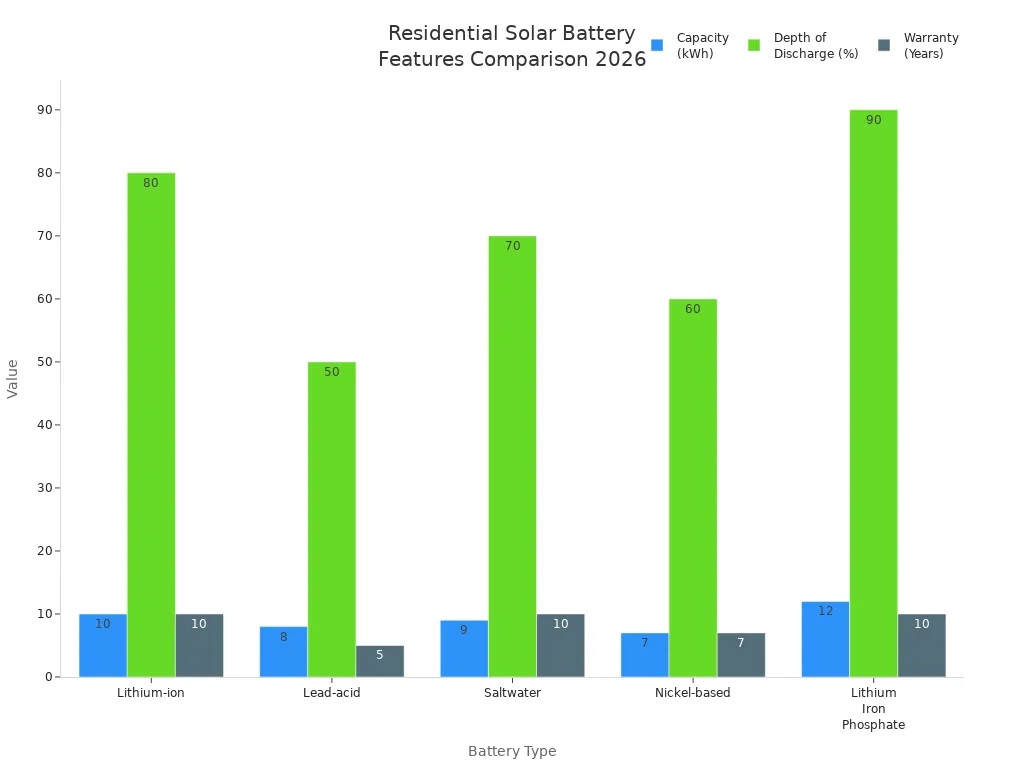
Pick a battery that fits your solar needs, budget, and safety. Lithium-ion and lithium iron phosphate batteries last longer and work better. Lead-acid batteries cost less but do not last as long. Saltwater and nickel-based batteries give you other choices for storing energy.
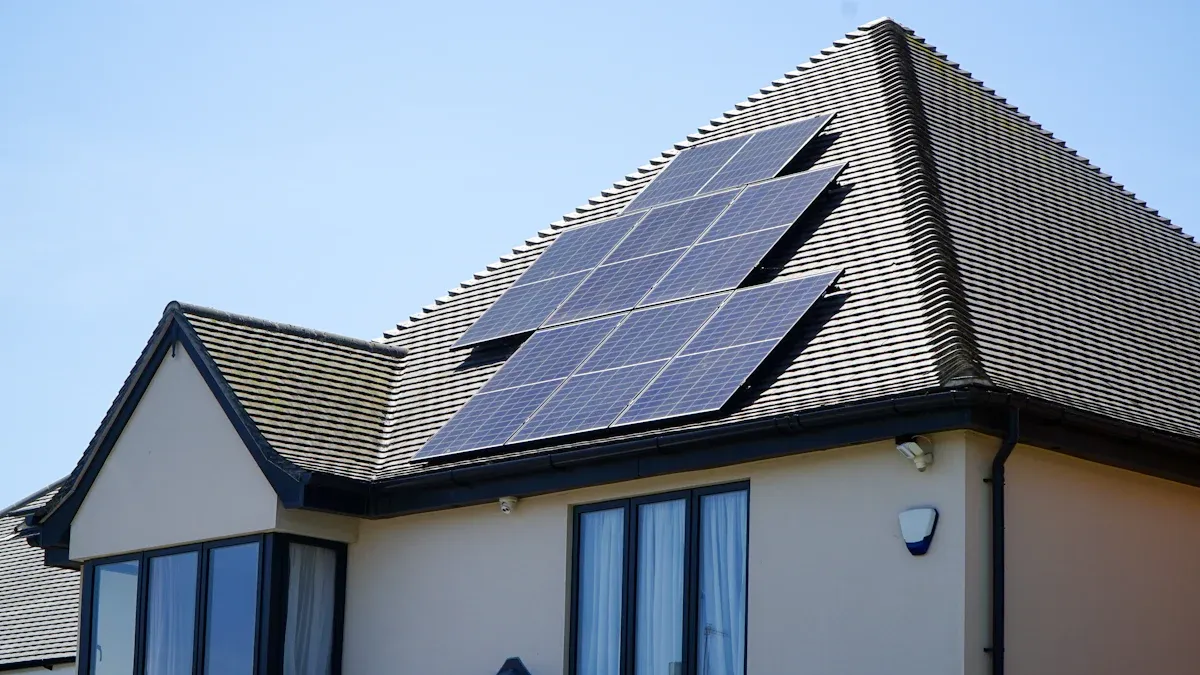
You want a solar battery that works well and lasts long. Tesla Powerwall 3 is the best for most homes. It has high capacity and strong power. You can add more units if you need. Use it for backup or daily storage. The inverter is built in, so setup is easy. You can connect it to your solar panels. You can check everything on your phone.
Here are the main features:
Feature | Powerwall 3 |
|---|---|
Continuous Output | 11.5 kW |
Energy Capacity | 13.5 kWh |
Scalability | Up to 4 units |
Load Start Capacity | 185 LRA |
Max Solar System Size | 20 kW DC |
MPPTs | 6 |
Built-in Inverter | Yes |
Warranty | 10 years |
This battery is good for backup and daily use. Many people pick Powerwall 3 for its price and performance.
If you want a smart solar battery, try BEINENG Home ESS. It puts everything you need in one box. You get solar power, battery storage, and EV charging. It uses smart energy management to help you save money.
High integration means fewer parts and faster setup.
AI helps you use your solar energy better.
It switches fast to keep lights on in outages.
Safety and maintenance features help you worry less.
You help the planet by using clean energy.
You can use the myBeineng app to control it. The app lets you check your battery and schedule EV charging. The system changes to fit your needs.
You may want to start small and grow later. Enphase IQ Battery lets you add more batteries as you need. This is good for families who want to expand.
Battery Model | Maximum Units per System | Total Capacity |
|---|---|---|
IQ Battery 5P | Up to 20 units | 100 kWh |
IQ Battery 3/10 | Up to 42 units | Mixed configurations allowed |
You can mix different battery sizes. This helps you build the right setup. Enphase IQ Battery has good safety and works with Enphase inverters.
You need a battery that works in any weather. FranklinWH aPower 2 uses LFP chemistry for safety. It works well in hot or cold places. The warranty is long and it lasts many years.
Warranty Duration | Guaranteed Throughput |
|---|---|
15 years | 60 MWh |
LFP chemistry means it is safer and lasts longer.
It has a high reliability certification.
You can use it in many climates.
FranklinWH aPower 2 is great for homes that need backup and daily use.
You want a battery that lasts many years. Villara VillaGrid 11.5 has one of the best warranties. You get 20 years and 10,000 cycles. You can use it every day and it still works well.
Feature | Villara VillaGrid 11.5 | Other Leading Batteries |
|---|---|---|
Warranty Period | 20 years | Varies |
Warrantied Cycles | 10,000 cycles | Varies |
Guaranteed End-of-Warranty Capacity | 70% | Varies |
This battery is good for long-term storage. It is a smart pick if you want peace of mind.
If you use a lot of energy, SolaX T-BAT H 20 is a good choice. It has big capacity and strong power. You can use it for whole-home backup or store extra energy.
High capacity lets you run more things in outages.
You can connect more batteries for up to 72 kWh.
It works well for big homes or high energy needs.
SolaX T-BAT H 20 is great for families who want to get the most from solar.
You may want a battery that saves money. PointGuard BatteryPack-8.0 gives good performance for less. It is good for small homes or people new to solar.
Lower cost makes it easy to start with solar.
Simple design means easy setup and care.
You still get backup and daily use.
This battery lets you enjoy solar without spending a lot.
If you have little space, LG RESU Prime is a smart choice. It is small and has high energy density. You can fit it in tight spots. It is about 30% smaller than others.
The battery is only 504 x 295 mm.
You can put the PRIME 10H on the wall.
The design makes it easy to move and install.
LG RESU Prime is great for apartments or homes with little room.
You want a battery that lasts many years. Panasonic EverVolt uses LFP chemistry for long life and safety. It gives over 6,000 cycles and 90% usable capacity.
Feature | Details |
|---|---|
Battery Chemistry | LFP (Lithium Iron Phosphate) |
Lifespan | 6,000+ charge cycles |
Safety | Lower risk of thermal runaway and fire |
Depth of Discharge | 90% usable capacity |
Environmental Impact | No cobalt or nickel, easier recycling |
You can use it for daily storage and backup. Panasonic EverVolt is a top pick if you want a battery that lasts decades.
You need a battery for power during outages. Generac PWRcell is great for backup. People in Texas used it for 36 hours in a storm. In California, it gave full energy during shutoffs. It can start a generator for longer backup.
"The generator integration is a game-changer for extended outages," said one homeowner.
Generac PWRcell is one of the best for homes that need strong backup.
You have many choices for solar batteries. Each one has special features for different needs. You can find the best battery by looking at capacity, price, and how you use solar.
You want to know the price before you buy a solar battery. In 2026, most home solar batteries cost $6,000 to $18,000. The price changes with size, features, and brand. You also pay for someone to install it. Most installers charge $1,000 to $2,000 for this job. If you add a battery when you get solar panels, you can save on labor. Some all-in-one systems cost more at first but give more value later.
Tip: Always ask for a quote that covers both the battery and installation.
You want to know how long it takes to get your money back. In 2026, most people wait 7 to 12 years for payback. For example, a 10 kWh battery costs $10,000 after incentives. You might save about $1,200 each year. This means you get your money back in about 8 years.
Most solar batteries pay for themselves in 7 to 12 years.
A 10 kWh battery can save you $1,200 per year.
You save money by using stored energy when rates are high.
You can lower your bill by using your battery when power costs more. Load shifting lets you use cheap solar energy instead of grid power. In places with big price changes, you can save hundreds each year.
Many things change how much you earn back from your battery. Here are the main things to think about:
Upfront costs for the battery and installation
Tax incentives that lower your total price
Future savings from using stored solar energy
Battery capacity, which shows how much energy you can store
Battery chemistry, which affects how long your battery lasts
Installation difficulty, which can change the cost
Where you live, since local prices and incentives matter
How well your battery works with your solar system
You get the best return when you pick the right battery and use your solar energy wisely.
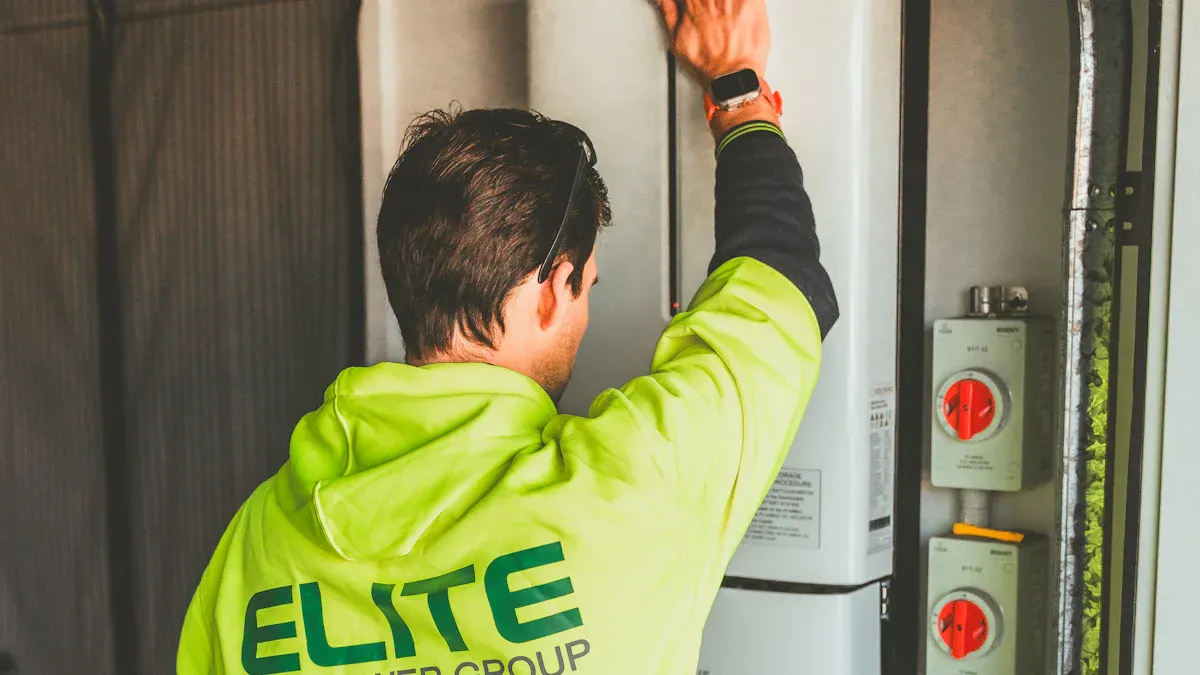
You must check if your solar battery fits your home system. The inverter links your solar panels, battery, and house. In 2026, there are many inverter types to pick from. Microinverters are good for homes with shade or odd roof angles. They help each solar panel work its best. String inverters are used in bigger systems and save money. Hybrid inverters are liked because they handle both solar and battery jobs. These inverters help you use your energy storage better. Always make sure your battery works with your inverter before buying.
Your solar battery should be put in safely and the right way. Installers often put the battery in a cool, dry place with air flow. Garages and basements are smart spots. The installer must follow the National Electrical Code and local laws. This means they will ground and wire the battery safely. You need permits from your city or county. These steps keep your solar system safe and legal.
Tip: Ask your installer to show you the permits and tell you about the rules in your area.
You want your solar battery to last a long time. Taking care of it helps it work well. Here is a table that shows what to do and how often:
Frequency | Tasks | Performed By |
|---|---|---|
Monthly | Look at the battery, check for alerts, clean outside | User |
Quarterly | Check if connections are tight, look at performance logs | User / Installer |
Annually | Full system check, update firmware, torque checks | Qualified Technician |
You can do simple checks every month. Every few months, check the connections and see how your battery is working. Once a year, a technician should check the whole system. This keeps your energy storage working well and helps stop problems.
You want your solar battery to be safe at home. Safety rules help you trust your battery. In 2026, the best batteries follow strict rules. These rules keep you safe from fire and electric shock. They also protect you from other dangers. Here is a table with the main safety standards:
Safety Standard | Description |
|---|---|
UL 9540 | Energy storage systems standard |
UL 1973 | Battery safety for stationary applications |
IEEE 1547 | Grid interconnection requirements |
NFPA 855 | Fire safety standards for energy storage |
Look for these certifications when you pick a solar battery. UL certifications test the whole battery system. They check for fire safety too. These rules make sure your battery is safe for your house.
You want your solar battery to work every day. Most batteries work well after the first year. About 1% of systems have problems in the first two years. After that, fewer than 1% fail each year. You can expect your battery to work more than 99% of the time. Most batteries keep 85-90% of their power after five years. Software updates can make your battery work 15% better. If you live somewhere hot, your battery may wear out faster. The failure rate drops a lot after the first 300 days.
Note: Batteries last longer and work better if you follow your installer's care tips.
You need to know how long your solar battery will last. Warranties help if something goes wrong. Most top brands promise at least 70% power after 10 years. Some give more years or more cycles. Here is a table to help you compare:
Brand/Model | Usable capacity | Warranty terms |
|---|---|---|
Franklin Home Power | 13.6 kWh | 70% after 12 years or 43 MWh throughput |
Panasonic Evervolt | 9-18 kWh | 70% after 12 years |
Enphase IQ 5P | 5 kWh | 60% after 15 years or 6,000 cycles |
SunPower SunVault | 13-19.5 kWh | 70% after 10 years (unlimited cycles) |
LG RESU Prime | 9.6 kWh | 70% after 10 years or 32 MWh throughput |
Generac PWRcell | 9 kWh | 70% after 10 years or 7.65 MWh per module |
Tesla Powerwall 2 | 13.5 kWh | 70% after 10 years (unlimited cycles) |
Check both the years and cycles in the warranty. This helps you choose the best solar battery for your home.
You want to find the best solar battery for your house. First, think about what you want most. Do you need backup power, want to save money, or both? Write down how much energy you use every day and when you use it most. Think about things you might add later, like an electric car or new appliances. Check if your solar system can work with a battery. Make sure you have enough space for the battery and that your home follows safety rules. Look at each battery’s features, price, and warranty. You can use a table to help you compare:
Step | What to Do |
|---|---|
Set Your Goals | Backup, savings, or both |
Check Energy Use | Daily and peak usage |
Plan for the Future | EVs, new appliances, or home changes |
Review Compatibility | Match battery to your solar system |
Compare Options | Look at features, price, and warranty |
It is smart to pick a solar battery from a trusted brand. Read what other people say in reviews. Ask if the battery has safety certifications and how long the company has been around. Good brands give clear warranties and easy apps. When you choose someone to install your battery, check their license and how much experience they have. Ask if they have training for your battery. A good installer will tell you how the setup works and answer your questions. You can also ask for names of people they worked for before. This helps you feel sure about your choice.
Tip: Pick a brand and installer that have done a good job for others and give good support.
Many people make mistakes when they pick a solar battery. Here are some common mistakes:
Only thinking about how much energy you use each day and not looking at the times you use the most.
Not checking your real energy use, so you might get the wrong battery size.
Forgetting about system losses, so you get less power than you thought.
Not thinking about depth of discharge and battery chemistry, which changes how much energy you can use.
Not planning for things you might add later, so your battery could be too small.
Picking the wrong size system, which can waste money or cause problems.
Not making sure your battery works with your solar inverter.
Choosing an installer who does not have enough experience.
You can stay away from these mistakes by planning ahead and asking good questions. This helps you get the most out of your solar battery.
You have many strong options for solar batteries. Tesla Powerwall 3 works best for most homes. BEINENG Home ESS gives you an all-in-one solution. PointGuard BatteryPack-8.0 helps you save money. Match the battery features to your needs and home setup. Use the tables and tips in this guide to compare your choices. For your next step, talk with a certified installer or request quotes to find the right fit.
Most home solar batteries work for 10 to 15 years. You can make them last longer if you follow care tips from the maker. Some types, like LFP batteries, can last even more years.
Yes, you can use solar batteries when the power goes out. The battery gives backup power to your house. Your system must have backup features for this to work. Not every battery has this option.
You should look at your battery every month for warnings and keep it clean.
A technician needs to check the system once each year.
Taking care of your battery helps it last longer.
Battery Model | EV Charging Support |
|---|---|
BEINENG Home ESS | ✅ Yes |
Tesla Powerwall 3 | ✅ Yes |
LG RESU Prime | ❌ No |
Pick a battery that has EV charging support if you want to charge your car.


Compact, quiet, and powerful, it keeps your essentials running during outages and lets you charge anywhere with solar power or grid power.
Perfect for renters who need flexibility without compromise.
Our estimator is only set up to provide preliminary estimates and installer information to residents of single family homes.