
 Email Us
 Contact us
 Whats App
Single family home

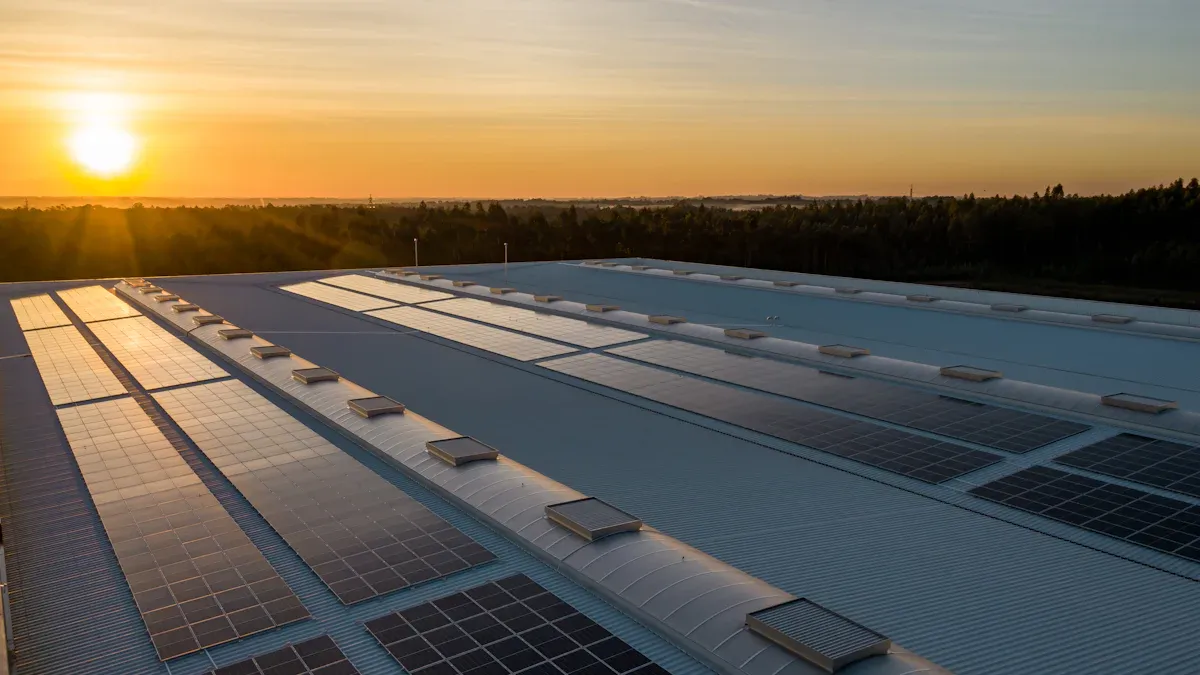
You want your solar power system to ensure long-term performance. Top choices like the BEINENG Home ESS, Tesla Powerwall 3, Enphase IQ 5P, Bluetti EP900, and Villara VillaGrid are robust and operate efficiently. Selecting a quality solar battery allows you to store energy effectively, helping you reduce reliance on the grid. It also provides safety for your home during power outages. Over the years, you can save significantly on energy costs, alleviating concerns about rising utility bills. Additionally, your home's value may increase. Consider your specific needs and local weather conditions to help you choose the best battery for your home.
Pick a strong solar battery so it lasts a long time and you do not have to buy new ones often. - Find a battery with high round-trip efficiency to save more energy and waste less. - Think about batteries that you can add more parts to if you need more power later. - Make sure the warranty is good so your money is safe for many years. - Choose a battery that works well in your weather to help it last longer and work better.
When you pick a solar battery, you want it to last. Durability and efficiency are very important for this. If your battery is strong, it can handle daily use and bad weather. This means you get more for your money. A tough battery needs fewer repairs and does not need to be replaced often.
Here are some reasons why durability and efficiency are important for your solar power system:
Battery storage lets you use more of your solar energy and helps balance your home's energy use.
It helps the power grid stay steady, so electricity is stable for everyone.
Scientists are always trying to make batteries last longer and work better.
You can look at the table below to see what affects how long your battery lasts:
Factor | Impact on Lifespan |
|---|---|
Depth of Discharge (DoD) | Using more of the battery each time wears it out faster. |
Temperature | Very hot or cold weather makes batteries work less well and not last as long. |
Charging/Discharging Rates | Charging or using the battery too fast can make it wear out sooner. |
If you choose a battery that is strong and works well, your solar system will last longer. This means your system will work well for many years.
Good batteries help you save money on your energy bills. When your battery stores extra solar energy, you can use it later. This helps you use less electricity from the grid, especially when prices are high. Over time, this saves your family money.
Many people get solar batteries so they have power during outages. With a battery, you can keep your lights and appliances on if the grid goes down. This also means you use less grid electricity, which saves you more money.
Studies show that battery storage lets you use more solar energy in the late afternoon and evening. This helps you avoid paying high prices for electricity and makes your home use energy better. By picking a battery that is strong and efficient, you help your solar system last longer and become more independent.
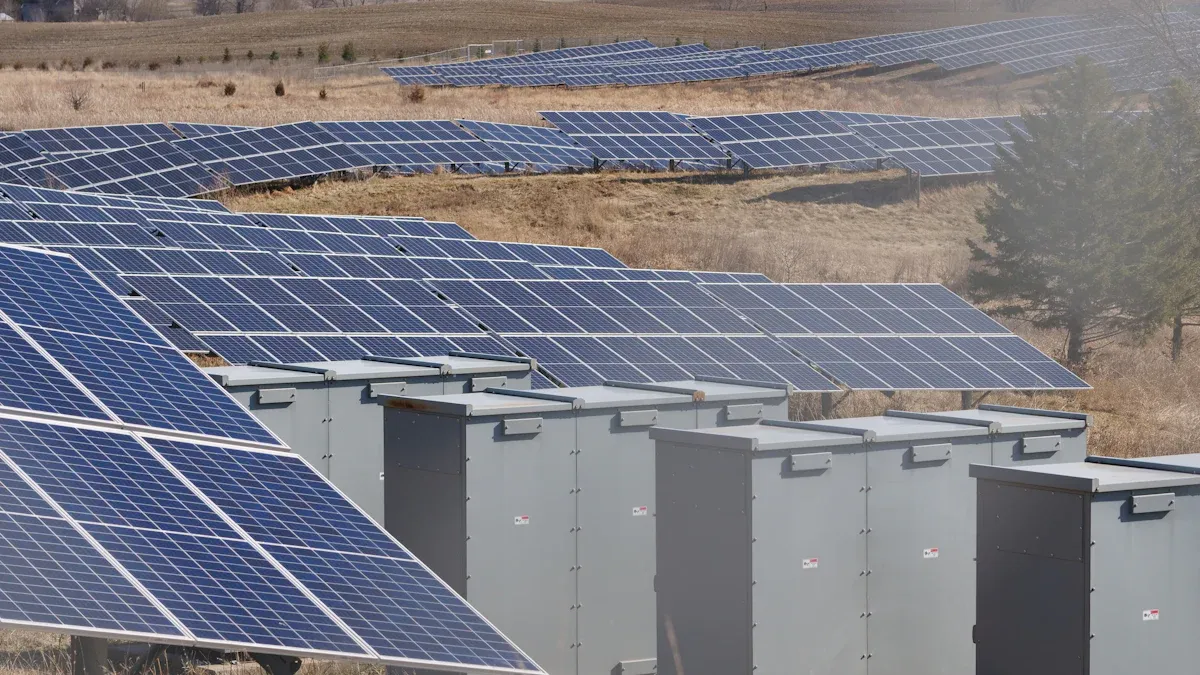
If you want your solar power system to last, you need a good battery. Experts and homeowners suggest these batteries for 2026:
Tesla Powerwall 3
Enphase IQ 5P
Bluetti EP900
Villara VillaGrid
LG Chem RESU
Sonnen Eco
BYD Battery-Box
Each battery has special features. These features help you get more from your solar setup. Let’s see what makes each battery good for long-term use.
BEINENG Home ESS gives you a full energy solution. It combines solar power, energy storage, and electric car charging. The system is flexible and can grow with your needs. You can add more storage if you use more energy. The myBeineng app lets you control and check your energy easily. You can use the system for solar plus storage, just storage, or backup power. It is easy to install and helps you save money fast. BEINENG Home ESS helps you use less grid power and supports a cleaner future.
Tip: BEINENG Home ESS has a 5-in-One solution. It is simple and strong for any home.
Tesla Powerwall 3 is a top pick for people who want steady energy storage. The battery lasts 10 to 15 years. It uses advanced lithium iron phosphate chemistry. This helps the battery keep about 80% of its power after 4,000 cycles. The round-trip efficiency is about 89–90%. You use most of the energy you store. Many people like Tesla batteries because they work well without net metering.
Feature | Value |
|---|---|
Cycle Life | 4,000–6,000 |
Round-Trip Efficiency | ~89–90% |
Lifespan | 10–15 years |
Enphase IQ 5P is good for smart homes and high efficiency. The battery connects with the Enphase App. You can check and control your energy from anywhere. The IQ 5P has a round-trip efficiency of 90%. It gives you steady performance and easy control. This helps you save energy and money.
Feature | Details |
|---|---|
Round-trip Efficiency | 90% |
Smart Home Integration | Works with Enphase App |
Bluetti EP900 is an all-in-one system. It has solar panels, an inverter, and a battery. You can start small and add more as you need. The EP900 has high capacity and can grow from 9.9kWh to 39.6kWh. You can check your energy use with a smart app. The system reacts fast to power outages. It keeps your home running when the grid fails. Bluetti EP900 works in tough weather and has a 10-year warranty.
All-in-one system for easy energy use
Modular design for more capacity
Smart app for checking energy
Fast response to grid problems
Needs little maintenance
High capacity and can grow (9.9kWh to 39.6kWh)
10-year warranty
Works in tough conditions
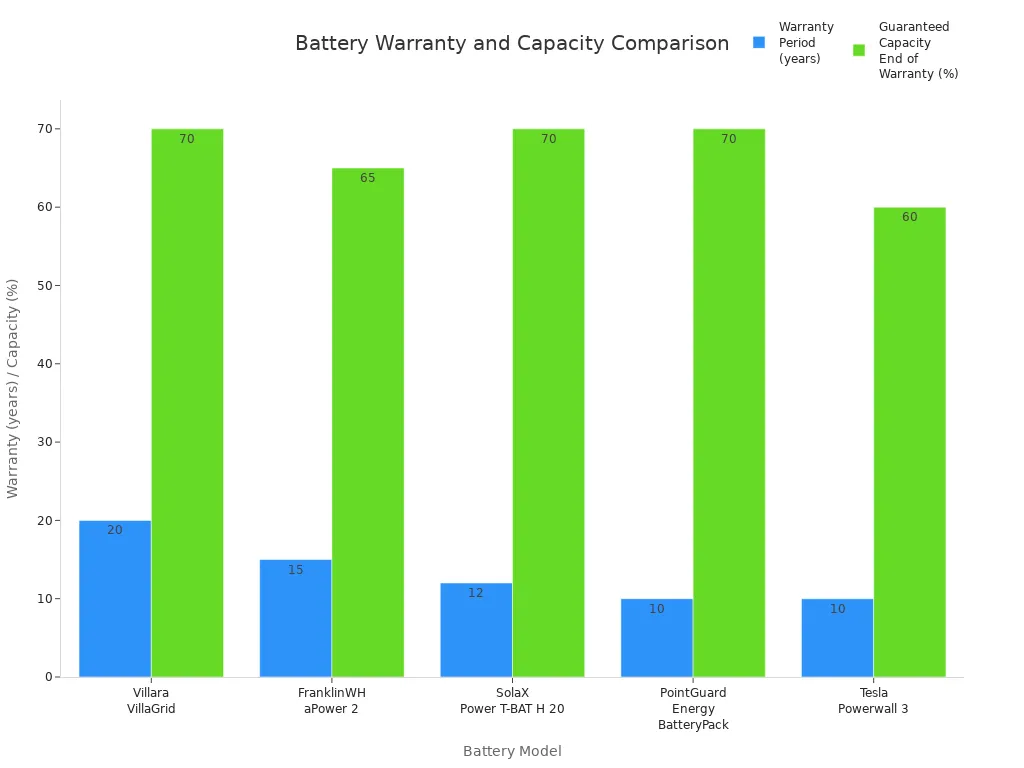
Villara VillaGrid is known for its long warranty and many cycles. You get a 20-year warranty and up to 10,000 cycles. The battery keeps 70% of its power at the end of the warranty. This makes VillaGrid a strong choice for long-term use.
Battery Model | Warranty Period | Warrantied Cycles | Guaranteed Capacity End of Warranty |
|---|---|---|---|
Villara VillaGrid | 20 years | 10,000 cycles | 70% |
FranklinWH aPower 2 | 15 years | N/A | 65% |
SolaX Power T-BAT H 20 | 12 years | N/A | 70% |
PointGuard Energy BatteryPack | 10 years | N/A | 70% |
Tesla Powerwall 3 | 10 years | N/A | 60% |
LG Chem RESU is known for high efficiency and deep discharge. You can use up to 95% of the battery’s power. The roundtrip efficiency is 94.5%. You lose very little energy when charging and using it. This battery works well in real homes and helps you get the most from your solar system.
METRIC | PERCENTAGE |
|---|---|
Depth of discharge | 95 |
Roundtrip efficiency | 94.5 |
Sonnen Eco uses lithium iron phosphate chemistry. This is safe and lasts a long time. The battery can last up to 10,000 cycles. You can use all the stored energy with 100% depth of discharge. Sonnen Eco does not use rare-earth or heavy metals. This is better for the environment. The roundtrip efficiency is 81.6%. You keep most of the energy you store.
Feature | Description |
|---|---|
Battery Type | Lithium Iron Phosphate (LFP) |
Power Rating | High power rating |
Safety | Stable chemistry, safer than other types |
Environmental Impact | No rare-earth or heavy metals |
Lifespan | Up to 10,000 cycles |
Depth of Discharge | 100% |
Roundtrip Efficiency | 81.6% |
BYD Battery-Box gives you flexibility and can grow with your needs. You can start small and add more modules later. The system supports stacking and parallel connections. You can expand from 4 kWh to over 900 kWh. BYD Battery-Box is a good choice for long-term use and future growth.
Feature | Description |
|---|---|
Modular Design | Lets you invest a little at first |
Capacity Scaling | 4 kWh to over 900 kWh |
Future Expansion | Allows stacking and parallel connection |
Flexibility | Add modules or stacks as needed |
Note: Picking a battery with modularity helps you change your system as your family or business grows.
You have many choices for solar batteries. They offer durability, efficiency, and flexibility. By picking the right battery, you get steady energy, save money, and help the planet.
Picking a solar battery means you want it to last. Most good batteries work for 15 to 17 years. Companies usually give a 10-year warranty. Many batteries can be charged and used 6,000 to 10,000 times. This means you can use them for many years before they wear out. Most companies say your battery will keep 70% of its starting power by the end of the warranty.
Aspect | Details |
|---|---|
Average Lifespan | 15 to 17 years |
Typical Warranty (Years) | 10 years |
Typical Cycles | 6,000 - 10,000 cycles |
Retained Capacity Guarantee | 70% capacity |
Temperature can change how long your battery lasts. If it gets too hot, it will not last as long. Every time the temperature goes up 10°C above 25°C, battery life drops by 20%. Tests show lithium batteries last longer than lead-acid ones. Batteries with cooling keep 95% of their power after three years.
Tip: Put your battery in a cool, dry spot to help it last longer.
Round-trip efficiency means how much energy you get back after storing it. Higher numbers mean you lose less energy. Most new batteries have high efficiency, so you save more energy.
Battery Model | Round-trip Efficiency |
|---|---|
95%+ | |
Tesla Powerwall 3 | 97.5% |
Enphase IQ 5P | 96% |
These batteries waste very little energy. This helps you get the most from your solar system and supports Long-Term Performance.
Usable capacity is how much stored energy you can use. Some batteries let you use almost all their power. Others keep some energy in reserve to protect the battery. When you compare batteries, look for ones with high usable capacity. This means you can run your home longer during outages or at night.
Most top batteries let you use 90% or more of their power.
Batteries with deep discharge features let you use more stored energy.
High usable capacity helps you save money and use more solar power.
Note: Always check usable capacity, not just total size, when picking a battery.
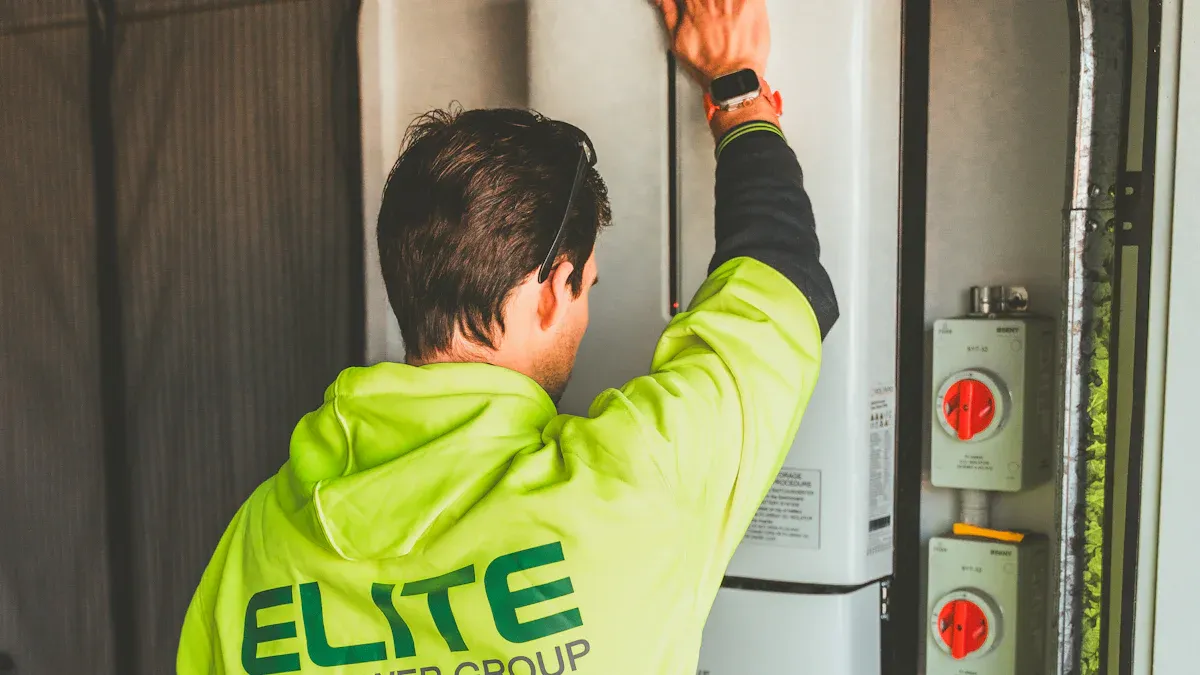
You want your solar battery to keep your home safe. Top brands make batteries with strong safety features. These features help stop overheating and fire risks. Most good batteries meet strict safety rules. Here are some important certifications you should know:
Certification/Standard | Description |
|---|---|
UL 9540 | Focuses on fire safety and electrical dangers in energy storage systems. |
UL 9540A | Tests if a battery can stop fire from spreading when it gets too hot. |
IEC 62619 | Sets safety rules for lithium-ion battery modules. |
IEC 62933 | Covers safety and testing for battery energy storage systems. |
NFPA 855 | Gives rules for safe battery setup and fire control. |
Manufacturers use special tests and designs to keep you safe. Thermal runaway testing helps stop fires before they spread. Installers follow NFPA 855 rules to lower fire risks. Good wiring and protection help stop electrical problems.
Tip: Always look for these certifications when you pick a solar battery. They help keep your home and family safe.
A good warranty helps you feel calm. It means the company trusts its product. Most top batteries have long warranties. These warranties cover how long the battery will last and how much power it will hold after many years. Here is a quick look at some popular models:
Battery Model | Warranty Duration | Capacity Coverage after 10 years |
|---|---|---|
Tesla Powerwall 3 | 10 years | N/A |
LG Chem RESU | N/A | 60% for older models, 70% for RESU Prime |
You should read the warranty details before you buy. Some warranties promise your battery will keep a certain amount of its starting power after 10 years. This helps you plan for the future.
Your local weather changes how well your battery works. High heat can make batteries last less time and work less well. Cold weather can also lower how much energy you get from your battery. Top brands use special technology to help batteries work in tough weather.
Climate Condition | Impact on Performance | Solution |
|---|---|---|
High Heat | Makes batteries last less time and work less well | Heat-resistant tech and thermal management |
Freezing Temperatures | Lowers capacity and may hurt the battery | Insulation, heating parts, and anti-freeze tech |
If you live in a cold place, you may get less power from your battery in winter. Some systems use extra insulation or heating to help. In hot places, batteries with cooling systems last longer. Always ask your installer about the best battery for your weather.
Note: Picking a battery that fits your local weather helps you get the most from your solar system all year.
If you want a solar battery, you need to compare them. A table makes it easy to see the main features. You can check which battery is best for your house. Look at each part to find what fits your needs.
Battery Model | Storage Capability (kWh) | Lifespan (Cycles) | Efficiency (%) | Warranty (Years) | Compatibility | Price Range ($) |
|---|---|---|---|---|---|---|
10–40 (scalable) | 6,000–10,000 | 95+ | 10 | High (all-in-one) | $$$ | |
Tesla Powerwall 3 | 13.5 | 4,000–6,000 | 97.5 | 10 | High | $$$ |
Enphase IQ 5P | 5 | 6,000+ | 96 | 15 | High (Enphase system) | $$ |
Bluetti EP900 | 9.9–39.6 (modular) | 6,000+ | 93 | 10 | High | $$ |
Villara VillaGrid | 20 | 10,000 | 90 | 20 | High | $$$$ |
LG Chem RESU | 9.8 | 6,000 | 94.5 | 10 | High | $$ |
Sonnen Eco | 10 | 10,000 | 81.6 | 10 | High | $$$$ |
BYD Battery-Box | 4–900 (modular) | 6,000–10,000 | 95 | 10 | High | $$–$$$$ |
Check storage capability to know how much energy you get in an outage. Lifespan means how many times you can use and charge the battery. Efficiency tells you how much power you really use. Warranty helps you feel safe if something breaks. Compatibility shows if the battery works with your solar system and smart home.
You should learn about warranty details too. Most batteries have coverage for 10 to 15 years. Many brands promise at least 70% of the battery’s starting power at the end. Some warranties stop early if you use too many cycles. Always read the warranty so you know what is included.
Here is a quick look at common warranty terms:
Warranty Aspect | Typical Terms / Details |
|---|---|
Warranty Duration | 10–15 years |
Capacity Retention | 70% minimum at end of warranty |
Cycle / Throughput Limits | Warranty may end early if you use too many cycles |
Coverage | Replacement for problems or low power |
Exclusions | Labor, mistakes in installation, weather damage, theft |
Tip: Use this table to help you pick the battery that fits your needs, budget, and home.
You should know what kind of battery you are getting. The main types are lithium-ion, lead-acid, and solid-state. Each one has good and bad points. The table below shows how lithium-ion and lead-acid batteries are different:
Feature | Lithium-Ion Batteries | Lead-Acid Batteries |
|---|---|---|
Charging Efficiency | Over 95% | 80–85% |
Charge Rate | Fast charging allowed | Slower charging needed |
Temperature Sensitivity | -20°C to 60°C, little capacity loss | 20°C to 30°C, big capacity loss |
Maintenance Requirements | Minimal to none | Regular water top-ups needed |
Energy Density | High, compact size | Low, larger size |
Environmental Impact | Less toxic, lower carbon footprint | Toxic materials, but easy to recycle |
Cost | Higher at first, lower long-term | Lower at first, higher long-term |
Lithium-ion batteries last longer and need less work. Lead-acid batteries are cheaper at first but need more care and do not last as long.
You might want your battery system to grow over time. Modularity means you can add more batteries when you need them. Scalability lets you start with a small system and make it bigger later. This helps you not spend too much money at the beginning. The table below shows why these features are helpful:
Feature | Benefit |
|---|---|
Modularity | Lets you add more capacity as your needs grow |
Scalability | Helps you spread out costs and plan for the future |
Customization | Lets you adjust your system without buying too much at the beginning |
Think about how much work your battery will need. Most lithium-ion batteries need almost no care. Lead-acid batteries need you to check them and add water often. If you pick a battery that needs less work, you save time and money. Here is a quick chart:
Battery Type | Maintenance Needs |
|---|---|
Lithium-Ion (LFP) | Minimal to none |
Lead-Acid (SLA) | Regular checks and water needed |
You want a battery that fits your budget and gives you good value. Lithium-ion batteries cost more at first but last longer and save you money over time. Lead-acid batteries are cheaper to buy but need more care and do not last as long. Think about both the price now and what you will spend later.
Tip: Paying more at the start can help you save money in the future.
You need to make sure your battery works with your solar panels and smart home devices. Check if your current system can use a new battery. Look at how much energy you use, your roof space, and if your home can handle the new setup. You might want to connect your battery to smart home systems for easy control.
Make sure your battery matches your solar panels and inverter.
Check if your home’s electrical panel can handle the new battery.
Ask a solar expert to help you pick the right battery.
Choose parts that work well together to save time and money.
Note: Good compatibility helps your system work well and makes upgrades easier.
You can make your solar setup better by picking a battery that lasts a long time and works well. Some batteries, like BEINENG Home ESS, Tesla Powerwall, and LG Chem RESU, have good warranties and are very safe. They also come in different sizes to fit your needs. If you choose a strong battery, you can use more of your own energy, spend less money, and have power when the lights go out. Look at your energy bills and think about what you might need later. Talk to a solar expert to get help. This way, you can find the best battery for your house and weather.
Keep your battery in a cool, dry spot. Do not let it get too hot or wet. Try not to use all the battery’s power at once. Use the battery’s app to check how it is working. Have a professional look at your battery every year.
Look at your inverter’s details to see what works with it. Most new batteries show which brands and models they fit. You can ask your installer for help. Always read the product manual before you buy.
Yes, many systems like BEINENG Home ESS and BYD Battery-Box let you add more batteries. You can start with a small setup. Add more batteries if you need more energy later.
Most solar batteries give you backup power when the grid goes out. You can keep your lights and important things on. Some systems need a special setup to work in backup mode.
Most lithium-ion batteries do not need much care. Check the system’s app for any warnings. Have a professional check your battery once a year to keep it safe and working well.


Compact, quiet, and powerful, it keeps your essentials running during outages and lets you charge anywhere with solar power or grid power.
Perfect for renters who need flexibility without compromise.
Our estimator is only set up to provide preliminary estimates and installer information to residents of single family homes.