
 Email Us
 Contact us
 Whats App
Single family home

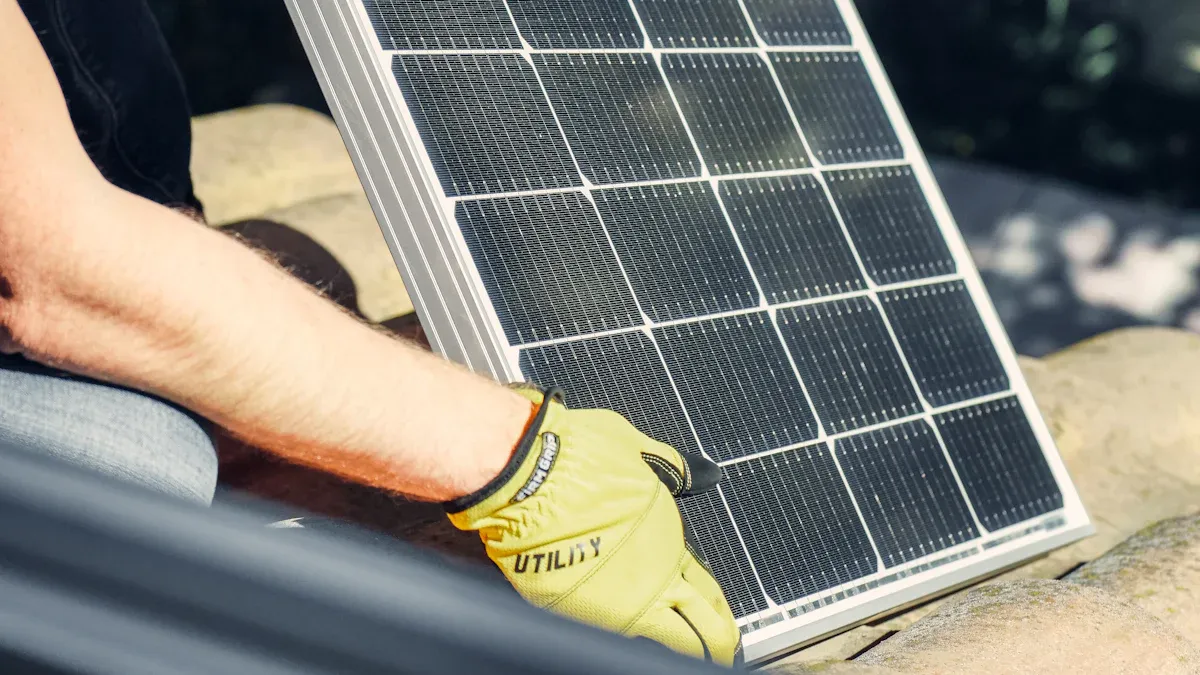
You can create the best solar battery system by selecting the right components tailored to your energy usage. Ensure that everything is installed correctly. In 2023, only 13% of homes with solar power had battery storage, but this number is increasing as more people seek to save solar energy. Assess your daily electricity consumption and consider your home’s layout and future needs. High-quality solar panels, inverters, and batteries enhance your system's performance and contribute to long-term savings, as illustrated below:
Component | Role | Impact on Efficiency and Cost Savings |
|---|---|---|
Solar Panels | Generate electricity from sunlight | More panels mean you use less power from the grid |
Solar Inverter | Convert DC to AC power | Better inverters make your system deliver more power |
Batteries | Store excess energy | Right-sized batteries help you use less grid energy |
To simplify your energy management, consider an all-in-one solution like the BEINENG Home ESS. This innovative system combines solar power generation, energy storage, and EV charging into one convenient package, making it the best solar battery system for your home.
Pick good solar panels, inverters, and batteries for better results and to save money.
Check how much energy your home uses to find the best size for your solar battery system.
Think about using an all-in-one system like the BEINENG Home ESS. It makes energy easy to manage.
Make a plan to do regular checkups. This helps your solar battery system work well.
Choose a system that can grow bigger later if you need more energy.
You must know how much electricity your home uses. Check your electric bills to see your daily energy use in kilowatt-hours (kWh). This number tells you how big your solar battery system should be. You can use a simple formula to guess the battery size you need:
Battery Capacity (kWh) = (Daily Energy Consumption ÷ Efficiency) ÷ Depth of Discharge (DoD)
This formula helps make sure your system works for you. Always round up the battery size for extra safety. This helps your system handle more energy on busy days. For the best results, talk to a certified solar energy professional. They can help you choose the right system for your home and weather.
Set clear goals before buying the Best Solar Battery System. Think about how much energy you use each day. Also, think about how much you use at night when power costs more. Decide if you want backup power for your whole house or just some devices. Check if your solar panels make extra energy you can store. Some people start small and add more batteries later. Others pick a big system right away.
You also need to think about your budget and how long it takes to save money. Many people save $700 to $1,100 each year on their electric bills with battery storage. These savings come from using your own solar energy, using less grid power at busy times, and skipping high rates. Remember, batteries need regular care. Plan for yearly checkups, software updates, and maybe new parts. This keeps your system working well and stops surprise costs.
If you know your energy needs and set smart goals, you can design a solar battery system that fits your home and saves you money.
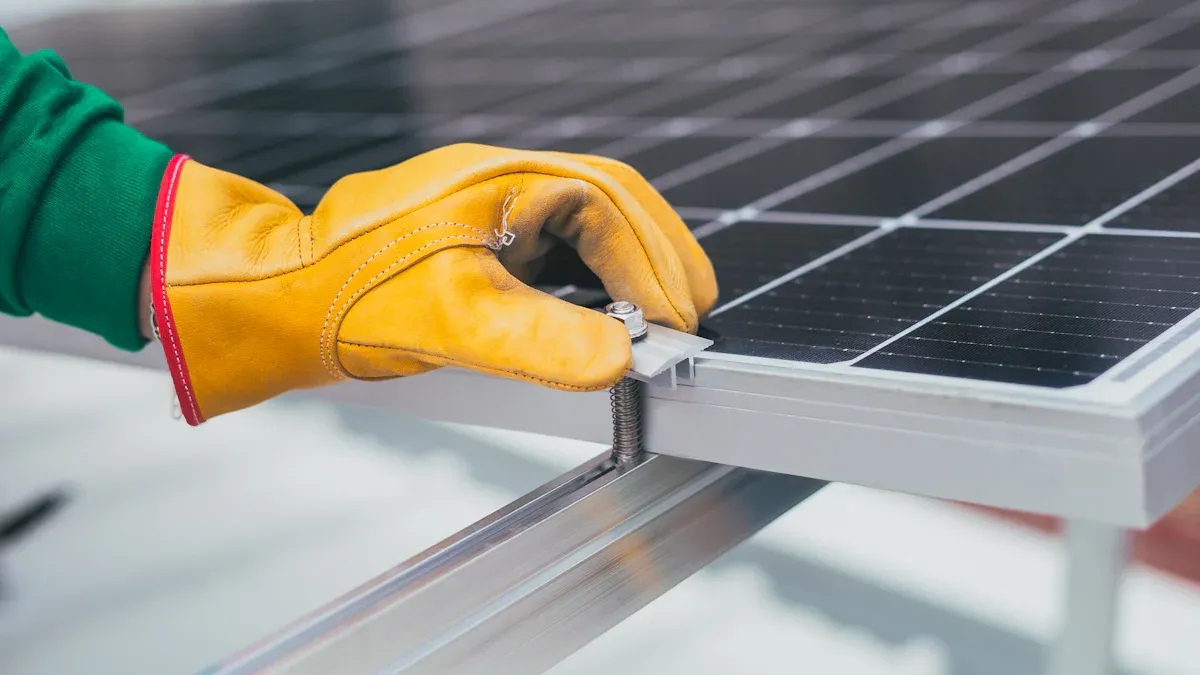
If you want to build the Best Solar Battery System, you should learn about each part. Every part helps your home use energy better and makes it more dependable. You can pick single parts or choose an all-in-one system like the BEINENG Home ESS. This system puts solar, storage, and EV charging together for a simple setup.
Solar panels grab sunlight and turn it into electricity for your house. New panels work better than old ones. Some panels in labs can reach almost 50% efficiency. This means you get more power from the same sunlight. Many homes use bifacial panels. These panels collect sunlight from both sides. Tracking systems help panels follow the sun. These features help you make more energy.
High efficiency lets you use fewer panels for the same power.
Bifacial panels and trackers help you get more energy.
Modern panels last a long time and need little care.
With the BEINENG Home ESS, you can use high-efficiency panels to save more energy.
Inverters change the electricity from your solar panels (DC) into the kind your house uses (AC). Picking the right inverter is important for your system. You need to match your battery bank voltage to the inverter’s input range. Hybrid inverters talk to your battery’s management system. This helps control charging and discharging. It keeps your system safe and working well.
Make sure your inverter matches your solar panel voltage.
Check if your inverter supports the right communication protocols.
The inverter must handle your battery’s charge and discharge rates.
The BEINENG Home ESS uses smart inverters that work with solar, batteries, and EV charging. This makes your energy system easy and dependable.
Batteries keep extra energy your solar panels make during the day. You can use this stored power at night or when the grid is down. The Best Solar Battery System uses batteries with lots of capacity, long life, and good safety. New batteries can hold more energy and cost less. Lithium Iron Phosphate (LFP) batteries are popular. They last longer and are safer than older batteries.
Here is a quick comparison:
Feature | Lithium-ion | Lead acid |
|---|---|---|
Cost | $5,000 - $15,000 | $500 - $1,000+ |
Capacity | 15+ kWh | 1.5-5 kWh |
Depth of discharge | 85% | 50% |
Efficiency | 95% | 80-85% |
Lifespan | 10-15 years | 3-12 years |
Most new batteries last 10 to 15 years and have a 10-year warranty. The BEINENG Home ESS uses advanced batteries for safe, long-lasting energy storage.
Charge controllers protect your batteries and help them last longer. They stop batteries from getting too full and keep them from losing too much charge. This keeps your battery healthy and saves you money. A good charge controller helps you get the most energy from your solar panels.
Stops overcharging and overheating.
Prevents deep discharge that can hurt batteries.
Controls charging and discharging for longer battery life.
Helps use energy better, especially with MPPT controllers.
The BEINENG Energy Controller is like the “brain” of your system. It manages energy between your solar panels, batteries, and home. It makes sure everything works well.
You need to watch your system’s performance to get the most from your Best Solar Battery System. Good monitoring tools show how much energy you use, how full your batteries are, and if your system is safe. Many systems let you check everything on your phone.
Feature | Description |
|---|---|
Real-time monitoring | See battery health and performance right away. |
State of Charge (SoC) | Know how much energy you have left. |
Temperature monitoring | Get alerts if your system gets too hot or cold. |
Mobile app integration | Control and check your system from anywhere. |
The BEINENG Home ESS has the myBeineng app for easy control. You can watch your energy use, control EV charging, and change settings from your phone. The BEINENG EV DC Charging Module gives fast, green charging for your electric car. This makes your system even better.
Tip: Using a system like the BEINENG Home ESS helps you use less grid power, lowers your bills, and helps the planet. You get solar, storage, and EV charging in one smart package.
When you know about each part, you can build the Best Solar Battery System for your home. Pick good parts or use an all-in-one system for the best results.
You need to size your solar battery system to match your home’s energy needs. Start by checking your past energy bills. Look for your highest usage days and note when you use the most electricity. This helps you pick the right battery size and solar panel setup. Make sure your battery can store enough energy for your busiest days.
Check your daily and monthly energy use.
Match your battery size to your solar panel output.
Think about when electricity costs the most in your area.
Choose a battery with a depth of discharge that fits your needs.
Plan for the total cost, including buying, installing, and maintaining your system.
Compatibility matters for long-term success. You want a system that grows with you. Some batteries let you add more storage later. If you plan to buy an electric car or add more solar panels, pick a system that can expand. BEINENG Home ESS gives you this flexibility. You can start small and add more batteries or panels as your needs change. This keeps your system useful for many years.
Tip: If you already have solar panels, you can retrofit your system with BEINENG solutions. The modular design lets you add storage and smart controls without replacing your whole setup.
You have three main choices for your solar battery system: grid-tied, off-grid, and hybrid. Each type works best for different homes and goals.
Feature | Off Grid Solar System | On Grid Solar System | Hybrid Solar System |
|---|---|---|---|
Upfront Cost | Highest | Lowest | Medium |
Long-Term Cost | No bills, more upkeep | Some bills, low care | Some bills, moderate care |
Reliability | High (if sized well) | Depends on grid | Very high |
Backup Power | Yes (batteries/gen) | No | Yes (batteries/grid) |
Energy Independence | Complete | None | Partial to high |
Maintenance | Frequent | Minimal | Moderate |
Best Use Case | Remote, full freedom | Urban, savings | Unstable grid, backup |
Grid-tied systems connect to the utility grid. You use solar power first, then draw from the grid if needed. These systems do not work during outages.
Off-grid systems work alone. You need enough batteries to power your home at night or on cloudy days. These systems suit remote areas.
Hybrid systems combine both. You use solar and batteries, but you can also use the grid. If the power goes out, your batteries keep your lights on. Hybrid systems give you the most flexibility and backup.
Hybrid systems like BEINENG Home ESS help you save money and keep your home running during outages. You can store extra solar energy and use it when grid prices go up. You also get backup power when you need it most.
Picking the right voltage and capacity helps your system run safely and efficiently. Start by figuring out how much power you use each day. Add a buffer for days when you use more energy.
Find your daily power use (for example, 2,000 watt-hours).
Add 20% more to cover losses (2,400 watt-hours).
Choose your battery voltage (for example, 12 volts).
Divide total watt-hours by voltage to get amp-hours (2,400 ÷ 12 = 200 amp-hours).
Adjust for depth of discharge (for example, 200 ÷ 0.8 = 250 amp-hours for lithium batteries).
You can wire batteries in series to increase voltage or in parallel to increase capacity. Series wiring adds voltage but keeps the same capacity. Parallel wiring keeps the voltage the same but adds more storage. Some systems use both methods to get the right balance.
Series wiring: Two 12V, 100Ah batteries in series = 24V, 100Ah.
Parallel wiring: Two 12V, 100Ah batteries in parallel = 12V, 200Ah.
Series-parallel: Mix both to get higher voltage and more capacity.
BEINENG Home ESS makes this easy. The system is modular and scalable. You can add more batteries or panels as your needs grow. This helps you avoid costly upgrades later. If you already have solar panels, BEINENG lets you add storage and smart controls without starting over.
Note: Always check that your inverter, charge controller, and batteries all work at the same voltage. This keeps your system safe and efficient.
When you plan your system with the right size, type, and voltage, you get the most from your investment. The Best Solar Battery System gives you energy freedom, savings, and peace of mind.
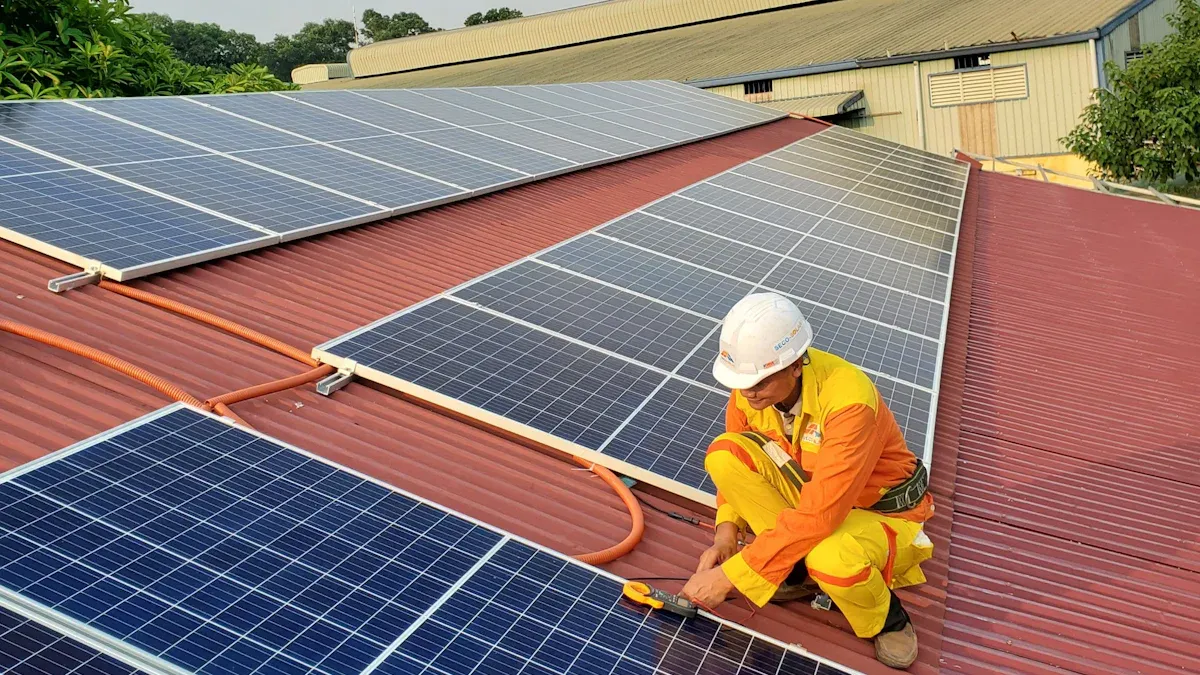
First, check if your home is ready for solar. Use solar maps to see how much sunlight you get. Walk around and look at your roof or yard. Make sure the area is strong enough for solar panels and batteries. Use special tools to measure sunlight. Write down weather like wind and temperature. Check if your roof can hold the system’s weight. Make a report with your findings, a design, and an installation plan.
Measure sunlight over time.
Write down local weather.
See if your roof or yard can hold the panels and batteries.
You need to follow rules before you install your system. Most places ask for permits from local officials. Permits help make sure your system is safe. You must follow the National Electrical Code for safety. You also need to follow rules from the National Fire Protection Association, especially NFPA 855. These rules help keep your home safe.
Requirement Type | Description |
|---|---|
Permits | Most home battery setups need permits from local officials. |
NEC Compliance | Your system must follow the National Electrical Code for safety. |
NFPA Guidelines | NFPA 855 gives safety rules for energy storage systems. |
Plan your setup so cables are short and straight. This helps stop power loss. Use good tools for strong connections. Put protection devices in order: battery positive terminal, fuse or breaker, master switch, then inverter. Connect the battery to the charge controller first. Then add solar panels. Always use certified parts and wear safety gear. Put batteries in a cool, dry place with airflow. The BEINENG Home ESS makes installation easy and safe. You can control everything with the myBeineng app.
Check every part before you turn on your system. Look for loose wires or leftover stuff. Tighten all connections. Test insulation and check voltages. Follow the manufacturer’s steps to start the inverter and battery. Make sure your system makes power as it should. Use the app to watch performance and check that everything works. The Best Solar Battery System gives you easy setup and steady energy.
You have to pick where your solar battery system will go. You can put it inside or outside. Both choices have good and bad points. If you put it inside, you can control the temperature and humidity better. It is also safer from theft or damage. But indoor systems need good airflow and use up space in your house. Outdoor setups keep your indoor space free and lower gas emissions inside. You can also change how your house looks outside. But outdoor systems must deal with weather and need more care.
Aspect | Indoor Installation Considerations | Outdoor Installation Considerations |
|---|---|---|
Safety Regulations | You might need fire alarms. | You must think about rain, sun, and wind. |
Manufacturer’s Recommendations | Always read the manual for safety and warranty. | Make sure your system is safe from water and weather. |
Environmental Exposure | There is less weather risk, but you need airflow. | Outside, batteries can get too hot or wet. |
Maintenance Needs | If installed right, you do not need much care. | You need to check and clean it more often. |
Tip: Always follow local rules and the manual for safety.
You can add batteries to your old solar system. But you need to plan well. First, check if your old parts and new parts work together. If they do not match, you could have problems or safety risks. Next, measure how much energy you use. Many people guess wrong and pick a battery that is too small. Always get the right permits and follow the rules. If you skip steps, you could get hurt or get fined. After you finish, check your system often. This helps your battery last longer.
Solar battery systems cost a lot at first. But they save you money later. A 15 kWh battery costs about $10,500. A 20 kWh battery costs about $14,000. Inverters cost $1,000 to $2,000. Labor costs $2,000 to $8,000. Permits and checks cost $500 to $2,000. Most people pay $10,000 to $25,000 or more for everything. Equipment is about half the total price. Labor and planning are the rest. Good batteries cost more but last longer.
Battery: $7,000–$15,000
Inverter: $1,000–$2,000
Labor: $2,000–$8,000
Permits: $500–$2,000
Note: Save money for repairs and checkups to keep your system working.
You need a trained installer to be safe and get good results. Look for people with NABCEP and state licenses. Check how long they have worked and how many jobs they have done. Read reviews and look at ratings. Ask about warranties and help if something breaks. Good installers tell you the price and answer your questions.
Criteria | Description |
|---|---|
Certifications | NABCEP, state licenses, insurance |
Experience | Years in business, number of installations |
Reputation | Reviews, BBB ratings |
Warranties | Installation and service support |
Communication | Clear answers and detailed quotes |
Tip: Ask for prices from a few installers and compare before you choose.
You need to take care of your solar battery system often. Check your system every month. Look for dirt or dust on the battery or panels. Make sure nothing is blocking them. Check that all wires are tight and clean. Every three months, look at your energy use. See if your system makes enough power. Once a year, have a professional check everything.
Here are some important things to do for routine care:
Watch how the battery works to find problems early.
Wipe the battery’s outside to keep it clean.
Keep the battery at the right temperature.
Look for rust on the terminals and connections.
Charge and use the battery the right way to help it last.
Update the system’s software when there is a new version.
Plan a yearly checkup with a trained technician.
Tip: Taking care of your system helps it last longer and saves money.
You can find problems early by watching your system. Use your app to look for error messages or warning lights. If your system makes less energy on sunny days, it may need help. A higher electric bill can also mean something is wrong.
Some signs of trouble are:
Your system makes less energy than normal.
You see error alerts in your app.
Warning lights show up on your inverter.
Your electricity bill goes up.
To fix small problems, make sure your system has good airflow. Check that it is set up right. Clean the battery terminals and check all wires. Watch the voltage to keep your battery healthy.
You can get your solar battery system ready for the future. Pick smart features and designs that can change. New batteries like lithium-ion, sodium-ion, and water-based types are safer and work better. Smart technology like AI and IoT lets you watch and control your system any time. These features help you save energy and money.
Other ways to get your system ready for the future:
Pick systems that work with new net metering rules and money-saving programs.
Choose batteries that are easy to recycle and good for the planet.
Pick a system that lets you add more batteries or panels later.
Use smart battery management to get the most from your storage.
Note: A system ready for the future makes your home worth more and helps you use your own energy.
You can do well with the Best Solar Battery System if you follow easy steps. First, make a plan for your project. Next, set your goals and pick the best layout for your home. Systems like BEINENG Home ESS let you keep solar energy for later. This helps you pay less for electricity and makes the planet cleaner.
Save energy to use when you need it and use less grid power
Make less pollution and help your house be worth more
Spend less money by using stored energy when prices are high
To get the best results, ask an expert for help, keep your panels clean, and check your system often.
You can expect installation to take one to three days. The BEINENG Home ESS speeds up the process because it uses an all-in-one design. A professional installer will finish faster if your home is ready.
Yes, you can expand your system. The BEINENG Home ESS lets you add more batteries or panels as your energy needs grow. This makes your system flexible and future-ready.
Your solar battery system keeps your lights on during outages. The BEINENG Home ESS provides backup power for your home. You can use stored energy until the grid returns.
You need Wi-Fi for real-time monitoring and control through the myBeineng app. If you lose Wi-Fi, your system still works, but you cannot check updates or change settings remotely.


Compact, quiet, and powerful, it keeps your essentials running during outages and lets you charge anywhere with solar power or grid power.
Perfect for renters who need flexibility without compromise.
Our estimator is only set up to provide preliminary estimates and installer information to residents of single family homes.