
 Email Us
 Contact us
 Whats App
Single family home

Power outages are becoming more frequent across many regions due to extreme weather conditions, aging electrical infrastructure, and rising electricity demand. For modern households, a blackout is no longer just a temporary inconvenience—it disrupts nearly every essential part of daily life.
Traditionally, homeowners have relied on fuel generators to solve this issue. However, more people are now actively searching for ways to keep house powered without generator, especially as noise, fuel dependency, and maintenance become unacceptable in residential environments.
Modern battery-based energy storage systems are gradually replacing generators as the preferred solution. They provide silent, automatic, and fuel-free backup power that fits the needs of today's connected homes.
Electricity is now deeply integrated into daily life. When a blackout happens, it affects more than just lighting. It interrupts entire systems that households depend on continuously.
The most immediate issues include:
● Loss of refrigeration and food safety risks
● Internet and communication failure
● Heating or cooling system shutdown
● Security system interruption
● Inability to charge essential devices
Because of these dependencies, homeowners increasingly search for battery backup during power outage solutions that can maintain essential functions automatically.
A blackout today is not a single failure—it is a chain reaction across multiple systems.
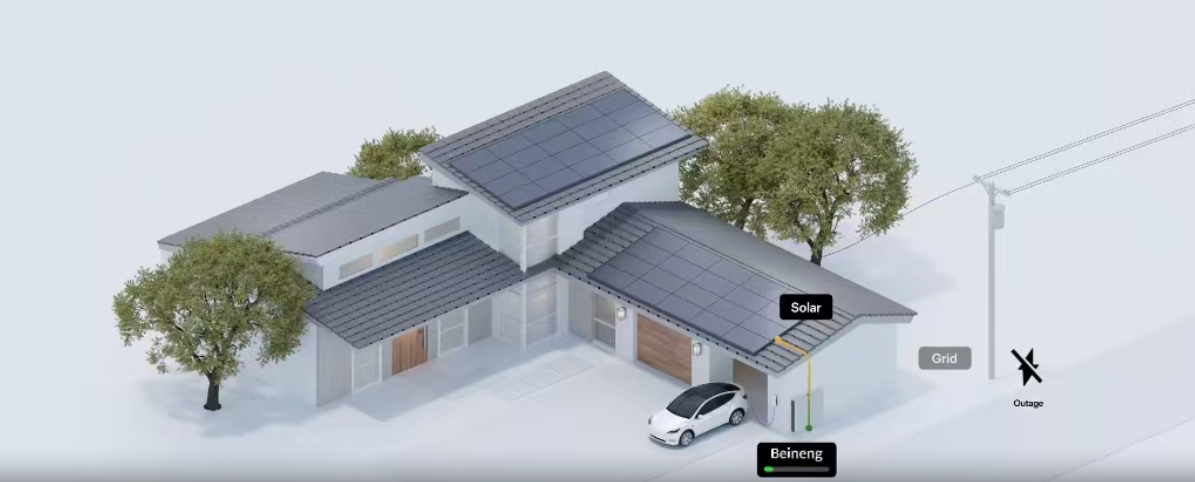
Although generators are still widely used, their limitations have become more obvious in modern residential environments.
● Continuous noise pollution affecting sleep and comfort
● Dependence on gasoline or diesel fuel storage
● Manual startup required during emergencies
● Indoor usage restrictions due to carbon monoxide risks
● Regular maintenance and mechanical servicing needs
These limitations have pushed homeowners toward quieter and more efficient alternatives such as quiet backup power for home systems.
| Feature | Generator | Home Battery System |
|---|---|---|
| Noise level | High | Silent |
| Fuel requirement | Required | Not required |
| Startup | Manual | Automatic |
| Maintenance | Regular | Minimal |
| Indoor safety | Not safe | Safe |
| Response time | Delayed | Instant |
This comparison explains why many households are transitioning away from fuel-based systems.
A home battery system operates as a stored energy reserve that activates automatically during power outages.
The process typically includes three stages:
1. Energy is stored during normal grid operation or solar charging
2. The system continuously monitors grid stability
3. During a blackout, it switches instantly to discharge mode
This automatic response is one of the key reasons why demand for home battery for blackout systems is increasing globally.
Unlike generators, no manual intervention is required.
Most households do not need full power coverage during a blackout. Instead, they rely on essential loads.
Typical supported devices include:
● Refrigerators to preserve food
● Lighting systems for visibility and safety
● WiFi routers for communication
● Fans or small cooling devices
● Medical equipment in special cases
This is how modern systems optimize energy usage:
1. Critical appliances (fridge, medical devices)
2. Communication devices (WiFi, phone charging)
3. Comfort devices (lights, fans)
4. Non-essential appliances (excluded during outages)
This approach significantly extends system runtime and efficiency.
Homeowners are increasingly choosing battery systems because they offer multiple advantages beyond just backup power.
● Silent operation with no mechanical noise
● No fuel storage or handling required
●Fully automatic activation during outages
● Safe indoor installation capability
● Integration with solar energy systems
● Long lifespan with LiFePO4 chemistry
This makes them a strong alternative to traditional emergency home battery system setups.
One of the most overlooked advantages of modern systems is their silent operation.
Unlike generators, battery systems produce no mechanical sound. This creates a significant difference in residential comfort, especially during nighttime outages.
Noise-free operation is particularly important for:
● Families with children
● Apartment buildings
● Elderly residents
● Noise-restricted neighborhoods
This is why interest in quiet battery instead of generator solutions continues to grow.
Traditional generators require fuel, which introduces logistical and safety challenges. In contrast, battery systems operate without any fuel dependency.
● No fuel storage required
● No risk of fuel shortage during emergencies
● No emissions or air pollution
● Lower long-term operational cost
This is why many homeowners prefer home power backup without fuel solutions for long-term reliability.
Battery systems are designed to support real-world emergency situations.
Typical scenarios include:
● Storm-related outages
● Grid instability or failure
● Nighttime power interruptions
● Rolling blackouts in urban areas
| Scenario | System Response |
|---|---|
| Storm outage | Automatic activation |
| Night blackout | Silent power supply |
| Grid failure | Instant switchover |
| Extended outage | Load prioritization |
These scenarios highlight why battery backup for refrigerator during outage is one of the most critical use cases.
Selecting the right system depends on household energy needs and usage patterns.
1. Total daily electricity consumption
2. Number of essential appliances
3. Expected backup duration
4. Presence of solar panels
5. Installation environment (indoor/outdoor)
| Household Type | Recommended Capacity |
|---|---|
| Small apartment | 5kWh system |
| Medium house | 10kWh system |
| Large home | 15kWh+ system |
● Does it support automatic switching?
● Can it power essential appliances continuously?
● Is it silent during operation?
● Does it support solar integration?
● Is the system safe for indoor installation?
This checklist ensures compatibility with emergency home battery system requirements.
The shift from generators to battery systems is not just technological—it is behavioral.
Homeowners are prioritizing:
● Convenience over manual operation
● Silence over mechanical power
● Automation over control complexity
● Clean energy over fuel dependency
This explains the rapid rise of searches like keep house powered without generator, especially in urban and suburban regions.
The concept of home backup power is evolving. It is no longer about reacting to failure, but about maintaining continuity.
Modern battery systems provide a stable, silent, and intelligent energy layer that ensures essential functions continue even when the grid fails.
This is why they are becoming the preferred solution for homeowners seeking reliable battery backup during power outages without the limitations of traditional generators.


Compact, quiet, and powerful, it keeps your essentials running during outages and lets you charge anywhere with solar power or grid power.
Perfect for renters who need flexibility without compromise.
Our estimator is only set up to provide preliminary estimates and installer information to residents of single family homes.