
 Email Us
 Contact us
 Whats App
Single family home

As electricity prices continue to rise and residential solar installations become more common, homeowners are looking beyond simply generating power—they want to store it intelligently. A home energy storage system allows families to use more of their own solar energy, reduce dependence on the grid, and maintain power during unexpected outages. For many households, installing a battery has become the next logical step after investing in rooftop solar.
At the same time, the technology behind residential battery storage has evolved rapidly. Traditional 48V battery systems still dominate smaller installations, but high-voltage battery solutions are becoming the preferred choice for modern homes. Higher system efficiency, better compatibility with hybrid inverters, and easier scalability make them particularly attractive for households with growing electricity demands.
However, choosing a battery is no longer as simple as comparing capacity or price. Many products appear similar on paper, yet differences in cell quality, battery management systems, manufacturing standards, and future expansion capabilities can significantly affect long-term performance.
This guide explains how to choose a high-voltage battery for a home energy storage system from both a technical and practical perspective. Rather than focusing on marketing claims, we'll explore the factors that truly determine reliability, safety, and long-term value, helping homeowners, solar installers, and distributors make informed decisions.
Residential energy storage has changed dramatically over the past decade. Earlier battery systems were primarily designed to provide emergency backup power. Today, they have become an integral part of household energy management, allowing homeowners to maximize solar self-consumption, optimize electricity costs, and even support electric vehicle charging.
This shift has accelerated the adoption of high-voltage battery systems.
Unlike conventional low-voltage batteries, which typically operate around 48V, high-voltage systems connect multiple battery modules in series to achieve operating voltages ranging from approximately 200V to over 600V. While the concept may sound more complex, the benefits are substantial for modern residential applications.
Electric power is determined by both voltage and current. When a system delivers the same amount of power at a higher voltage, it requires significantly less current. Lower current reduces electrical losses in cables, decreases heat generation, and improves the overall efficiency of the system.
For homeowners, these engineering advantages translate into practical benefits:
Higher charging and discharging efficiency
Reduced cable losses
Smaller installation footprint
Better compatibility with modern hybrid inverters
Improved performance for larger residential loads
These improvements become especially noticeable in homes equipped with air conditioning, heat pumps, induction cooking systems, swimming pools, or electric vehicle chargers.
Many of today's leading hybrid inverter manufacturers have shifted their residential product lines toward high-voltage battery compatibility.
The reason is straightforward.
Modern households consume significantly more electricity than they did ten years ago. As more families electrify heating, transportation, and cooking, battery systems must deliver higher power outputs while maintaining efficiency.
High-voltage architectures enable:
Faster battery charging
Higher inverter efficiency
Lower operating temperatures
Better support for high-power household appliances
For installers, this also means cleaner cable layouts and simplified system integration.
Although low-voltage systems remain suitable for smaller homes, high-voltage batteries are becoming the preferred solution for medium and large residential projects.
They are particularly suitable for:
Homes with solar PV systems above 8–10 kW
Properties planning to install EV chargers
Homes seeking whole-house backup during outages
Households expecting future energy demand growth
Rather than purchasing another battery system several years later, many homeowners choose modular high-voltage platforms that allow capacity expansion as their energy requirements increase.
Before selecting a battery, it's useful to understand how the two technologies compare.
| Feature | High Voltage Battery | Low Voltage Battery |
|---|---|---|
| Operating Voltage | Typically 200–600V | Around 48V |
| Cable Loss | Lower | Higher |
| Charging Efficiency | Higher | Moderate |
| Installation | Cleaner cable routing | Simpler for small systems |
| Scalability | Excellent | Limited in larger projects |
| Best Application | Medium to large homes | Small residential systems |
Neither solution is universally "better." The right choice depends on the home's energy profile, future expansion plans, and inverter compatibility. However, as residential electricity consumption continues to increase, high-voltage systems are becoming the preferred long-term investment.
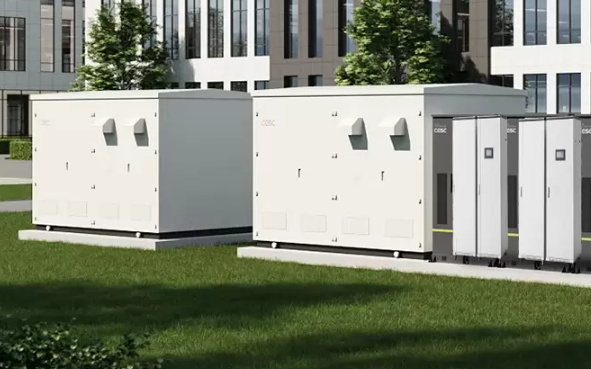
One of the biggest mistakes homeowners make is selecting a battery based solely on advertised capacity.
A larger battery is not automatically a better battery.
The real question should be:
How much energy does your home actually need to store?
The answer depends on several factors that extend far beyond the battery specification sheet.
The first step is understanding how much electricity your household uses each day.
Most utility bills provide monthly electricity consumption, making it easy to estimate daily demand.
For example:
| Monthly Consumption | Daily Consumption |
|---|---|
| 300 kWh | 10 kWh/day |
| 600 kWh | 20 kWh/day |
| 900 kWh | 30 kWh/day |
Daily consumption provides a much clearer picture of the battery capacity required than simply counting household appliances.
Not every appliance needs to remain operational during a power outage.
Some homeowners only want to power essential loads, while others expect a true whole-home battery backup capable of supporting their entire lifestyle.
Consider dividing appliances into three categories.
These are devices that most homeowners expect to remain powered during an outage:
Refrigerator
Internet router
Lighting
Security system
These loads usually consume relatively little electricity but are critical for daily life.
Many families also want to continue using:
Air conditioning
Television
Kitchen appliances
Washing machine
Supporting these devices requires significantly larger battery capacity.
Modern homes increasingly include:
Electric vehicle chargers
Heat pumps
Pool equipment
Workshop machinery
These applications require batteries capable of delivering higher continuous power, making high-voltage systems a more practical choice.
A battery should serve your home for many years.
During that time, household electricity demand often changes.
Examples include:
Installing rooftop solar
Purchasing an electric vehicle
Adding air conditioning
Expanding the home
Switching from gas heating to electric heat pumps
Many homeowners underestimate future demand and purchase undersized systems that require replacement or costly upgrades within just a few years.
Choosing a modular battery platform that supports future expansion provides greater flexibility while reducing long-term investment costs.
While every household is different, the following recommendations provide a useful starting point.
| Household Profile | Daily Consumption | Recommended Battery Capacity |
|---|---|---|
| Small Apartment | 6–10 kWh | 5–10 kWh |
| Family Home | 12–20 kWh | 10–20 kWh |
| Large Home with Solar | 20–35 kWh | 20–40 kWh |
| Solar + EV Charging | 30+ kWh | Expandable High Voltage System |
These figures should always be adjusted based on local electricity tariffs, solar production, and desired backup duration.
Battery capacity should complement—not exceed—the amount of energy your solar array can generate.
For example, installing a very large battery on a relatively small photovoltaic system may leave much of the battery underutilized.
Conversely, an oversized solar array paired with a small battery may export excessive electricity to the grid, reducing opportunities for self-consumption.
The most efficient systems are designed by balancing three elements:
Solar generation
Household electricity demand
Battery storage capacity
This balance maximizes renewable energy utilization while improving the return on investment.
Choosing between high-voltage and low-voltage storage isn't simply a matter of technology—it depends on how your home uses electricity today and how it may evolve over the next decade.
Many online comparisons focus only on efficiency figures, but homeowners should evaluate the broader picture.
Low-voltage systems have traditionally been popular because of their straightforward installation. For smaller residential projects, they remain a practical option.
However, as system sizes increase, high-voltage batteries often simplify the overall installation by reducing cable sizes and minimizing current-related losses.
Professional installers increasingly favor high-voltage architectures for larger hybrid solar systems because they integrate more effectively with modern inverter platforms.
One of the biggest advantages of a modular home energy storage system is the ability to expand capacity over time.
A growing family may eventually need additional storage after purchasing an EV or installing a larger solar array.
When evaluating a battery, ask the manufacturer:
Can additional modules be added later?
Is there a maximum expansion limit?
Will new modules remain compatible with older ones?
Does expansion require replacing the entire system?
These questions often have a greater impact on long-term ownership costs than the battery's initial purchase price.
Battery capacity is easy to compare because every manufacturer advertises it prominently.
Unfortunately, it is also one of the least useful indicators when considered in isolation.
A reliable LiFePO4 battery should be evaluated across several technical dimensions.
Lithium iron phosphate chemistry has become the preferred choice for residential storage because it combines thermal stability, long cycle life, and consistent performance.
Compared with other lithium chemistries, LiFePO4 offers better suitability for daily charge-discharge applications, making it particularly well suited to solar energy storage.
The BMS continuously monitors voltage, temperature, current, and cell balance.
An advanced battery management system helps protect the battery from abnormal operating conditions while maximizing usable capacity and extending service life.
A battery that performs well for thousands of charge-discharge cycles generally delivers lower lifetime ownership costs than one requiring early replacement.
Instead of focusing only on warranty years, compare expected cycle life under realistic operating conditions.
Not every battery communicates seamlessly with every inverter.
Checking compatibility before purchase can prevent installation delays and reduce commissioning issues.
An expandable battery system protects your investment by allowing capacity growth without replacing the original installation.
For many homeowners, this flexibility becomes increasingly valuable as household energy consumption continues to evolve.
From a buyer's perspective, two residential battery systems with the same voltage, capacity, and even similar specifications may appear nearly identical. Yet in the market, their prices can differ significantly. This often leads homeowners and distributors to ask the same question:
Why does one high-voltage battery cost considerably more than another with seemingly identical specifications?
The answer lies in manufacturing quality rather than the numbers printed on the specification sheet.
A battery pack is a complete energy storage system made up of cells, a battery management system (BMS), thermal management components, communication modules, structural design, and extensive quality control. Weakness in any one of these areas can affect performance, lifespan, and safety.
The performance of a LiFePO4 battery starts with the cells themselves.
Premium manufacturers generally use Grade A cells with strict consistency requirements for capacity, internal resistance, and voltage matching. This consistency allows every module to charge and discharge evenly, reducing stress across the entire battery pack.
Lower-grade cells may still meet basic capacity requirements, but differences between individual cells can increase over time, leading to reduced usable capacity and shortened service life.
For homeowners planning to use a battery every day for ten years or more, cell consistency often matters more than choosing the highest advertised capacity.
Building a reliable home energy storage system involves much more than assembling cells inside a cabinet.
Manufacturers should carefully evaluate:
Mechanical structure
Heat dissipation
Cable routing
Cell compression
Electrical insulation
Vibration resistance
A well-designed battery pack minimizes thermal stress during thousands of charging cycles while making future maintenance easier for installers.
These details are rarely highlighted in product brochures, yet they directly influence long-term reliability.
Modern battery production increasingly relies on automated manufacturing rather than manual assembly.
Processes such as laser welding, automatic torque control, barcode traceability, and end-of-line functional testing improve consistency from one battery pack to the next.
Although homeowners may never see these production processes, they reduce quality variation and improve long-term performance.
From a factory perspective, consistency is just as important as innovation.
Whether purchasing a single battery or sourcing products for distribution, asking the right questions can help avoid future problems.
Consider discussing the following points with your supplier:
Are Grade A LiFePO4 cells used throughout the product line?
Does the battery include an intelligent battery management system (BMS)?
What factory testing is performed before shipment?
Is long-term technical support available?
Can additional battery modules be added in the future?
Manufacturers that can clearly answer these questions are generally more transparent about their production standards.
Safety is one of the most important considerations when choosing a residential battery, yet it is also one of the most misunderstood.
Many buyers assume that certifications alone determine whether a battery is safe.
In reality, certifications demonstrate compliance with specific standards, but true safety depends on how the entire system has been engineered.
Several systems work together to maintain safe operation.
The BMS continuously monitors:
Cell voltage
Current
Temperature
State of charge
Cell balancing
If abnormal conditions occur, the BMS can automatically disconnect the battery before damage develops.
Although LiFePO4 chemistry is known for its thermal stability, effective heat management remains essential.
Proper ventilation, optimized module spacing, and intelligent temperature monitoring help maintain consistent performance under varying environmental conditions.
Modern high voltage battery systems increasingly incorporate integrated fire suppression solutions.
Built-in aerosol fire suppression systems can provide an additional layer of protection should an unexpected fault occur.
While these systems are rarely activated, their presence reflects a proactive approach to safety engineering.
Outdoor battery installations may experience:
Heavy rain
Dust
Snow
High humidity
Coastal salt exposure
Choosing a cabinet with an appropriate IP rating helps protect internal components and extends system lifespan.
Although certifications are not the only indicator of quality, they remain essential when evaluating a home energy storage system.
Common certifications include:
CE
UN38.3
MSDS
IEC standards
These certifications provide confidence that the product has undergone recognized testing procedures before entering international markets.
Understanding how batteries are used in real homes makes technical specifications easier to evaluate.
A family installs a 10 kW rooftop solar system with average daily electricity consumption of approximately 18 kWh.
Rather than purchasing the largest available battery immediately, they choose a modular high-voltage system that meets current demand while leaving room for future expansion.
This approach reduces initial investment without limiting future flexibility.
Another homeowner plans to purchase an electric vehicle within two years.
Instead of replacing the battery later, they select an expandable system from the beginning.
When EV charging becomes part of daily electricity consumption, additional battery modules can simply be added.
Planning ahead often proves more economical than redesigning an entire energy storage system.
In regions where severe weather occasionally interrupts electricity supply, homeowners increasingly prioritize backup capability.
A properly sized whole home battery backup system can maintain essential household functions including refrigeration, lighting, communications, and selected HVAC equipment until grid power returns.
For many families, the value of uninterrupted electricity extends beyond convenience to protecting food, supporting remote work, and maintaining home security.
Many purchasing mistakes result not from choosing poor products but from focusing on the wrong criteria.
Avoid these common pitfalls.
Lower initial cost does not necessarily mean lower long-term ownership cost.
Cycle life, efficiency, maintenance, and expandability all affect total value.
A battery that cannot communicate properly with the inverter may reduce system functionality or require additional configuration.
Compatibility should always be verified before purchase.
Today's household may look very different five years from now.
Electric vehicles, heat pumps, or home renovations can substantially increase electricity demand.
Choosing an expandable system provides greater long-term flexibility.
Battery production requires extensive expertise in electrical engineering, software development, manufacturing, and quality control.
Experienced manufacturers generally maintain more mature production processes and stronger after-sales support.
A high voltage battery should be viewed as a long-term component of a home's energy infrastructure rather than a short-term purchase.
The most valuable system is not necessarily the one with the highest capacity or the lowest price. Instead, it is the one that continues to perform reliably as your household evolves—whether that means adding solar panels, purchasing an electric vehicle, increasing backup requirements, or pursuing greater energy independence.
When evaluating a home energy storage system, look beyond the specification sheet. Consider manufacturing quality, battery chemistry, system safety, compatibility, expansion capability, and the technical expertise behind the product. These factors have a far greater impact on long-term performance than headline specifications alone.
As residential energy storage continues to evolve, homeowners who invest in a scalable LiFePO4 battery platform today are better positioned to adapt to tomorrow's energy demands. A thoughtfully designed system not only improves solar self-consumption and reduces electricity costs, but also provides resilience during outages and supports the transition toward a smarter, more sustainable home.
Choosing wisely today means building an energy system that remains dependable for years to come—not simply purchasing another piece of equipment, but investing in the future of your home's energy independence.


Compact, quiet, and powerful, it keeps your essentials running during outages and lets you charge anywhere with solar power or grid power.
Perfect for renters who need flexibility without compromise.
Our estimator is only set up to provide preliminary estimates and installer information to residents of single family homes.