
 Email Us
 Contact us
 Whats App
Single family home

For years, home battery systems were marketed almost exclusively alongside rooftop solar panels. The message was simple: install solar first, then add a battery to store excess energy. While that setup certainly makes sense for many households, it has also created a common misconception—that a home battery without solar has little value.
In reality, that's no longer true.
As electricity prices continue to rise and extreme weather places greater strain on power grids, more homeowners are investing in residential battery storage before they install solar panels—or even without any plans to install solar at all. In many regions, utility companies already offer time-of-use pricing, making it possible to charge a battery during off-peak hours and use that stored electricity when rates are highest. For others, the priority is much simpler: keeping essential appliances running when the grid goes down.
From an engineering perspective, modern battery technology has evolved far beyond its original role as a companion to solar power. Today's intelligent home battery systems can charge directly from the grid, automatically switch to backup mode during outages, and communicate with energy management platforms to optimize charging schedules. Whether solar panels are present or not, the battery itself has become an independent energy asset.
So, can you install a home battery without solar panels?
Absolutely. The more important question is whether doing so makes sense for your home, your electricity usage, and your long-term energy plans. Understanding how these systems work—and where they deliver the greatest value—can help you make a smarter investment rather than simply following the most common installation trend.
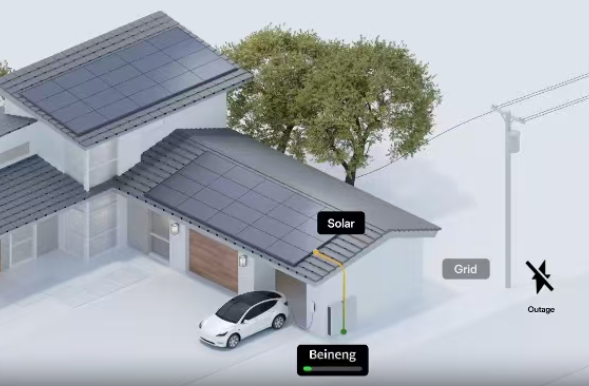
At its core, a home battery system doesn't require solar panels to store electricity. Instead of collecting energy from photovoltaic modules, it draws electricity directly from the utility grid and stores it for later use.
The operating principle is surprisingly straightforward.
During periods when electricity demand is low—typically overnight or during off-peak pricing hours—the battery charges from the grid. When household demand increases, electricity prices rise, or a power outage occurs, the system automatically discharges stored energy to power selected household circuits or, depending on system configuration, the entire home.
Unlike older backup systems that required manual intervention, today's intelligent battery storage without solar solutions operate automatically through an integrated Battery Management System (BMS), inverter, and energy controller.
A typical workflow looks like this:
The battery charges from the utility grid during lower-cost hours.
Energy is stored safely inside LiFePO₄ battery cells.
The system continuously monitors household electricity demand.
When needed, stored energy is supplied to connected appliances automatically.
Because the process is fully automated, homeowners often don't realize the battery has switched operating modes until they receive a notification through a mobile monitoring app.
This capability makes modern standalone home batteries very different from traditional emergency generators. There is no fuel storage, no engine maintenance, no exhaust emissions, and virtually no operating noise. Instead, energy is managed electronically and delivered within milliseconds whenever it's needed.
One of the biggest misunderstandings surrounding home batteries without solar systems is the belief that charging from the grid somehow defeats the purpose of owning a battery.
That assumption overlooks how modern electricity markets work.
Many countries now use variable electricity pricing throughout the day. Energy may cost significantly less overnight than during evening peak demand. By charging the battery when electricity is inexpensive and using stored energy during expensive periods, homeowners can reduce their overall electricity costs without generating any solar power at all.
For example:
| Scenario | Electricity Source | Battery Action |
|---|---|---|
| Late Night (Off-Peak) | Utility Grid | Charging |
| Morning Usage | Battery | Discharging |
| Afternoon | Utility Grid | Idle or Charging |
| Evening Peak Pricing | Battery | Discharging |
| Power Outage | Battery | Backup Power |
This strategy is becoming increasingly attractive in regions where electricity tariffs fluctuate throughout the day.
Rather than acting solely as emergency backup, the battery becomes part of a home's daily energy management strategy.
Walk into a residential energy exhibition today, and you'll notice a shift in the conversations taking place.
Five years ago, visitors typically asked installers,
"Which solar panels should I buy?"
Today, another question appears just as frequently:
"Can I install the battery now and add solar later?"
The answer is often yes—and there are several practical reasons why homeowners are choosing this path.
For many households, the decision has little to do with environmental goals and much more to do with predictable energy costs.
Electricity prices have become increasingly volatile across many markets. While solar generation can offset daytime consumption, homeowners without solar can still benefit from strategic energy storage.
Instead of purchasing expensive electricity during peak demand, they charge their home battery system when prices are lower and use that stored electricity later.
This isn't producing new energy—it's buying electricity more intelligently.
Weather-related outages are becoming more frequent in many regions.
Storms, heatwaves, overloaded distribution networks, and infrastructure maintenance can interrupt electricity for hours—or even days.
During an outage, a properly configured battery backup can continue powering critical household equipment, including:
Refrigerators and freezers
Internet routers and communication devices
Lighting circuits
Home security systems
Some larger systems can also support air conditioning, water pumps, or additional household appliances depending on battery capacity and inverter specifications.
For many families, avoiding food spoilage or maintaining internet access while working remotely is reason enough to invest in residential battery storage.
Another advantage rarely discussed outside the installation industry is planning flexibility.
Installing the battery first doesn't prevent adding solar panels later.
In fact, many homeowners deliberately separate the investment into stages.
Rather than purchasing an entire renewable energy system at once, they begin with battery storage, monitor their household electricity consumption, and later expand the system when budgets or government incentives make solar installation more attractive.
This phased approach offers several advantages:
Lower upfront investment
Flexible future expansion
Better understanding of household energy consumption
Reduced installation disruption over time
From a financial planning perspective, spreading the investment across multiple stages often feels more manageable than completing everything at once.
Most product pages emphasize battery capacity.
You'll see numbers like 10kWh, 15kWh, or 20kWh displayed prominently because they're easy to compare.
Inside a battery manufacturing facility, however, capacity is rarely the first specification engineers focus on.
Long-term reliability depends on many details that consumers rarely see.
Two batteries may both advertise 15kWh of usable energy, yet perform very differently after several years of operation.
The reason often comes down to cell matching.
Before battery modules are assembled, manufacturers measure each individual cell for characteristics such as voltage, internal resistance, and capacity. Cells with closely matched performance are grouped together within the same battery pack.
If poorly matched cells are assembled together, stronger cells continually compensate for weaker ones during charging and discharging. Over time, this imbalance accelerates capacity loss and reduces overall system lifespan.
For this reason, premium manufacturers invest significant time in cell grading and matching before production begins. Although this process adds manufacturing cost, it helps maintain more stable performance over thousands of charge-discharge cycles.
For homeowners, this difference isn't immediately visible—but it becomes increasingly important after years of daily use.
A modern home battery system is much more than a collection of lithium cells.
The Battery Management System (BMS) continuously monitors:
Cell voltage
Temperature
Charging current
Discharge current
If any parameter moves outside its safe operating range, the system automatically adjusts or disconnects the battery to protect both the equipment and the user.
This intelligent monitoring is especially valuable in standalone home battery installations, where the battery may charge directly from the grid every day rather than intermittently from solar panels.
Without effective battery management, long-term performance would gradually decline regardless of the quality of the cells themselves.
Battery specifications are often measured under ideal laboratory environments, but residential installations rarely enjoy perfect conditions.
Garages become hot in summer. Utility rooms can be humid. Outdoor walls experience changing temperatures throughout the year.
That is why experienced manufacturers place significant emphasis on practical design features such as enclosure sealing, thermal management, and protection against dust and moisture—not just laboratory performance figures.
A well-designed wall-mounted battery should deliver consistent performance across a wide range of real-world operating conditions while remaining easy to install, inspect, and maintain.
These engineering details rarely appear in marketing headlines, yet they often determine whether a battery continues operating reliably long after the warranty period begins.
This is often the question that ultimately determines whether someone moves forward with an installation.
The answer depends less on the battery itself and more on how electricity is priced where you live, how frequently you experience outages, and what role you expect the system to play over the next decade.
If your only goal is to reduce electricity bills in an area with flat-rate pricing and a highly reliable grid, the financial return may be modest. On the other hand, households that face time-of-use tariffs, frequent blackouts, or rising utility costs often see value that extends beyond simple payback calculations.
Rather than viewing a home battery system as a device that only saves money, it's more accurate to think of it as an investment in energy flexibility. It gives homeowners greater control over when they purchase electricity and how they use it.
The comparison below illustrates the difference.
| Feature | Home Battery Without Solar | Home Battery + Solar |
|---|---|---|
| Backup power during outages | ✔ | ✔ |
| Charge from the utility grid | ✔ | Optional |
| Store self-generated solar energy | ✖ | ✔ |
| Reduce peak electricity costs | ✔ | ✔ |
| Initial investment | Lower | Higher |
| Expandable in the future | ✔ | Already integrated |
For many homeowners, starting with battery storage without solar simply makes budgeting easier. Instead of committing to an entire renewable energy system at once, they can spread the investment over several years while still gaining immediate backup power and energy management benefits.
Every household has different priorities, which is why there is no single "correct" way to build a residential energy system. In practice, installers often recommend different solutions based on how electricity is actually used.
A family works from home several days each week. Their neighborhood experiences occasional outages that last anywhere from thirty minutes to several hours.
Instead of investing in a generator that requires fuel, maintenance, and manual startup, they install a standalone home battery connected to essential household circuits.
When the power fails, the transition is automatic. Internet equipment, lighting, computers, and refrigeration continue operating with little interruption, allowing work and daily routines to continue normally.
Another homeowner is building a new house.
The construction budget doesn't allow for both rooftop solar panels and battery storage in the first phase, but electrical planning includes the possibility of future expansion.
The homeowner installs a home battery system first, reducing installation complexity later by leaving sufficient space for the inverter, cabling, and additional equipment. When solar panels are eventually added, the existing battery becomes part of a fully integrated energy system rather than requiring a complete redesign.
In some regions, electricity purchased overnight costs significantly less than electricity consumed during evening peak hours.
Rather than paying premium rates every evening, homeowners schedule their home battery without solar to charge overnight and discharge during expensive periods.
This strategy doesn't create electricity—it simply shifts when electricity is purchased. Over time, the savings can become meaningful, particularly in households with consistent daily energy consumption.
Capacity is usually the first specification people compare, but it shouldn't be the only one.
A battery is expected to operate reliably for many years, often through thousands of charging cycles. Choosing solely based on capacity or purchase price can lead to higher ownership costs over time.
When evaluating a residential battery storage solution, focus on the following factors.
Modern LiFePO₄ batteries have become the preferred choice for residential storage because they offer excellent thermal stability, long cycle life, and consistent performance.
Compared with older lead-acid technologies, they require less maintenance and generally provide a much longer service life.
An advanced BMS protects the battery by monitoring voltage, temperature, and charging conditions in real time.
Intelligent balancing between cells also helps maintain consistent performance over thousands of cycles.
Energy needs change.
A household that consumes 10kWh per day today may require significantly more capacity after purchasing an electric vehicle or installing additional appliances.
Selecting a battery platform that supports future expansion provides greater flexibility than replacing the entire system later.
Installation conditions vary considerably.
Some batteries are installed indoors, while others are mounted in garages, utility rooms, or outdoor locations.
Choosing a wall-mounted battery with a high IP protection rating helps ensure reliable operation under changing environmental conditions.
Modern batteries are no longer passive storage devices.
Features such as:
Real-time energy monitoring
Remote mobile app control
Charging schedule optimization
Automatic backup switching
allow homeowners to manage electricity more efficiently while improving visibility into daily energy usage.
These capabilities become increasingly valuable even in homes that do not yet have solar panels installed.
If you're unsure whether installing a home battery without solar is the right choice, work through these questions first.
Do power outages affect your daily life?
If losing electricity interrupts work, security systems, medical equipment, or food storage, backup power may already justify the investment.
Does your electricity provider use time-of-use pricing?
If electricity costs vary throughout the day, battery storage can help shift consumption away from expensive peak periods.
Are you planning to install solar within the next few years?
If the answer is yes, installing a battery first may simplify future expansion while spreading the overall investment across multiple stages.
How important is long-term energy independence?
Many homeowners aren't trying to disconnect from the grid entirely. Instead, they simply want greater control over how and when they use electricity.
A battery provides that flexibility regardless of whether solar panels are already installed.
Can a home battery without solar charge directly from the grid?
Yes. Most modern residential battery systems can charge from the utility grid. Charging schedules can often be programmed automatically to take advantage of lower electricity prices during off-peak hours.
Will a home battery work during a power outage?
If the battery is installed with backup functionality and compatible switching equipment, it can automatically provide electricity to selected household circuits when the grid fails.
Can I install solar panels later?
Absolutely.
Many homeowners intentionally install battery storage first and expand the system later as budgets, government incentives, or energy needs change.
Is a standalone home battery suitable for every household?
Not necessarily.
Its value depends on electricity pricing, outage frequency, household energy consumption, and long-term plans. Homes experiencing frequent outages or variable electricity tariffs generally benefit the most.
How long does a residential battery typically last?
While lifespan varies by product and usage conditions, quality LiFePO₄ batteries are commonly designed for thousands of charge-discharge cycles and can provide reliable performance for many years when properly managed.
Can a battery replace a generator?
For many residential backup applications, yes.
Unlike conventional generators, battery systems operate silently, require no fuel, produce no exhaust emissions, and switch to backup power almost instantly. However, households with exceptionally high continuous power demands may still require additional backup solutions depending on their energy requirements.
Solar panels and battery storage are often presented as inseparable technologies, but today's energy landscape tells a different story.
A home battery without solar is no longer a temporary compromise or an incomplete system. For many homeowners, it is a practical first step toward smarter energy management. It provides reliable backup power, helps reduce the impact of peak electricity pricing, and creates a flexible foundation for future upgrades.
The most successful installations begin with understanding how a household actually uses electricity rather than simply following a standard package configuration. Factors such as battery chemistry, intelligent energy management, expansion capability, and product reliability often have a greater influence on long-term satisfaction than the presence of solar panels alone.
Whether you decide to add photovoltaic panels next year or continue relying on the utility grid for the foreseeable future, investing in a well-designed home battery system gives you something increasingly valuable in today's energy market: greater control over your home's electricity, greater resilience during unexpected outages, and a system that can evolve alongside your future energy needs.


Compact, quiet, and powerful, it keeps your essentials running during outages and lets you charge anywhere with solar power or grid power.
Perfect for renters who need flexibility without compromise.
Our estimator is only set up to provide preliminary estimates and installer information to residents of single family homes.