
 Email Us
 Contact us
 Whats App
Single family home

A decade ago, most homeowners who invested in energy storage had relatively simple expectations. They wanted backup power during outages, a way to store excess solar energy, or a solution that could help reduce electricity bills. System sizing was usually straightforward because household energy consumption remained relatively stable year after year.
That reality is changing.
Today, energy demand is becoming increasingly unpredictable. A family that consumes 15 kWh per day today may need twice that amount within a few years. Electric vehicles, heat pumps, home offices, smart appliances, and growing solar installations are reshaping how households consume and manage electricity.
This shift has exposed a major weakness in traditional storage systems. Fixed-capacity battery installations are often difficult and expensive to expand. Homeowners either overspend on capacity they may never use or find themselves replacing an entire system when their needs increase.
This is precisely why modular battery storage has become one of the fastest-growing segments in the residential energy sector.
Unlike conventional systems, a modular approach allows homeowners to start with the capacity they need today and expand gradually as requirements evolve. The concept sounds simple, but its financial and operational advantages can be substantial over the lifetime of an energy storage investment.
One of the most common mistakes homeowners make when purchasing a battery storage system is assuming that their current electricity consumption will remain unchanged for the next ten or twenty years.
In reality, energy demand almost always increases.
A family may initially install a solar system to reduce utility costs. A few years later, an electric vehicle enters the driveway. Soon after that, a home office becomes a permanent workspace. Then comes a pool pump, an electric water heater, or a heat pump replacing a gas furnace.
Each change adds incremental energy demand.
The challenge is that most traditional battery systems are designed around a fixed capacity. Expanding them later often requires complicated integration work, compatibility checks, and sometimes complete system replacement.
This is where expandable home battery storage becomes significantly more practical.
Rather than attempting to predict future electricity consumption with perfect accuracy, homeowners can install a smaller battery bank initially and expand when real-world needs justify the investment.
This flexibility has become particularly valuable in regions where electricity prices continue to rise and renewable energy adoption is accelerating.
The idea behind modular battery storage is remarkably straightforward.
Instead of relying on a large monolithic battery cabinet, the system consists of individual battery modules that work together as a single energy storage platform.
Each module contributes additional storage capacity while maintaining compatibility with the existing installation.
For homeowners, this creates a fundamentally different purchasing experience.
Instead of making a large upfront commitment, they can begin with a smaller configuration and increase capacity later without discarding their original investment.
This approach mirrors how people upgrade other technologies.
Very few consumers buy the largest possible smartphone storage option, the largest server rack, or the most powerful computer configuration available. Most start with what they need and expand when circumstances change.
Energy storage is increasingly following the same model.
The result is a more efficient allocation of capital and a lower barrier to entry for households considering battery storage for the first time.
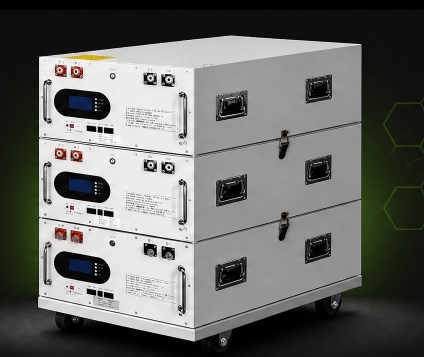
The value of scalable battery storage becomes obvious when examining real-world household energy transitions.
Consider a homeowner who installs a 10 kWh battery system alongside a rooftop solar array.
At the time of installation, the system comfortably covers evening consumption and provides limited backup power during outages.
Three years later, the homeowner purchases an electric vehicle.
Daily energy consumption rises dramatically.
A traditional fixed-capacity battery may no longer provide sufficient storage to maximize solar self-consumption or maintain backup capability during extended outages.
Without scalability, the homeowner faces two undesirable options:
● Accept reduced performance
● Replace the entire system
With scalable battery storage, a third option exists.
Additional battery modules can simply be added to increase total storage capacity.
The original investment remains valuable.
The system evolves alongside the household.
This capability is one of the strongest arguments for modular architecture in residential applications.
Not every homeowner has a dedicated utility room or large garage.
Many installations must fit into compact spaces, narrow side yards, storage rooms, or utility closets.
This reality has driven growing interest in the stackable energy storage battery concept.
Rather than occupying a large fixed footprint, stackable systems utilize vertical space more efficiently.
Additional battery modules are added by stacking units together, creating a clean and compact installation.
The advantages extend beyond aesthetics.
Stackable systems can often be deployed in locations where traditional battery cabinets simply will not fit.
This flexibility becomes especially important in urban environments where available installation space is limited.
For installers, stackable architecture can also reduce installation complexity and shorten deployment times.
A simpler installation frequently translates into lower labor costs and fewer potential issues during commissioning.
Many buyers evaluating residential storage eventually ask the same question:
How does a modular system compare with a traditional cabinet-based battery solution?
The answer depends on the priorities of the user, but several important differences consistently emerge.
| Feature | Modular Battery Storage | Cabinet Battery Storage |
|---|---|---|
| Expansion | Add modules gradually | Often requires major upgrades |
| Space Usage | Flexible vertical stacking | Fixed footprint |
| Initial Investment | Lower entry cost | Higher upfront spending |
| Maintenance | Module-level replacement | Cabinet-level servicing |
| Future Upgrades | Simple and scalable | More restrictive |
Traditional cabinet systems can be effective in large commercial installations where future expansion plans are already known.
Residential users, however, often benefit from the flexibility that modular designs provide.
When future energy requirements remain uncertain, adaptability becomes a valuable asset.
Perhaps the most compelling advantage of a modular approach is financial flexibility.
Many homeowners are interested in battery storage but hesitate because of the upfront investment required.
A large fixed-capacity installation may provide impressive specifications, but it also demands a significant initial budget.
The concept of pay as you grow battery storage addresses this concern directly.
Instead of purchasing maximum capacity immediately, homeowners invest only in what they currently need.
Additional modules are added later as energy consumption increases.
This approach produces several benefits:
● Lower initial capital expenditure
● Faster investment decisions
● Reduced risk of oversizing
● Better alignment with future energy demand
For many households, this strategy feels considerably more practical than purchasing excess capacity on day one.
Energy needs evolve.
Investments should be able to evolve as well.
The rapid growth of residential solar installations has created a natural demand for modular battery storage for solar systems.
Solar generation rarely matches household consumption patterns perfectly.
Most homes produce peak solar power during daylight hours when electricity demand may be relatively low.
Battery storage bridges this gap.
Excess solar generation can be stored during the day and used later in the evening.
However, as solar systems expand, storage requirements often increase as well.
A homeowner may begin with a modest photovoltaic installation and later add additional panels.
Without expandable storage, much of the added generation may be exported back to the grid at unfavorable rates.
This is where modular battery storage for solar systems delivers significant advantages.
Storage capacity can be increased alongside solar generation capacity.
Both systems grow together.
The result is greater self-consumption, improved return on investment, and reduced dependence on utility companies.
To understand the practical value of an expandable energy storage system, consider a common residential scenario.
A homeowner installs:
The goal is basic backup power and even energy usage.
Two years later:
Additional battery modules increase storage to 20 kWh.
No major system replacement is required.
An electric vehicle is purchased.
Daily electricity consumption increases significantly.
Battery capacity expands again to 30 kWh or more.
The homeowner continues building on the original investment rather than starting from scratch.
This incremental approach is precisely what makes modular systems attractive to both homeowners and installers.
Performance specifications often dominate product discussions, but installation efficiency deserves equal attention.
Complicated installations increase labor costs, extend project timelines, and create additional opportunities for errors.
Modern stackable systems address these concerns through simplified installation methods.
Snap-on designs, quick-connect cabling, and modular architecture can significantly reduce deployment complexity.
For installers, this means fewer hours on site.
For homeowners, it often means lower overall project costs.
The benefits become even more apparent when future expansions are required.
Adding additional modules is generally far simpler than modifying a fixed cabinet structure.
Expansion becomes a routine upgrade rather than a major construction project.
Battery buyers frequently focus on capacity and price while overlooking longevity.
This can be a costly mistake.
The true value of an energy storage system is determined not only by how much energy it stores today but by how reliably it performs over many years.
High-quality lithium battery systems built with premium cells are increasingly capable of delivering thousands of charge-discharge cycles.
In practical terms, this means years of daily operation without significant performance degradation.
A storage system that maintains strong performance for a decade or longer often delivers greater value than a lower-cost alternative that requires premature replacement.
This perspective is becoming increasingly important as homeowners evaluate total ownership costs rather than simply comparing purchase prices.
One of the most common conversations in the residential storage market revolves around cost.
Understandably, homeowners want to know how much a battery system costs before they explore anything else. However, experienced installers often point out that purchase price alone rarely tells the full story.
A battery system is not a product that is replaced every few years. It is a long-term infrastructure investment, much like a solar array, HVAC system, or roofing project.
This is why lifecycle economics matter.
For example, a battery equipped with premium lithium cells, capable of delivering up to 8,000 cycles and designed for a service life approaching 20 years, may initially appear more expensive than entry-level alternatives.
Yet over the course of its operating life, the numbers often tell a different story.
A homeowner who chooses a reliable expandable energy storage system may avoid several future expenses:
When these factors are considered, the long-term cost difference can become surprisingly small.
In many cases, the more flexible solution becomes the more economical one.
Not every household has the same energy profile.
Some users simply want backup power during occasional outages. Others are attempting to maximize solar self-consumption. Some are preparing for electric vehicle adoption, while others live in remote locations where grid reliability is limited.
The strength of modular battery storage lies in its ability to accommodate all of these situations.
Solar homeowners often experience changing energy requirements over time.
Additional panels may be installed.
Electricity tariffs may change.
Family size may increase.
A modular system adapts more easily to these changes than a fixed-capacity alternative.
EV adoption is dramatically increasing household electricity consumption.
A vehicle charged at home can quickly alter the economics of energy storage.
The ability to expand capacity without replacing the original battery system becomes particularly valuable in these situations.
Many rural properties experience occasional grid instability.
Some homeowners operate workshops, irrigation systems, or other energy-intensive equipment.
Battery storage requirements can change substantially as these operations grow.
A scalable battery storage solution provides flexibility without forcing a complete redesign.
Vacation properties often have seasonal energy demands.
Owners may initially install modest storage capacity and expand later if occupancy patterns change.
This gradual investment strategy aligns perfectly with the modular approach.
Although residential energy storage has advanced significantly over the last decade, several persistent challenges continue to influence purchasing decisions.
Understanding these concerns helps explain why modular systems are attracting growing interest worldwide.
Many homeowners purchase more storage than they actually need.
Installers often recommend larger systems to avoid future limitations, but this increases initial investment.
Modular designs reduce this risk because capacity can be added later.
The opposite problem is equally common.
A system that appears sufficient today may become inadequate after the installation of an EV charger, heat pump, or larger solar array.
Expansion capability helps address this issue without forcing a complete replacement.
Energy technology evolves rapidly.
Homeowners worry that today's investment could become obsolete.
A modular platform provides greater flexibility for adapting to future requirements.
Limited installation space remains a challenge in many urban environments.
The compact footprint of a stackable energy storage battery often provides more deployment options than traditional cabinet-based systems.
Distributors, solar installers, and project developers evaluating residential battery systems tend to ask remarkably similar questions.
Their concerns go far beyond simple capacity figures.
They want confidence that the system will remain practical for years to come.
The following topics frequently arise during procurement discussions.
Buyers often hear marketing claims about scalability, but real-world implementation matters.
A well-designed modular platform should allow additional batteries to be integrated without extensive rewiring, software modifications, or system replacement.
Expansion should feel like an upgrade rather than a reconstruction project.
Compatibility concerns are legitimate.
Installers want reassurance that battery modules purchased years later will work seamlessly with the original installation.
Systems designed around standardized communication protocols such as RS485 and CAN typically provide greater long-term flexibility.
Expansion limits vary significantly between manufacturers.
Some systems allow only modest increases in capacity.
Others support extensive growth.
A platform capable of stacking up to 16 units provides considerable room for future development.
This question becomes increasingly important as system size grows.
One advantage of modular architecture is the ability to isolate and replace individual modules rather than servicing an entire cabinet.
This can reduce maintenance costs and minimize downtime.
Selecting a battery storage solution requires more than comparing specification sheets.
Several practical considerations deserve careful evaluation.
| Selection Factor | Why It Matters |
|---|---|
| Expansion Capability | Supports future energy growth |
| Communication Protocols | Improves inverter compatibility |
| Cycle Life | Influences long-term value |
| Installation Method | Affects labor costs |
| Warranty Support | Reduces investment risk |
| Cell Quality | Determines reliability |
| Scalability Limit | Defines future flexibility |
Many buyers focus heavily on capacity while overlooking these factors.
However, long-term satisfaction often depends more on adaptability than on initial storage volume.
A slightly smaller system with strong expansion potential frequently proves more valuable than a larger fixed-capacity solution.
Across Europe, Australia, North America, and other major residential solar markets, one trend has become increasingly clear.
Homeowners want greater control over their energy future.
Rising utility costs, grid instability, and evolving energy regulations are encouraging households to become more self-sufficient.
Battery storage plays a central role in this transition.
The goal is no longer limited to emergency backup power.
Many homeowners now view storage as an essential component of long-term energy management.
This shift helps explain the growing popularity of modular battery storage for solar systems.
Rather than making a single large investment based on uncertain forecasts, homeowners can build energy infrastructure progressively.
Their storage capacity grows alongside their energy ambitions.
The system becomes a dynamic asset rather than a static purchase.
When comparing storage technologies, buyers often become focused on headline specifications.
They compare capacity numbers, charging rates, and warranty periods.
While these metrics are important, flexibility frequently proves just as valuable.
A household's energy needs five years from now may look very different from today's requirements.
An adaptable system acknowledges this reality.
That is ultimately the strength of expandable home battery storage.
Instead of forcing homeowners to predict the future with perfect accuracy, it allows them to respond to changing circumstances as they occur.
The result is a storage strategy built around real-world behavior rather than theoretical assumptions.
The energy transition is reshaping residential electricity consumption in ways few people could have predicted a decade ago.
Solar panels are becoming more common. Electric vehicles are entering driveways. Home electrification is accelerating. Utility pricing structures continue to evolve.
In this environment, flexibility has become a valuable resource.
A well-designed modular battery storage solution provides homeowners with the ability to adapt rather than commit to a fixed path.
The advantages extend beyond simple capacity expansion.
Lower entry costs, simplified upgrades, improved space utilization, and long-term investment protection all contribute to a stronger ownership experience.
Whether the goal is maximizing solar self-consumption, improving backup power capability, preparing for future EV charging, or reducing dependence on utility providers, a scalable battery storage approach offers a practical path forward.
For households facing uncertain future energy requirements, an expandable energy storage system may not simply be a convenient option.
It may be the smartest way to ensure that today's investment continues to meet tomorrow's needs.


Compact, quiet, and powerful, it keeps your essentials running during outages and lets you charge anywhere with solar power or grid power.
Perfect for renters who need flexibility without compromise.
Our estimator is only set up to provide preliminary estimates and installer information to residents of single family homes.