
 Email Us
 Contact us
 Whats App
Single family home

Power outages are becoming a growing concern for homeowners who rely on stable electricity for daily living, remote work, security systems, and essential appliances. A 15kWh home battery has become one of the popular choices for residential backup power because it offers a balance between storage capacity, installation size, and long-term energy independence.
However, many homeowners still have the same question before investing:
How long can a 15kWh battery actually power a house during a blackout?
The answer depends on more than battery capacity. Household electricity consumption, inverter output, backup load selection, battery efficiency, and solar charging capability all affect real-world performance.
A properly configured 15kWh home energy storage battery can support essential household loads for many hours and, in some cases, provide backup power throughout an entire day when combined with solar generation. Understanding how capacity works helps homeowners choose a system that matches their actual energy needs instead of simply buying the largest battery available.
This guide explains how a 15kWh battery works, what appliances it can support, how to calculate backup time, and what factors should be considered when selecting a residential energy storage system.
Before choosing a battery system, homeowners need to understand what “15kWh” actually represents.
A 15kWh home battery means the battery can theoretically store 15 kilowatt-hours of electrical energy. This measurement describes the total amount of energy available, not the amount of power the battery can deliver at one moment.
For example:
· A device using 1kW of power could theoretically operate for around 15 hours.
· A home consuming 3kW continuously could use the stored energy in approximately 5 hours.
In real applications, the usable energy will be slightly lower because residential battery systems include energy conversion losses, battery protection limits, and inverter efficiency factors.
A complete 15kWh energy storage system usually includes:
· Battery modules
· Battery management system (BMS)
· Hybrid inverter or compatible inverter
· Energy management system
· Monitoring platform
· Safety protection components
The battery capacity determines how long energy can be stored, while the inverter determines how much power can be supplied to household appliances at the same time.
This is why selecting a battery only by kWh rating is not enough. A reliable home energy storage solution requires matching both capacity and output power.
The backup time of a 15kWh home battery depends mainly on household energy consumption.
A small home with only essential backup loads may operate much longer than a high-consumption household running air conditioning, electric heating, or other large appliances.
A simple calculation method is:
Battery backup time = Usable battery capacity ÷ Average household power consumption
For example:
Household Power Usage | Estimated Backup Duration |
500W average load | Around 25–28 hours |
1kW average load | Around 12–14 hours |
2kW average load | Around 6–7 hours |
3kW average load | Around 4–5 hours |
Actual results vary depending on battery efficiency, inverter losses, temperature, and system settings.
For many residential users, the goal is not necessarily to power every appliance during an outage. Instead, the purpose of a whole house backup battery is usually to maintain essential electricity usage, including:
· Refrigerator and freezer
· Lighting
· Internet router
· Security systems
· Computers
· Mobile device charging
· Medical equipment where required
By managing energy consumption properly, a 15kWh system can provide reliable backup without excessive battery capacity investment.
One common misunderstanding is that a larger battery automatically means it can power every household appliance.
In reality, two factors must be considered:
Energy capacity determines how long devices can run.
Inverter output power determines which devices can start and operate together.
For example, a refrigerator may consume only a few hundred watts during normal operation, but an air conditioner may require several kilowatts during startup.
Appliance | Typical Power Consumption | Suitable for 15kWh Backup |
Refrigerator | 100–300W | Yes, long-term support |
LED lighting | 50–150W | Yes |
WiFi router | 10–30W | Yes |
Television | 80–200W | Yes |
Desktop computer | 200–500W | Yes |
Air conditioner | 1000W+ | Depends on inverter capacity |
Electric heater | 1500W+ | Limited |
For homeowners considering a 15kWh solar battery, it is important to review actual daily electricity usage rather than estimated appliance numbers.
A household that mainly needs backup lighting, refrigeration, and communication equipment may have completely different requirements from a home that wants to maintain HVAC operation during a long outage.
A 15kWh solar battery is often selected by homeowners who already have photovoltaic panels or plan to install solar energy systems.
The advantage of combining solar panels with battery storage is that excess solar energy generated during the day can be stored and used at night or during grid interruptions.
A typical solar storage cycle works like this:
1. Solar panels generate electricity during daylight hours.
2. Household loads use available solar power first.
3. Extra energy charges the battery.
4. Stored energy supplies the home when solar production decreases.
5. During blackouts, the battery provides backup power through the inverter.
However, whether a 15kWh battery is suitable depends on several factors:
A home using 10–15kWh per day may find a 15kWh system well balanced.
A larger household with higher electricity demand may require additional battery capacity or multiple battery units.
The solar system should be capable of producing enough energy to recharge the battery.
For example, a large battery paired with a small solar array may take longer to recharge after several cloudy days.
Homes with high evening electricity consumption often benefit more from battery storage because stored solar energy can replace grid electricity during peak hours.
For homeowners looking for greater energy independence, a properly designed home battery for solar system can reduce grid dependence while improving backup reliability.
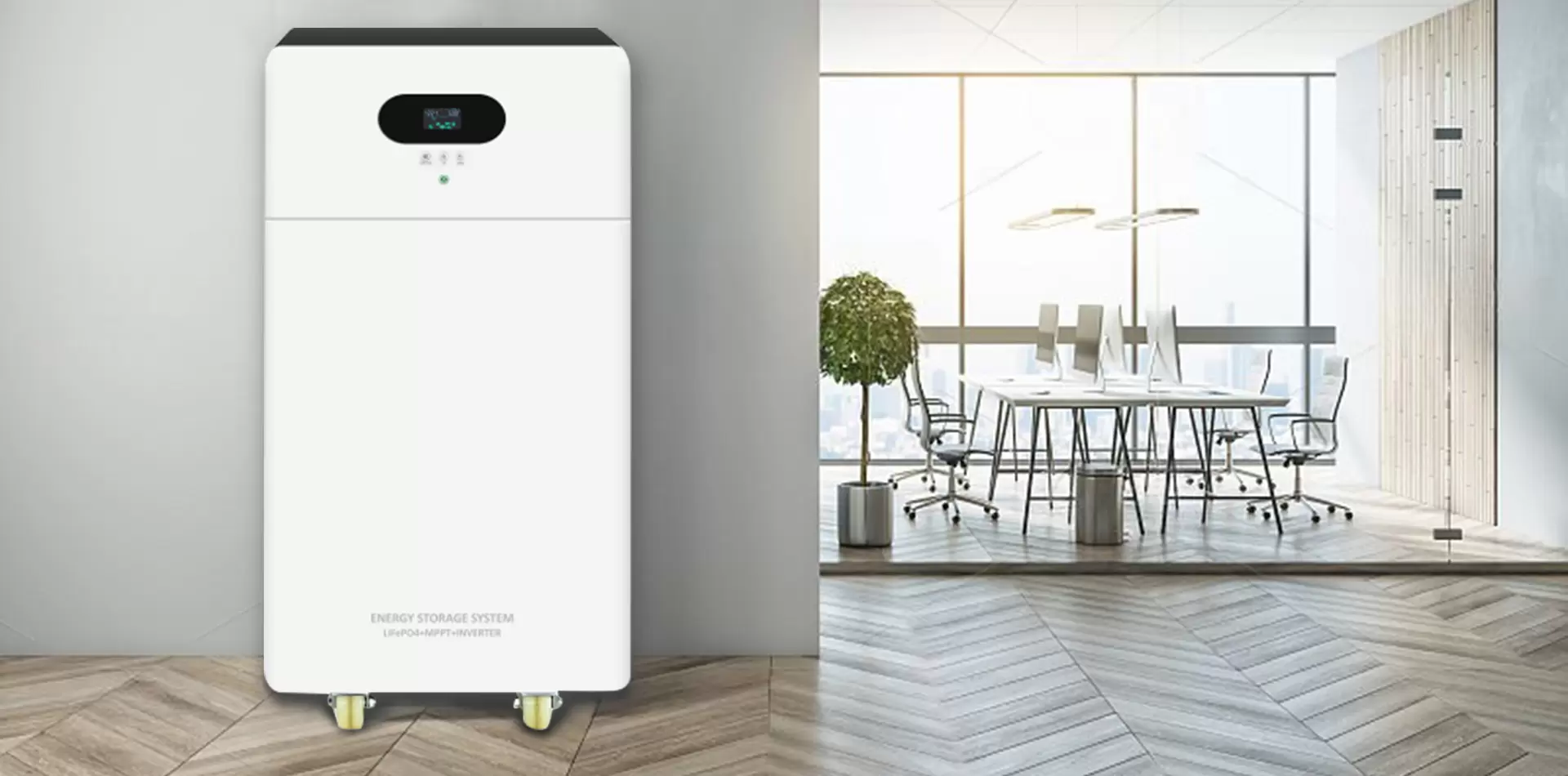
Most modern residential energy storage systems use lithium iron phosphate (LiFePO4) battery technology because it offers a strong balance between safety, lifespan, and daily performance.
A 15kWh LiFePO4 battery is not only designed to store more energy. It must also maintain stable performance through thousands of charge and discharge cycles while operating in different home environments.
Compared with traditional battery chemistries, LiFePO4 batteries provide several advantages for residential applications:
Long cycle life
Home batteries are charged and discharged frequently, especially in solar applications. A longer cycle life means the battery can maintain usable capacity over many years instead of experiencing rapid degradation.
Better thermal stability
Residential batteries are often installed in garages, utility rooms, or outdoor enclosures where temperature conditions may change. LiFePO4 chemistry provides better thermal stability, which helps improve long-term reliability.
Built-in BMS protection
A high-quality residential battery system relies on a battery management system (BMS) to monitor and control battery operation.
The BMS manages:
· Cell voltage balancing
· Overcharge protection
· Over-discharge protection
· Temperature monitoring
· Charging and discharging control
For a 15kWh home energy storage battery, the battery management system plays an important role because the larger capacity requires accurate monitoring of multiple battery cells working together.
Choosing the correct battery capacity is not simply about selecting the largest available option. The ideal size depends on household electricity consumption, backup expectations, and future energy plans.
Many homeowners compare 10kWh, 15kWh, and 20kWh systems before making a purchase decision.
Battery Capacity | Suitable Application | Typical User |
10kWh Battery | Basic backup and daily energy shifting | Small homes with moderate electricity use |
15kWh Battery | Balanced backup and solar storage | Average households requiring longer backup |
20kWh+ Battery | Extended backup and higher consumption | Large homes or high-energy users |
A 15kWh home battery is often considered a practical middle option because it provides more backup capability than smaller systems without significantly increasing installation complexity.
For example:
A 10kWh system may cover essential loads during short outages, but users may need to limit appliance usage during longer interruptions.
A 20kWh system provides longer autonomy but requires more installation space and a higher investment.
A 15kWh system can provide a balanced solution for homeowners who want:
· More backup time during outages
· Better solar energy utilization
· Reduced dependence on grid electricity
· Flexible future expansion options
For residential battery manufacturers, delivering a reliable system requires more than assembling battery cells into a cabinet.
A professional energy storage factory needs to verify performance at multiple stages before products reach the market.
During the production process of a 15kWh energy storage system, manufacturers typically focus on four important areas.
Each battery system needs to be tested to ensure the actual usable capacity matches the rated specification.
Capacity testing helps identify:
· Cell consistency issues
· Abnormal capacity loss
· Charging and discharging performance problems
This step ensures customers receive a battery that performs according to its specifications.
Residential batteries are expected to operate for many years.
Cycle testing evaluates:
· Capacity retention after repeated charging
· Long-term discharge stability
· Battery aging performance
This information helps manufacturers improve battery management strategies and provide more accurate lifespan expectations.
A residential battery system must operate safely under different conditions.
Testing may include:
· Overvoltage protection
· Temperature protection
· Communication stability
· Abnormal operating conditions
Safety is especially important for larger capacity systems because more stored energy requires stronger protection mechanisms.
A home battery is part of a larger energy ecosystem.
Manufacturers need to verify compatibility with:
· Hybrid inverters
· Solar systems
· Monitoring platforms
· Energy management software
A reliable 15kWh solar battery system should not only store energy but also communicate effectively with the complete solar installation.
Selecting a residential battery requires understanding actual energy needs rather than choosing based only on capacity.
The following process can help homeowners evaluate whether a 15kWh system is suitable.
Start by reviewing electricity bills or smart meter data.
Important information includes:
· Average daily kWh usage
· Peak electricity demand
· Nighttime consumption
· Seasonal changes
A home using electricity mainly during the evening may benefit significantly from battery storage.
Not every appliance needs to operate during a blackout.
Create a backup priority list:
High priority:
· Refrigerator
· Lighting
· Internet equipment
· Security system
Medium priority:
· Television
· Computers
· Small kitchen appliances
Lower priority:
· Large heating equipment
· High-power appliances
This helps determine whether a 15kWh battery capacity is enough for the intended application.
Battery capacity and inverter power must match.
A 15kWh battery may store enough energy, but the inverter must also provide enough output power to start and operate connected equipment.
Large appliances such as air conditioners or pumps require special attention because startup power can be significantly higher than normal operating power.
A good energy storage system should support future changes.
Homeowners may later add:
· Electric vehicles
· More solar panels
· Additional household appliances
A modular battery design can provide more flexibility by allowing capacity expansion when energy demand increases.
A 15kWh battery can provide backup power from several hours to more than one day depending on household electricity consumption.
A home using only essential loads may achieve much longer backup time compared with a household running multiple high-power appliances.
Yes, but the result depends on the inverter size, household load, and backup strategy.
A properly designed whole house backup battery system can support many household functions, but high-power appliances may require load management or additional capacity.
The required solar panel capacity depends on local sunlight conditions, daily electricity usage, and desired charging speed.
A larger solar array can recharge the battery faster, especially after extended cloudy periods.
A quality 15kWh LiFePO4 battery can typically provide many years of service when properly installed and maintained.
Actual lifespan depends on:
· Charge and discharge frequency
· Operating temperature
· Depth of discharge
· Battery management system settings
A 15kWh system can work for some off-grid homes, but system design is critical.
Off-grid applications require careful consideration of:
· Solar generation capacity
· Backup power requirements
· Seasonal energy changes
· Additional battery expansion needs
A 15kWh home battery is a practical choice for many residential energy storage applications because it offers a balance between backup capability, solar integration, and installation cost.
However, the right battery size depends on the complete energy system rather than the battery capacity alone.
Homeowners should evaluate:
· Daily electricity consumption
· Backup priorities
· Solar generation capability
· Inverter compatibility
· Long-term energy goals
For users who want reliable backup power and improved energy independence, a properly configured 15kWh home energy storage battery can provide a strong foundation for a modern residential energy system.


Compact, quiet, and powerful, it keeps your essentials running during outages and lets you charge anywhere with solar power or grid power.
Perfect for renters who need flexibility without compromise.
Our estimator is only set up to provide preliminary estimates and installer information to residents of single family homes.