
 Email Us
 Contact us
 Whats App
Single family home

When planning a whole house backup battery system, many homeowners focus on battery brand or price first. However, the more important question is: how much battery capacity does your home actually need?
A battery system that is too small may not provide enough power during an outage, while an oversized system can increase investment costs and leave valuable capacity unused. The right solution depends on several factors, including daily electricity consumption, backup loads, outage duration, and future energy needs.
For most residential applications, the battery size is not determined by the size of the house alone. A 100-square-meter home and a 300-square-meter home may require similar battery capacity if their electricity usage patterns are close.
A proper whole house backup battery design should consider:
· Which appliances need power during an outage
· How long backup power is required
· How much energy the household consumes every day
· Whether the system needs future expansion
· How the battery works with solar panels and inverters
For modern residential energy storage projects, 51.2V LiFePO4 battery systems have become a popular choice because they offer high safety, long cycle life, and flexible capacity expansion. Understanding battery sizing before purchasing helps homeowners avoid unnecessary costs and build a more reliable backup power solution.
Choosing the number of batteries for a home backup system is not simply about adding more capacity. The goal is to balance energy availability, system efficiency, and investment return.
In practical installation projects, manufacturers and system integrators usually start by analyzing the homeowner’s electricity profile instead of recommending a fixed battery size.
For example:
A family may want backup power for only essential appliances such as:
· Refrigerator
· Lighting
· Internet router
· Security system
· Medical equipment
In this situation, a smaller battery system may provide sufficient protection.
However, another homeowner may expect the battery to support:
· Air conditioning
· Water pumps
· Kitchen appliances
· Office equipment
· Multiple household circuits
This requires a larger home battery capacity and a higher inverter output.
From a system design perspective, battery quantity affects:
Backup duration
More usable battery capacity means longer operating time during grid failures.
Power availability
A battery with sufficient capacity does not always mean it can support high-power appliances. The inverter rating and battery discharge capability must also match the load.
Long-term operating cost
Oversizing the system increases initial investment, while undersizing may require additional battery modules later.
A professional battery supplier normally evaluates three key questions before determining the right configuration:
1. How much electricity does the home consume daily?
2. Which electrical loads must continue operating during an outage?
3. How many hours of backup power are required?
These factors determine whether a 5kWh, 10kWh, 15kWh, or larger residential energy storage system is suitable.
There is no universal battery size that fits every household. A reliable home battery sizing process starts with understanding actual energy demand.
The first step is calculating how much energy your home uses every day.
Electricity consumption is usually measured in kilowatt-hours (kWh). Homeowners can check:
· Monthly electricity bills
· Smart meter records
· Solar inverter monitoring data
· Previous energy usage reports
For example:
A household consumes around 12kWh of electricity per day.
If the homeowner wants overnight backup and plans to use approximately 80% of the battery’s usable capacity, a battery system close to 15kWh may provide a suitable balance.
The calculation is not simply:
Daily electricity usage = required battery capacity
Because real systems include:
· Battery depth of discharge
· Inverter efficiency
· Energy conversion losses
· Weather conditions
· Backup priorities
A professional design usually includes additional safety margins to ensure stable operation.
For homeowners with solar panels, the calculation also changes because solar generation can recharge the battery during the day.
A typical solar energy storage system works through this cycle:
Solar panels → Hybrid inverter → Battery storage → Home loads
During sunny periods, excess solar energy charges the battery. At night or during outages, stored energy supplies the home.
This is why many households choose a solar battery storage system instead of relying only on grid electricity.
One of the most common mistakes when selecting a whole house backup battery is assuming every appliance needs to operate during a blackout.
In reality, most homes have two types of electrical loads:
Critical loads
These are devices that should remain powered:
· Refrigerator
· Lighting
· WiFi equipment
· Security systems
· Communication devices
Non-essential loads
These consume more energy and may not need continuous backup:
· Electric ovens
· Swimming pool equipment
· Large heaters
· EV chargers
· Multiple air conditioners
The following example shows how different appliances affect battery sizing:
Appliance | Typical Power Demand | Backup Priority |
Refrigerator | 100–300W | High |
WiFi Router | 10–30W | High |
LED Lighting | 50–200W | High |
Television | 50–150W | Medium |
Air Conditioner | 1,000W+ | Depends on system size |
EV Charger | 3,000W+ | Usually requires special planning |
A home battery system should be designed according to the actual backup objective.
For example:
A homeowner who only wants protection from short power interruptions may only need a smaller battery.
A homeowner living in an area with frequent outages may need a larger residential battery storage system capable of supporting several hours or even a full day of operation.
After calculating electricity demand and backup loads, the next factor is backup time.
A simple calculation method is:
Battery capacity × usable efficiency ÷ average load = estimated backup duration
For example:
A 15kWh battery system does not always provide 15kWh of usable energy because:
· Batteries have recommended depth of discharge limits
· Inverters consume some energy
· Household loads fluctuate
A properly designed system considers these factors to avoid unexpected shutdowns.
Typical backup requirements:
Backup Goal | Recommended Battery Approach |
Short power interruptions | Smaller battery capacity |
Overnight backup | Medium residential battery system |
Extended outage protection | Larger modular battery storage system |
Whole-home energy independence | Expandable multi-battery configuration |
For this reason, modular designs are becoming increasingly popular. Homeowners can start with a basic system and add additional battery modules when electricity demand increases.
After understanding electricity consumption, backup loads, and required backup time, the next step is matching the battery capacity with the actual application.
Many homeowners make decisions based only on battery size numbers, but a higher kWh rating does not always mean a better solution. The ideal battery system should match the household’s energy habits, solar generation capacity, and future expansion plans.
The following comparison provides a general reference:
Battery Capacity | Suitable Application | Typical Usage Scenario |
5kWh battery | Basic backup | Lighting, WiFi, refrigerator, communication devices |
10kWh battery | Average household backup | Essential home circuits and moderate daily consumption |
15kWh battery | Whole house backup | Larger homes, longer outage protection, higher electricity demand |
20kWh+ battery | High-energy households | Large properties, multiple appliances, extended backup requirements |
A 15kWh home energy storage battery is becoming a common choice for homeowners who want more than emergency backup. It can support longer operating periods and provide greater energy independence when combined with rooftop solar.
For example, a family with:
· Daily electricity consumption of 12–15kWh
· A rooftop solar system
· Regular power outages
· Several essential household appliances
may find a 15kWh solar battery storage system a suitable balance between capacity and investment.
However, a smaller home with lower energy consumption may not need the same capacity. Battery sizing should always start with actual electricity usage rather than selecting the largest available model.
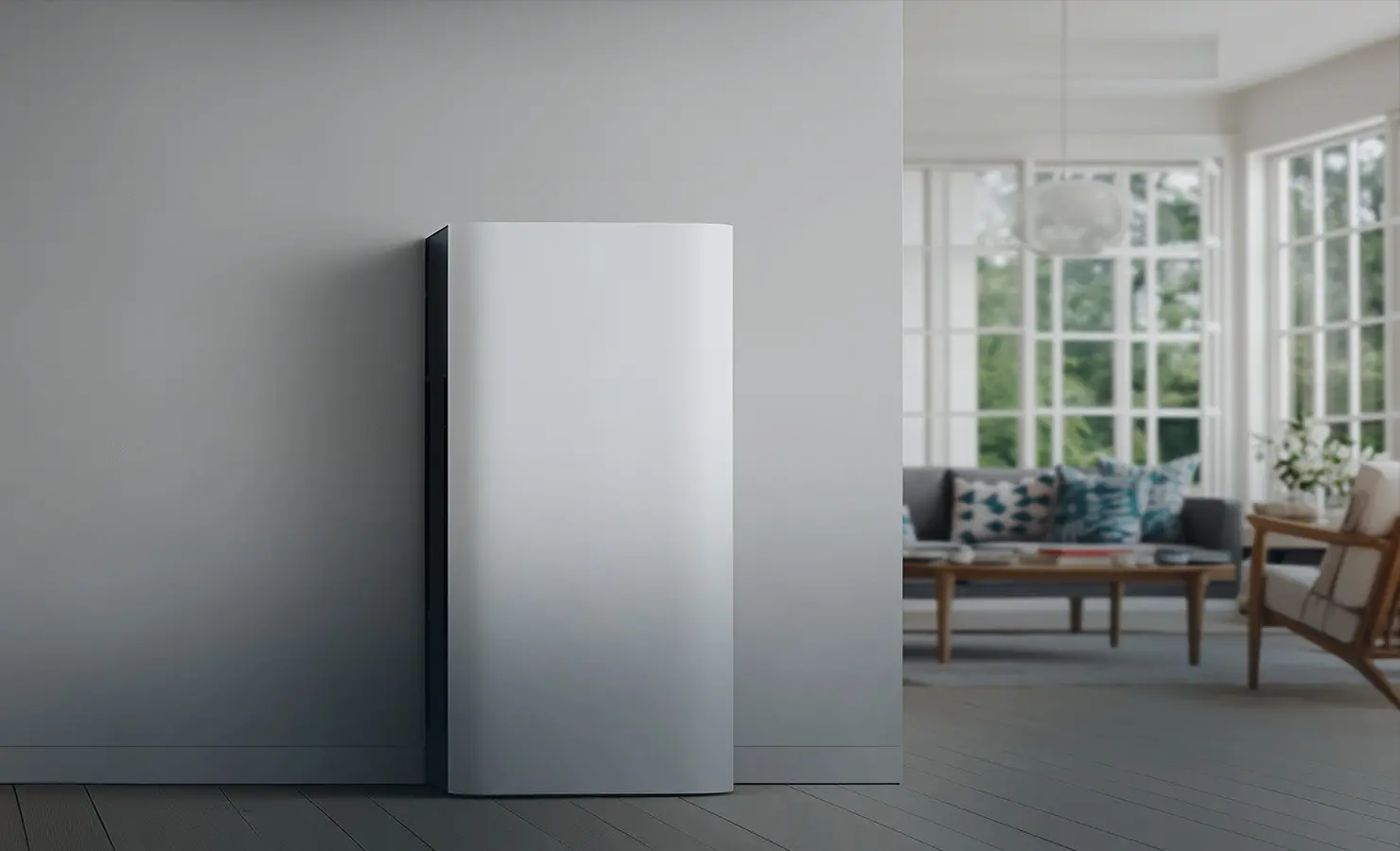
In recent years, 51.2V home battery systems have become one of the most common solutions for residential energy storage applications.
The reason is related to both battery technology development and practical installation requirements.
Most modern 51.2V systems use LiFePO4 battery chemistry, which provides several advantages:
· Long cycle life
· High thermal stability
· Better safety performance
· Lower maintenance requirements
· Flexible modular expansion
Compared with traditional low-voltage battery configurations, 51.2V systems can achieve better efficiency for many residential applications because they operate at a higher voltage level while reducing current requirements.
For homeowners, this means:
More flexible capacity options
A system can start with a smaller battery module and expand later according to increasing electricity demand.
Better compatibility
Many residential hybrid inverters are designed to work with 48V/51.2V battery platforms.
Improved installation planning
Modular battery designs make transportation, installation, and maintenance easier.
For example, a homeowner may initially install a 10kWh system and later add additional modules to reach 15kWh or higher capacity without replacing the complete energy storage system.
This type of scalable design is especially valuable as household electricity consumption changes over time.
A practical example helps explain how battery sizing works.
A residential customer installed a solar energy system and wanted reliable backup power during grid interruptions.
The customer needed backup support for:
· Refrigerator
· Lighting circuits
· Internet equipment
· Security system
· Home office equipment
· Selected household appliances
The average daily electricity consumption was approximately:
12–14kWh per day
The homeowner wanted:
· Overnight backup capability
· Solar charging during daytime
· Expandable capacity for future electricity growth
The recommended configuration included:
· 15kWh residential energy storage battery
· LiFePO4 battery cells
· Battery management system (BMS)
· Hybrid solar inverter
· Smart monitoring function
A smaller battery could provide emergency power but would offer limited operating time.
A larger battery system would increase upfront costs without providing significant additional value for the current energy demand.
The 15kWh configuration provided:
· Enough backup capacity for essential household loads
· Better solar energy utilization
· Room for future expansion
· Improved return on investment
This type of project demonstrates that choosing the right battery size is not about selecting the biggest capacity. It is about matching the battery system with real energy requirements.
Although home battery systems are becoming more popular, several mistakes can affect system performance and investment value.
A larger house does not always require a larger battery.
Energy consumption depends on:
· Number of residents
· Appliance usage habits
· Heating and cooling systems
· Solar generation
· Lifestyle requirements
A small energy-efficient home may use less electricity than a larger property with high-power appliances.
Battery capacity measures stored energy, but it does not determine whether the system can start high-power devices.
For example:
An air conditioner may require a high starting current even if its average running consumption is moderate.
Therefore, system design must consider:
· Battery discharge capability
· Inverter power rating
· Peak load requirements
Many households increase electricity consumption over time due to:
· Electric vehicles
· Heat pumps
· Home offices
· Additional appliances
A modular battery storage system allows homeowners to expand capacity without replacing the entire system.
This is one reason why expandable LiFePO4 home battery systems are becoming increasingly attractive for long-term residential applications.
Professional battery manufacturers do not select system capacity based on a single number.
A complete sizing process usually includes several steps:
Step 1: Analyze electricity consumption
Review historical electricity usage and identify daily energy requirements.
Step 2: Define backup objectives
Determine which appliances must remain operational during power failures.
Step 3: Calculate required battery capacity
Consider:
· Energy consumption
· Backup hours
· Battery efficiency
· Depth of discharge
Step 4: Match inverter and battery performance
Ensure the battery system can support both normal operation and peak loads.
Step 5: Evaluate installation conditions
Consider:
· Indoor or outdoor installation
· Temperature range
· Ventilation requirements
· Maintenance accessibility
This approach helps avoid oversizing or undersizing problems and creates a more reliable residential energy storage solution.
The answer depends on your daily electricity consumption and backup requirements. Some homes may only need a 5kWh or 10kWh battery, while larger households may require a 15kWh or higher-capacity system.
A 15kWh home energy storage battery can support many residential applications, especially when paired with solar panels and a properly sized inverter. However, the actual backup duration depends on household load and electricity usage.
Most homeowners should calculate battery size based on daily electricity consumption, critical loads, and expected backup time. A professional energy assessment provides the most accurate recommendation.
Yes. Many modern modular battery systems allow additional battery modules to be installed later as electricity demand increases.
LiFePO4 batteries are widely used for residential energy storage because they offer long cycle life, stable performance, and strong safety characteristics.
Choosing the correct number of batteries for a whole house backup battery system requires more than comparing kWh numbers. The best solution balances energy demand, backup expectations, safety, and future expansion.
For most modern homes, a properly designed 51.2V LiFePO4 battery system provides a practical foundation for reliable solar storage and backup power.
Whether the goal is reducing grid dependence, improving outage protection, or increasing solar self-consumption, the right battery capacity can make the entire energy system more efficient and cost-effective.
BEINENG provides residential energy storage solutions ranging from compact home battery systems to larger modular configurations, helping homeowners and installers build flexible backup power systems based on real energy needs.


Compact, quiet, and powerful, it keeps your essentials running during outages and lets you charge anywhere with solar power or grid power.
Perfect for renters who need flexibility without compromise.
Our estimator is only set up to provide preliminary estimates and installer information to residents of single family homes.