
 Email Us
 Contact us
 Whats App
Single family home

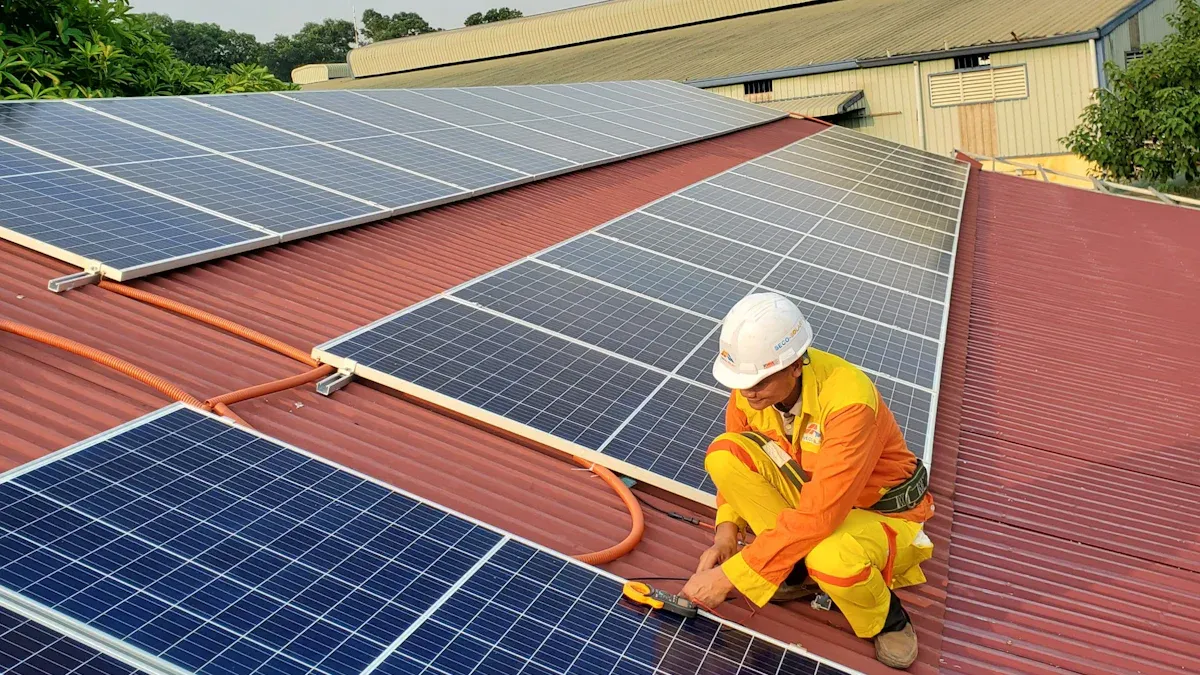
A home solar battery system uses sunlight to make power for your house. It also saves extra energy for later use. You can spend less money and use the grid less if you plan your system well. Many people pick smart options like BEINENG Home ESS. These systems have solar, battery storage, and EV charging together. In the last five years, about 15–20% of new U.S. homes with solar added battery storage. This number is still going up. With a good setup, you could save $115–$140 each month on electricity.
A home solar battery system helps you save energy. It also lowers your electricity bills. You can save $115 to $140 each month. This happens when you use solar power well.
It is important to know your energy needs. Do an energy audit to see how much power you use. This helps you find ways to save energy at home.
Pick the right parts for your solar system. The main parts are solar panels, battery modules, inverters, and charge controllers. These parts work together to make your system run well.
Make sure your solar battery system is the right size. This gives you enough energy for your home. Think about how many people live in your house. Also, think about the weather and changes in seasons.
Take care of your solar battery system often. Use smart monitoring to help it last longer. Apps can help you check how your system is working. They can also send alerts if something is wrong.
A home solar battery system helps your house use sunlight for power. It lets you save extra energy to use later. You can use this energy for lights, appliances, or charging your electric vehicle. The main parts work together so you can control your energy. Here is what each part does:
The Battery keeps extra energy until you need it.
The Inverter changes the power so your house can use it.
The Battery Management System keeps things safe and working well.
The Charge Controller makes sure the panels send the right power.
System Monitoring lets you see your energy use right away.
Racking and Enclosures keep your equipment safe.
Cabling and Safety Components make sure everything is connected safely.
Modern systems like BEINENG Home ESS do even more. You get solar, battery storage, and EV charging in one system. BEINENG Home ESS uses smart technology and an app. You can check your energy use anytime. You can add more battery modules if you need them. The system looks nice in your home. You can set it up fast with easy connectors.
Tip: A solar energy system can keep your house running during blackouts.
A solar power system gives your home many good things. Here are the top three:
You can pay less for electricity, even if prices go up.
Your home can be worth more, sometimes by about $15,000.
You can make your own power and use it when you want.
A solar battery system helps you use energy better. You can save power when it is cheap and use it when it costs more. Smart systems like BEINENG Home ESS use AI to guess how much energy you need. They can also change for weather. You can connect to smart home devices to save even more energy.
Feature | Description |
|---|---|
Unique Design | Cool eagle eye front and side lights, looks nice at home. |
High Integration | Has solar inverter, EV DC Charger, Battery PCS, Battery Pack, and EMS. |
Enhanced Safety | Five layers of battery safety and system safety. |
Streamlined Installation | Easy connectors let you set it up in 15 minutes. |
AI Technology | Uses cloud and AI for safety and smart energy plans. |
You get more than just saving money. You get peace of mind and a smarter way to use power.
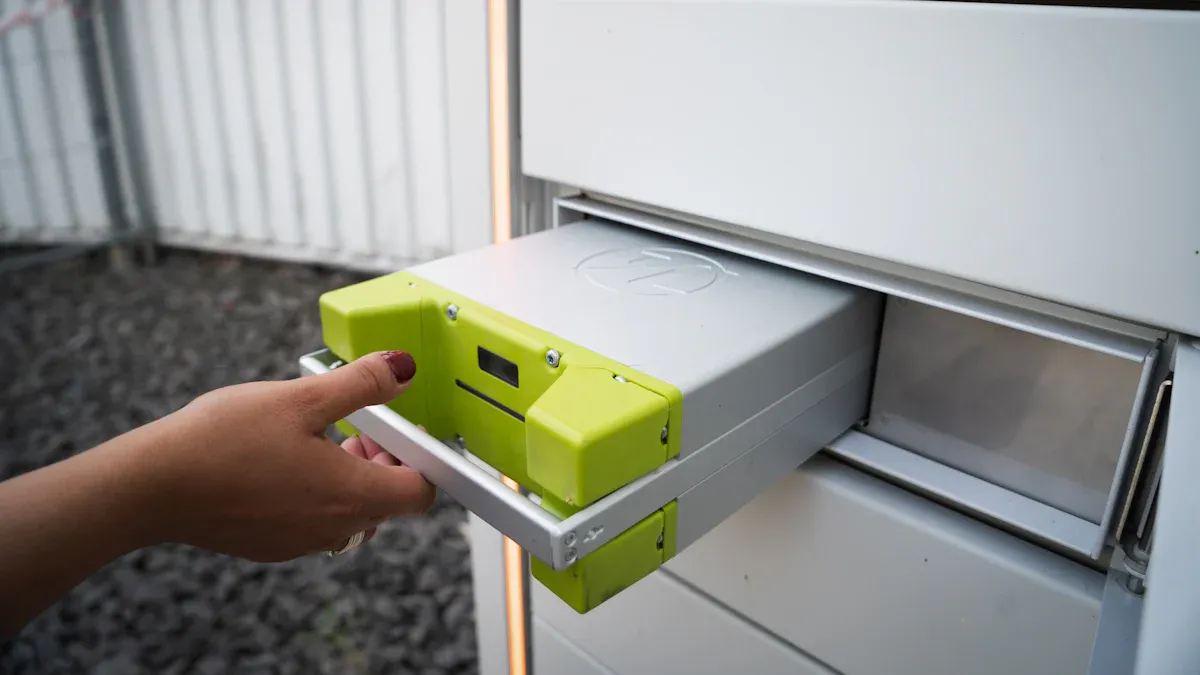
A solar battery storage system has many parts. These parts work together to help your home use solar energy. Each part has a special job to keep things safe and running well. Let’s look at the main parts and what they do.
Solar panels go on your roof or in your yard. They catch sunlight and turn it into power. Most solar panels today are about 20% to 25% efficient. Some can be as high as 24.8%. If you pick panels with high efficiency, you get more energy from the sun. Solar panels are the first thing you need for your solar system.
Solar panels need lots of sun to work best.
You must have enough panels for your power needs.
Battery modules keep extra energy your panels make. You use this energy at night or when it is cloudy. Most homes use lead-acid or lithium-ion batteries. Lead-acid batteries last about 10 to 15 years. Lithium-ion batteries last longer and work better. BEINENG battery modules can be stacked. This means you can add more if you need more power. You can mix old and new batteries for more choices.
Tip: Stackable batteries let you add more as you need them.
The inverter is like the brain of your system. It changes the power from your panels (DC) into the kind your house uses (AC). Here is what the inverter does:
Helps your system work with the grid.
Keeps your system safe if there is a problem.
Shows you how much energy you use.
Manages power and battery storage.
The charge controller keeps your battery modules safe. It stops the batteries from getting too full or too empty. This helps your batteries last longer. The charge controller also helps you use energy in the best way.
Stops batteries from overcharging or getting too empty.
Helps you use energy in a smart way.
Wiring and mounting connect all the parts of your solar system. You need the right size wires to keep things safe. Use wires made for outside and for solar systems. Always use fuses or circuit breakers to stop too much power. Put your battery storage in a clean, dry place with good air. Wear safety glasses and gloves when you work with these parts.
Use the right wire size and fuse for your system.
Connect batteries to the charge controller before the panels.
Safety devices keep your solar battery system safe and legal. You need good air flow, fire safety, and the right electrical setup. Here is a quick look:
Safety Device | Description |
|---|---|
Ventilation | Keeps batteries cool and stops overheating. |
Fire Safety Compliance | Follows rules for safe setup. |
Electrical Infrastructure | Uses breakers and switches for safety. |
You need permits and plans for your system. Always follow local rules for building, electric, and fire safety.
Smart systems like BEINENG Home ESS let you check all parts with the myBeineng app. You can see your energy and battery storage on your phone.
Getting the right size for your home solar battery system is important. It helps you save money and keeps your lights on. You need to think about your energy use, your house, and your goals. Let’s look at the steps so you can make good choices.
Before you choose any solar parts, you need to know how much energy your house uses. Doing an energy audit helps you see where you use the most power and where you can save.
Here’s an easy way to do your own energy audit:
Check your attic, walls, and floors for missing insulation. Look for gaps.
Check windows and doors for drafts. Seal any gaps with weatherstripping or caulk.
Look at your heating and cooling systems. Clean or change air filters and check ducts.
Change old bulbs to LED or CFL bulbs. Use timers or motion sensors for lights.
Check your appliances and electronics. Unplug things you don’t use and look for energy-saving models.
Find air leaks around outlets, pipes, and windows. Seal them up.
Check your water heater. Lower the temperature and wrap hot water pipes.
Track your energy use with your bills or a smart meter.
Try a DIY energy audit kit for more details.
You can also hire a professional for an audit. They might use a blower door test to find leaks or thermal imaging to find cold spots. After the audit, you’ll get a report with tips to save energy and lower your bills.
Tip: Knowing your daily energy use helps you plan your solar battery storage system better.
Now that you know your energy use, you can figure out how many solar panels you need. Your goal is to match your solar system to your daily energy use.
Here are some things that change how many panels you need:
Factor | Description |
|---|---|
Household Size | More people means more energy used. |
Climate Control | Heating and cooling use a lot of power. |
Appliance Usage | Using many appliances raises your energy needs. |
Water Heating | Hot water uses a lot of energy. |
Lighting | Indoor and outdoor lights add up. |
Electric Vehicles | Charging an EV uses extra energy. |
To figure out your solar panel size, use this formula:
Formula Type | Formula |
|---|---|
Basic Formula | Number of Panels = (Annual kWh ÷ Peak Sun Hours ÷ 365) ÷ (Panel Wattage × System Efficiency) |
Advanced Formula | System Size (kW) = Annual kWh ÷ (Peak Sun Hours × 365 × System Efficiency) |
Number of Panels = System Size (kW) × 1,000 ÷ Panel Wattage |
Where you live matters, too. If you live in the Southwest, you get more sun and need fewer panels. In northern or coastal places, you may need more panels for the same energy.
Region | Sunlight Exposure | Panel Requirement |
|---|---|---|
Southwest | High | Fewer panels needed |
Northern areas | Moderate | Proper sizing needed |
Coastal areas | Consistent | Moderate panels needed |
High-altitude | Increased | Fewer panels needed |
Note: Always check your roof space and local rules before you buy solar panels.
Once you know your solar panel setup, you need to size your battery storage. The right battery storage keeps your house running at night or when it’s cloudy.
Think about these things when picking your battery storage:
Your energy goals. Do you want backup for just the basics or your whole house?
The specs of your batteries. Look at usable capacity, peak output, and efficiency.
Your property and how much solar energy you can make.
Seasonal changes. You may need more storage in winter when days are shorter.
Environmental conditions. Hot or cold weather can change how your battery works.
You can use this formula to help:
Battery storage capacity = (Total Daily Energy Consumption) / (Depth of Discharge × Days of Autonomy)
If you want backup for two days, use “2” for Days of Autonomy. Depth of Discharge (DoD) is how much of the battery you can use safely—most lithium batteries have a DoD of 80% to 90%.
Callout: Stackable batteries, like those in the BEINENG Home ESS, let you add more storage as your needs grow. You can mix new and old batteries, so you don’t have to replace everything at once.
The inverter and charge controller are the brains of your solar battery storage system. You want to pick the right size so your system works well.
The inverter should match your solar system’s total output. If your panels make 5 kW, get an inverter that can handle at least that much.
The charge controller keeps your batteries safe from overcharging or draining too much. Make sure it matches your battery voltage and solar panel output.
Look for smart features, too. Some systems, like BEINENG Home ESS, let you check everything with an app. You can see your energy flow, check your battery storage, and even control your system from your phone.
Feature/Benefit | BEINENG Home ESS | Traditional Battery Storage Solutions |
|---|---|---|
Flexibility | Adapts to many homes and needs | Less adaptable |
Scalability | Easy to add more storage | Harder to upgrade |
Space Efficiency | Compact and neat | Takes up more space |
With a modular system, you can start small and add more battery storage later. This makes it easy to grow your solar system as your family or needs change.
Tip: Always talk to a solar expert before making big decisions. They can help you pick the best system for your home.
By following these steps, you can size your home solar battery system with confidence. You’ll get the most from your solar panels, batteries, and all your solar system parts.
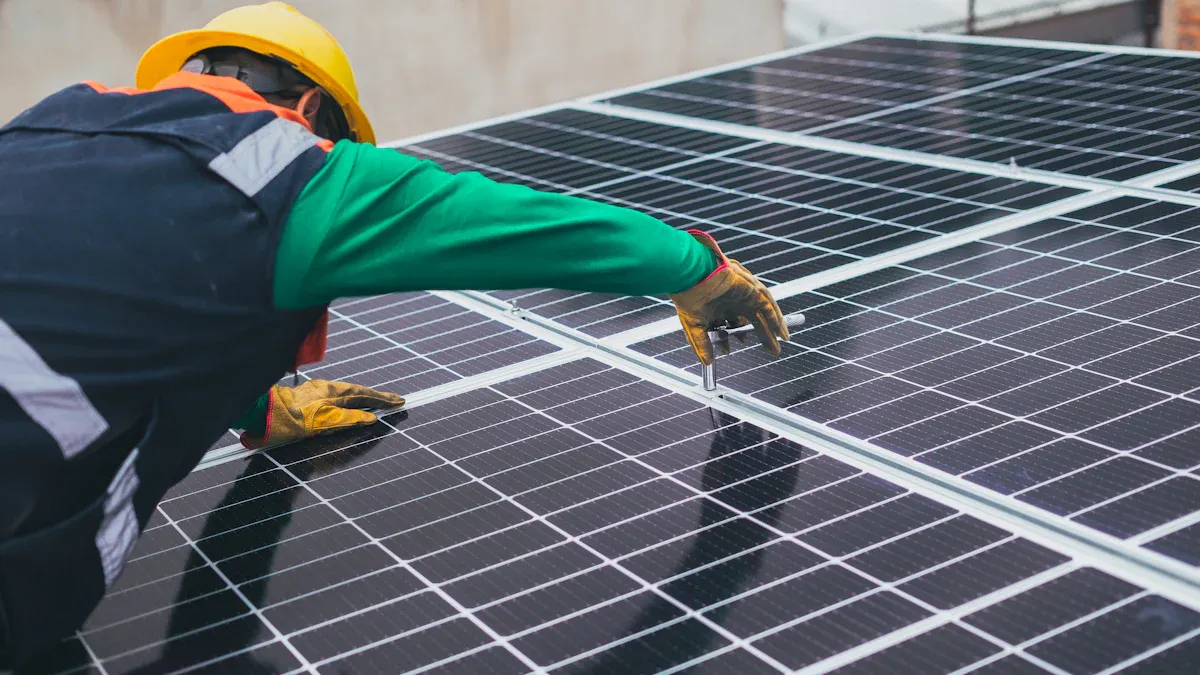
First, you check your house before starting the project. A professional looks at your roof and how much sun it gets. They also check if there is space for solar panels. Your roof should be strong and not too old. Sunlight is important, so you look for shade from trees or buildings. The way your roof faces helps you get more energy. If your roof does not work, you can put panels in your yard. Here’s what you need to think about:
Factor | Description | Importance |
|---|---|---|
Is your roof strong and new enough? | Supports panels safely | |
Sunlight Exposure | How much sun does your roof get? | More sun means more energy |
Available Space | Is there enough room for panels? | Bigger system possible |
Roof Tilt and Orientation | Which way does your roof face? | South is best in the U.S. |
Electrical System | Is your wiring ready for solar? | Safe connection |
Ground-Mount Options | Can you use your yard for panels? | Good for tricky roofs |
You must get permits before you start installing. Local rules help keep your project safe and legal. You usually need a building permit and a grid connection permit. You give your plans and drawings to your city or county. They check your wiring, battery backup, and fire safety. Always follow the rules for solar and battery storage.
Get permits from your city or county.
Share your plans and electrical drawings.
Make sure your system meets fire and building codes.
Sign an agreement to connect to the grid.
Now you put up the solar panels and connect the wires. Use wires made for outside and that fit your system. Most people use PV wire, 10 or 12 gauge, for solar panels. Connect the panels to the charge controller, inverter, and battery modules. Always use the right wire size and fuses for safety. Hire a licensed pro to help you. Charge controllers protect your batteries and help them last longer.
Pick the right panels and battery modules.
Decide if you wire in series, parallel, or both.
Follow local rules for wiring and mounting.
You connect all the parts of your solar battery storage system. Make sure your panels, batteries, inverter, and charge controller work together. Draw a wiring diagram before you start. Use the right wire size and add fuses and circuit breakers. Check that your system fits your energy needs and backup goals.
Make sure all parts match.
Use safety devices for battery backup systems.
You finish by testing your system to make sure it works. Check the wiring, voltage, and battery storage. Here are some tests you do:
Test Item | What to Record | Acceptance Range |
|---|---|---|
Polarity check (DC) | Voltage sign and connections | No reversals |
Continuity and bonding | Resistance and connections | Low resistance |
Insulation resistance | Measured MΩ and conditions | ≥ 1 MΩ per string |
Open-circuit voltage Voc | Measured V vs. expected V | ±5% of expected |
Short-circuit current Isc | Measured A vs. expected A | ±10% of expected |
Turn on your system and use a smart app like myBeineng. Watch your energy flow and see how much power your battery gives you. You get alerts if something needs fixing. Smart monitoring helps you keep your system working well and gives you backup power when you need it.
Tip: Smart apps help you check your energy and battery storage every day.
You want your solar battery system to last a long time. Taking care of it helps your battery storage work well. It also keeps your energy running. Here are some easy ways to help your system:
Keep your battery in a room with steady temperature. Try to keep it between 68°F and 77°F. This helps your battery work better and last longer.
Do not put your battery in direct sunlight. Too much heat or cold can hurt battery storage and make it less efficient.
Charge and use your battery slowly and evenly. Fast charging or using it too quickly can wear it out.
Set your Depth of Discharge to about 80-90%. This means you use most of your battery but not all of it. Doing this helps your battery storage last longer.
Make sure air can move around your battery. Good airflow lets heat escape and keeps your battery cool.
If your area gets very hot or cold, add insulation. This keeps your battery storage safe from big temperature changes.
Watch your battery for anything strange. If you see a problem, check your system right away.
Take time to care for your battery. You save money and help the planet by keeping your energy storage healthy.
Tip: Checking your system often and having good habits can help your battery storage and solar system last longer.
Smart monitoring helps you keep your solar battery system working well. With the myBeineng app, you can check your energy use and battery storage on your phone or tablet. You get alerts if something is wrong, so you can fix it fast. You also see how you use energy, which helps you make better choices.
Feature | Benefit |
|---|---|
You can see how your system works right now. | |
Performance alerts | You get a message if your battery storage drops or has problems. |
Data analysis | You learn how to use energy better and save more. |
Access via smart devices | You can check your system from anywhere, anytime. |
Historical performance data | You can see how your battery storage changes over time and plan upgrades. |
Upgrading your system is easy with BEINENG Home ESS. You can add more battery modules if you need more energy. The system lets you use new and old batteries together, so you do not waste money. Smart monitoring helps you know when it is time for an upgrade. This keeps your solar system ready for the future and easy to change.
Now you know how to make a home solar battery system. You learned about the main parts, how to pick the right size, and how to install it. Smart systems like BEINENG Home ESS help you use less grid power and save money. Here are some things you get with a smart solar system:
You do not worry about higher power bills.
Your system is quiet and easy to take care of.
You feel safe all year long.
If you want more help, you can read guides about solar batteries, find out about new solar ideas, or get tips for putting batteries in a virtually safe spot. Take the next step to use your own energy and help the planet.
Most solar batteries last 10 to 15 years. You can help your battery last longer by keeping it cool and checking it often. If you use your battery gently, you get more years out of it.
Yes, you can add more batteries if you need extra power. Many systems, like BEINENG Home ESS, let you stack new batteries with old ones. This makes your energy storage system easy to upgrade.
Your solar panels make less power when the sun hides. You still get energy from your battery storage. If you need more, you can use power from the grid until the sun comes back.
You should clean your solar panels a few times each year. Dust, leaves, and snow can block sunlight. Use water and a soft brush. Clean panels help you get more energy.
Yes, you can use solar power if you have battery storage. Your system gives you backup energy when the grid goes down. You stay safe and keep your lights on.


Compact, quiet, and powerful, it keeps your essentials running during outages and lets you charge anywhere with solar power or grid power.
Perfect for renters who need flexibility without compromise.
Our estimator is only set up to provide preliminary estimates and installer information to residents of single family homes.