
 Email Us
 Contact us
 Whats App
Single family home

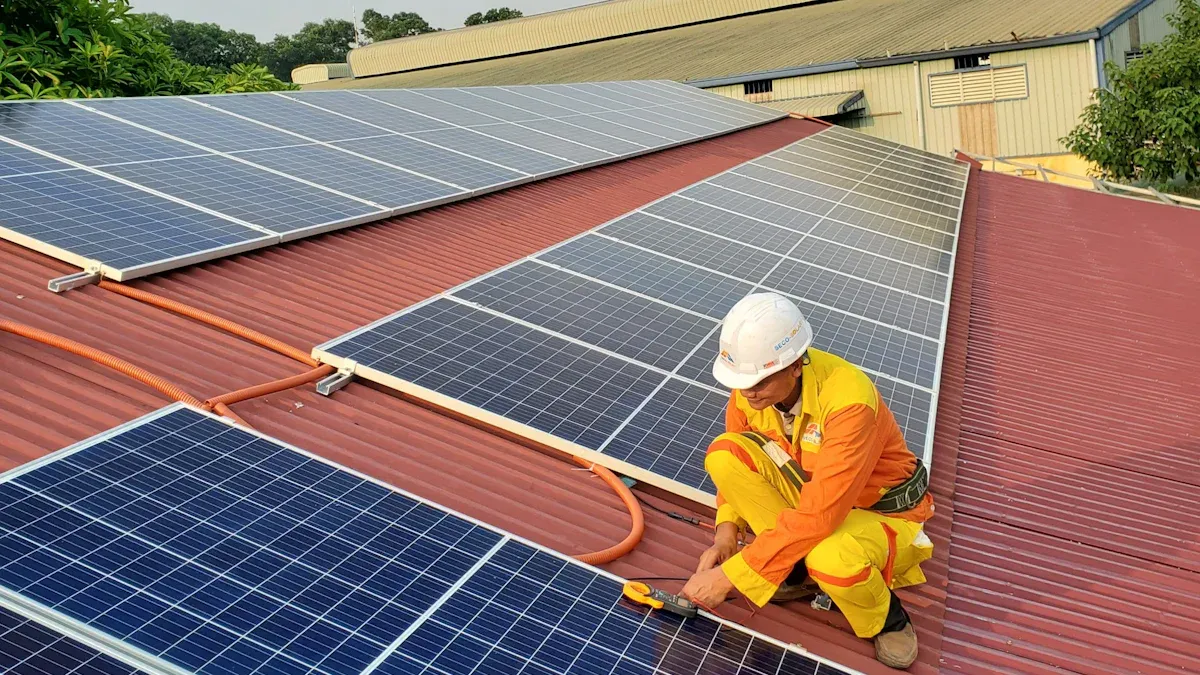
Have you ever wondered if adding a home battery to your solar setup could change how you use energy at home? More homeowners are choosing to pair their home solar system with a battery. In 2023, about 12% of people with solar had a home battery, and that number keeps growing. In places like Hawaii, almost every home with solar uses energy storage. You can save up to $1,200 a year by storing solar energy and using it when you need it most. Think about your home, your energy needs, and how backup power could help you plan for the future.
Think about how much energy you use and what you want. This helps you pick the right battery size and type for your life.
Lithium-ion batteries last a long time and need little care. They are often the best way to save money over many years.
Make sure your solar system and battery work together. This helps you avoid problems with your power.
Check if the battery has safety certifications. This means it is safe and will protect your home.
Look for incentives and rebates in your area. These can help lower the price of your home battery system.
You want to have more say in how you use energy. Adding a home battery lets you keep extra electricity from sunny days. You can use this stored power at night or when it is cloudy. This means you do not need the utility grid as much. You get to choose when to use your solar power. Many people feel better knowing their lights stay on if the grid fails. Having energy storage can help you pay less for electricity. It also makes you feel safer. You help your community by using less from the grid. This makes your neighborhood stronger.
Save extra electricity for later
Depend less on the grid
Have more control over your energy
You want your solar system to be worth it. Picking the right battery helps you get more from your solar setup. Solar batteries are much better now. They can hold more energy in smaller sizes. This makes your system work better and can cost less to install. Using stored energy when rates are high saves you money. Some top brands cost more at first, but they have features that help your system work better. Think about how much you will save over time, not just the first price.
Better battery power and storage
Lower setup costs and better results
Power outages can happen anytime. A home battery means you do not have to worry. The battery turns on fast and keeps important things working. You can charge your phone and keep the internet on. Medical devices will keep running. If you need to keep medicine cold, your battery helps with that too. Solar batteries do more than save money. They give you comfort and safety when you need it.
Tip: A good backup system keeps you safe and connected, even when the power goes out.
Picking a solar battery can be tricky. There are many choices. Each battery works in its own way. Let’s look at the main types. This will help you find what fits your home.
Lithium-ion batteries are very popular for homes. They last a long time and need little care. You can use most of the energy stored inside. These batteries can be used thousands of times. Many solar systems use lithium-ion because they work well with solar panels. They also work with smart energy systems.
Battery Type | Lifespan (Cycles) | Depth of Discharge | Efficiency |
|---|---|---|---|
Lithium-ion | 2,000-5,000 | 80-100% | 95%+ |
Lead-acid | 300-500 | ~50% | 80-85% |
Flow/Saltwater | 5,000+ | 90-100% | 70-80% |
Some batteries use lithium iron phosphate. These are very safe and last a long time. BEINENG Home ESS uses advanced lithium technology. It helps store power and keeps your home running.
Lead-acid batteries cost less at first. They are found in older solar setups. These batteries last for a few hundred cycles. You need to check them often. You can only use half of the energy inside. Lead-acid batteries work for backup but need more care.
Saltwater and flow batteries use safe materials. They last a long time and can be used deeply. These batteries are easy to recycle. They can be made bigger if needed. They take up more space and cost more to put in. People pick these for a greener choice.
Tip: Saltwater and flow batteries are safe and strong, but they are bigger than other types.
Lithium-ion: Lasts long, works well, needs little care, costs more.
Lead-acid: Costs less, does not last as long, needs more care.
Saltwater/Flow: Safe, strong, good for the planet, bigger, costs more at first.
BEINENG Home ESS is a modern and flexible choice. You can also try BEINENGStor for a 5-in-One system. The Beineng Hybrid Inverter helps connect solar batteries easily. These new options help you get the best from your home solar batteries.
Picking a home battery can seem hard. You want a battery that fits your life. It should save you money. It should keep your house powered when you need it. Here are the main things to think about before you choose.
Capacity means how much energy your battery holds. Power means how fast it sends energy to your house. If you have a big family, you need more capacity and power. A bigger battery stores more energy from your solar panels. You can use this energy at night or when the power goes out. This helps you use less from the grid and save money.
Bigger battery capacity gives you more freedom.
You can use stored energy when you need it most.
A steady energy supply lets you use your own solar power.
Tip: Look at your electricity bills. See when you use the most power. This helps you pick the right battery size for your home.
The myBeineng app helps you track your energy use. You can see how much storage you need. You can make your system work better and save more.
You want your battery to last a long time. Most solar batteries come with a warranty for years or cycles. Lifespan means how many times you can use the battery before it gets weaker. Longer warranties and more cycles mean you get more for your money.
Here is a table of top brands:
Brand | Warranty Length | Capacity Retention | Cycle Limit |
|---|---|---|---|
Tesla Powerwall | 10 years | 70% | No limit |
Franklin WH Battery | 12 years | 70% | 6,000 cycles |
Enphase IQ Battery | 15 years | 60% | 6,000 cycles |
LG Chem Battery | 10 years | 60% | N/A |
SolarEdge Battery | 10 years | 70% | No limit |
Sonnen Battery | 10 years | N/A | 10,000 cycles |
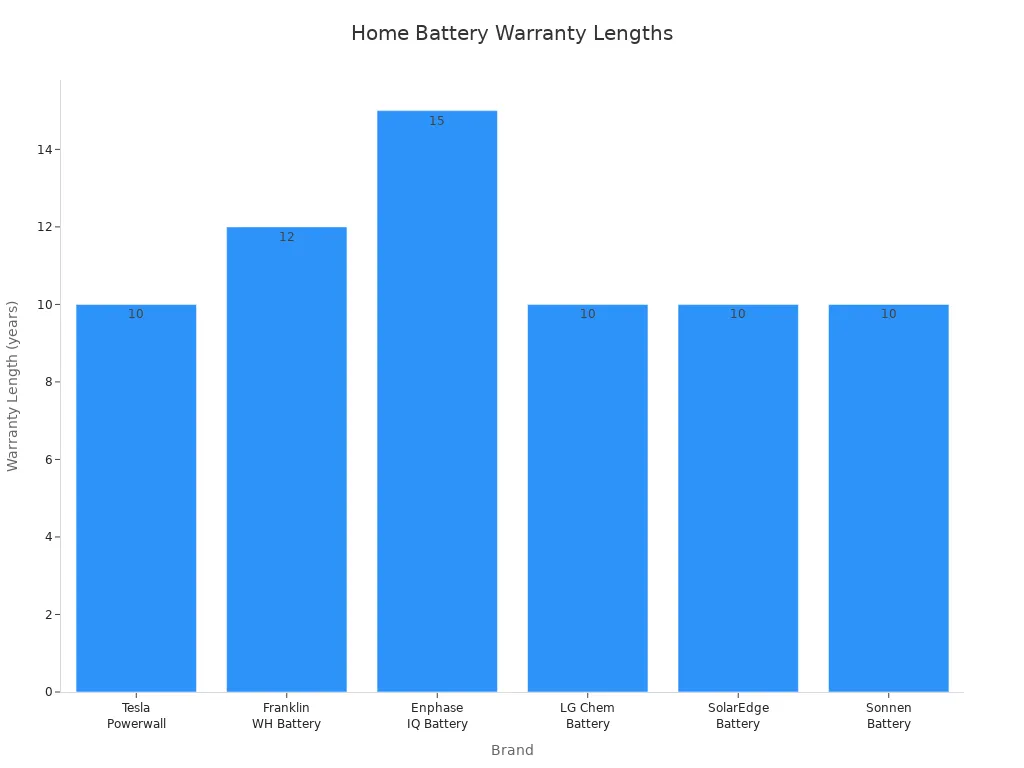
Note: A longer warranty means your battery will work for many years.
Cost is important, but think about value too. Some batteries cost less at first but need more care. Others, like lithium-ion batteries, cost more but last longer and save more money.
Lithium-ion batteries: $800–$1,500 per kWh, last 10–15 years, 90% depth of discharge, save $500–$2,000 a year.
Lead-acid batteries: $200–$500 per kWh, last 3–7 years, 50–60% depth of discharge, need more care and replacement.
If you want to save money over time, lithium-ion batteries are a smart pick. They work better and need fewer replacements.
Your battery must work with your solar system. Check if your inverter matches the battery. Make sure the voltage is right. Some batteries use AC, others use DC. You might need to update your grid connection or get new papers. Pick batteries and inverters that use common rules so they work together.
Compatibility Issue | Description |
|---|---|
Inverter Compatibility | Make sure your inverter is on the battery’s approved list. |
Battery Voltage | Match battery voltage with inverter voltage. |
AC vs. DC Coupling | Know how your battery connects to your system. |
Grid Connection Updates | Check if you need new applications or certificates. |
Brand Integration | Use batteries and inverters that support common protocols. |
Charge/Discharge Rates | Match battery discharge rate with your home’s peak load. |
Battery Monitoring | Make sure you can monitor your battery for best performance. |
Future Expansion | Choose a scalable battery system for future needs. |
CEC Approval | Pick batteries listed on the Clean Energy Council Approved Products list. |
Tip: BEINENG Home ESS and Beineng Hybrid Inverter make it easy to connect. You can add more batteries if you need more energy later.
Safety is very important. Look for batteries with safety labels like UL 1973, UL 9540, and UL 9540A. These show the battery is safe from fire and electric problems. NFPA 855 gives rules for safe setup and use. Most new solar batteries need little care, but you should check them sometimes to keep your home safe.
UL 1973: Safety for batteries that stay in one place
UL 9540: Safety for energy storage systems
UL 9540A: Fire safety testing
NFPA 855: Fire safety and setup rules
Alert: Always ask your installer about safety labels and care before you buy.
A home energy storage system like BEINENG Home ESS gives you peace of mind. You get backup power, easy checks, and safe use for your house.
You want your solar system to fit your life. Start by looking at your electricity bill. Find out how much energy you use each day. See which times you use the most power. If you live in a house, you can use the Department of Energy’s calculator. It helps you learn how much energy your fridge, lights, and other things need. Write down the month you use the most energy. Divide that number by 30 to get your daily average. This shows how much battery storage you need for your solar system.
Tip: The myBeineng app helps you watch your solar energy use and find your busiest hours.
Think about what you want your solar batteries to do. Do you need backup for just a few things or for everything? If you want backup for lights, fridge, and internet, list those as important. Figure out how long you want backup power during an outage. If outages are short, you need less storage. If outages last a long time, you need more battery power.
Here’s a table to help you choose:
Factor | Description |
|---|---|
Energy goals and demand | Decide if you want to power only important things or your whole house. |
Solar battery specifications | Check usable energy, peak output, and how many cycles it lasts. |
Property and solar energy factors | Look at how much solar power you make and how well your system works to see how many batteries you need. |
Note: Always round up your battery size so you have enough energy for your home.
Now match your battery to your solar system size. Use this easy formula:
Solar Battery Size (kWh) = Daily Energy Usage (kWh) × Storage Hours NeededCheck the depth of discharge for your battery. Lithium-ion batteries let you use most of their power, about 80-95%. If you need 8 kWh for backup, and your battery’s DoD is 95%, look for a battery with at least 8.5 kWh. Add up the wattage of all the things you want to run at the same time to check the power rating.
Here’s a chart showing how well different batteries work:
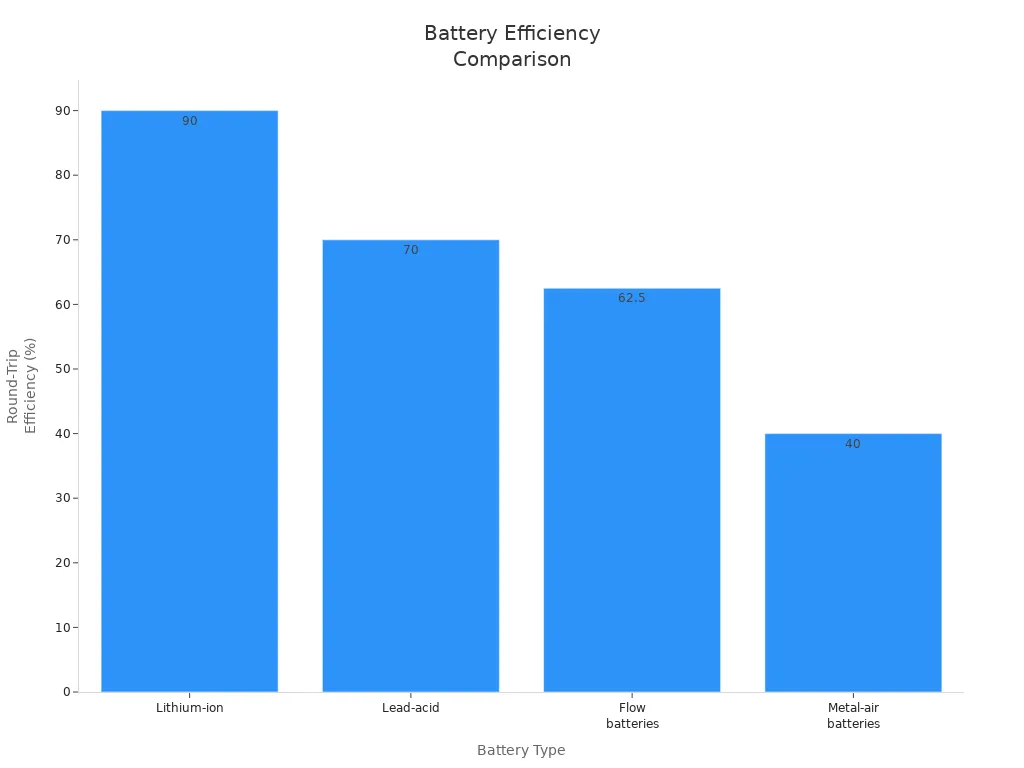
When you pick solar batteries, look for high energy density, fast charging, and a good Battery Management System. Make sure the voltage and amp-hour ratings match your solar system. If you want to add more batteries or solar panels later, choose a battery that can grow with your needs.
Callout: A battery that matches your solar system gives you steady backup and helps you save energy every day.

You can pick from two main solar setups. One connects to the grid. The other works off-grid. A grid-tied system uses solar energy and sends extra power to the utility. You get help from the grid when your solar panels do not make enough energy. Off-grid systems work by themselves. You rely on your solar battery for all your power. You must make sure your solar system gives you enough energy every hour, even on cloudy days.
Here’s a simple table showing the differences:
Feature | Grid-Tied Battery System | Off-Grid Battery System |
|---|---|---|
Utility Connection | Connected to the main electrical grid | Completely standalone; no grid connection |
Reliability | High; uses the grid as a backup | Depends on system size and weather |
Initial Cost | Lower to Moderate | High to Very High |
System Sizing | Flexible; can offset part of usage | Must meet 100% of demand |
Financial Incentives | Net metering and rebates | Not eligible for grid incentives |
Maintenance | Lower; grid helps during upkeep | Higher; owner handles all upkeep |
Best For | Urban/suburban homes | Remote homes or full independence |
Tip: BEINENG Home ESS works for both types. You can add more batteries if you need them.
Some people want backup power for their home. Others use solar energy and battery power every day. Backup power keeps your lights and fridge on during outages. Daily cycling means you use solar and battery power all the time. If you want backup, you need a battery that holds enough energy for emergencies. For daily cycling, you need a battery that charges and discharges many times without wearing out.
BEINENG Home ESS gives you both choices. You can set it for backup or daily use. The system lets you add more storage if your family grows or you use more energy.
Callout: Pick a battery that fits your life. Daily cycling saves more money. Backup power helps you feel safe.
Do you have an electric car? You can connect EV charging to your home solar system. This lets you use solar energy to charge your car. You can also store extra power in your battery. You save money on charging and lower your utility bills. You help the planet by using clean energy.
Here are some good things about EV charging with your solar battery:
Financial Savings: You spend less on electricity and charging.
Grid Independence: You keep your car charged, even if the power goes out.
Environmental Impact: You lower carbon emissions at home and on the road.
BEINENG Home ESS makes EV charging simple. You can add more batteries or chargers if you need them. Your home solar system can grow with you.
Note: A flexible home solar system lets you power your house, charge your car, and be ready for anything.
Picking the best home battery can seem hard. You want your solar system to work well. It should help you save money. It should keep your house powered when you need it. Let’s look at each step so you feel sure about your choice.
First, think about what you want from your solar system. Do you want to pay less for electricity? Are you worried about losing power during storms? Maybe you want to use clean energy every day. Home batteries let you save extra solar power for later. This helps you use less from the grid. You will feel better when the lights stay on.
Here’s a table showing how your goals change your battery needs:
What You Optimize | Storage Window | Typical Sizing Direction | |
|---|---|---|---|
Bill Stability | Evening self-consumption, peak avoidance | A typical evening routine | Smaller pack with smart scheduling |
Balanced Plan | Savings plus short outage coverage | One evening plus overnight essentials | Mid-size pack, flexible discharge profile |
Resilience Priority | Comfort during extended outages | Multi-day cadence with solar recharge | Larger pack, defined backup reserve |
Think about your daily life. Do you want to power only some things or everything? If you plan to add an electric car or more people, pick a bigger battery.
Tip: Write down your main goals for your solar system. This will help you choose the right battery.
There are many solar battery types. Each one works in its own way. Some need more care. Others last longer or store more energy. When you look at batteries, check these things:
Criteria | Description |
|---|---|
How much energy the battery can store | |
Operational lifespan | How many charge cycles the battery can handle |
Energy conversion effectiveness | How well the battery turns solar into usable power |
System integration compatibility | How easily the battery fits with your home solar system |
Cost considerations | Upfront price and what the warranty covers |
Lithium-ion batteries last a long time and need little care. Lead-acid batteries cost less but need more work. Flow batteries are good for big homes and last a long time. Always check which battery fits your needs best.
There are lead acid, lithium-ion, flow, and nickel cadmium solar batteries. Each type has its own needs and works differently.
Your solar system and battery must work together. If they do not match, you could lose power or break your equipment. Here are the main things to check:
Specification/Factor | Description |
|---|---|
How much electricity your solar panels can make. This affects how fast you can charge your battery. | |
Voltage (V) | The battery and solar system must use the same voltage. |
Current (Amperes) | The system must handle the amount of electricity flowing through it. |
Maximum Power Point (MPP) | The best spot for your solar panels to make the most power. |
Temperature Coefficient | Shows how well your system works in hot or cold weather. |
Voltage Matching | The solar array voltage should match the battery system voltage. |
Charge Controller Compatibility | The charge controller must work with both your solar panels and battery. |
Inverter Type | The inverter (string, micro, or hybrid) must fit your battery system. |
BEINENG Home ESS is easy to connect and grow. Always ask your installer to check if everything matches.
Home batteries can cost a lot at first. But you can save money over time. Many states give rebates and special deals for adding a battery. Here are some examples:
State | Incentive Description | Amount/Details |
|---|---|---|
Demand Side Grid Support (DSGS) Program | Compensates homeowners for using battery systems to ease grid stress. | |
Equity Tier | Up to $850/kWh for eligible low-income customers. | |
New 2025 Residential Solar & Storage Equity Initiative | $1,100/kWh for battery, plus $3,100/kW for solar installations starting June 2, 2025. | |
New York | NYSERDA Battery Rebates | $200/kWh in upfront rebates for residential battery storage systems (up to 25 kWh). |
Massachusetts | ConnectedSolutions VPP | Earn $275/kW average summer performance, up to $2,750 per year for a 10 kW battery system. |
Vermont | Green Mountain Power BYOD VPP Program | Up to $950 per kW of usable battery power, plus a $1,000 bonus for solar retrofits. |
Hawaii | Bring Your Own Device Plus (BYOD Plus) Program | $400 per kW of committed battery capacity, or $800/kW for low-to-moderate income households. |
Texas | Local Utility Incentive from CPS Energy | $10 bill credits per event-based discharge. |
Oregon | Solar Within Reach Program | Rebates of $750–$900 per kWh for low/moderate income households. |
Connecticut | Energy Storage Solutions (ESS) Program | $250 per kWh of usable battery capacity, capped at $16,000 or 50% of the system cost. |
Colorado | Xcel Energy’s Renewable Battery Connect Program | Up to $5,000 upfront at $350 per kW of continuous discharge capacity. |
Carolinas | Duke Energy's PowerPair and Battery Program | Up to $9,000 in upfront rebates for solar-plus-battery systems. |
Check what deals are in your area. These can help you pay less and get more from your solar system.
Note: Rebates and incentives can change every year. Ask your installer or check your state’s website for new updates.
You do not have to choose alone. Solar experts can help you find the best battery. Look for people who have worked on projects like yours. They should know about solar systems and batteries. They should know how to connect everything safely.
Here’s what makes a good solar expert:
Has worked on projects like yours
Knows a lot about solar and batteries
Talks clearly and answers questions
Manages projects well
Gives honest prices and costs
Uses new ideas and technology
A trusted expert can answer your questions. They can explain your battery choices. They make sure your solar system works the way you want.
Callout: Take your time and ask questions. Work with someone who listens to you. The right team makes your solar project easy and worry-free.
You want your solar battery to work for your home. It should match how you live. Look for these things before you pick one:
Big energy capacity for your daily solar use
Long life and a good warranty
Charges and discharges quickly
Works easily with your solar panels
Smart monitoring with apps like myBeineng
Safety labels for peace of mind
Can add more storage as your home gets bigger
Tip: Your solar battery should give backup power when the lights go out.
Ask your installer simple questions. This helps you know what to expect and get the best battery for your house.
Question | Why It Matters |
|---|---|
Will this battery work with my solar system? | Makes sure everything runs smoothly |
How much backup power will I have? | Shows what you can use during outages |
What is the warranty and service plan? | Keeps your battery safe and covered |
Can I add more battery storage later? | Lets you prepare for future changes |
How do I check my solar battery? | Helps you see your energy use easily |
What safety features are included? | Keeps your home safe |
Check your list before you decide. Does your solar battery fit your home’s energy needs? Can you trust the warranty and safety labels? Will your solar system work well with your battery? If you want to add an electric car or more solar panels, make sure your battery can grow with you.
Callout: The right solar battery gives your home freedom, savings, and peace of mind.
You’ve learned how to pick the right home battery for your solar setup. Start by looking at your energy needs and goals. Talk with solar experts to make sure your home system works well. Think about advanced solutions like BEINENG Home ESS for easy solar energy management. Your home can use solar power every day, charge your car, and stay safe during outages. Take action now and enjoy energy independence and savings!
Ready to power your home with solar? Your future starts today.
Check your electricity bill. Find your daily energy use in kilowatt-hours (kWh). Pick a battery that covers your highest daily use. You can ask your installer for help if you want a backup for outages.
Yes, you can expand most modern systems. BEINENG Home ESS lets you add more batteries as your needs grow. Ask your installer about future upgrades before you buy.
Your battery can keep your lights and fridge on when the grid goes down. Make sure your system has backup power features. BEINENG Home ESS offers fast backup so you stay safe and connected.
Most lithium-ion batteries last 10 to 15 years. You get thousands of charge cycles. Check the warranty for details. Regular checks help your battery work longer.
Yes, home batteries follow strict safety rules. Look for UL and NFPA labels. Your installer will set up everything safely. BEINENG Home ESS meets top safety standards for peace of mind.


Compact, quiet, and powerful, it keeps your essentials running during outages and lets you charge anywhere with solar power or grid power.
Perfect for renters who need flexibility without compromise.
Our estimator is only set up to provide preliminary estimates and installer information to residents of single family homes.