Jun 17, 2026

Home Energy Storage System Worth It? Cost and Payback Analysis of 51.2V Batteries

Whether a home energy storage system is worth it is not a question with a universal answer. It depends on how electricity is used inside a home, how the grid behaves in that region, and whether solar power is part of the setup.

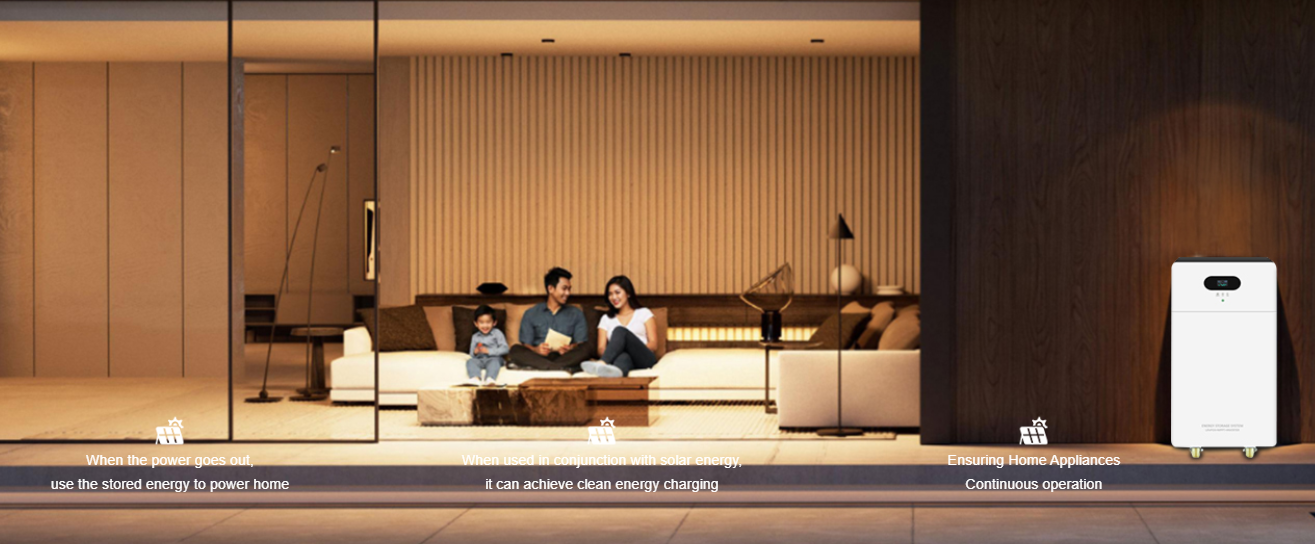
Over the past few years, 51.2V lithium battery systems—especially all-in-one designs combining inverter, battery, and energy management—have moved from industrial applications into residential spaces. The appeal is clear: backup power during outages, lower electricity bills, and better use of solar energy.

But in real deployment, expectations and outcomes are not always aligned. Some households see meaningful savings and stability improvements, while others find the impact more modest. The difference usually comes down to system design, usage habits, and energy pricing conditions rather than the battery itself.

How a 51.2V Home Energy Storage System Actually Works

At first glance, a home battery system looks simple: store electricity when it is cheap or available, and use it when needed. In practice, a 51.2V all-in-one system behaves more like an energy control hub than a passive storage unit.

Inside the system, several functions work together:

● Battery modules store and release electrical energy

● Inverter converts DC electricity into usable AC power for home appliances

● EMS (Energy Management System) decides when to charge or discharge

● PCS manages energy flow between grid, solar panels, and the battery

What matters most is not any single component, but how smoothly these parts coordinate in real time. A well-designed system does not simply “store power”—it actively decides how electricity is used across the home.

This is where integrated systems differ from older modular setups. Instead of relying on multiple separately configured components, the logic is unified, which reduces inefficiencies and system conflicts.

Where the Real Cost Savings Come From

The idea that a home battery “saves electricity” is only partially correct. It does not reduce how much energy a household consumes. Instead, it changes when and where that energy comes from.

Most savings come from three real-world behaviors:

Electricity is stored during low-cost periods or when solar generation exceeds demand. That stored energy is then used during peak hours when grid electricity is more expensive. Over time, this reduces dependence on high-cost grid consumption.

In solar-equipped homes, another layer of savings comes from self-consumption. Without storage, excess solar power is often exported to the grid at a relatively low value. With a battery system, that energy can be stored and reused later, increasing overall efficiency.

In outage-prone areas, the value is not just financial. The system provides continuity—keeping essential loads running without interruption.

Energy Cost Behavior Over Time

To understand whether the system is financially worthwhile, it helps to compare how energy costs behave under different setups.

Household Energy Cost Patterns

System ConfigurationEnergy Flow BehaviorLong-Term Cost Trend
Grid-only householdFully dependent on utility powerGradually increasing due to tariff changes
Solar without storageDaytime self-use, excess exportModerate savings but limited optimization
Solar + 51.2V storage systemTime-shifted energy usageMore stable and controllable cost structure

The most important shift is not the absolute cost reduction, but the ability to control when energy is consumed. That control is what creates long-term economic value.

Why Real Performance Often Differs From Expectations

One of the most common misunderstandings in the market is the assumption that battery capacity alone determines performance.

In real household environments, several other factors have equal or greater influence.

Inverter sizing is one of them. If the inverter cannot handle peak loads, the system may shut down or limit output even when battery capacity is sufficient. This creates a perception that the system is “not powerful enough,” when in reality it is a configuration issue.

Energy management logic is another factor. Some systems are designed to be overly conservative, reserving too much capacity for backup instead of allowing flexible usage. This reduces usable energy in everyday operation.

Household wiring and load distribution also play a role. If high-consumption appliances are not properly assigned to supported circuits, the system cannot optimize energy delivery effectively.

These factors explain why two systems with similar specifications can deliver very different user experiences.

What a 51.2V System Feels Like in Daily Use

In normal operation, a home energy storage system is not something users actively interact with. It runs in the background, adjusting energy flow automatically.

During regular days, it quietly shifts energy between solar, grid, and battery depending on availability and demand. When solar production is high, it stores excess energy. When demand rises in the evening, it discharges to support household usage.

During outages, its role becomes more visible. Essential systems such as refrigeration, lighting, and communication equipment continue running without interruption. The experience is less about performance visibility and more about continuity.

The system is not designed to change daily habits dramatically. Instead, it reduces friction in how energy is accessed.

What Determines the Payback Period

The payback period of a home battery system is not fixed. It varies significantly between households because it depends on behavior and environment rather than just equipment cost.

Electricity pricing structure plays a major role. Regions with strong peak and off-peak differences tend to benefit more because the system can shift consumption away from expensive periods.

Solar availability is another major factor. Systems paired with solar generation generally achieve faster payback due to higher self-consumption rates.

Daily consumption patterns also matter. Homes with higher evening energy usage tend to extract more value from stored energy compared to evenly distributed usage patterns.

Finally, system sizing and configuration determine how much of the theoretical value can actually be realized in practice.

Key Factors Influencing Payback

FactorImpact LevelExplanation
Electricity pricingHighDetermines value of energy shifting
Solar integrationVery highIncreases usable stored energy
Consumption patternMedium to highAffects discharge efficiency
System sizingHighMismatch reduces usable capacity
EMS strategyMediumControls energy allocation behavior

This explains why payback cannot be reduced to a single number. It is the result of system design and household behavior interacting over time.

Why Integrated 51.2V Systems Are Becoming More Common

From a design and manufacturing perspective, all-in-one systems are not just a convenience feature. They solve real engineering and deployment challenges.

By integrating battery, inverter, and control logic into a unified system, energy conversion paths are shortened, which reduces energy loss during operation. System reliability also improves because there are fewer external connection points, which are often the source of failures in modular setups.

Installation becomes more predictable as well. In field deployments, variability between installers and system configurations often leads to inconsistent performance. Integrated systems reduce this variability by standardizing architecture.

For residential applications, this consistency is often more valuable than marginal efficiency gains.

Real-World Usage Scenarios

In residential backup applications, the system’s value becomes most obvious during unexpected outages. Essential household functions can continue operating for extended periods depending on load size and configuration.

In solar self-consumption setups, the system significantly improves energy utilization by storing excess daytime production and using it during evening demand. This reduces reliance on grid electricity and improves overall efficiency.

In higher-load environments, such as larger homes with air conditioning and kitchen appliances, performance depends heavily on load balancing and system configuration. Energy management systems automatically regulate output to prevent overload conditions while maintaining stable operation for critical loads.

Installation Factors That Affect Real Performance

Although specifications often dominate purchase decisions, installation conditions have a major impact on actual performance.

Thermal management is one of the most important factors. Batteries perform best within controlled temperature ranges, and poor ventilation can reduce both efficiency and lifespan.

System matching is another critical element. An improperly sized inverter or poorly designed load distribution can limit system performance regardless of battery capacity.

Circuit design inside the home also influences how effectively stored energy is used. Without proper separation of critical and non-critical loads, energy efficiency may be lower than expected.

So, Is It Worth It?

A home energy storage system is worth it in some situations and less effective in others, and the difference is rarely about the product itself.

It tends to deliver strong value in households with high electricity costs, frequent outages, or existing solar systems. In these cases, it improves both cost control and energy reliability.

In more stable environments with low electricity pricing and no solar integration, the system functions more as a backup solution than a cost-saving tool.

Ultimately, its value is not just financial. It also lies in energy independence and stability, which are harder to quantify but often become more important over time.

FAQ

How long does a 51.2V home energy storage system last?

A typical 51.2V home energy storage system lasts around 8 to 12 years, but the real lifespan depends more on usage conditions than the number itself. If the system is regularly charged and discharged deeply every day, the battery will age faster compared to light backup usage. Temperature is another critical factor—high heat environments can gradually reduce usable capacity over time. In stable, well-ventilated installations using LiFePO4 chemistry, it is common for systems to maintain strong performance even after thousands of cycles.

Can a 51.2V battery system run air conditioners?

Yes, it can power air conditioners, but the limiting factor is not the battery capacity—it is the inverter size and surge power capability. Air conditioners require a high startup current, which means the system must be designed to handle peak load, not just continuous consumption. In real household setups, smaller systems may support one AC unit with controlled usage, while larger systems can run multiple units if the inverter is properly sized and the load is balanced across circuits.

Do I need solar panels for a home energy storage system?

No, solar panels are not required for the system to operate. A 51.2V home energy storage system can charge directly from the grid and still function as a backup power solution. However, without solar, the system’s economic value is more limited.

When solar panels are added, the system becomes significantly more efficient because it stores excess daytime solar energy and uses it later during peak hours. This improves self-consumption and usually shortens the payback period. In most real-world scenarios, solar integration is what turns the system from a backup device into a cost-saving energy solution.

Why is LiFePO4 used in most home energy storage systems?

Lithium Iron Phosphate (LiFePO4) has become the standard chemistry for residential energy storage because it offers a balance of safety, durability, and long cycle life. Unlike other lithium chemistries that prioritize energy density, LiFePO4 is optimized for stability and long-term cycling.

In practical use, this means lower risk of overheating, more predictable performance degradation, and better suitability for daily cycling in home environments. For systems that operate continuously for years without frequent maintenance, this stability is a key advantage over alternative battery types.


A 51.2V home energy storage system is not simply a backup battery. It is a shift in how household electricity is managed, distributed, and optimized. Its real value does not appear immediately after installation. It emerges gradually through reduced dependence on grid pricing fluctuations, improved solar utilization, and more stable household energy supply. Whether it is worth the investment ultimately depends on how much value is placed on long-term energy control rather than short-term cost savings.


Get started
+86 19924242919
Book an appointment
Sorry, we are unable to service you right now

Our estimator is only set up to provide preliminary estimates and installer information to residents of single family homes.