
 Email Us
 Contact us
 Whats App
Single family home

By 2026, residential electricity is no longer a passive utility. It has become a system that households actively manage, especially in regions where solar adoption is growing and electricity pricing is increasingly dynamic. In this context, the role of a home energy storage system has shifted from optional backup to a core part of household energy infrastructure.
However, most buyers still struggle with interpretation. Technical labels such as 100Ah, 200Ah, or 600Ah, and performance terms like cycle efficiency or IP67, are rarely explained in a way that reflects real household behavior. This creates a gap between specification sheets and actual usage reality.
This guide focuses on closing that gap by analyzing how a 15kWh battery system behaves in real applications, and how engineers evaluate system performance beyond marketing definitions. Core concepts such as energy storage battery guide, 15kWh battery system, and solar storage sizing are integrated into a practical decision framework.
The rise of residential energy storage is not driven by a single trend, but by a convergence of energy system changes.
Electric grids are experiencing more frequent stress due to peak demand concentration and environmental instability. At the same time, solar energy systems are being widely adopted, but without storage, their effectiveness is limited to daytime production only. Electricity pricing structures are also becoming more dynamic, with time-based tariffs making consumption timing as important as consumption volume.
In this environment, a storage system is no longer just a backup device. It becomes a timing and balancing layer between energy production and consumption.
A modern home energy storage system allows households to store excess solar energy during low-demand periods and release it when demand or electricity cost is higher, effectively reshaping how energy is used throughout the day.
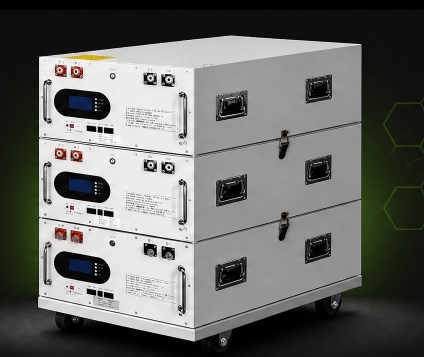
Battery specifications such as 100Ah, 200Ah, or 600Ah are often misunderstood because they are presented without system context. In residential lithium systems based on 51.2V architecture, capacity must be interpreted as usable energy rather than isolated electrical charge.
In practical application:
● 100Ah systems are typically limited to essential backup loads such as lighting and communication devices
● 200Ah systems support partial household operation under controlled load conditions
● 300Ah to 320Ah systems are capable of supporting full daily residential energy cycles
● 600Ah systems are designed for high-load homes or partial off-grid environments
What is often overlooked is that nominal capacity does not equal usable output. Real-world performance is influenced by discharge depth, inverter efficiency, and thermal behavior under continuous load.
This is why system-level design is more important than raw battery size when evaluating long-term performance.
A 15kWh battery system represents a balanced configuration in residential energy design. It is large enough to support full daily energy cycles while still maintaining installation efficiency and cost balance.
In real-world conditions, it typically supports three core usage layers:
1. Continuous operation of essential appliances such as refrigeration and communication systems
2. Evening household demand including lighting, entertainment, and cooking support
3. Time-shifted solar energy usage where daytime generation is stored for nighttime consumption
This capacity range is widely adopted because it aligns closely with average household consumption patterns in many global regions. It is not an arbitrary industry figure, but a result of real usage data convergence.
Cycle efficiency is one of the most critical yet underestimated parameters in energy storage systems. It defines how much of the stored energy is actually usable after conversion losses.
A system with 70% efficiency and another with 90% efficiency may appear similar in specification, but their real-world output differs significantly.
High-efficiency systems deliver:
● Higher usable energy per full cycle
● Lower heat generation during operation
● Improved long-term battery stability
● Reduced energy waste during conversion
From an engineering perspective, achieving 90% cycle efficiency requires optimization across multiple system layers, including battery cell quality, BMS control accuracy, and inverter conversion design. It is a system integration outcome rather than a single-component feature.
The IP67 rating is often underestimated during purchase decisions, yet it directly influences where and how a system can be installed.
An IP67-rated system is designed to resist both dust ingress and temporary water exposure, which expands installation possibilities beyond controlled indoor environments.
However, achieving this level of protection requires careful engineering trade-offs. Sealed structures must still maintain effective thermal management to prevent performance degradation under continuous load conditions.
This balance between environmental protection and heat dissipation is a key factor in long-term system reliability.
Proper system sizing should always begin with energy consumption behavior rather than product specifications.
A structured approach involves three key steps:
1. Identify baseline household loads such as refrigeration, lighting, and communication devices
2. Evaluate peak-load appliances such as air conditioning and heating systems
3. Convert total daily usage into kilowatt-hour requirements for accurate matching
This method avoids the most common selection errors, such as oversizing based on assumptions or undersizing based on incomplete load analysis.
Within this framework, a 15kWh battery system typically represents a full-cycle residential solution for standard households.
Modern energy storage systems are not standalone batteries. They are integrated energy management platforms composed of multiple coordinated subsystems.
A complete system typically includes battery modules, a Battery Management System (BMS), thermal control architecture, and power conversion components.
When these elements are not properly integrated, performance degradation can occur even if individual components are high quality. Issues often appear as inconsistent output, higher thermal stress, or reduced long-term cycle stability.
Well-integrated systems ensure synchronized operation across all components, resulting in more stable and predictable performance under varying household loads.
Energy storage systems behave differently depending on their application context. In practice, three main usage patterns dominate residential and small commercial deployments:
Each scenario places different operational demands on the same underlying hardware, particularly in terms of cycle frequency and discharge depth.
| Capacity level | Energy output | Typical application | Operational behavior |
|---|---|---|---|
| 100Ah | Low range | Emergency backup | Short-duration support |
| 200Ah | Mid range | Partial home usage | Balanced operation |
| 300–320Ah | ~15kWh class | Full residential supply | Stable daily cycling |
| 600Ah | High range | Villas / off-grid systems | Extended autonomy operation |
| Parameter | Specification |
|---|---|
| Capacity | 15kWh battery system |
| Voltage | 51.2V |
| Cycle efficiency | 90% |
| Protection level | IP67 |
| Operating temperature | -20°C to 60°C |
| Installation type | Indoor / outdoor |
| Lifespan | Up to 20 years |
| Warranty | 10–15 years |
Selection errors often come from misinterpretation rather than technical limitations.
Many users focus excessively on capacity while ignoring efficiency losses that directly affect usable output. Others underestimate the importance of installation environment, assuming all systems perform equally under outdoor conditions. Another common issue is treating all lithium systems as interchangeable without considering integration quality.
In reality, system performance is determined by how components interact, not by isolated specifications.
Is a 15kWh system enough for a household?
Yes. It is suitable for most standard residential daily energy cycles.
How long does an energy storage system last?
Typically 10–20 years depending on usage patterns and thermal conditions.
Can it work without solar panels?
Yes, but solar integration significantly improves efficiency and return on investment.
Is IP67 necessary for residential systems?
Not mandatory, but highly beneficial for flexible installation environments.
Choosing a residential energy storage system is no longer a matter of comparing technical numbers. It requires understanding how energy behaves within a household system across time, load variation, and environmental conditions.
A 15kWh battery system represents a practical equilibrium point in modern residential energy design. Its value is not defined by capacity alone, but by how well it aligns with real-world consumption patterns and system-level efficiency.
In 2026, energy storage is no longer just backup power. It is a mechanism for controlling energy timing, improving efficiency, and enabling households to operate with greater independence and predictability.


Compact, quiet, and powerful, it keeps your essentials running during outages and lets you charge anywhere with solar power or grid power.
Perfect for renters who need flexibility without compromise.
Our estimator is only set up to provide preliminary estimates and installer information to residents of single family homes.