
 Email Us
 Contact us
 Whats App
Single family home

Residential solar systems are often introduced as a pathway to energy independence, but in real operation they reveal a structural limitation that is rarely obvious at the installation stage: energy production and energy consumption are not aligned in time.
Solar output peaks around midday, often when households are operating at minimal load. In contrast, residential consumption spikes in the early morning and again in the evening, when solar production naturally drops to zero.
What makes this mismatch more significant is that it is not occasional or seasonal—it is consistent and predictable across almost all residential behavior patterns. This means the system is not dealing with uncertainty, but with a fixed structural gap.
Without storage, solar energy behaves less like a continuous supply and more like a time-bound output window.
Most discussions about solar performance focus on generation capacity, but the real inefficiency lies in timing displacement.
When surplus energy is exported during midday, it is often compensated at a lower rate than the retail electricity price. Later, the same household may buy electricity back from the grid during peak pricing hours.
This creates a quiet but persistent economic imbalance where energy is technically “produced efficiently” but “used inefficiently.”
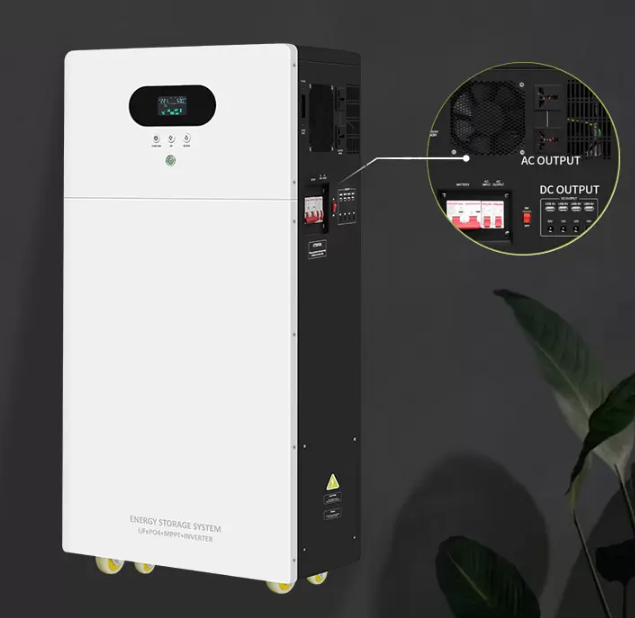
Once a battery system is introduced, energy no longer flows in a simple straight line from production to consumption. Instead, it becomes a conditional system that constantly evaluates where energy should be placed.
In real operation, energy is continuously redistributed based on household behavior rather than a fixed schedule. A sudden appliance start-up can change the discharge pattern instantly, while a cloudy sky can shift priority from storage to immediate consumption.
This is where solar energy storage system design becomes less about hardware configuration and more about behavioral modeling of energy demand.
On paper, two systems with identical capacity may appear interchangeable. In real environments, however, their behavior diverges due to control logic, thermal stability, and response speed.
One system may prioritize self-consumption aggressively, while another maintains conservative discharge to extend battery lifespan. These differences are not visible in datasheets, but they significantly affect user experience over time.
Stability of battery cell matching under repeated cycling
Accuracy of inverter response under sudden load changes
Thermal consistency during high-demand evening periods
Quality of long-term BMS calibration drift control
These factors define how smoothly a system transitions between charging and discharging states in real residential conditions.
Electricity pricing in many regions is no longer purely based on total usage. Time-of-use tariffs and peak pricing models have introduced a structural layer where the same unit of electricity has different value depending on when it is consumed.
This fundamentally changes how households interact with energy systems. The goal is no longer just reduction, but timing optimization.
This is where how to reduce electricity bill using solar battery storage becomes a practical system question rather than a theoretical concept.
Storage systems introduce a controlled timing gap between production and consumption.
Energy generated during low-cost periods is stored, then released during high-cost periods. The system effectively turns electricity into a time-shifted resource.
In real installations, the most consistent savings come not from peak solar production days, but from daily evening discharge cycles that replace grid consumption during expensive tariff windows.
| Energy stage | Without storage | With storage system |
|---|---|---|
| Midday solar surplus | Exported at low value | Stored locally |
| Evening peak demand | Grid electricity purchased | Battery discharge used |
| Night consumption | Full grid dependency | Partial or full self-supply |
| Pricing exposure | High volatility | Smoother cost profile |
Increasing self-consumption ratio of solar energy
Reducing exposure to peak electricity tariffs
Minimizing grid imports during high-cost periods
Maximizing use of previously wasted daytime surplus
Grid reliability has become less predictable in many regions due to weather instability, infrastructure aging, and peak demand pressure.
As a result, residential energy systems are increasingly expected to provide uninterrupted power rather than just cost savings.
This shift has made solar battery backup system for the home during power outage a baseline design requirement in many new installations.
During a grid failure, modern systems perform a rapid transition sequence. The detection of instability triggers an automatic disconnection from the grid, followed by immediate activation of battery-based supply.
What matters in practice is not just the switching speed, but the stability during load fluctuations that occur immediately after transition. Appliances such as compressors or pumps create sudden load spikes, and the system must absorb these without voltage instability.
In well-designed systems, this process is effectively invisible to the user.
The idea of off grid solar power for home system explanation is often interpreted as full separation from the grid. In real-world usage, most systems operate within a hybrid boundary.
Even systems designed for off-grid capability often retain grid interaction as a backup stabilizer during periods of low solar generation or unexpected load spikes.
Energy independence is better understood as a layered system rather than a final destination. Households typically move through increasing levels of autonomy, but rarely reach absolute isolation from external supply.
The limiting factor is not technology alone, but variability in daily consumption patterns, which makes full isolation difficult to sustain consistently.
Technical specifications describe maximum capability, but not operational consistency over time. In residential environments, systems are subjected to daily cycling, temperature variation, and irregular load patterns.
Over time, differences in manufacturing quality become more visible than initial performance metrics.
A system described as the best residential solar energy storage solution for home is not defined by peak output, but by how consistently it maintains performance across thousands of cycles.
Poor integration often leads to uneven discharge patterns, faster degradation, and reduced usable capacity even when nominal specifications remain unchanged.
One of the most subtle effects of storage adoption is that users rarely need to change behavior intentionally. Instead, the system absorbs fluctuations in demand and smooths energy usage over time.
This creates a gradual shift where energy feels more stable and less dependent on external supply conditions.
In practical use, solar energy covers daytime demand while excess is stored. As solar output declines, stored energy gradually takes over without a noticeable transition point.
This continuous balancing effect reduces the perception of energy scarcity during peak hours.
Modern residential energy systems are increasingly defined by software-driven coordination rather than hardware capacity alone. Systems now incorporate forecasting, adaptive discharge logic, and dynamic grid interaction.
This transforms storage from a passive buffer into an active control layer.
As a result, solar energy storage systems are evolving toward predictive energy management platforms rather than simple storage devices.
Why do similar systems perform differently in real use
Because real-world performance depends on control logic, thermal behavior, and manufacturing consistency rather than specification values alone.
Can storage systems fully eliminate electricity bills
In most residential cases, they significantly reduce costs but do not fully eliminate grid dependency unless system capacity is oversized.
How long do residential systems typically last
Most lithium-based systems operate effectively for around 8–12 years depending on usage intensity and environmental conditions.
Is full off-grid living practical?
It is technically possible but rarely optimal. Hybrid systems remain more stable and economically efficient in most residential environments.
The rise of solar energy storage systems reflects a deeper transformation in how residential energy is structured.
The core change is not increased generation capacity, but the ability to control when energy is available and consumed.
Electricity is gradually evolving from a real-time commodity into a time-managed resource, where storage, delay, and release are coordinated by system logic rather than immediate demand.
In this new structure, energy is no longer simply produced and consumed—it is scheduled, buffered, and optimized across time as a continuous process.


Compact, quiet, and powerful, it keeps your essentials running during outages and lets you charge anywhere with solar power or grid power.
Perfect for renters who need flexibility without compromise.
Our estimator is only set up to provide preliminary estimates and installer information to residents of single family homes.