
 Email Us
 Contact us
 Whats App
Single family home

A home battery can power an entire house, but whether one battery can do it depends on much more than the battery’s stated capacity. A home battery has to provide enough stored energy for the required backup period, while its continuous and peak power ratings must also handle the appliances operating at the same time. A battery with 15 kWh of usable energy, for example, may provide many hours of backup for essential loads but may not be enough to run an electric range, air conditioner, water heater, and other high-power appliances continuously.
For homeowners and installers, the more useful question is not simply whether one battery can power a house. It is whether the battery has the right combination of energy capacity, output power, inverter compatibility, and backup configuration for that particular property. This distinction is important when comparing residential systems, especially as larger 51.2V batteries and modular storage systems become more common. BEINENG’s residential solar battery storage systems include different configurations for homes with different backup requirements.
The answer is yes, but only when the battery and the home’s electrical demand are properly matched.
Consider a home that normally consumes 20–30 kWh of electricity per day. That does not mean a 20–30 kWh battery is automatically required for backup. Much of the household’s daily consumption may occur during the daytime, when solar panels or the grid are supplying power directly. During an outage, the battery may only need to support selected loads during the evening and overnight.
The situation changes when the homeowner expects whole-house backup rather than essential-load backup. Whole-house backup means the battery system is expected to support a much larger portion of the electrical panel, potentially including HVAC equipment, cooking appliances, pumps, refrigeration, lighting, communications equipment, and other household loads.
The battery therefore needs to satisfy two separate requirements:
· Energy capacity: how much electricity can be stored and delivered over time.
· Power output: how much electricity the system can deliver at one moment.
A battery can have plenty of stored energy and still fail to operate a large appliance if its inverter or battery output cannot supply the required power. Conversely, a system with high power output may run several appliances at once but exhaust its stored energy quickly.
This is why home battery capacity and home battery power output should always be evaluated together.
One of the most important decisions in a residential energy storage project is defining what “power the entire house” actually means.
An essential-load backup system typically supplies a dedicated backup panel. Refrigerators, lights, internet equipment, security systems, selected outlets, and perhaps a small air conditioner may be connected to this panel. Large loads such as electric water heaters, EV chargers, ovens, pool pumps, or central HVAC systems may remain outside the backup circuit.
A whole-house system takes a different approach. The battery and inverter are connected so that a much larger portion of the home can remain operational during a grid outage. This requires greater inverter capacity, careful load management, and usually more battery capacity.
Backup configuration | Typical loads | Main requirement |
Essential-load backup | Refrigerator, lights, Wi-Fi, security, selected outlets | Moderate battery capacity |
Partial-home backup | Essential loads plus selected HVAC or kitchen appliances | Higher power and capacity |
Whole-house backup | Most household circuits, including larger appliances | High inverter output, sufficient battery capacity and proper load management |
A homeowner who only wants refrigeration, lighting, communications, and basic comfort during an outage may not need a very large system. Someone who expects the house to function almost normally during a multi-hour outage has a much different requirement.
The BEINENG home energy storage solutions can be evaluated according to this difference between basic backup and broader household power requirements.
Battery capacity is normally expressed in kWh, while individual lithium battery products may also be described by voltage and amp-hour ratings.
For example, a 51.2V 300Ah battery has a nominal energy capacity of approximately:
51.2V × 300Ah = 15.36 kWh
That does not mean the homeowner will necessarily receive 15.36 kWh of usable AC energy from the system. Conversion losses, reserve settings, battery management parameters, temperature, inverter efficiency, and the allowed depth of discharge all affect the energy available to household loads.
The same principle applies when comparing a 280Ah battery with a 300Ah model. The difference in amp-hours is useful, but it is only one part of the system design. The 300Ah vs 280Ah home battery comparison provides a more detailed look at why nominal capacity should not be treated as the only purchasing factor.
For practical system sizing, it is better to work backward from the loads.
If a home needs an average of 2 kW during an outage and the target backup period is 8 hours, the basic energy requirement is:
2 kW × 8 hours = 16 kWh
The real battery requirement will be higher because the system does not operate with 100% conversion efficiency and homeowners may want a reserve for unexpected loads.
That is why a battery advertised as 15 kWh should not automatically be described as providing 15 kWh of usable household electricity.
Power demand can create a problem long before the battery is empty.
A refrigerator may consume relatively little energy over an entire day, but its compressor can create a short starting surge. An air conditioner can have a much larger startup requirement. Electric resistance heaters, ovens, dryers, EV chargers, and electric water heaters can draw several kilowatts while operating.
A home might therefore have a normal average demand of only 1–2 kW while occasionally reaching 8–12 kW or more.
This is where the inverter becomes critical.
The inverter determines how much DC energy from the battery can be converted into usable AC power for the home. Its continuous rating indicates the power it can normally provide, while its surge or peak capability determines whether it can handle short-duration starting loads.
A system with adequate kWh capacity but insufficient inverter output may shut down or disconnect when several appliances start simultaneously.
For whole-house backup, installers should therefore examine:
· continuous household load
· peak household load
· motor startup current
· inverter continuous output
· inverter surge capability
· battery maximum discharge current
· available load-management functions
This is also why simply adding a larger battery does not always solve a power problem. If the inverter remains undersized, increasing storage capacity will provide more energy but not necessarily more instantaneous output.
A 15kWh-class battery has become an interesting size for residential applications because it provides a substantial amount of stored energy without requiring a very large battery bank.
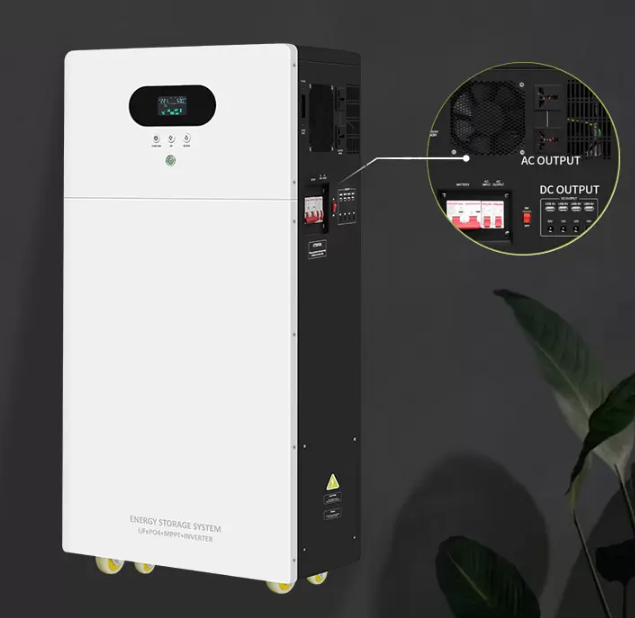
BEINENG offers a 15kWh AI touchscreen wall-mounted home battery storage system, which is positioned within this residential storage range.
Whether 15 kWh is enough depends heavily on the actual loads.
Suppose a household reduces its outage consumption to approximately 1.5 kW by avoiding large electric heating loads and unnecessary appliances. A nominal 15 kWh battery could theoretically provide around 10 hours at that average load before considering system losses and reserve settings.
At 3 kW average demand, the same nominal capacity would theoretically last about 5 hours.
Average backup load | Approximate energy use per hour | Theoretical runtime from 15 kWh* |
1 kW | 1 kWh | 15 hours |
1.5 kW | 1.5 kWh | 10 hours |
2 kW | 2 kWh | 7.5 hours |
3 kW | 3 kWh | 5 hours |
5 kW | 5 kWh | 3 hours |
*Simple energy calculation before accounting for inverter losses, reserve capacity, temperature and other system conditions.
The important point is that runtime is determined by actual load, not the number of appliances installed in the house.
A 15kWh system may therefore provide comfortable overnight backup for one household while being insufficient for another household with heavy electric heating or continuous air-conditioning use.
Some appliances have a disproportionate effect on battery sizing because they consume a lot of power.
Central air conditioning is a common example. An HVAC system may operate intermittently, so its average daily energy consumption can be manageable, but when the compressor starts, the instantaneous power demand can be significant.
Electric water heaters create another issue. A conventional resistance water heater may draw several kilowatts while heating. If it operates at the same time as an oven and air conditioner, the combined load can quickly exceed the inverter’s output rating.
EV charging is even more significant. A residential EV charger can represent a major load compared with lighting, refrigeration, and electronics. Using the battery to charge an EV during a blackout may reduce the available backup time dramatically.
For whole-house systems, these loads should not simply be added together using their nameplate ratings without considering operating patterns. A realistic load profile is much more useful.
A well-designed system does not necessarily try to operate every appliance at the same time.
Instead, smart energy management can prioritize important loads and temporarily limit lower-priority consumption. For example, during a grid outage, an energy management system could allow refrigeration and HVAC operation while delaying water heating or EV charging.
This approach can make a single battery far more useful without simply adding another battery module.
The same principle applies to solar charging. If the home has adequate PV generation during the day, the battery can be recharged after overnight discharge. In that situation, the homeowner may care less about storing enough energy for several consecutive days and more about maintaining enough capacity to cover the period between solar production and the next charging cycle.
The home energy storage system guide is useful when assessing the wider relationship between battery capacity, system configuration and residential backup requirements.
For higher-capacity residential systems, 51.2V lithium batteries are increasingly common because they can provide substantial energy storage at a practical DC voltage.
A 51.2V architecture is commonly associated with LiFePO4 battery configurations built from sixteen 3.2V nominal cells in series. When combined with an appropriate battery management system, inverter and protection equipment, this architecture can support residential storage applications ranging from smaller backup systems to larger modular battery banks.
BEINENG’s 48V and 51.2V battery range covers this part of the residential storage market.
The advantage is not simply the voltage number. The battery, inverter, BMS and communication system have to work together. A 51.2V battery with unsuitable discharge limits or incompatible communication protocols can still create system-level problems.
For installers, compatibility should be checked before choosing the battery based only on capacity.
There is no universal battery size that can power every home.
A single battery is more likely to be sufficient when the home has moderate energy consumption, limited high-power loads, good solar production, and a clearly defined backup strategy. It becomes less practical when the property has electric heating, multiple air-conditioning systems, an EV charger, electric water heating, pumps, or a requirement for extended off-grid operation.
A second battery may make more sense when the issue is storage capacity rather than inverter output. For example, if the existing inverter can already support the required loads but the battery runs out of energy too quickly, additional storage can extend runtime.
If the inverter itself cannot handle the required power, however, adding battery capacity alone may not solve the problem.
That distinction should be made before purchasing additional modules.
A battery is only one part of a whole-house backup system.
The complete installation may include the battery bank, hybrid inverter, automatic transfer equipment, protection devices, backup distribution, communication interfaces, solar PV input and monitoring controls. The electrical architecture determines how the system behaves when the grid fails.
The BEINENG residential system design resources can be used as a reference when evaluating how the storage system fits into the wider home energy setup.
A battery paired with solar panels can behave very differently from a battery used as a standalone backup source.
During a daytime outage, solar generation may supply household loads while simultaneously charging the battery. This can significantly extend the effective backup period, provided the inverter and system controls are designed to operate correctly during grid outages.
Without solar generation, the battery is effectively a finite energy reservoir. Once the stored energy is depleted, the home needs another source of electricity.
For households concerned about long outages, this makes the relationship between solar PV capacity, battery capacity and household consumption more important than battery capacity alone.
A simple way to estimate backup runtime is:
Backup runtime ≈ usable battery energy ÷ average backup load
The challenge is determining the average backup load accurately.
A home that uses 2 kW continuously is very different from a home that alternates between 500 W and 5 kW. The second home may have the same average consumption over several hours but a much more demanding instantaneous load profile.
For a more realistic estimate, divide household loads into three groups:
1. Critical loads that should remain operational throughout an outage.
2. Flexible loads that can be scheduled or temporarily disconnected.
3. High-power loads that require special consideration because of their demand or startup surge.
This method gives the installer a much better basis for determining whether one battery can support the home.
The most reliable approach is to check the system in this order rather than starting with battery capacity.
List the appliances and circuits that need to remain powered during an outage. Do not begin with the battery model.
A refrigerator, internet router, lighting, security equipment and selected outlets create a very different requirement from a home where air conditioning, cooking, water heating and EV charging must also remain available.
Next, determine what could realistically operate at the same time.
This is where inverter sizing becomes important. If the expected simultaneous demand exceeds the inverter’s continuous output, the system needs a different configuration regardless of how many kWh the battery stores.
Finally, estimate how long the home needs to operate without grid power.
A homeowner who mainly wants protection against two- to four-hour outages has a different requirement from someone preparing for overnight outages or multi-day grid interruptions.
For longer outages, solar recharge capability can become just as important as battery size.
There is a tendency to judge residential batteries by the largest capacity available, but bigger is not automatically better.
An oversized battery can increase the upfront cost without providing meaningful additional value if the household rarely uses the extra capacity. An undersized battery can create the opposite problem: frequent deep discharge, short backup periods and frustration during outages.
The right system should balance:
· usable energy capacity
· continuous and peak output
· daily household consumption
· critical-load requirements
· solar generation
· backup duration
· inverter compatibility
· future electricity demand
For many homes, a single well-matched battery can provide effective backup. For homes with high demand or whole-house backup expectations, multiple batteries or a higher-capacity system may be the more practical solution.
Yes, if its capacity and output are matched to the home's loads. High-demand homes may require multiple batteries or a larger system.
It can be enough for moderate loads, but heavy HVAC, electric heating or EV charging can reduce runtime substantially.
Not necessarily. Capacity determines stored energy, while inverter and battery discharge ratings determine available power.
A properly designed solar-plus-storage system can recharge the battery during an outage, provided the inverter and controls support off-grid solar operation.
The choice depends on required capacity, output power, installation space, future expansion and system architecture. Modular systems can provide more flexibility as household demand changes.
Both matter. Capacity determines how long the system can run, while inverter power determines what loads it can operate at the same time.
A single home battery can absolutely keep an entire house running, but only when the battery, inverter and household load profile are designed as one system. The practical target is not the biggest battery or the highest kWh figure. It is enough usable energy for the expected outage period, enough output for the appliances that may run simultaneously, and enough flexibility to recharge or expand when household demand changes.
For homeowners considering whole-house backup, the most useful next step is to compare actual household loads with the battery’s usable capacity and inverter output rather than relying on battery capacity alone.


Compact, quiet, and powerful, it keeps your essentials running during outages and lets you charge anywhere with solar power or grid power.
Perfect for renters who need flexibility without compromise.
Our estimator is only set up to provide preliminary estimates and installer information to residents of single family homes.