
 Email Us
 Contact us
 Whats App
Single family home

Electricity costs continue to rise, solar installations are becoming more common, and homeowners are paying closer attention to how much power they buy from the grid. As a result, investing in a home energy storage system has become less about preparing for occasional outages and more about improving everyday energy efficiency. The challenge isn't deciding whether battery storage is worthwhile—it's choosing a system that genuinely fits the way a home consumes electricity.
Many first-time buyers start by comparing battery capacities or searching for the lowest price. In practice, those factors rarely determine whether a system performs well over the next ten years. Engineers look at a different set of questions. How much electricity is used after sunset? Will the household add an electric vehicle within a few years? Is the existing inverter compatible with battery storage? Is the goal to reduce electricity bills, provide emergency backup, or maximize solar self-consumption?
The answers to those questions shape the ideal system far more than the number printed on a specification sheet. A properly sized home energy storage system delivers better financial returns, longer battery life, and greater flexibility as household energy needs evolve.
One of the biggest misconceptions in residential energy storage is that monthly electricity consumption tells the whole story. It doesn't.
From an engineering perspective, monthly utility bills provide only a broad overview. They reveal how much electricity a household purchased but say very little about when that electricity was consumed. Timing is exactly what determines whether battery storage will generate meaningful savings.
Consider two homes that each use 900 kWh per month. On paper, their consumption appears identical. In reality, one family may spend most of the day away from home, using electricity primarily during the evening. The other may operate air conditioning, appliances and home offices throughout daylight hours. Although annual consumption is the same, the recommended battery configuration could be completely different.
A quality home energy storage system is designed around load profiles rather than monthly totals. Engineers typically evaluate several questions before recommending battery capacity:
· How much electricity is used after solar production declines?
· Which appliances create the highest peak demand?
· Are there seasonal changes in consumption?
· Will future upgrades increase household electricity use?
Without these answers, selecting battery capacity becomes little more than guesswork.
Another common mistake is focusing only on energy consumption while overlooking instantaneous power demand.
For example, lighting, televisions and refrigerators consume electricity continuously but at relatively low power levels. Air conditioners, electric ovens, induction cooktops and EV chargers can create short periods of extremely high demand. Even if total daily energy usage remains moderate, these peak loads influence inverter sizing and battery discharge capability.
This explains why two households requiring the same usable battery capacity may require entirely different system configurations.
Instead of asking, "How many kilowatt-hours do I use each day?", experienced installers usually ask, "Which appliances are likely to operate at the same time?"
That single question often changes the recommended solution.
Many buyers assume that purchasing the largest available battery guarantees the best outcome. In reality, oversizing can increase costs without providing meaningful benefits.
Battery capacity should match actual energy habits rather than anticipated worst-case scenarios. Oversized systems frequently spend much of their service life operating below their optimal charge-discharge range, reducing financial returns.
On the other hand, undersized batteries cycle more aggressively and may reach their discharge limits before the evening demand period ends.
Finding the right balance is therefore more important than purchasing maximum capacity.
Household Profile | Average Daily Consumption | Suggested Battery Capacity |
Apartment or small home | 8–12 kWh | 10–15 kWh |
Typical family home | 15–20 kWh | 15–20 kWh |
Large household | 20–30 kWh | 20–25 kWh |
Home with EV charging | 30 kWh+ | Modular expansion recommended |
The figures above should be treated as planning references rather than fixed rules. Roof size, local electricity tariffs, solar generation and backup requirements all influence the final recommendation.
One trend has become increasingly clear over the past several years: homeowners rarely regret choosing a system that allows future expansion. They are much more likely to regret purchasing a fixed-capacity solution that cannot adapt as electricity consumption grows.
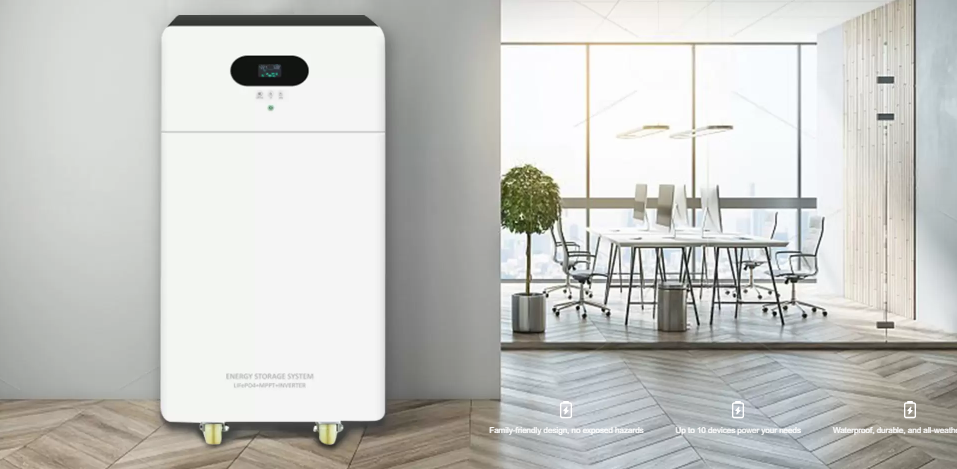
Only a few years ago, residential batteries were available in multiple voltage platforms. Today, the vast majority of premium residential products are built around 51.2V home battery architecture.
This shift isn't simply a marketing trend. It reflects improvements in safety, compatibility and manufacturing consistency across the global energy storage industry.
A 51.2V configuration typically consists of sixteen LiFePO₄ cells connected in series. This arrangement offers an excellent balance between operating voltage, thermal stability and inverter compatibility while remaining suitable for residential applications.
For manufacturers, adopting standardized voltage platforms also simplifies quality control, inventory management and after-sales support. Replacement modules, battery management systems and communication protocols become easier to standardize, reducing maintenance complexity over the product lifecycle.
For homeowners, the advantages are equally practical. Standardized voltage improves compatibility with mainstream hybrid inverters, simplifies future capacity expansion and provides access to a broader selection of compatible accessories and replacement components.
Rather than asking whether a battery uses 48V or 51.2V terminology, buyers should focus on the overall system design, certified safety standards and long-term supplier support.
Choosing battery chemistry is only part of the purchasing decision. System architecture has an equally significant impact on installation, maintenance and future upgrades.
The two most common residential designs today are integrated cabinets and modular stackable systems.
Feature | Stackable Battery | |
Installation | Faster and simpler | Modular assembly required |
Expansion | Limited | Excellent scalability |
Maintenance | Whole unit service | Individual module replacement |
Initial investment | Lower | Slightly higher |
Long-term flexibility | Moderate | High |
For homeowners planning to remain in the same property for many years, expansion flexibility often becomes increasingly valuable. Families may install an EV charger, replace gas heating with electric heat pumps or expand rooftop solar capacity. Each of these changes increases electricity demand.
A stackable battery system allows additional modules to be added as requirements evolve, avoiding the need to replace the original battery bank.
By contrast, an integrated cabinet works particularly well where installation space is limited and future expansion is unlikely.
One advantage of working directly with a battery manufacturer is seeing hundreds of residential projects before production even begins. The conversation rarely starts with battery capacity. Instead, it begins with understanding how electricity flows through the home and what the owner expects from the system over the next five to ten years.
One homeowner may want to reduce peak electricity costs under a time-of-use tariff, while another simply wants reliable backup power during frequent outages. Some customers plan to install rooftop solar immediately, while others intend to add photovoltaic panels a year later. These scenarios require different system designs, even if their daily electricity consumption appears similar.
For engineering teams, several factors are reviewed before recommending a home energy storage system:
· The home's daily and evening load profile rather than monthly electricity bills.
· Existing inverter model and communication protocol compatibility.
· Available installation space, ventilation conditions and ambient temperature.
· Future plans such as EV charging, additional solar panels or electric heating.
A common mistake is purchasing a battery sized only for current consumption. Residential energy demand rarely remains static. Air conditioners are upgraded, electric vehicles replace fuel-powered cars, and families often install additional appliances that increase electricity usage. A modular system designed with expansion in mind usually provides a better long-term investment than replacing an undersized battery after only a few years.
Another issue manufacturers frequently encounter is buyers comparing products solely by nominal capacity. Two batteries labeled 15 kWh may not deliver identical real-world performance. Usable capacity, battery management strategy, charging efficiency, thermal protection and warranty conditions all influence how much energy the homeowner can actually use every day.
Reliable manufacturers evaluate the complete system rather than selling the largest battery available. That approach generally results in lower lifecycle costs and higher customer satisfaction over the lifetime of the installation.
A homeowner in Southern Europe contacted our engineering team after receiving quotations for both a 10 kWh and a 20 kWh battery. The quotations differed significantly in price, but neither installer had explained why one option would be better than the other.
The property had a 6 kW rooftop solar array, average daily consumption of approximately 18 kWh, and the family was typically away from home during working hours. Most electricity was consumed between 6 p.m. and midnight when cooking, air conditioning and entertainment systems were running simultaneously.
After reviewing the home's load profile, engineers recommended a 15 kWh home battery energy storage system rather than either of the original options.
The recommendation was based on several factors:
· Daytime solar generation was sufficient to recharge the battery under normal weather conditions.
· Evening electricity demand could be covered without routinely discharging the battery to its minimum state of charge.
· Additional capacity remained available for occasional grid outages without unnecessarily increasing project cost.
· The selected system allowed future battery expansion if an EV charger was installed.
Six months after commissioning, grid electricity purchases during evening hours had fallen by more than half, while the homeowner avoided paying for battery capacity that would have remained unused for most of the year.
The outcome illustrates an important principle: successful battery sizing depends on energy usage patterns rather than simply choosing the largest available specification.
Purchasing a home energy storage system should involve more than comparing capacity and price. Asking the right questions before placing an order can prevent compatibility issues and unnecessary upgrades later.
· Verify that the battery is compatible with the inverter already installed or planned for the project.
· Compare usable battery capacity rather than nominal capacity, especially when evaluating different manufacturers.
· Consider whether additional battery modules may be required in the future as electricity demand increases.
· Review warranty coverage, cycle life and technical support instead of focusing only on initial purchase cost.
A system designed around future flexibility often provides greater value over ten years than a lower-priced solution that cannot be expanded or integrated with additional renewable energy equipment.
It depends on when electricity is consumed rather than how much is consumed overall. Homes that use most of their electricity after sunset generally benefit from larger battery capacity than homes where daytime solar generation directly powers appliances. Reviewing the daily load profile provides a more reliable basis for sizing than monthly utility bills.
A 15 kWh system often suits medium-sized households with rooftop solar because it provides additional storage without becoming excessively oversized. However, capacity should always match actual consumption, expected solar production and future expansion plans rather than following a fixed recommendation.
Most modern residential battery systems are designed to integrate with solar installations, but compatibility depends on inverter type, communication protocol and system configuration. Checking compatibility before purchasing avoids unnecessary installation costs and commissioning delays.
Integrated systems simplify installation and require less space, making them suitable for many standard residential projects. Modular stackable battery designs offer greater flexibility when future expansion is expected, particularly for households planning to add EV charging or larger solar arrays.
High-quality LiFePO₄ batteries typically provide several thousand charge-discharge cycles under normal operating conditions. Actual service life depends on charging strategy, operating temperature, depth of discharge and battery management quality. Many premium residential systems continue operating efficiently for well over ten years.
The best home energy storage system is not necessarily the one with the highest capacity or the longest feature list. It is the system that aligns with how electricity is produced, stored and consumed in a particular home.
Battery capacity should reflect actual household demand, inverter compatibility should be confirmed before installation, and future expansion should always be considered during system design. Paying attention to these factors helps homeowners maximize solar self-consumption, reduce long-term electricity costs and avoid expensive upgrades as energy needs change.
A carefully planned system becomes part of a home's long-term energy strategy rather than simply another electrical appliance. Taking the time to evaluate usage patterns, installation requirements and future plans before purchasing almost always produces better results than choosing a battery based on specifications alone.


Compact, quiet, and powerful, it keeps your essentials running during outages and lets you charge anywhere with solar power or grid power.
Perfect for renters who need flexibility without compromise.
Our estimator is only set up to provide preliminary estimates and installer information to residents of single family homes.