
 Email Us
 Contact us
 Whats App
Single family home

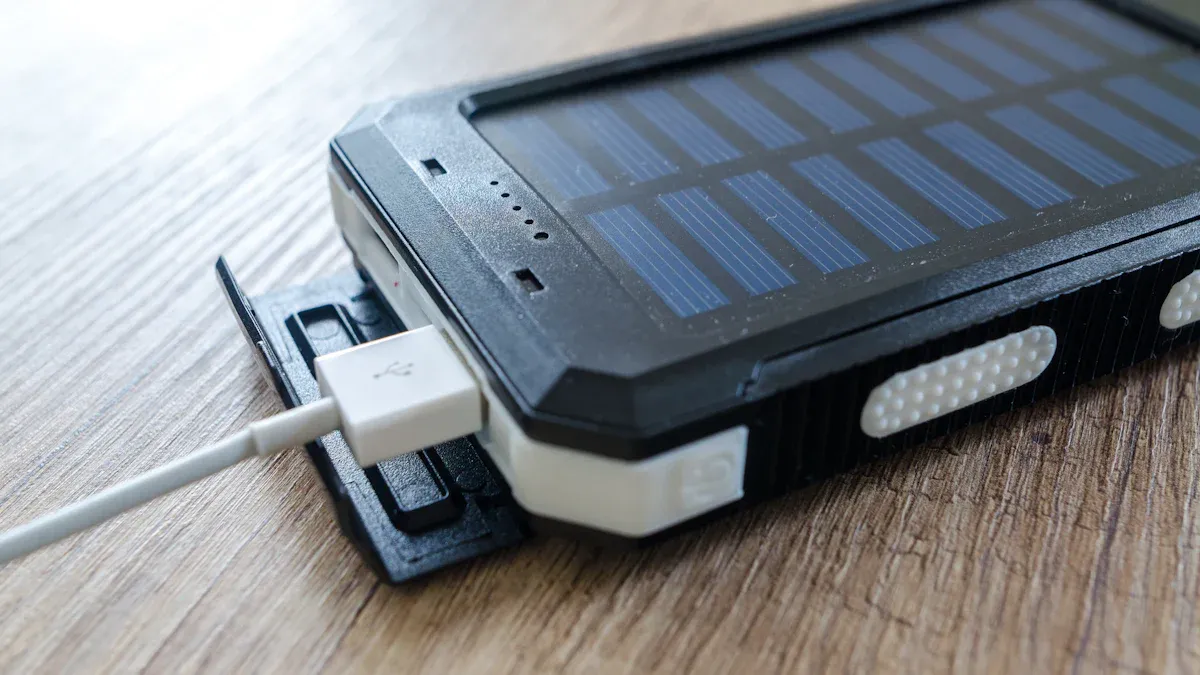
You want the best solar batteries for your house in 2026. Good choices for solar panel use are BEINENG Home ESS, Bluetti EP900, and Tesla Powerwall 3. These batteries work with solar panels to store energy. You can use this energy when you need it most. If you use a battery with your solar panels, you get backup power during outages. You also get more control over your energy. Trusted brands let you use solar energy day and night. You get energy freedom, lower bills, and strong performance from your panels and battery.
Solar batteries give backup power during outages. They help your home stay powered when the grid does not work.
Using solar batteries can save you a lot of money. You might save $700 to $1,100 each year.
Pick a battery that fits your energy needs. Think about storage size and power rating for best results.
Find batteries with good warranties. Longer warranties mean the product is more reliable and trusted.
Stackable battery systems are easy to expand. You can add more storage if you need more energy later.
Solar batteries change how families use solar energy. When you add batteries to solar panels, you get many good things. You can save extra solar power during the day. You use it at night or when it is cloudy. This helps you use more of your own solar energy. You do not need the grid as much. Solar batteries help you control your energy use. They keep your home working well.
Here is a table that shows why people pick solar battery storage in 2026:
Reason | Description |
|---|---|
Financial savings | Batteries let you save energy when prices are low. You use it when prices go up. This helps lower your bills. |
Energy resilience | Home batteries can run important things when the grid fails. This keeps your home safe and working. |
Energy independence | Batteries give you more control over your power. You do not need the utility as much during emergencies. |
Environmental impact | Batteries help you use more clean energy. This means you use less fossil fuels. |
You want your house to have power during outages. Solar batteries give you backup power if the grid stops working. Your solar panels make energy, and your battery saves it for later. Your lights, fridge, and other things keep working. You do not need to worry about losing power in storms. With batteries, you get energy independence. You control your own energy and use solar power even when the grid is off.
Uninterrupted power supply: Solar batteries keep your house on during outages.
Energy independence: You use your own solar energy more.
Cost savings: You use saved energy when prices are high.
Environmental impact: You use more clean energy and help the earth.
Solar batteries help you save money. You store solar energy when prices are low. You use it when prices are high. Many people save $700 to $1,100 each year with batteries. In 10 to 15 years, you can save $7,000 to $16,500. Solar batteries also make your system work better. You use more of your own solar power and waste less energy. Batteries help with changes in solar energy. Your system works well all year. With smart storage, you get more from your solar panels and save money for a long time.
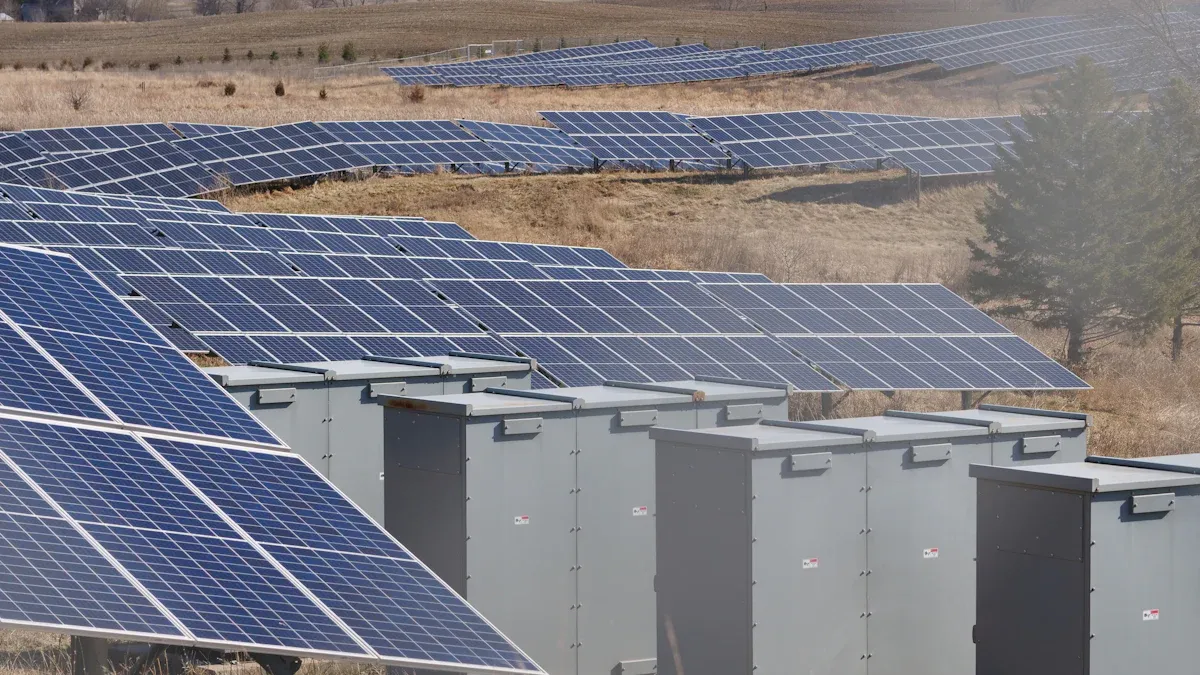
To pick the right solar battery, you need to know the main types in 2026. Brands like BEINENG Home ESS, Bluetti EP900, Tesla Powerwall 3, Enphase IQ 5P, Franklin aPower2, Simpliphi, Fortress Power, and BigBattery make good storage systems. These systems work with solar panels. They help you keep energy and make your system better.
Many solar systems use lithium-ion and lithium iron phosphate (LiFePO4) batteries. These batteries hold a lot of energy and work well with solar panels. LiFePO4 batteries last longer, from 2,000 to 5,000 cycles. They also charge fast and keep energy well. This makes them good for homes that need lots of power. Lithium-ion batteries are popular because they store more power in a small space. They do not let out harmful gases. LiFePO4 batteries have safe chemistry. This means they do not get too hot. You get safe, strong, and long-lasting power for your solar system.
Lead-acid batteries are an old choice for solar storage. They cost less and are easy to buy. People use them for small solar systems. But they need care and do not last as long. Flow batteries are new and work very well. They last a long time and can be made bigger for more storage. Flow batteries cost a lot and are big, so most homes do not use them. Both types work with solar panels. You should think about how big your system is and what you need.
Type | Characteristics | Advantages | Disadvantages |
|---|---|---|---|
Lithium-ion | High energy density, widely used | Efficient, compact, popular options available | Higher cost compared to others |
Lithium Iron Phosphate | Longer lifespan, deeper depth of discharge, eco-friendly | Safe, stable, good for long-term use | Lower energy density than Li-ion |
Lead-acid | Traditional choice, larger size, requires maintenance | Lower initial cost, reliable | Shorter lifespan, heavier |
Flow | Emerging technology, not widely adopted yet | Potential for scalability | Bulky, expensive |
New solar battery systems like BEINENG Home ESS use stackable and modular designs. You can start small and add more batteries if you need more power. These systems let you change your solar storage as you want. You can stack two to eight battery modules. This makes it easy to grow your system. You do not have to change everything to upgrade. Modular systems work with many solar panels and storage needs. This gives you more choices and better results.
Tip: Stackable battery systems help you save money over time. You can add more storage as your family or energy use gets bigger.
You need to look at the good and bad parts of each battery before you choose. Lithium-ion batteries work well and last a long time, but they cost more. LiFePO4 batteries are safe and steady for solar storage. Lead-acid batteries are cheaper but need more care and do not last as long. Flow batteries are good for big solar systems but cost a lot and are large.
Battery Type | Pros | Cons |
|---|---|---|
Lead-Acid | Cheapest option for solar systems | Vulnerable to overheating, extreme cold, and deep discharge limits. |
Lithium-Ion | Higher efficiency and longer lifespan | Higher initial cost compared to lead-acid. |
AC Coupled | Easier to add to existing systems | Less efficient due to multiple energy conversions. |
You should think about your solar panels, how much storage you need, and your budget. Pick a battery system that fits your home and works best for you.
Your solar battery should match your home's energy use. Storage capacity means how much energy the battery holds. Power rating shows how much energy it gives at once. If you use many devices or want backup, pick higher capacity and power. You can use easy math to find the right size.
Battery storage capacity = Total Daily Energy Consumption ÷ (Depth of Discharge × Days of Autonomy)
Total watt-hours needed ÷ Battery Voltage = Required battery capacity (amp-hours)
Stackable batteries like BEINENG Home ESS let you start small. You can add more modules as your needs grow. This helps you use more of your own energy. You do not need a new system if your family gets bigger or you buy new things.
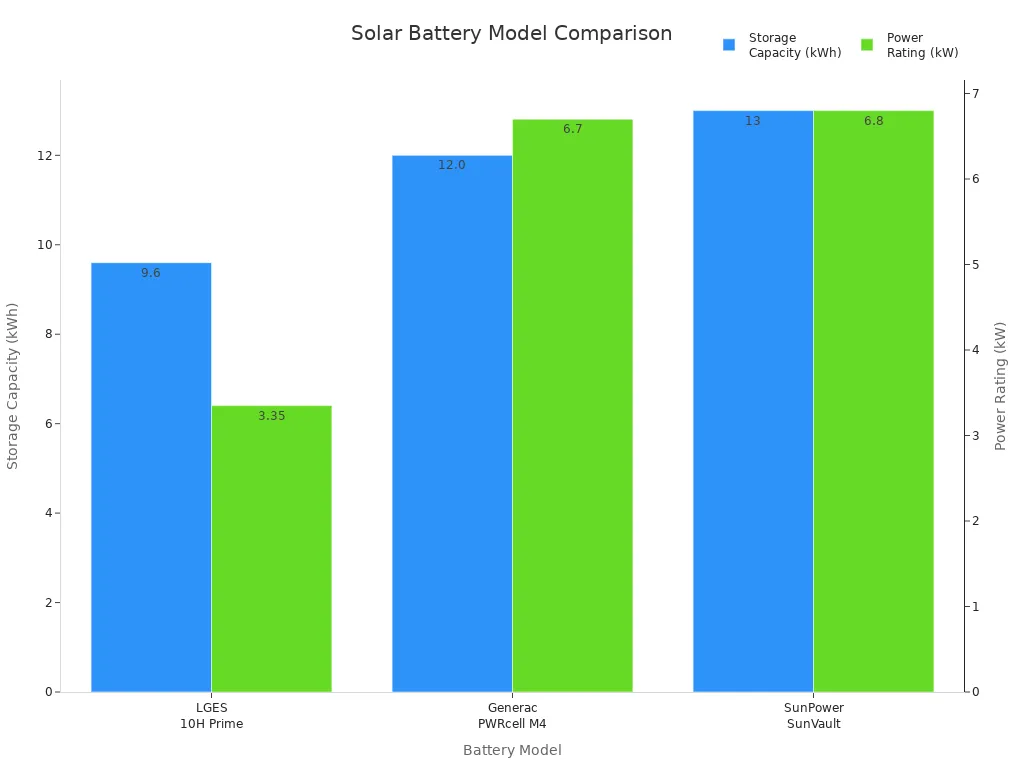
Here is a table comparing popular solar batteries:
Battery Model | Storage Capacity | Power Rating (kW) | Round-Trip Efficiency | Cost |
|---|---|---|---|---|
LGES 10H Prime | 9.6 kWh | 3.35 | 90% | Moderate |
Generac PWRcell M4 | 12.0 kWh | 6.7 | 96.5% | Competitive |
SunPower SunVault | 13 kWh | 6.8 | 85% | Competitive |
Tesla Powerwall 3 | High Capacity | Substantial Loads | High Efficiency | Premium |
Franklin Home Power | Substantial Capacity | Smart Connectivity | High Efficiency | Premium |
Enphase IQ Battery | Modular Design | High Efficiency | High Efficiency | Moderate |
Tip: Pick a battery that fits your daily energy use. Stackable modules make it easy to add more storage.
You want your solar battery to last a long time. Lifespan means how many years the battery works. Warranty protects you if something breaks. Most lithium-ion batteries last 10 to 15 years. Flow batteries can last over 20 years. Lead-acid batteries last 3 to 5 years.
Battery Type | Lifespan | Warranty |
|---|---|---|
Lithium-Ion | 10–15 years | 8–12 years |
Tesla Powerwall | 10 years | 10-year limited warranty |
Lead-Acid | 3–5 years | 3–5 years |
Flow Battery | 20+ years | 15–20 years |
Top brands give strong warranties. Some cover labor, shipping, and inverter parts. Check if the warranty can move to new owners. See if you can make the warranty longer.
Coverage time
Capacity promises
Labor and shipping costs
Can transfer to new owners
Inverter coverage
Options to extend warranty

Note: A longer warranty means you can trust your battery more.
Solar batteries cost money but help you save on bills. In 2026, the average price is $550–$850 per usable kWh installed. A 10 kWh home battery system costs $8,000–$11,000 before incentives. Prices are lower than last year. You get more value if your battery matches your needs and lasts longer.
Lower cost per kWh is better value.
Incentives and rebates can lower your cost.
Stackable systems like BEINENG let you add storage later. This spreads out your spending.
Tip: Look at total cost, warranty, and lifespan to find the best battery for you.
Your solar battery should work with your solar panels, inverter, and EV charger. Compatibility means your battery fits with your system. Integration lets you use energy from different places.
System size matters for EV charging and home use.
Your inverter and charger must match your battery and panels.
BEINENG Home ESS works with solar panels, energy storage, and EV DC charging. This helps you build a smart pv system for your house.
You can pick AC-coupled or DC-coupled systems. DC-coupled systems have higher round-trip efficiency (90–95%). AC-coupled systems are easier to add to old solar setups. They let you grow your system later.
System Type | Round-Trip Efficiency |
|---|---|
DC Coupled | 90-95% |
AC Coupled | 85-90% |
DC-coupled systems make utility connection simple and lower study costs. AC-coupled systems give you more design choices and easy upgrades.
Put your solar battery in a safe, easy-to-reach place. Indoors, you can use garages, utility rooms, or basements. Outdoors, you can use shaded walls, canopies, or special enclosures. Keep your battery close to the inverter to lower voltage loss.
Garage: Big space, needs fire-safe box.
Utility Room: Central spot, short cables, may get warm.
Basement: Steady temperature, watch for water.
Shaded Wall: Fast install, needs fire-safe board.
Canopy: Keeps out weather, needs air flow.
Outdoor Enclosure: Good for big systems, costs more.
Stackable batteries like BEINENG let you add modules when you need them. You can mix new and old batteries for flexible storage. Lithium-ion batteries need little care. Lead-acid batteries need checks for rust. Flow batteries need checks for liquid levels.
Tip: Clean your solar panels and check your battery often. Monitoring helps you find problems early and keeps your system working well.
When you pick a solar battery for your house in 2026, make sure it fits your energy needs. Check how much energy the battery can hold. Look at how much energy you can use before recharging. Think about the battery warranty and how much it costs to install. Review how much energy you use now. Plan for changes, like getting an electric car. Brands like Tesla Powerwall, Enphase, and FranklinWH have good solar batteries. New battery types and smart systems make using solar energy easier. Expert reviews help you compare price, power, and warranty.
An easy way to size your solar battery is to divide your daily energy use by the number of peak sun hours in your area.
Criteria | Description |
|---|---|
Price | Total cost and value |
Power | Meets energy demands |
Warranty | Longevity and coverage |
Talk to solar experts before you buy a battery. They can help you choose the best solar energy system for your house.
You can store extra solar energy for later use. This helps you use more of your own power. You get backup power during outages. Your system gives you more control over your energy.
Check your daily energy use. Look at your solar panel output. Choose a system that matches your needs. Stackable systems let you add more storage if your energy use grows.
Yes, you can add a battery system to most solar setups. Many new systems work with older panels. You may need an inverter that matches your system. Ask a solar expert for help.
BEINENG Home ESS combines solar production, storage, and EV charging in one system. You can expand it as your needs change. This system gives you energy freedom and supports your move to clean energy.
Keep your system clean and dry. Check for dust or damage. Monitor your system’s performance with its app or display. Most systems need little care, but regular checks help your system last longer.


Compact, quiet, and powerful, it keeps your essentials running during outages and lets you charge anywhere with solar power or grid power.
Perfect for renters who need flexibility without compromise.
Our estimator is only set up to provide preliminary estimates and installer information to residents of single family homes.