
 Email Us
 Contact us
 Whats App
Single family home

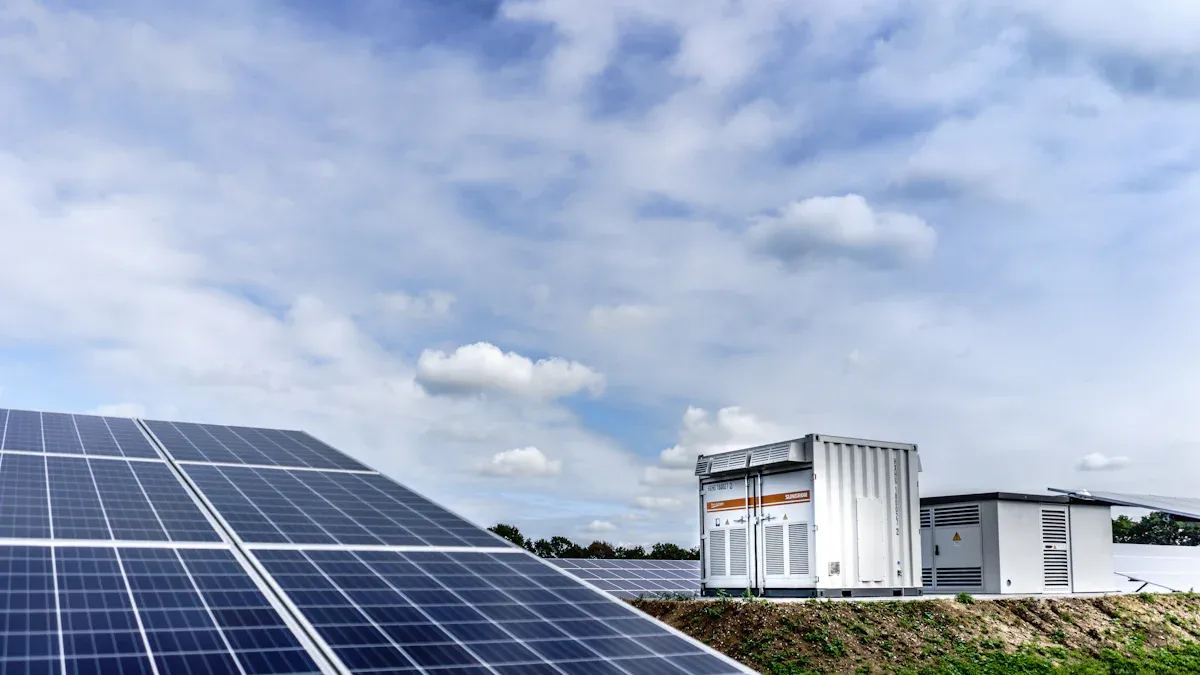
Here are the 5 Best Battery Options for solar installations you should know:
BEINENG Home ESS: This is a smart energy system. It puts solar, storage, and EV charging together. You can use it in many ways.
Bluetti EP900: This is a modular lithium iron phosphate battery. It works for big home backup and off-grid living.
Tesla Powerwall 3: This battery looks nice and holds a lot of power. It connects easily and has advanced app controls for homeowners.
Enphase IQ Battery 5P: This is a small, reliable battery. It uses microinverter technology for easy expansion and safety.
Generac PWRcell: This is a strong backup solution. You can scale it for whole-home energy management.
Picking the right battery makes your solar setup better and more reliable. In 2023, about 12% of solar installations had battery storage. This number may go up to 28% by 2028. You get backup power when the lights go out. You save money by using stored energy when prices are high. You also stay ready as net metering rules change. The right battery helps you get the most from your investment. It also matches your needs, like off-grid living, backup, or daily use.
Pick the best battery for your solar system. This helps make it work better and more often. Think about using lithium-ion or LiFePO4 batteries. These batteries last a long time and give power when the lights go out. Make sure to look at warranties and safety papers. This helps you buy a good battery. Find batteries that have high round-trip efficiency. This means you will not lose much energy. Choose batteries that you can add more to later. This helps if you need more power in the future.
When you look for the Best Battery Options for your solar setup, you want to focus on three main things: how much energy the battery can store, how long it will last, and how well it works. Here’s a simple table to help you compare the most common battery types:
Battery Type | Cycle Life (cycles) | Round-Trip Efficiency (%) | Lifespan (years) | Depth of Discharge (%) |
|---|---|---|---|---|
LiFePO4 (LFP) | 3,000-8,000 | 95-98 | 10-15 | 85-100 |
Lithium-Ion | 95-98 | 10-15 | 85 | |
Lead-Acid | 300-800 | 80-85 | 3-12 | 50 |
You get more usable energy and longer life from lithium batteries. Lead-acid batteries cost less at first, but they need more care and do not last as long.
Not every battery fits every home. You need to think about how you will use your solar system:
If you want backup power for storms or outages, lithium-ion and LiFePO4 batteries work best. They last longer and give you more energy when you need it.
For off-grid living, choose LiFePO4. These batteries handle daily charging and discharging, and they are very safe.
If you only need a small backup for short outages, lead-acid batteries can work, but you will need to replace them more often.
Tip: LiFePO4 batteries are great for homes with high energy needs, like running air conditioning or well pumps.
Always check the warranty. Good batteries offer 10-15 years of coverage.
Look for safety certifications like UL 9540 and UL 1973.
Make sure the battery matches your solar inverter and your home’s energy use.
Ask about round-trip efficiency. Higher numbers mean less wasted energy.
Think about future needs. Choose a battery that you can expand if you add more solar panels later.
Choosing the right battery helps you get the most from your solar investment. Take your time, compare your options, and pick the one that fits your life.
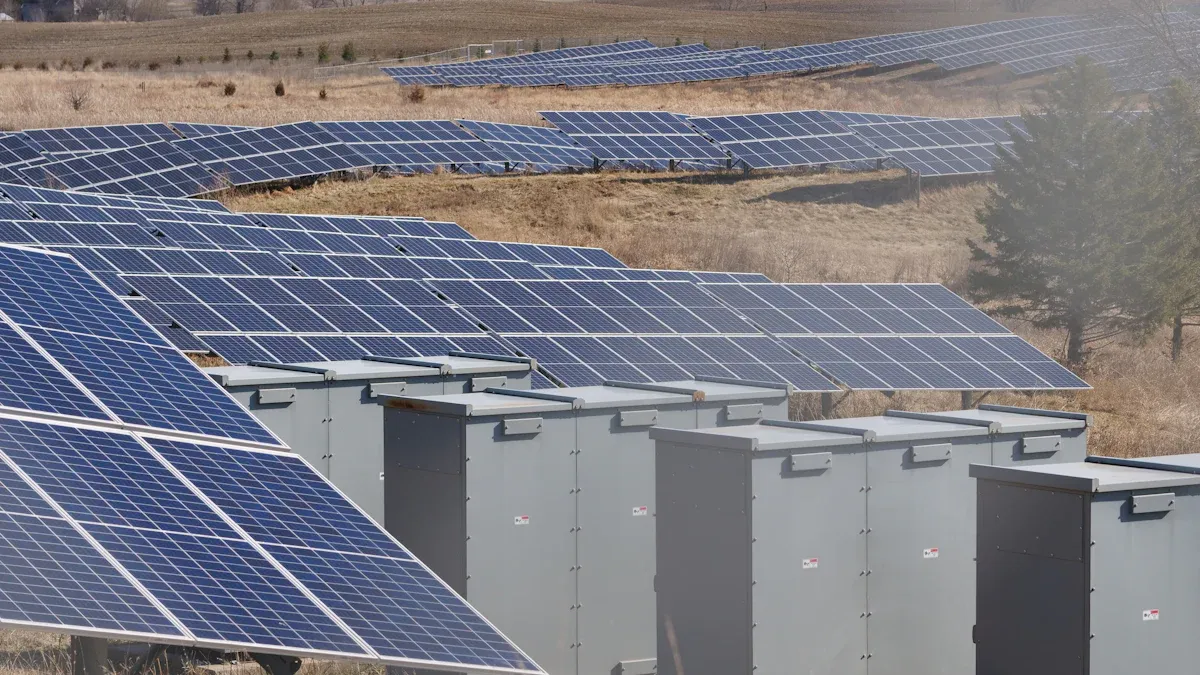
If you want more than just energy storage, check out the BEINENG Home ESS. This system gives you solar power, energy storage, and EV charging together. You can use it for backup, daily use, or off-grid living. It is simple to install. You can control everything with the myBeineng app on your phone. You can see your energy use and make changes easily. The system is smart and safe, so you do not have to worry. If you need more power later, you can add more. This makes it one of the Best Battery Options for families who want a flexible system. The price depends on what you need, but you get a lot because it does so much.
Tip: If you want an easy way to manage solar, storage, and EV charging, BEINENG Home ESS is a complete choice.
The Bluetti EP900 is a good pick if you need a big battery for your home or business. This system is modular, so you can start small and add more later. You can begin with 9.9 kWh and go up to 19.8 kWh. It has a 7.6 kW inverter and works with solar panels or a generator. You can use it inside or outside. You can also run two units together for more power. The BLUETTI app lets you control your system in real time. The EP900 helps you save money by using energy when it is cheaper. You can even sell extra power back to the utility company. This battery is one of the Best Battery Options for people who want strong backup and off-grid power. The price is higher than some other batteries, but you get many features.
Key Features:
Modular design lets you add more batteries
9kW inverter with 120V/240V output
Works with new or old solar systems
Real-time app control
Peak Load Shifting to lower bills
Ideal Use Cases:
Large homes
Small businesses
Off-grid setups
Backup during outages
Tesla Powerwall 3 is a top battery for solar homes. It looks nice and has smart controls with the Tesla app. The Powerwall 3 stores enough energy to power your whole house if the power goes out. It connects to most solar systems and gives you real-time updates. The battery has a 10-year warranty, so it will last a long time. The total cost for the unit, gateway, accessories, and installation is about $15,400. This battery is one of the Best Battery Options if you want energy independence and smart features.
Specification | Details |
|---|---|
Energy Capacity | 13.5 kWh |
Power Output | 11.5 kW peak, 5.8 kW continuous |
Warranty | 10 years |
Price (Installed) | ~$15,400 |
Connectivity | Wi-Fi, Ethernet, Cellular |
Monitoring | Tesla Mobile App |
Pros | Cons |
|---|---|
Energy independence | High installation cost |
Cost savings | Performance drops in shaded areas |
Advanced monitoring | |
Whole home backup | |
Easy integration | |
Real-time insights | |
VPP program potential |
Ideal Use Cases:
Homeowners who want backup for the whole house
Tech-savvy users
People who want to join virtual power plants
If you want a battery that is easy to grow, the Enphase IQ Battery 5P is a smart choice. You can start with one battery and add more as you need. Each battery gives you 5 kWh of storage and 3.84 kW of power. You can stack up to 16 batteries for a total of 80 kWh. The system works well with Enphase solar panels and microinverters. You get a 15-year warranty, which is longer than most other batteries. The price for one unit is about $3,649. This battery is one of the Best Battery Options for people who want safety and flexibility.
Feature | Details |
|---|---|
Price | $3,649 per unit |
Warranty | 15 years |
Energy Capacity | 5 kWh per unit |
Power Rating | 3.84 kW continuous, 7.68 kW peak |
DC Efficiency | 96% |
AC Efficiency | 90% |
Key Features:
Modular design lets you add more batteries
Works well with Enphase solar systems
Reliable backup during outages
Homeowners can install it after training
Ideal Use Cases:
Small homes
People who want to start small and grow
Users who want a long warranty
Generac PWRcell is a strong battery for backup and energy management. You can start with 9 kWh and add more modules for more power. The system works well in moderate climates and gives steady performance all year. You get a 10-year warranty on the main parts. The price starts at $12,500 and can go up to $18,000 with installation and extra modules. PWRcell is one of the Best Battery Options for homes that need backup and want to save money on bills.
Specification | Details |
|---|---|
Price Range | $12,500 - $18,000 (installed) |
Storage Capacity | 9 kWh minimum, expandable |
Warranty | 10 years or 17.3 MWh throughput |
Battery Capacity Warranty | 70% for 10 years |
Advantages:
Good for cold and moderate climates
Manages heating loads for longer backup
Works with generators for long outages
Proven performance in real homes
Ideal Use Cases:
Suburban homes needing backup
Rural homes with generator integration
Families wanting energy independence
Note: Generac PWRcell has helped many people keep their homes running during storms and outages. You can add more modules if your needs change.
You have many choices for the Best Battery Options for solar installations. Each battery is good for different needs, so think about what is most important for your home.
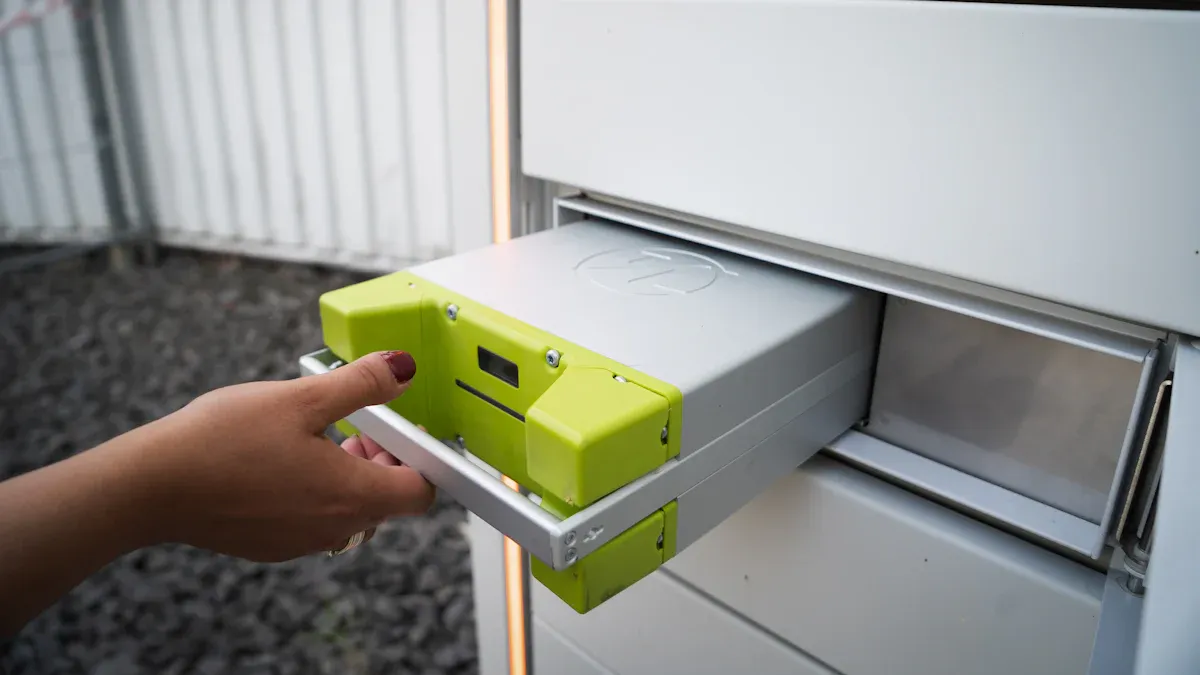
When you compare solar batteries, you want to see all the important details in one place. Here’s a handy table that shows how the top five batteries stack up. You can use this to spot the best fit for your home.
Battery Model | Price Range (Installed) | Storage Capacity (kWh) | Cycle Life / Warranty | |
|---|---|---|---|---|
Varies (customizable) | Scalable (custom) | 10 years | 95-98% | |
Bluetti EP900 | $8,000 - $12,000 | 9.9 - 19.8 | 10 years | 95-98% |
Tesla Powerwall 3 | ~$15,400 | 13.5 | 10 years | 97.5% |
Enphase IQ Battery 5P | ~$3,649 per unit | 5 (expandable to 80) | 15 years | 96% (DC), 90% (AC) |
Generac PWRcell | $12,500 - $18,000 | 9 (expandable) | 10 years | 96% |
Tip: If you want a battery that lasts the longest, look at the Enphase IQ Battery 5P. It comes with a 15-year warranty, which is longer than most.
You might wonder about efficiency. That’s how much energy you get back after storing it. Tesla Powerwall 3 leads the pack with a 97.5% round-trip efficiency. BEINENG Home ESS and Bluetti EP900 also score high, so you won’t lose much power when you store and use it later.
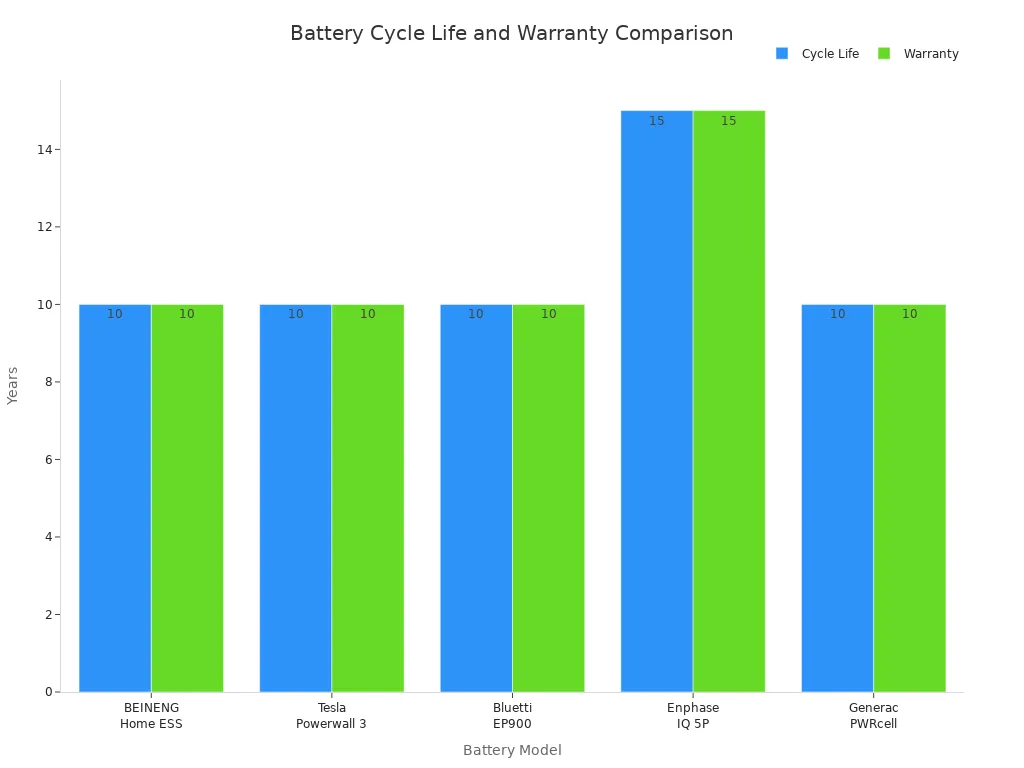
If you have a big house or lots of energy needs, Bluetti EP900 and BEINENG Home ESS let you add more storage as you go. Enphase IQ Battery 5P is great if you want to start small and grow over time.
Here’s a quick checklist to help you decide:
Want the longest warranty? Go with Enphase.
Need the highest efficiency? Tesla Powerwall 3 is your pick.
Looking for a flexible system? Try BEINENG Home ESS or Bluetti EP900.
On a budget? Start with one Enphase IQ Battery 5P and add more later.
Choosing the right battery means you get the most out of your solar setup. Take a look at the table, think about your needs, and you’ll find the best match for your home.
You can pick from many solar batteries. BEINENG Home ESS is good if you want smart controls and options. Bluetti EP900 is best for homes not connected to the grid. Tesla Powerwall 3 is perfect for people who like new technology. Enphase IQ Battery 5P is a smart choice if you want to save money and add more later. Generac PWRcell is strong for families who need backup power. Look at the table below to see how each battery type lasts and how much care they need:
Battery Type | Lifespan | Maintenance |
|---|---|---|
Lithium-ion | 10-15 years | Low |
Lead-acid | 3-5 years | High |
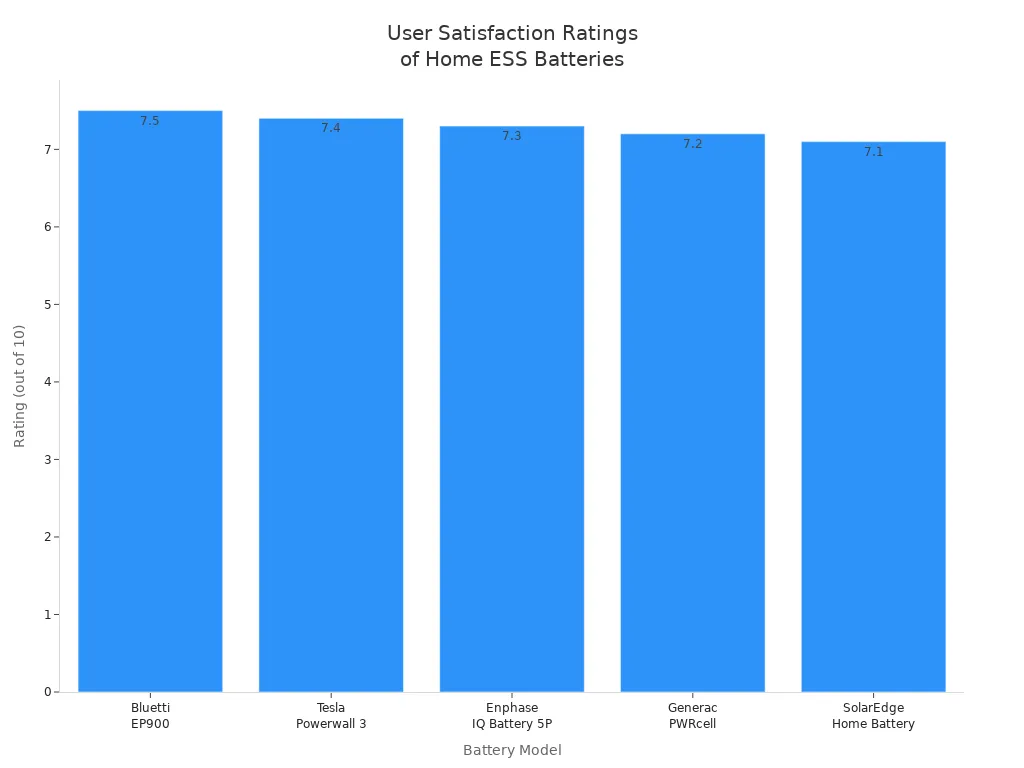
More people are buying solar batteries every year. Think about what you need and talk to a solar expert before you buy one. Choose a battery that gives you good value, works well, and is dependable for the best results.
You should check your inverter and battery specs. Most modern batteries work with many solar systems. If you feel unsure, ask your installer or check the battery’s compatibility list.
Most solar batteries last 10 to 15 years. Some, like LiFePO4 models, can last even longer. You may need to replace your battery once during your solar system’s life.
You do not need much maintenance for lithium batteries. Just keep them clean and dry. Lead-acid batteries need more care, like checking water levels.
Tip: Use your battery’s app to monitor health and get alerts.
Yes, many systems let you add more batteries. Modular designs like BEINENG Home ESS, Bluetti EP900, and Enphase IQ Battery 5P make expansion easy.
Your battery will kick in and power your home. You can keep lights, fridges, and some outlets running. The amount of backup depends on your battery size.


Compact, quiet, and powerful, it keeps your essentials running during outages and lets you charge anywhere with solar power or grid power.
Perfect for renters who need flexibility without compromise.
Our estimator is only set up to provide preliminary estimates and installer information to residents of single family homes.