
 Email Us
 Contact us
 Whats App
Single family home

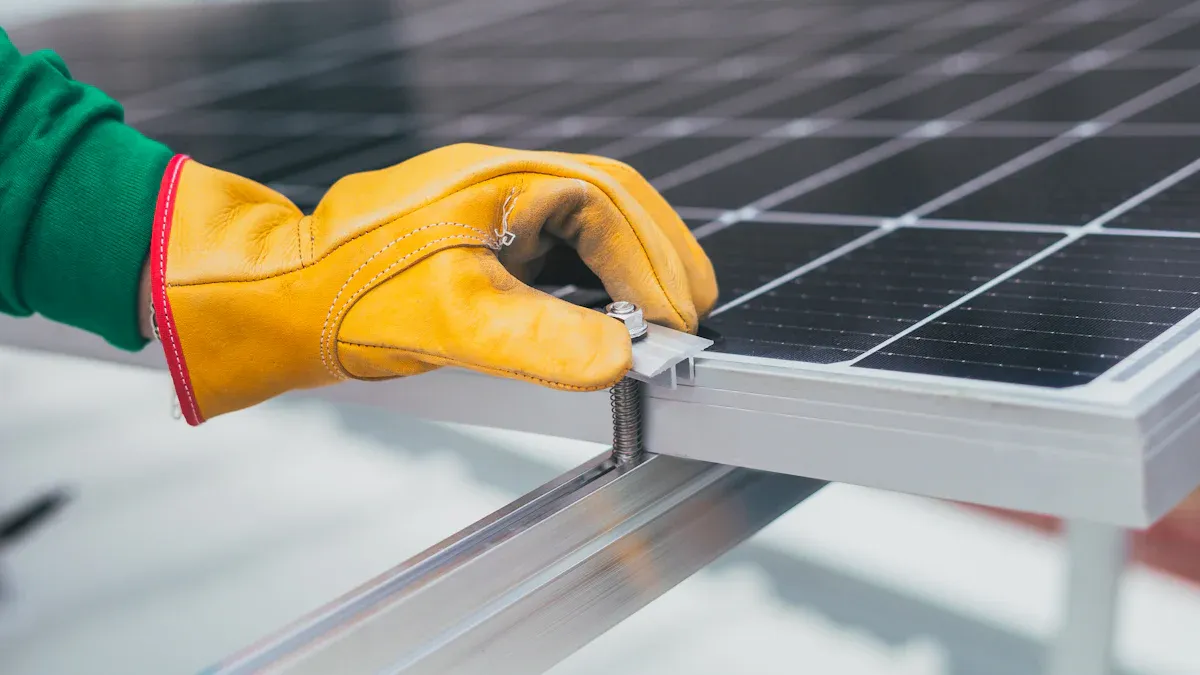
If you want the best battery for solar panels in 2025, pick lithium iron phosphate (LiFePO4) batteries. These batteries are safer and do not catch fire easily. They also do not explode. LiFePO4 batteries last a long time. You save money because you do not replace them often. These batteries work well and give steady power. They help you when you need energy. LiFePO4 batteries are good for the environment. They do not have harmful metals. You can find all-in-one systems like the BEINENG Home ESS. These systems make solar energy easy, flexible, and smart for your house.
Pick lithium iron phosphate (LiFePO4) batteries for solar panels in 2025. These batteries are safe to use. They last a long time. They are good for the environment.
Look at the BEINENG Home ESS for a solar energy system. It has smart controls for easy use. You can add more parts if you need. It gives backup power to your home.
Check your electricity bills to know your energy needs. This helps you choose the right battery size. The battery should match your daily use.
Solar batteries give backup power when the lights go out. They save extra energy for later use. Your home stays powered when the sun is not out.
Use smart apps to watch your energy use and save money. Using your own solar power means you need less from the grid. This helps lower your electricity bills.
You want the Best Battery for your solar panels. In 2025, lithium-ion batteries are very popular. Many people pick them because they work well and last long. These batteries hold a lot of energy in a small space. You can use your solar power for more hours. They help you use energy better.
Here are three main reasons lithium-ion batteries are great for solar:
High energy density (90-120 Wh/lb) means you store more energy in less space.
Long lifespan (10-15 years typical) means you do not replace them often.
Minimal maintenance saves you time and effort.
About 70% of home energy systems use lithium-ion batteries in 2025. People like them because they are efficient and charge fast. They last through many cycles. Prices keep getting lower, so you save money. Other batteries, like sodium-ion, are becoming more common. But lithium-ion batteries are still used more.
If you want a battery that lasts, charges fast, and is easy to care for, lithium-ion is the Best Battery for your solar setup. LiFePO4 is a kind of lithium-ion battery. It is extra safe and stable. You feel good knowing your energy is stored safely.
You may wonder which system uses the Best Battery for your home. The BEINENG Home ESS is an all-in-one system. It makes solar energy simple and smart. This system lets you make, store, and use solar energy. You can also charge your electric car with it.
The BEINENG Home ESS can grow with your needs. You can add more batteries if you need more energy. The stackable design makes it easy to add storage. You do not have to worry about old parts not fitting. You can make your system bigger anytime.
The myBeineng app helps you control your energy. You can check and manage your energy from your phone. The BEINENG Energy Gateway helps you use energy better in your house. You save more and use energy smarter.
If you have an electric car, the BEINENG EV DC Charging Module charges it fast. You can use solar energy to power your car. This helps the planet by lowering pollution.
Tip: Pick a system like BEINENG Home ESS if you want easy setup, smart control, and flexibility. You get backup power, lower bills, and more freedom with your energy.
The BEINENG Home ESS uses lithium-ion batteries, mostly LiFePO4. These batteries are safe, last long, and work well. You get the Best Battery for your solar panels. This system helps you enjoy green energy every day.
Solar panels change sunlight into electricity. Sunlight hits the panels and makes DC electricity. The battery keeps this energy for later. When you need power, the battery sends out DC electricity. An inverter turns DC into AC electricity. Your home uses AC electricity.
Here is how it works step by step:
Sunlight shines on your solar panels and makes DC electricity.
The electricity goes into your battery and gets stored.
When you need power, the battery gives out DC electricity.
The inverter changes DC into AC for your house or the grid.
You can use stored energy at night or when it is cloudy. This helps you keep your lights on when there is no sun. You get more control over your energy use. You can save money on your bills. Many people pick the Best Battery so their system works well and lasts long.
You can set up your solar battery system in two ways: grid-tied or off-grid. Each way has its own good points.
Feature | Grid-Tied Systems | Off-Grid Systems |
|---|---|---|
Connection | Linked to the utility grid | Works alone, not linked to the grid |
Primary Goal | Lower bills and give backup during outages | Full independence, good for faraway places |
Equipment | Regular solar panels connected to the grid | Special equipment for storing energy |
Installation Requirements | May need an electrician for grid connection | Often low voltage, can be installed by yourself |
A grid-tied system connects to your local power grid. You use solar energy first. If you need more, you use the grid. This helps you pay less for electricity. You also get backup power if the lights go out.
An off-grid system does not connect to the utility grid. You only use your solar panels and batteries. This is good if you live far from the city or want full control. You make and store all your own power.
Tip: Think about where you live and how much energy you need before you pick a system. Grid-tied systems work well in most places. Off-grid systems are best for faraway areas or if you want all control over your energy.
You want your home to stay powered during outages. Solar batteries give you a strong backup power source. When your solar panels make extra electricity during the day, your battery stores it for later. If the grid goes down, your system can keep running. You do not have to worry about losing lights or important devices.
Solar batteries store extra electricity for use during outages.
Your solar system can work in island mode, so you still get power and can charge the battery even when the grid is off.
Using solar batteries helps the grid by lowering stress during busy times, which makes the whole system more reliable.
You get peace of mind knowing your home stays bright and safe, even when others lose power.
Solar batteries help you use more of the energy you make. During the day, your solar panels often make more power than you need. Instead of sending it back to the grid, you can store it in your battery. Later, you use this stored energy at night or on cloudy days.
This means you rely less on the grid. You use your own clean energy when you want. You get more value from your solar panels. Many people choose the Best Battery for this reason. You get more control over your energy use and help the environment.
Solar batteries can save you a lot of money. When you use more of your own solar power, you buy less electricity from the grid. Most homeowners save about $115 to $140 each month. That adds up to $1,380 to $1,680 every year. Some people save between $700 and $1,100 a year on their bills.
If you live where electricity rates go up often, or where net metering is not as good, your savings can be even higher. Solar batteries help you lock in lower energy costs and protect you from price hikes.
Tip: Track your energy use with smart apps to see how much you save each month.
You see lithium-ion batteries everywhere in solar energy. Most homes use them because they store a lot of energy and work well. LiFePO4 batteries are a special type of lithium-ion. They last longer and stay safe. You can expect them to work for many years and thousands of charge cycles.
Source | Lifespan | Cycle Life (Charge Cycles) |
|---|---|---|
Qurator | 5–10 years | 2,500 - 9,000 cycles |
EcoFlow | 10–15 years | 3,000 - 5,000 cycles |
SolarTech | 8–22 years | 3,000 - 8,000+ cycles |
Lithium-ion batteries hold about 90% of the market in 2025. You get up to 95% efficiency, which means you use almost all the energy you store. These batteries are the Best Battery for most solar setups.
Lead-acid batteries have been around for a long time. You find them in cars and backup systems. Many homes use them because they cost less at first. They are growing fast in residential solar. You can use them for simple setups.
Battery Type | Upfront Cost (per kWh) | Lifespan | Efficiency |
|---|---|---|---|
Lead-Acid | $100 – $200 | 3 to 10 years | 80-85% |
Lithium-Ion | $300 – $500 | 5 to 15 years | Over 95% |
Lead-acid batteries work well but do not last as long as lithium-ion. You may need to replace them more often.
You see new battery types in 2025. Some work better for big buildings or special needs.
Flow batteries: Good for factories and large solar farms.
Solid-state batteries: Store more energy and last longer.
Sodium-ion batteries: Cost less and handle heat well.
Water-based batteries: Use safe materials and last over 10,000 cycles.
High-capacity lithium-ion: Use new parts to hold more energy.
These new batteries help make solar energy better for everyone.
You want to know what works best for your home. Here is a quick look at popular battery types:
Battery Model | Pros | Cons |
|---|---|---|
Tesla Powerwall 3 | Easy to use, smart app | Costs more per kWh |
Enphase IQ Battery 5P | Safe, grows with your needs | Only works with Enphase gear |
WonVolt LiFePO4 Series | Lasts long, stays cool | Made for big projects |
Generac PWRcell | Handles big setups | Hard to install |
EcoFlow Delta Pro | Portable, simple to use | Not for heavy off-grid jobs |
Tip: Think about how much energy you need and how often you want to replace your battery. This helps you pick the right type for your solar system.
You need to know how much energy your battery can hold. Storage capacity shows how long your battery will power your house. If your house is big or you want backup for many hours, you need a battery with more capacity.
Bigger battery capacity gives you more freedom.
You can keep extra energy made when it is sunny.
This energy helps you at night or when it is cloudy.
Check your electricity bills to see how much energy you use each month. Look for changes in different seasons. This helps you pick the Best Battery for your home.
You want a battery that works for many years. Lithium-ion batteries last longer than lead-acid batteries. Most top brands give good warranties. Here is a quick look:
Brand | Warranty Period |
|---|---|
Tesla Powerwall | 10 years |
Sonnen Eco | Up to 25 years |
LG RESU Prime | 10 years |
A longer warranty means you do not worry as much. You know your battery will work well for a long time.
You should think about both the price and what you get. A battery that costs more may last longer and save you money later. Look at the cost for each kilowatt-hour and how long the battery will last. Lithium-ion batteries cost more at first but need less care and last longer.
You must make sure your new battery fits your solar system. Check these things:
Compatibility Issue | Description |
|---|---|
Incompatible System Components | All parts must work together for the system to run well. |
Mismatched Inverters | The wrong inverter can waste energy. |
Battery Chemistry and Voltage | Different batteries need different voltages. Wrong matches can hurt your system. |
System Configuration & Warranty | Bigger systems may need more batteries or a new inverter. Some brands limit your choices. |
Hybrid inverters can handle both solar and battery storage. Regular grid-tied inverters may not work with batteries. Always check your system size and wires before you add a new battery.
You want a battery that is easy to take care of. Lithium-ion batteries need very little work. You just need to avoid charging too much or letting the battery get too low. Lead-acid batteries need more care, like checking fluids and cleaning.
Battery Type | |
|---|---|
Lithium-ion | Minimal; avoid overcharging/undercharging |
Lead-acid | Regular checks; clean terminals and check fluids |
Picking a battery that needs little care saves you time and work.
You want your solar battery to meet your energy needs every day. Start by checking your electricity bills for the past year. Look at your total energy use in kilowatt-hours (kWh). Find your highest-use month and divide that number by 30. This gives you a good estimate of your daily energy needs.
Review your energy bills to see how much electricity you use each month.
Pick the month when you use the most energy.
Divide the total kWh for that month by 30 to get your average daily use.
Think about how your energy use changes with the seasons. You may use more power in summer or winter. If you live in a cold climate, you should oversize your battery by 10% to 40%. For example, if you need 10 kWh per day, multiply by 1.2 for an 80% depth of discharge (DoD). That gives you 12 kWh. Then, if you want to adjust for cold weather, multiply by 1.4. Your battery size should be about 16.8 kWh.
You can also use this formula:
Battery storage capacity = (Total Daily Energy Consumption) / (DoD × Days of Autonomy)
This formula helps you plan for days when the sun does not shine.
Tip: Always consider both daily and seasonal changes in your energy use. This helps you avoid running out of power.
You need to match your battery size to your solar system. Think about how you use energy and what you want from your system.
Look at your energy consumption patterns.
Decide how much energy independence you want.
Think about your backup power needs.
Check your system design and configuration.
Plan for future expansion if you think your needs will grow.
Follow installation best practices for safety and performance.
Choose a battery that is easy to maintain.
A well-sized battery gives you reliable power and helps you get the most from your solar panels. If you choose a scalable system like BEINENG Home ESS, you can add more batteries as your needs change. This flexibility makes it easy to grow your system over time.
Note: Matching your battery to your solar system ensures you get the best performance and value from your investment.
You want your solar battery to last as long as possible. Cycle life tells you how many times you can charge and discharge a battery before it starts to lose power. A higher cycle life means your battery will work for more years. In 2025, lithium-ion batteries, especially LiFePO4, lead the market because they last a long time and give steady performance.
Here is a table that shows the average cycle life for different battery types:
Battery Type | Cycle Life |
|---|---|
Lithium-ion | 3000 cycles |
Lead-acid | 500 cycles |
Flow Battery | 15000 cycles |
Nickel-based | 2000 cycles |
Sodium-ion | 1500 cycles |
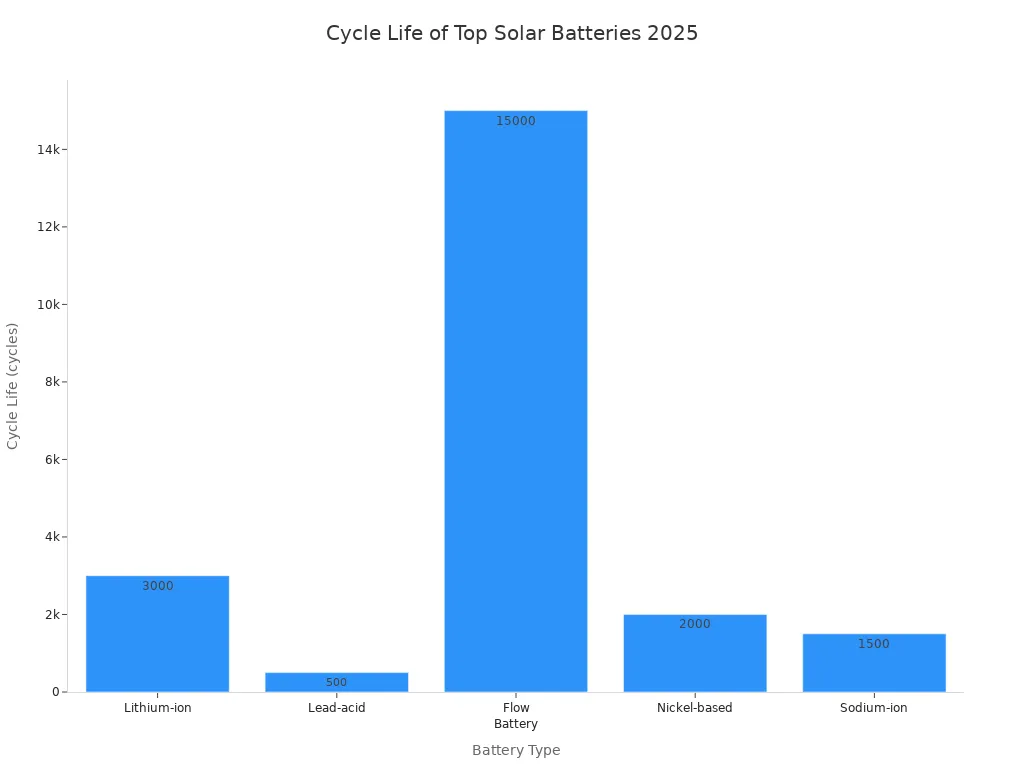
Most lithium-ion batteries last between 10 to 15 years if you take care of them. Some can last over 20 years. This makes them a smart choice for your home. You get reliable energy and do not need to replace your battery often.
You can help your battery last longer by following a few simple steps. These habits keep your battery healthy and working well.
Monitor charge levels to keep your battery from getting too low or too full.
Keep the battery at the right temperature. Avoid places that get too hot or too cold.
Clean the battery terminals and check for corrosion.
Store your battery in a cool, dry place if you do not use it for a while. Keep it partly charged.
Update the battery management system (BMS) when new versions come out.
Tip: Small actions, like checking your battery and keeping it clean, can add years to its life.
If you follow these tips, your solar battery will give you strong performance and last for many years. You get more value from your investment and enjoy energy independence.
You want a battery that gives you reliable power and fits your needs. In 2025, three models stand out for home solar systems. BEINENG Home ESS leads with its all-in-one design, smart controls, and easy expansion. You can add more storage as your needs grow. The system also supports fast EV charging and lets you manage energy with the myBeineng app.
Here is a table comparing top battery models for solar panels in 2025:
Battery Model | Usable Capacity | Peak Power | Continuous Power | Warranty | Round-trip Efficiency | Depth of Discharge |
|---|---|---|---|---|---|---|
BEINENG Home ESS | Scalable | High | High | Up to 15 yrs | Up to 95% | 100% |
Enphase IQ 5P | 5 kWh | 7.68 kW | 3.84 kW | Up to 15 yrs | 90% | 98% |
Franklin aPower2 | 15 kWh | 15 kW | 10 kW | Up to 15 yrs | 89% | 100% |
BEINENG Home ESS stands out because you get a flexible system that grows with you. You control your energy from your phone. You can use it for backup, self-consumption, or EV charging. The stackable battery design means you do not worry about upgrades.
You want to choose the Best Battery for your home. Look at important criteria before you buy. The chart below shows what matters most when picking a solar battery in 2025.
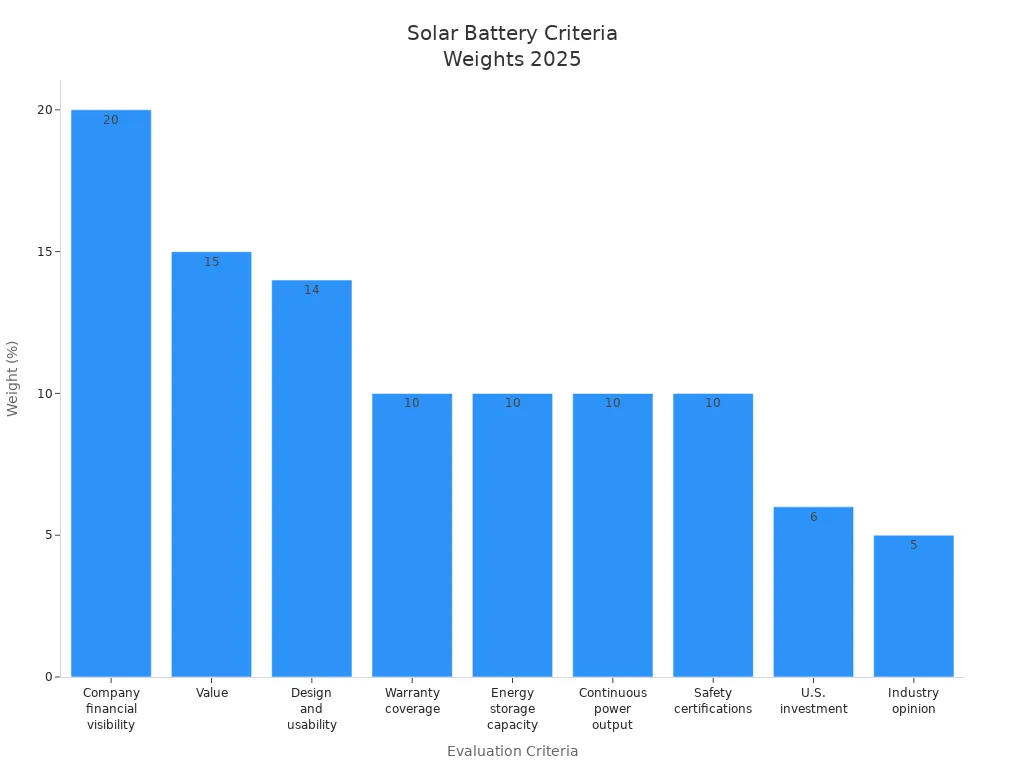
Use this checklist when you compare options:
Check usable capacity and power output. Make sure the battery meets your daily needs.
Look for safety certifications like UL9540A and UL1973.
Review the warranty. Longer coverage means more peace of mind.
Choose a system with easy controls and smart features.
Make sure you can expand storage if your needs change.
Ask about local support and service.
Tip: Pick a battery from a company with strong financial visibility. This helps you trust that your warranty and support will last.
You get the most value when you match your battery to your lifestyle and energy goals. BEINENG Home ESS gives you flexibility, smart management, and reliable power for years.
You see lithium-ion batteries leading the way for solar homes in 2025. BEINENG Home ESS gives you smart control, safety, and flexibility. The solar battery market keeps growing fast:
Market size jumps from $9.66 billion in 2024 to $10.92 billion in 2025.
Growth rate reaches 13.0% CAGR.
Think about your energy needs before you choose. Use the myBeineng app to track savings. Investing in the right battery helps you save money and enjoy energy freedom.
You get more safety and longer life with LiFePO4 batteries. These batteries do not catch fire easily. They last for thousands of cycles. You save money because you do not replace them often.
Yes, you can. The BEINENG Home ESS uses a stackable design. You add more battery modules as your needs change. This gives you flexibility for the future.
Check your electricity bills. Find your highest daily use in kilowatt-hours (kWh). Choose a battery that covers your daily needs. Add extra capacity for cloudy days or emergencies.
Tip: Oversize your battery by 10% to 40% for more backup power.
No, most lithium-ion batteries need little care. You only need to keep them clean and avoid extreme temperatures. The BEINENG Home ESS has smart controls that help you monitor battery health.
Yes, you can. The BEINENG Home ESS gives you backup power when the grid goes down. You keep your lights and devices running. You stay comfortable and safe during outages.


Compact, quiet, and powerful, it keeps your essentials running during outages and lets you charge anywhere with solar power or grid power.
Perfect for renters who need flexibility without compromise.
Our estimator is only set up to provide preliminary estimates and installer information to residents of single family homes.