
 Email Us
 Contact us
 Whats App
Single family home

In remote industrial environments such as mining sites, offshore platforms, desert-based factories, and isolated processing facilities, electricity is rarely treated as a utility problem. It is a production constraint that defines what can and cannot operate.
A sudden voltage fluctuation can destabilize heavy machinery. A brief outage can interrupt automated control systems. In high-load environments like mineral extraction or continuous manufacturing, even seconds of downtime create cascading losses that extend far beyond the electrical system itself.
What makes these environments particularly difficult is that power instability is not occasional—it is structural. Many sites operate on weak grid connections, long transmission lines, or hybrid setups where diesel generators act as the primary fallback. None of these systems are designed for continuous industrial-grade stability.
This is where the concept of an industrial off-grid power solution becomes essential. The objective is no longer simply to supply electricity, but to maintain predictable operational continuity under unstable conditions.
In modern industrial planning, energy is increasingly treated as part of production infrastructure design rather than utility procurement. That shift changes everything about how systems are engineered, deployed, and maintained.
Diesel generators have long been the default solution for remote industrial power. They are simple to deploy, familiar to operators, and capable of handling large loads. However, at scale and under continuous operation, their limitations become structural rather than situational.
One of the most overlooked issues is that diesel systems are not energy systems—they are fuel logistics systems. Their performance depends less on electrical output and more on supply chain reliability. Fuel must be transported, stored, secured, and continuously replenished. In remote mining zones or offshore environments, this logistics chain becomes a significant cost driver.
Another limitation lies in load variability. Industrial operations rarely maintain constant demand. Crushing equipment, compressors, pumps, and processing lines all create fluctuating load profiles. Diesel generators are inefficient under variable loads, often operating far from optimal efficiency ranges.
Maintenance dependency is another critical factor. Unlike modern energy storage systems, diesel infrastructure requires frequent servicing, mechanical inspection, and part replacement. In remote environments, each maintenance cycle introduces downtime risk and operational uncertainty.
Over time, these constraints accumulate into what can be described as systemic operational fragility. This is why many operators are actively exploring diesel replacement energy systems for industrial use, not as a sustainability initiative, but as a cost and reliability optimization strategy.
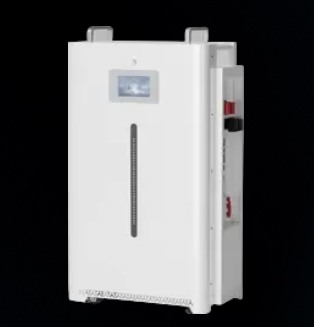
A common misconception in industrial energy planning is the belief that energy independence is achieved by installing a single technology—whether that is solar panels, batteries, or generators.
In reality, modern industrial energy independence is achieved through system architecture design.
A typical remote industrial energy architecture consists of four interconnected layers:
Generation layer – solar PV, sometimes combined with auxiliary generation
Storage layer – battery energy storage systems that stabilize supply and demand
Control layer – intelligent energy management systems that optimize distribution
Protection layer – safety systems ensuring operational continuity under fault conditions
These layers work together to form a continuous energy loop that can operate independently of external grids.
Within this structure, the combination of solar generation and battery storage has become particularly important. A well-designed solar plus battery system for remote industrial sites does more than reduce fuel consumption—it reshapes how energy is buffered, distributed, and prioritized across operational loads.
Instead of reacting to demand, the system anticipates it. Instead of compensating for instability, it absorbs it.
Mining operations are often used as a benchmark for industrial energy system design because they combine almost every extreme condition simultaneously.
Equipment loads are heavy and continuous. Crushers, excavators, conveyor systems, and processing plants operate under high mechanical stress. Power demand is not only high but also highly dynamic, with frequent spikes and drops.
Environmental conditions further complicate operations. Dust infiltration, vibration, temperature extremes, and remote geography all reduce system reliability if the infrastructure is not specifically engineered for resilience.
Unlike many industrial applications, mining operations cannot tolerate downtime. A single interruption can halt the entire extraction and processing chain, resulting in immediate financial loss and downstream operational disruption.
For this reason, energy storage systems for mining operations are designed with a different set of priorities:
● high discharge stability under peak load
● long-cycle durability under continuous operation
● environmental resilience under harsh physical conditions
● redundancy to prevent single-point failure
In practice, mining sites function as stress-test environments for industrial energy systems. If a system performs reliably in mining conditions, it is typically suitable for most other remote industrial applications.
One of the most significant shifts in industrial energy design is the transition toward modular architecture.
Traditional energy storage systems were built as centralized units. While effective in controlled environments, they are difficult to scale, transport, and maintain in remote regions.
Modular systems, by contrast, are designed around standardized energy blocks that can be deployed incrementally.
This approach introduces three fundamental advantages.
First, deployment becomes logistics-driven rather than engineering-driven. Instead of requiring specialized infrastructure to install a large system, modular units can be transported and assembled on-site with minimal equipment.
Second, scalability becomes operationally flexible. Industrial facilities rarely know their exact future energy requirements at the time of deployment. Expansion of production capacity can be matched with incremental energy expansion.
Third, system reliability improves through redundancy. A failure in one module does not compromise the entire system, which is particularly important in isolated environments.
A modular energy storage system for factories therefore does not simply reduce installation complexity—it changes the operational lifecycle of industrial energy infrastructure.
To understand how these systems operate in practice, consider a remote manufacturing facility located far from stable grid infrastructure. The site operates metal processing equipment, air compressors, and automated assembly lines.
Initially, the facility relied on diesel generators. The system was functional but inefficient. Fuel consumption was high, maintenance cycles were frequent, and production interruptions occurred during peak load transitions.
After transitioning to a hybrid configuration combining solar generation and modular battery storage, the system architecture changed significantly.
Solar generation handled baseline daytime load. Battery storage absorbed peak fluctuations and provided continuity during transitions. Diesel generators were retained only as backup during extended low-generation periods.
The operational result was not simply reduced fuel consumption. More importantly, the facility experienced stable voltage conditions, which improved equipment lifespan and reduced unplanned downtime.
In this case, the shift toward a solar plus battery system for remote industrial sites was not an environmental decision—it was a production stability decision.
In industrial energy systems, efficiency losses are often hidden in conversion processes.
Traditional AC-coupled systems require multiple energy conversions between generation, storage, and consumption stages. Each conversion introduces energy loss and system complexity.
DC-coupled architecture reduces the number of conversion steps, allowing energy to flow more directly between solar generation, battery storage, and industrial loads.
The practical outcome is improved round-trip efficiency, lower system heat generation, and reduced dependency on auxiliary conversion equipment.
While efficiency improvements may appear marginal on paper, in continuous industrial operations even small percentage gains accumulate into significant long-term cost savings.
This is particularly relevant in remote environments where energy optimization directly translates into reduced fuel dependency and lower logistical burden.
In remote industrial environments, safety is not a compliance feature—it is an operational necessity.
Modern energy storage systems incorporate multiple layers of protection to ensure stability under fault conditions. These typically include battery management systems, thermal monitoring, fault isolation mechanisms, and fire suppression technologies.
Environmental protection is equally critical. Systems must withstand dust exposure, moisture ingress, and temperature variations without performance degradation.
In high-reliability industrial deployments, these safety systems are designed to operate autonomously, without requiring constant human supervision.
The objective is simple: the system must remain stable even when operating conditions are not.
Remote industrial sites are often distributed across large geographic areas, making centralized monitoring essential.
Modern energy systems integrate cloud-based platforms that provide real-time visibility into energy generation, consumption, and storage conditions.
This enables operators to adjust load distribution, detect anomalies, and optimize system performance without physical intervention.
In more advanced configurations, predictive algorithms are used to forecast energy demand and adjust system behavior proactively. This reduces energy waste and improves overall system efficiency.
From an operational perspective, this transforms energy systems from passive infrastructure into actively managed assets.
The shift toward energy independence in remote industrial operations is not driven solely by sustainability considerations. It is primarily driven by cost structure optimization.
Diesel-based systems introduce recurring operational expenditure tied to fuel logistics, maintenance cycles, and inefficiency under variable load conditions.
By contrast, hybrid energy systems shift expenditure toward upfront infrastructure investment while significantly reducing long-term operational costs.
The financial advantage becomes particularly clear in high-consumption environments where fuel logistics represent a significant portion of total operating cost.
In many cases, the transition to energy storage systems results in improved asset utilization, reduced downtime, and more predictable operating expenses.
Improving energy independence in remote industrial operations is not about selecting a single technology. It is about designing a system that can operate continuously under constraints that are unpredictable, distributed, and physically demanding.
The most effective solutions combine generation, storage, control, and protection into a unified architecture that adapts to operational demand in real time.
As industries continue expanding into remote and high-demand environments, the ability to maintain stable energy supply will increasingly define operational competitiveness.
Energy independence is no longer a support function. It is part of the production system itself.
What is an industrial off-grid power solution?
An industrial off-grid power solution is an integrated system designed to supply electricity independently of centralized grids, typically combining generation, storage, and intelligent energy management.
Why are diesel generators being replaced in remote industries?
Because they are heavily dependent on fuel logistics, have high maintenance requirements, and operate inefficiently under variable loads.
How does energy storage improve mining operations?
It stabilizes power supply, reduces downtime, and ensures heavy machinery can operate continuously under high-load conditions.
What is the advantage of modular energy storage systems?
They allow scalable deployment, easier transportation, and improved system redundancy in remote environments.
Are solar hybrid systems reliable for industrial use?
Yes, when combined with battery storage and proper energy management systems, they can provide stable and continuous industrial-grade power.


Compact, quiet, and powerful, it keeps your essentials running during outages and lets you charge anywhere with solar power or grid power.
Perfect for renters who need flexibility without compromise.
Our estimator is only set up to provide preliminary estimates and installer information to residents of single family homes.