
 Email Us
 Contact us
 Whats App
Single family home

LiFePO4 (Lithium Iron Phosphate) batteries have become one of the most widely used technologies in modern home energy storage systems. Whether in solar backup systems, residential energy storage units, or portable power stations, this chemistry has gradually replaced many traditional lithium-ion solutions in household applications.
But the reason behind this shift is not just performance on paper. In real-world use, especially in homes where systems run unattended for years, behavior under stress matters more than peak specifications. That is where LiFePO4 has changed the entire industry logic.
Instead of chasing maximum energy density like earlier lithium chemistries, LiFePO4 focuses on stability, safety, and predictable long-term cycling. This change sounds simple, but in engineering practice, it affects everything—from battery design to system integration and even factory quality control.
At a material level, LiFePO4 uses iron phosphate as the cathode instead of cobalt-based compounds found in traditional lithium-ion batteries. This difference is often explained in simple terms like “safer” or “more stable,” but the real impact becomes visible only when the battery is pushed outside ideal conditions.
In manufacturing testing environments, batteries are deliberately exposed to heat, overcharge conditions, deep discharge cycles, and uneven load stress. This is where LiFePO4 shows a very different behavior pattern.
Rather than reacting violently under extreme conditions, it tends to maintain structural integrity longer and degrade gradually. This does not mean it cannot fail, but the failure mode is fundamentally different—less abrupt and more predictable.
In home energy systems, this characteristic becomes critical because most users do not actively monitor battery behavior in real time.
Safety in batteries is often misunderstood as a single feature. In reality, it is the result of multiple interacting factors: chemistry, battery management, thermal design, and system integration.
LiFePO4 stands out because its internal chemistry is inherently more resistant to thermal runaway, which is the chain reaction responsible for most lithium battery fire incidents.
However, what matters more in real applications is how the system behaves when something goes wrong.
A well-designed LiFePO4 system usually shows early warning signs:
This type of degradation gives time for maintenance or system correction, which is extremely important in residential environments where batteries are installed indoors or in garages.
Traditional lithium-ion systems, depending on chemistry and design, may not provide the same level of predictability under extreme stress conditions.
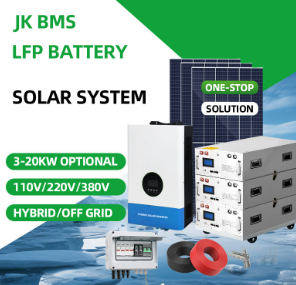
A LiFePO4 battery is only one part of a larger energy ecosystem. In a typical residential setup, the system includes solar panels, charge controllers, a battery management system (BMS), and an inverter.
The energy flow is relatively simple on the surface but complex in execution:
Solar panels generate DC electricity → the charge controller regulates input → energy is stored in the LiFePO4 battery → the inverter converts stored energy into AC power for home use.
While this looks straightforward, the real intelligence of the system lies in the BMS.
The BMS continuously monitors:
Without this system-level control, even the safest chemistry cannot guarantee stable long-term performance.
One of the least discussed truths in the industry is that LiFePO4 is not a uniform product standard—it is a system outcome.
From a factory point of view, two batteries with identical specifications can behave very differently over time due to manufacturing differences that are not visible to end users.
The most critical variables include cell selection, assembly precision, BMS tuning, and thermal design.
Even small variations in these areas can lead to noticeable differences in long-term performance. In accelerated life testing, it is common to see divergence in usable capacity after several hundred cycles, even when the batteries start with identical ratings.
This is why experienced manufacturers focus less on marketing specifications and more on cycle stability testing under real load conditions.
On specification sheets, lithium-ion batteries often appear more attractive due to higher energy density. However, real-world usage—especially in home environments—favors a different set of priorities.
| Performance Factor | LiFePO4 Home Battery | Traditional Lithium-Ion |
|---|---|---|
| Thermal behavior | Highly stable under stress | More sensitive to heat buildup |
| Cycle life | 3000–8000+ cycles | 500–1500 cycles |
| Failure behavior | Gradual performance decline | Possible sudden failure under stress |
| Maintenance requirement | Low | Medium to high |
| Residential suitability | Widely adopted standard | Limited without strict controls |
What this comparison does not fully show is the long-term economic impact. In residential systems where daily cycling is common, cycle life and degradation curve matter more than initial energy density.
In real residential use, a LiFePO4 system often runs in a continuous cycle: charging during the day (especially when paired with solar systems) and discharging at night or during outages.
A typical setup in a medium household may include a 25.6V 200Ah system paired with a solar input and inverter. The system is designed to operate automatically without user intervention.
In practice, what users experience is not just backup power, but continuity. Appliances continue running without noticeable switching delays or voltage instability.
Unlike fuel generators, there is no startup noise or fuel dependency. Unlike smaller battery systems, output remains stable even under moderate load variation.
A practical example comes from a small family home using a LiFePO4-based storage system integrated with rooftop solar panels.
The system is designed to support essential loads, including refrigeration, lighting, communication devices, and small appliances.
Over time, the system operates in a predictable daily cycle:
| Metric | Real Outcome |
|---|---|
| Daily usage pattern | 1 full cycle per day |
| Backup duration | 6–12 hours depending on load |
| Efficiency range | 88%–92% system efficiency |
| Maintenance requirement | Minimal over long-term use |
What stands out in real usage is not peak output, but consistency. Voltage remains stable enough that household electronics operate without disruption, which is often a problem in lower-quality storage systems.
Choosing a LiFePO4 home battery system is not just about capacity. Engineers and installers typically evaluate systems through a structured process:
The first step is verifying cell quality consistency, ensuring that the battery uses matched A-grade cells with similar internal resistance values. Without this, long-term balancing issues often appear.
The second step involves examining the BMS functionality, particularly its ability to manage overcharge protection, temperature control, and cell balancing across long cycles.
The third step is cycle testing under realistic load conditions rather than theoretical lab conditions, since real usage often involves fluctuating loads and partial discharge cycles.
Finally, system integration is assessed, ensuring compatibility between the battery, inverter, and solar input to avoid efficiency loss or instability.
The reason LiFePO4 has become dominant is not that it is the most energy-dense option, but because it aligns with how homes actually use energy systems.
Homes require systems that can operate quietly, safely, and consistently without constant supervision. LiFePO4 fits this requirement because it does not rely on extreme performance conditions to function well.
Instead, it performs best under moderate, repetitive daily cycles—the exact pattern found in residential environments.
LiFePO4 batteries are widely considered suitable for indoor installation because of their stable thermal behavior and controlled degradation pattern. They do not typically exhibit sudden failure modes associated with more reactive lithium chemistries.
Their lifespan depends on depth of discharge and operating conditions, but in typical residential use, they can last many years of daily cycling without major performance collapse.
They are also highly compatible with solar energy systems due to their stable charging curve and predictable voltage behavior, which simplifies system design and improves efficiency.
LiFePO4 technology represents a shift in how energy storage is designed for real-world use. Instead of prioritizing maximum energy density, it prioritizes predictability, safety, and long-term operational stability.
From a manufacturing perspective, the real difference between systems is not just chemistry, but how well the entire structure is engineered—from cell selection to BMS logic and thermal design.
In home energy storage, where systems are expected to operate silently and reliably for years, this combination of stability and controlled behavior is what ultimately defines value.
LiFePO4 does not win by being the most powerful option. It wins by being the most consistent one when it matters every single day.


Compact, quiet, and powerful, it keeps your essentials running during outages and lets you charge anywhere with solar power or grid power.
Perfect for renters who need flexibility without compromise.
Our estimator is only set up to provide preliminary estimates and installer information to residents of single family homes.