
 Email Us
 Contact us
 Whats App
Single family home

For anyone planning an off-grid solar system, the solar panels usually receive the most attention. Higher wattage, better efficiency, and advanced inverter technology often dominate the conversation. Yet experienced installers know that the success of an off-grid system depends just as much on what happens after the sun goes down.
Without reliable off-grid solar battery storage, even the best solar array cannot provide continuous power. A poorly matched battery bank can shorten system life, waste valuable solar energy, and leave users without electricity during cloudy weather or at night. In many off-grid projects, battery selection—not solar generation—is the deciding factor between a dependable system and one that constantly struggles.
Whether you're building a remote cabin, powering an agricultural facility, supplying electricity to a telecommunications site, or creating energy independence for your home, choosing the right battery storage solution deserves careful planning. Modern lithium technology has dramatically changed the industry, offering longer service life, higher efficiency, and lower maintenance than traditional battery systems. However, selecting the right solution requires more than simply choosing the latest battery chemistry.
This guide explains how off-grid solar battery storage works, why battery technology matters, and what factors should influence your purchasing decision. It also compares today's leading battery options to help homeowners, installers, distributors, and commercial buyers choose a system that delivers reliable performance for years to come.
Unlike grid-connected solar systems, off-grid installations operate independently from the public utility network. Every watt generated during daylight must either be used immediately or stored for later use.
This makes the battery bank the heart of the entire system.
During sunny hours, solar panels charge the batteries while supplying electricity to connected appliances. After sunset, the stored energy becomes the only available power source. The same applies during prolonged periods of bad weather when solar generation drops significantly.
Without sufficient off-grid solar battery storage, users may experience:
Battery storage is no longer viewed simply as backup power. For many off-grid installations, it is the primary energy reserve that determines how comfortably people can live or operate without grid electricity.
As renewable energy adoption continues to grow worldwide, reliable battery storage has become one of the most valuable investments in an off-grid system.
Although system sizes vary, most off-grid solar installations follow the same operating principle.
When sunlight is abundant, excess energy charges the batteries. During evenings or cloudy days, the stored electricity supplies the connected loads.
A properly designed system balances three key factors:
Oversizing one component while neglecting another often leads to unnecessary costs or reduced system performance.
| Component | Primary Function |
|---|---|
| Solar Panels | Generate electricity from sunlight |
| MPPT Charge Controller | Optimizes battery charging efficiency |
| Battery Bank | Stores electrical energy for later use |
| Hybrid or Off-Grid Inverter | Converts DC to usable AC power |
| Battery Management System (BMS) | Protects lithium batteries from overcharge, over-discharge, overheating, and imbalance |
Each component contributes to overall reliability, but the battery system directly influences runtime, maintenance requirements, and future expansion.
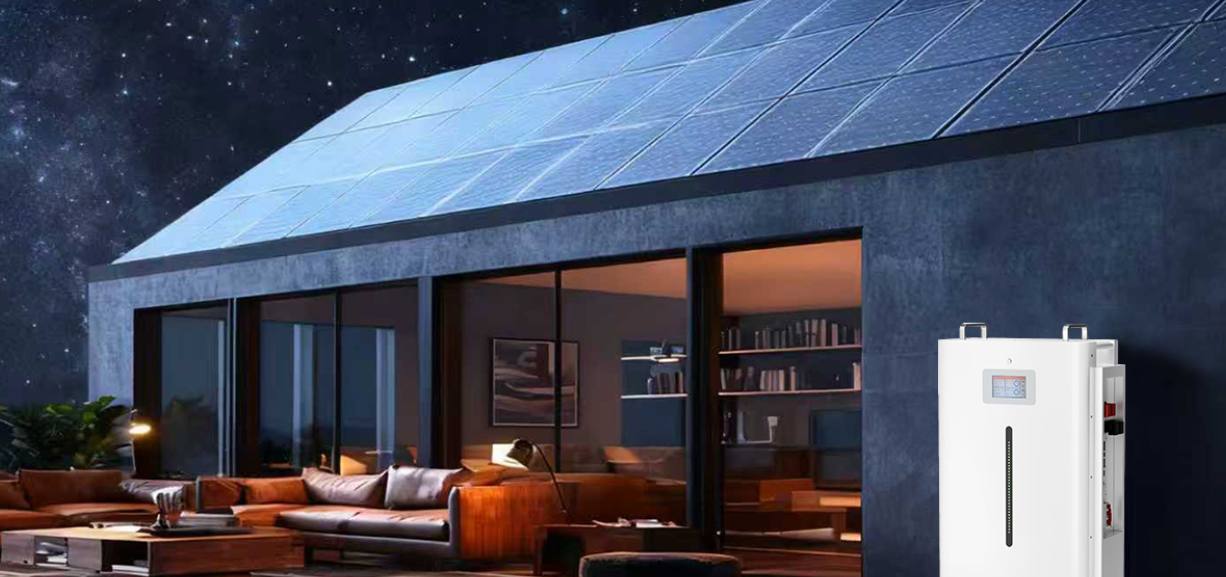
For decades, lead-acid batteries dominated off-grid applications because they were widely available and relatively inexpensive.
That situation has changed rapidly.
The falling cost of lithium batteries—particularly LiFePO4 technology—has made long-term ownership significantly more economical.
Many installers now recommend lithium batteries for off-grid solar applications because the overall lifetime cost is considerably lower, even if the initial investment is higher.
Instead of replacing batteries every few years, users can often operate the same lithium battery bank for more than a decade under normal conditions.
The difference becomes even more noticeable in larger residential and commercial systems where maintenance costs and downtime directly affect productivity.
Choosing the best battery for off-grid solar system projects starts with understanding the strengths and limitations of each battery chemistry.
While lead-acid batteries remain suitable for certain budget-conscious installations, lithium batteries have become the preferred choice for most new projects.
| Feature | Lead-Acid Battery | LiFePO4 Battery |
|---|---|---|
| Cycle Life | 500–1,200 cycles | 4,000–6,000+ cycles |
| Depth of Discharge | Around 50% | Up to 90–95% |
| Charging Speed | Slow | Fast |
| Maintenance | Regular inspection required | Virtually maintenance-free |
| Round-Trip Efficiency | 75–85% | 95–98% |
| Weight | Heavy | Much lighter |
| Lifetime Cost | Higher due to replacement | Lower over long-term use |
Although lead-acid batteries generally cost less upfront, their shorter lifespan means replacements become necessary much sooner.
In contrast, LiFePO4 batteries deliver higher usable capacity, faster charging, and significantly longer service life.
For homeowners planning long-term energy independence, lithium has become the industry standard rather than the premium option.
Battery technology has advanced considerably over the last decade, but LiFePO4 remains one of the safest and most stable lithium chemistries available.
Several characteristics explain why it has become the preferred solution for off-grid solar battery storage.
Cycle life is often overlooked by first-time buyers.
A battery that lasts 5,000 cycles may continue operating for well over ten years under normal daily use. By comparison, many lead-acid batteries require replacement after only a few years.
This dramatically reduces the overall cost of ownership.
Not all battery capacity can actually be used.
Lead-acid batteries are typically limited to around 50% depth of discharge if users want to preserve battery life.
A 10 kWh lead-acid battery effectively provides only about 5 kWh of usable energy.
LiFePO4 batteries, however, can safely utilize around 90% or more of their rated capacity.
This means users obtain substantially more usable electricity without increasing battery size.
Solar production varies throughout the day.
Cloud cover, seasonal weather, and shorter winter daylight hours all reduce available charging time.
Lithium batteries accept higher charging currents, allowing them to capture more solar energy during limited sunshine.
This improves overall system efficiency, particularly in regions with unstable weather conditions.
Traditional flooded batteries require routine inspection.
Users must monitor electrolyte levels, clean terminals, and ensure proper ventilation.
Modern lithium batteries eliminate nearly all of these maintenance tasks.
For remote installations where maintenance visits are expensive, this advantage alone often justifies the investment.
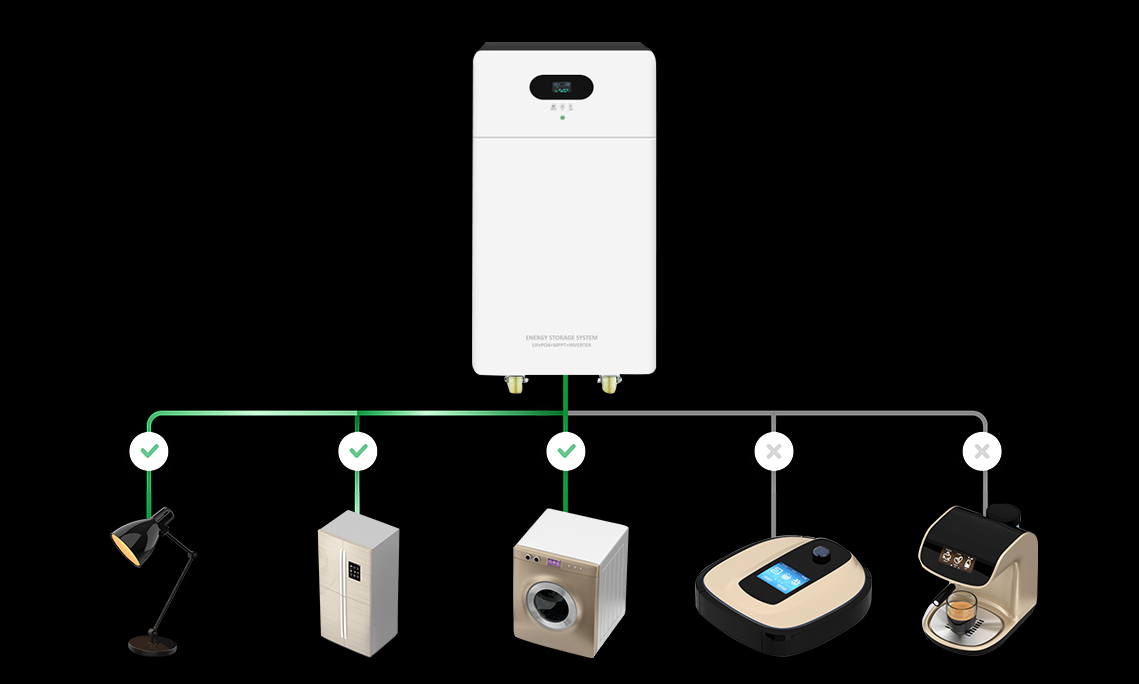
Choosing an appropriately sized off-grid solar battery bank involves much more than simply selecting the largest battery available.
Oversized systems increase project costs unnecessarily.
Undersized systems lead to frequent deep discharges and unreliable operation.
The process should begin with understanding actual daily electricity consumption.
Typical household loads include:
Rather than estimating, installers generally calculate daily energy usage in kilowatt-hours (kWh).
For example:
| Appliance | Daily Usage |
|---|---|
| Refrigerator | 1.5 kWh |
| Lighting | 0.8 kWh |
| Television | 0.6 kWh |
| Laptop & Electronics | 1.2 kWh |
| Water Pump | 1.0 kWh |
| Total Daily Consumption | 5.1 kWh |
If three days of backup power are required during poor weather, the battery bank should be sized to provide sufficient reserve while maintaining a safe depth of discharge.
This calculation often surprises first-time buyers. Many discover that increasing battery capacity slightly at the beginning is far more economical than expanding an undersized system after installation.
Battery capacity is only one part of selecting the best battery for off-grid solar system installations.
Professional designers also consider:
Ignoring these factors frequently results in compatibility issues that reduce system performance long before the battery reaches the end of its expected service life.
No single battery configuration works for every off-grid project.
A weekend cabin with a few LED lights has very different requirements from a remote telecommunications station operating 24 hours a day. Likewise, a family home running air conditioners and kitchen appliances needs a different off-grid solar battery storage solution than an RV or a small farm.
Understanding how electricity is used is often more important than simply comparing battery capacities.
Homeowners are among the fastest-growing users of off-grid solar battery storage. Rising electricity prices, unreliable grids in some regions, and the desire for greater energy independence have all accelerated demand.
A typical residential system powers:
For most homes, scalability is just as important as the initial battery capacity.
Many families start with one battery module and add more storage as electricity consumption grows. A modular LiFePO4 system makes this expansion straightforward without replacing the original batteries.
When planning a residential installation, buyers should think beyond today's electricity needs. An electric vehicle charger, heat pump, or additional appliances may require significantly more storage in the future.
Agricultural facilities often operate far from stable utility grids.
Reliable battery storage allows farmers to power:
Unlike residential systems, agricultural loads can fluctuate dramatically during different seasons.
During harvest, electricity demand may increase substantially.
A flexible off-grid solar battery bank with expandable capacity helps accommodate these changing requirements while avoiding oversized investments during quieter months.
Telecommunications equipment requires continuous operation.
Even a brief interruption can disrupt communications and create expensive downtime.
Because reliability is critical, telecom projects usually prioritize:
LiFePO4 technology has become increasingly popular for these applications because maintenance visits are often expensive and difficult in remote locations.
The popularity of mobile lifestyles has created another rapidly growing market for lithium batteries for off-grid solar systems.
Space and weight become major design considerations.
Compared with traditional batteries, LiFePO4 batteries offer several advantages:
For travelers relying on solar energy, these characteristics translate directly into longer camping times without external charging.
Commercial users generally evaluate battery systems differently from homeowners.
Their priorities often include:
Factories, warehouses, hotels, mining operations, and industrial facilities frequently require large-capacity battery cabinets rather than residential battery modules.
These systems can integrate with renewable generation while reducing diesel consumption and improving energy resilience.
Many battery problems do not result from manufacturing defects.
Instead, they begin during system design.
The following mistakes appear repeatedly across residential and commercial installations.
A lower purchase price can become significantly more expensive over time.
Batteries with shorter cycle life require earlier replacement, increasing labor costs and system downtime.
Instead of comparing purchase prices alone, buyers should evaluate the total cost over the battery's expected lifespan.
One of the most common design mistakes is calculating only average electricity use.
Unexpected loads—such as power tools, water pumps, or air conditioners—can quickly exceed battery capacity.
Adding a reasonable safety margin helps prevent frequent deep discharges.
Energy demand rarely remains constant.
Families purchase new appliances.
Businesses grow.
Agricultural equipment changes.
Selecting a battery system that supports future expansion is usually more cost-effective than replacing the entire installation later.
A quality Battery Management System (BMS) is essential for every modern lithium battery.
The BMS continuously monitors:
Without proper battery protection, even premium lithium cells cannot achieve their expected service life.
Combining batteries with different capacities, chemistries, or ages often creates performance problems.
Uneven charging and discharging reduce overall system efficiency and accelerate battery degradation.
Whenever possible, battery banks should use identical models installed at the same time.
Whether purchasing a single system or importing container quantities, selecting the right supplier is just as important as selecting the right battery.
Experienced buyers typically evaluate suppliers using several practical criteria.
| Evaluation Factor | Why It Matters |
|---|---|
| Battery Cell Quality | Determines lifespan and long-term performance |
| Safety Certifications | Required for many international markets |
| Integrated BMS | Protects battery performance and safety |
| Production Capacity | Supports large or repeat orders |
| OEM & ODM Capability | Enables customized branding and product design |
| Technical Support | Helps resolve installation and compatibility issues |
| Warranty Policy | Reflects manufacturer confidence in product quality |
| Delivery Stability | Reduces project delays and inventory risks |
A supplier that offers detailed technical documentation, responsive engineering support, and consistent manufacturing standards often provides greater long-term value than one competing only on price.
Building a dependable off-grid solar system is about much more than installing solar panels. Long-term performance depends on selecting the right off-grid solar battery storage solution, properly sizing the battery bank, and choosing components that can support future energy needs.
For most modern applications, lithium batteries for off-grid solar installations have become the preferred choice because it combines long cycle life, high efficiency, minimal maintenance, and outstanding safety. Whether the project involves a home, farm, telecommunications site, RV, or commercial facility, investing in a well-designed off-grid solar battery bank helps maximize the value of every kilowatt-hour generated.
Rather than focusing solely on the initial purchase price, experienced buyers evaluate battery lifespan, system compatibility, technical support, certifications, and supplier reliability. A carefully planned system may cost slightly more upfront, but it delivers greater stability, lower maintenance costs, and a significantly better return over its lifetime.
As off-grid renewable energy continues to expand worldwide, battery storage will remain the foundation of reliable energy independence. Choosing the best battery for off-grid solar system projects today means building an energy solution that can continue performing efficiently for many years to come.


Compact, quiet, and powerful, it keeps your essentials running during outages and lets you charge anywhere with solar power or grid power.
Perfect for renters who need flexibility without compromise.
Our estimator is only set up to provide preliminary estimates and installer information to residents of single family homes.