
 Email Us
 Contact us
 Whats App
Single family home

Battery technology has undergone significant transformation over the past century, and nowhere is this progress more evident than in residential energy storage. What began as basic backup systems for small appliances has now evolved into sophisticated, high-efficiency power platforms capable of supporting entire households.
As solar adoption grows, homeowners increasingly rely on batteries not only for emergency backup but also for daily load management, nighttime solar use, and long-term energy independence. Understanding how home battery technology has evolved helps homeowners make informed decisions—and prepares them for the innovations shaping the future of residential power.
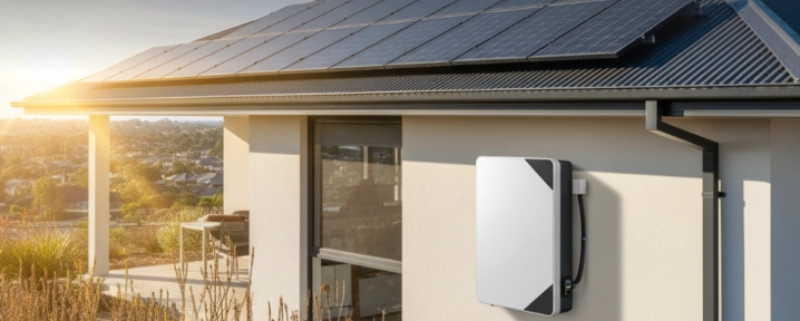
Guangdong Beineng New Energy Co., Ltd., a company dedicated to the R&D and production of LiFePO₄ battery packs, LiFePO₄ cells, lithium polymer batteries, and customized battery systems, plays an active role in advancing these technologies for modern homes.
The earliest form of home energy storage relied almost entirely on lead-acid batteries, the same technology used in car batteries for decades. These systems were widely used in:
Small off-grid homes
Backup lighting systems
Remote telecommunications sites
Early renewable energy installations
Simple and familiar technology
Low upfront cost
Suitable for occasional backup power
Short lifespan when cycled daily
Limited depth of discharge
High weight and large footprint
Regular maintenance required
While lead-acid batteries made early solar systems possible, their technical limitations restricted how far residential energy storage could advance.
The 2000s brought a wave of innovation in lithium-ion battery chemistry, driven largely by consumer electronics and electric vehicles. The same technology soon found its way into residential energy storage.
Lithium-ion batteries offered significant improvements over lead-acid systems:
Higher energy density
Lower weight
Faster charging ability
Longer lifespan
This marked the turning point when homeowners began incorporating battery systems into their solar PV setups to maximize self-consumption and gain daily energy reliability.
However, early lithium-ion chemistries such as NMC and NCA, while energy-dense, were more sensitive to high temperatures and required careful management.
Over the last decade, LiFePO₄ (Lithium Iron Phosphate) has become the preferred battery chemistry for residential use. Companies like Guangdong Beineng New Energy have led this transition by producing:
LiFePO₄ battery packs
LiFePO₄ cell modules
High-safety lithium polymer batteries
Integrated home energy storage systems
LiFePO₄ offers several practical advantages for homes:
Exceptional safety: Stable chemical structure with strong thermal resistance
Long cycle life: Suitable for daily solar charging and discharging
High usable capacity: Deep depth of discharge without degrading performance
Low maintenance: No water refilling or frequent replacements
Environmental responsibility: No cobalt and safer recycling profile
These qualities make LiFePO₄ systems ideal for solar pairing, where batteries cycle every day and must remain operational for many years.
Modern systems can:
Detect power outages instantly
Provide silent, clean backup power
Store solar energy during the day
Deliver multiple days of electricity when paired with PV
Reduce carbon emissions and reliance on the grid
To explore current-generation residential systems, you can visit
Solar Battery Factory.
As battery technology matured, its role inside homes expanded significantly.
Running emergency lights
Powering small electronics
Supporting communication systems
Whole-house backup power
Daily cycling for solar energy storage
Load shifting to reduce grid dependence
Off-grid cabins and remote homes
RVs, marine systems, and portable power solutions
Home batteries have become core components of energy-efficient living, especially in solar-powered homes that rely on evening storage to maintain independence.
Modern BMS solutions prevent:
Overcharge
Over-discharge
Short-circuits
Overcurrent
Excessive heat
Manufacturers like Beineng integrate high-quality BMS hardware to maintain long-term stability.
Today’s systems are built for scalability. Modular LiFePO₄ packs allow homeowners to increase capacity as needed—without rebuilding the entire system.
Refinements in electrode material, coating processes, and internal resistance have extended battery cycle life, ensuring consistent performance even under heavy daily use.
Modern residential batteries integrate with:
Smart inverters
Home energy management systems
Mobile app monitoring
Cloud-based analytics
Consumers now expect energy visibility and automated control—not just backup storage.
Although LiFePO₄ defines the present, new innovations are already shaping the future. These developments aim to increase energy density, improve sustainability, and reduce lifecycle environmental impact.
Solid-state designs replace liquid electrolytes with solid conductive material, offering:
Higher safety
Greater energy density
Longer cycle life
These are still in development but show strong promise for home storage.
Sodium-ion chemistries reduce reliance on lithium and offer:
Good performance in cold temperatures
Lower resource constraints
Potential for mass-market affordability
While energy density is lower than LiFePO₄, sodium-ion may soon support certain residential applications.
Future systems will communicate more directly with the grid, enabling:
Dynamic load shifting
Energy trading
Vehicle-to-home (V2H) backup capabilities
This will turn the home itself into a micro energy hub.
Companies like Guangdong Beineng New Energy are increasingly adopting:
Cleaner production processes
Recyclable materials
Sustainable supply chains
As homeowners prioritize low-carbon living, sustainability in battery manufacturing will remain a focus.
When evaluating future-ready home batteries, focus on:
Proven chemistry such as LiFePO₄
Reliable, transparent cycle life
Strong BMS protection
Verified safety certifications
Expandable, modular configurations
Compatibility with hybrid or off-grid solar systems
These features ensure the system will continue delivering value as the energy landscape evolves.
From the lead-acid batteries of the past to the LiFePO₄ systems leading today’s residential market, and toward solid-state and sodium-ion technologies on the horizon, home battery technology has rapidly matured.
Manufacturers like Guangdong Beineng New Energy Co., Ltd. have been instrumental in advancing this evolution through continuous R&D in LiFePO₄ cells, packs, and integrated solar storage solutions.
As homeowners place greater emphasis on energy independence, resilience, and environmental responsibility, the next generation of home battery innovation will play an even larger role in shaping how homes consume and store electricity.
To explore practical solutions available today, visit
Solar Battery Factory.


Compact, quiet, and powerful, it keeps your essentials running during outages and lets you charge anywhere with solar power or grid power.
Perfect for renters who need flexibility without compromise.
Our estimator is only set up to provide preliminary estimates and installer information to residents of single family homes.