
 Email Us
 Contact us
 Whats App
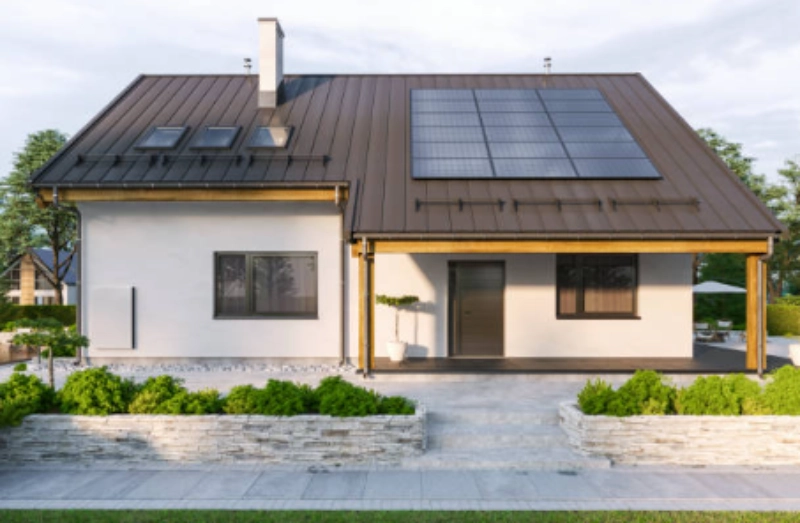
Single family home

Selecting the right battery for a home solar power system is one of the most important decisions a homeowner can make. The solar panels may determine how much energy you harvest, but the battery determines how effectively you store and use that energy.
A well-matched battery ensures reliable nighttime power, smooth operation during outages, and long-term system efficiency. A poorly matched one can lead to shortened lifespan, energy losses, or system incompatibility.
Guangdong Beineng New Energy Co., Ltd., a manufacturer dedicated to R&D and production of LiFePO₄ battery packs, battery pack systems, LiFePO₄ cells, and lithium-ion polymer batteries, has extensive experience supporting residential and off-grid solar applications. Drawing from real industry practices, this guide explains the technical specifications and sizing principles that matter most when choosing a home solar battery.
For professional residential solutions, you may explore options at
Solar Battery Factory.
A home solar system must balance three factors:
How much electricity your home uses
How much your solar panels generate
How much the battery can store and deliver
A properly selected battery ensures:
Smooth backup power during outages
Effective use of daytime solar energy at night
Higher energy independence and reduced grid reliance
Longer component lifespan and stable performance
Lower operational waste caused by improper sizing
This is why technical specifications—not assumptions—must guide your battery choice.
Home solar systems require batteries that cycle daily, tolerate a wide temperature range, and operate safely indoors. Among available chemistries, LiFePO₄ (Lithium Iron Phosphate) has become the industry benchmark because it offers:
High cycle life suitable for daily charging and discharging
Stable chemical structure resistant to overheating
Better depth of discharge compared to lead-acid batteries
Long operational life with minimal maintenance
High round-trip efficiency, improving overall solar utilization
This is why manufacturers such as Guangdong Beineng New Energy continue to prioritize LiFePO₄ designs in their home energy storage products.
When comparing home solar batteries, focus on specifications that directly impact performance, safety, and long-term reliability.
Capacity determines how much energy a battery can store.
For example:
A small home may use 8–12 kWh per day
A medium home may use 12–20 kWh
A large home may use 20 kWh+
Your battery capacity should match:
Your daily usage
Your solar production
How long you want backup power to last
A battery that’s too small cycles excessively and ages quickly. One that’s too large may not fully charge, reducing efficiency.
Power rating explains how much energy the battery can deliver at once.
Continuous output supports regular household loads
Peak output handles start-up surges (refrigerators, pumps, AC compressors)
If the power rating is too low, the system may fail to run essential appliances even if capacity is sufficient.
DoD indicates how much of the battery’s capacity can be used.
LiFePO₄ batteries often allow 90% or more, giving homeowners access to most of the stored energy without degrading the battery prematurely.
Lead-acid batteries, by comparison, may only allow 40–50% DoD, making them unsuitable for daily solar cycling.
Today’s residential solar systems commonly use 48-volt batteries because they:
Harmonize with modern hybrid inverters
Improve energy conversion efficiency
Support longer cable runs with fewer losses
This has become the standard architecture for solar-integrated storage.
Efficiency represents how much energy is returned after charging.
LiFePO₄ systems typically achieve high efficiency, which improves the overall effectiveness of the solar system.
Cycle life matters because solar batteries cycle every single day.
LiFePO₄ batteries from manufacturers like Beineng New Energy are designed for long cycle life, supporting years of stable performance.
A quality BMS protects against:
Overcharging
Over-discharging
Short circuits
Over-current
Temperature extremes
Beineng’s internal BMS designs help maintain system stability and extend the battery lifespan, especially in high-cycle solar environments.
Selecting capacity by “guessing” leads to undersized or oversized systems. Here are practical guidelines used in real installations.
Review your electrical bill for total monthly usage, then divide by 30.
This reveals your average daily kWh, a starting point for battery capacity planning.
Common scenarios:
Nighttime-only usage: Requires storing solar energy for after sunset
Backup only: Capacity enough for critical loads
Full independence: Multiple days of storage paired with solar recharging
Cloudy seasons, winter sunlight angles, and panel installation orientation all affect how much energy is available to charge the battery.
A well-sized battery should:
Charge fully on typical sunny days
Discharge efficiently at night
Avoid remaining chronically undercharged
Air-conditioners, induction cooktops, pumps, and other appliances may require additional power rating.
Battery output must always exceed the home’s expected surge loads.
The battery and inverter must communicate effectively through protocols such as:
CAN
RS485
A compatible inverter avoids issues like:
Slow charging
System shutdowns
Fault errors
Reduced power output
Professional suppliers, including Beineng, typically provide compatibility lists to simplify planning.
Guangdong Beineng New Energy Co., Ltd. is known for manufacturing safe, high-performance LiFePO₄ battery packs and cells designed specifically for renewable energy applications.
Their products are built to:
Detect grid outages and switch automatically
Store solar energy efficiently for nighttime use
Provide reliable power for several days when paired with solar
Operate silently with no fuel or maintenance
Reduce carbon emissions through clean energy utilization
Beineng’s engineering teams design battery packs with stable chemistry, strong safety protections, and practical configurations for residential installations.
These examples reflect real-world considerations rather than fixed recommendations.
Light to moderate loads
Battery: mid-capacity LiFePO₄
Goal: nighttime solar use + short backup
Multiple appliances, occasional AC
Battery: medium-to-large 48V system
Goal: daily solar cycling + outage protection
Heavy loads or remote living
Battery: modular or expandable LiFePO₄
Goal: multi-day autonomy with solar charging
A properly selected battery enhances:
Solar utilization
System longevity
Energy independence
When combined with solar charging, LiFePO₄ storage allows homeowners to enjoy clean night-time energy produced by their own roof.
To explore engineered solutions and sizes designed for home environments, visit:
Solar Battery Factory
Selecting the right battery for a home solar system requires balancing technical specifications, daily usage patterns, and system compatibility. LiFePO₄ batteries—especially those developed by Beineng New Energy—have become the preferred choice due to their stability, long lifespan, and dependable performance.
By evaluating capacity, power ratings, DoD, cycle life, BMS quality, and inverter compatibility, homeowners can ensure their solar PV system operates efficiently for years.
A properly sized and well-built battery transforms a solar installation from a basic daytime generator into a full, reliable, around-the-clock energy system.


Compact, quiet, and powerful, it keeps your essentials running during outages and lets you charge anywhere with solar power or grid power.
Perfect for renters who need flexibility without compromise.
Our estimator is only set up to provide preliminary estimates and installer information to residents of single family homes.