
 Email Us
 Contact us
 Whats App
Single family home

Telecom networks are expected to operate continuously, whether they are supporting mobile communications in busy cities or connecting remote industrial sites. While generators still play an important role during extended outages, the first line of defense is almost always the battery system. That is why more operators are replacing older lead-acid installations with 51.2V telecom battery systems built around LiFePO₄ technology.
The popularity of the 51.2V architecture is not simply the result of longer battery life. It also reflects changes in the way telecom infrastructure is built today. Base stations are becoming more compact, equipment loads fluctuate throughout the day, and operators are under constant pressure to reduce maintenance costs while improving network uptime. A battery system that occupies less space, charges more efficiently, and communicates with remote management platforms has become a practical necessity rather than a premium feature.
For procurement teams, however, choosing a telecom battery is no longer as simple as comparing voltage and capacity. Two batteries with the same nominal specifications can perform very differently after several years in outdoor cabinets or high-temperature equipment rooms. Cell consistency, thermal management, battery management software, mechanical design, and factory testing all have a direct impact on long-term operating costs.
This is why experienced buyers increasingly evaluate the manufacturer behind the battery instead of focusing only on the product datasheet. Production capability, quality traceability, engineering suport, and customization often determine whether a project runs smoothly over the next decade.
· 51.2V telecom battery systems have become the preferred solution for modern communication networks because they combine high energy density, long cycle life, and lower maintenance requirements.
· The reliability of a telecom backup system depends as much on manufacturing quality and battery management as on electrical specifications.
· Buyers should evaluate factory capabilities, testing procedures, and after-sales support before comparing prices.
· Different telecom applications—including macro base stations, edge data centers, and outdoor cabinets—often require different battery configurations.
Telecom power systems have gradually evolved toward standardized DC architectures that simplify installation while supporting higher equipment efficiency. A 51.2V telecom battery pack fits naturally into today's communication power systems because it provides stable output while remaining compatible with mainstream telecom rectifiers and intelligent power management equipment.
Unlike older battery banks assembled from multiple smaller modules, a 51.2V lithium battery integrates sixteen LiFePO₄ cells into a balanced system managed by an intelligent BMS. This design reduces wiring complexity, improves charging efficiency, and allows operators to monitor battery status remotely.
For network operators managing hundreds or even thousands of sites, standardization brings another important advantage. Using the same voltage platform across multiple locations simplifies spare parts management, technician training, maintenance procedures, and future capacity expansion.
Another reason for the growing adoption of 51.2V telecom battery systems is their flexibility. The same voltage platform can support applications ranging from compact roadside cabinets to indoor telecom rooms and edge computing facilities. Capacity can be expanded by adding battery modules instead of replacing the entire backup system.
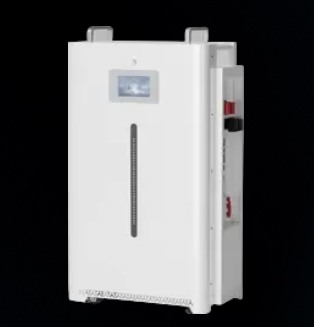
Many purchasing specifications focus on battery capacity expressed in amp-hours or kilowatt-hours. Capacity certainly matters, but it is only one part of overall system performance.
The duration a telecom site can remain online depends on several interconnected factors, including equipment load, battery discharge rate, ambient temperature, charging strategy, and battery health after years of operation. A battery rated at the same capacity may deliver noticeably different backup times if its thermal performance or cell consistency is poor.
For example, outdoor telecom cabinets installed in tropical climates routinely experience temperatures well above laboratory testing conditions. Elevated temperatures accelerate cell aging, increase internal resistance, and reduce available capacity if thermal management has not been properly considered during product design.
Battery management software also plays a larger role than many buyers expect. Modern BMS platforms continuously monitor voltage, current, temperature, and cell balancing while communicating with remote monitoring systems. Early fault detection allows operators to replace individual modules before unexpected failures affect network availability.
Instead of asking only "How many amp-hours does this battery provide?", experienced procurement engineers are more likely to ask:
· How consistent are the cells after production?
· How accurately does the BMS estimate remaining capacity?
· What happens if one module develops an abnormal temperature?
· How easily can the battery be integrated into an existing telecom power system?
These questions usually reveal more about long-term reliability than the specification sheet alone.
From the outside, most 51.2V telecom battery packs appear remarkably similar. The enclosure dimensions, nominal voltage, and published capacity often differ very little between suppliers. The real differences are hidden inside the manufacturing process.
In our production experience, battery consistency begins long before final assembly. Incoming LiFePO₄ cells are sorted according to voltage, internal resistance, and capacity deviation. Even minor differences between cells can become magnified after thousands of charge and discharge cycles if matching is not carefully controlled.
Cell grouping is followed by laser welding, insulation inspection, torque verification, communication testing, and multiple charging and discharging procedures before the battery is approved for shipment. Every stage generates production records that can later be traced if service support is required.
Temperature testing is another area where manufacturers vary significantly. Instead of evaluating batteries only under room-temperature conditions, comprehensive testing exposes finished products to both high and low temperature environments to verify charging behavior, discharge stability, and communication performance under realistic operating conditions.
These production steps require additional investment, but they reduce field failures that are considerably more expensive than factory testing.
For telecom operators maintaining nationwide infrastructure, preventing even a small percentage of unexpected battery failures can translate into substantial savings in maintenance visits, emergency repairs, and service interruptions.
One characteristic shared by long-life telecom batteries is manufacturing consistency rather than exceptionally high specifications.
A well-designed production line controls every stage from raw material inspection through final packaging. Automated equipment reduces variation during welding and assembly, while digital production records allow every battery pack to be traced back to its individual cells and production batch.
Before shipment, every completed battery undergoes functional verification that includes communication protocol testing, charge-discharge validation, insulation resistance measurement, and protection response testing. Batteries that fail any stage are removed from production instead of being reworked into commercial inventory.
Equally important is the software side of production. Firmware calibration ensures that the BMS reports accurate state-of-charge information, balances cells correctly, and communicates reliably with telecom power management equipment using industry-standard protocols.
This attention to manufacturing details is one reason why reputable 51.2V telecom battery factories often support products with longer warranty periods and higher expected service life.
Manufacturing Stage | Purpose | Impact on Field Reliability |
Cell matching | Minimize voltage variation | Longer cycle life |
Laser welding | Stable electrical connections | Lower internal resistance |
Charge-discharge aging | Verify battery consistency | Reduced early failures |
BMS calibration | Accurate monitoring | Better remote management |
Final inspection | Confirm electrical performance | Higher installation success rate |
One trend that has become increasingly clear over the past few years is that telecom operators are no longer purchasing identical battery systems for every installation. Network architecture has diversified, and backup power requirements now vary significantly depending on where the equipment is deployed.
A rooftop macro base station serving thousands of subscribers has very different operating conditions from a compact roadside cabinet supporting a suburban 5G cell. Edge computing sites introduce another layer of complexity because battery systems may also need to support networking equipment, servers, and environmental control systems simultaneously.
This shift has encouraged manufacturers to move beyond standardized battery products toward modular solutions that can be configured according to project requirements. Instead of forcing customers to adapt their infrastructure to a fixed battery design, many operators now specify cabinet dimensions, communication protocols, rack configurations, expansion capability, and monitoring requirements before production begins.
The result is a telecom battery system that integrates more smoothly into existing infrastructure, reduces installation time, and leaves room for future expansion without replacing the original investment.
For many years, telecom operators expanded backup capacity by installing larger battery cabinets or adding additional battery strings. That approach suited traditional communication networks, where equipment loads changed slowly and site upgrades were relatively infrequent. The rollout of 5G, edge computing, and distributed communication infrastructure has changed that pattern. Today, backup power requirements can increase within months as more equipment is added to existing sites.
This is one of the main reasons telecom modular energy storage has become increasingly popular. Instead of replacing an entire battery bank whenever additional runtime is required, operators can simply add compatible battery modules while keeping the existing system in service. The original investment continues to deliver value, installation work is minimized, and future expansion becomes much easier to plan.
Another practical advantage is transportation and field installation. Smaller battery modules are easier to move into rooftop shelters, outdoor cabinets, and remote communication sites where space is often limited. Maintenance teams can also replace individual modules instead of removing a complete battery cabinet, reducing both labor costs and service downtime.
A stackable 51.2V telecom battery system offers benefits that extend well beyond easier installation. For network operators responsible for hundreds or even thousands of sites, flexibility is often more valuable than simply purchasing the largest battery available.
Network traffic rarely grows at the same pace across every location. Some base stations may require additional backup capacity after only a year, while others continue operating without modification for much longer. A modular battery architecture allows capacity to grow alongside network demand instead of forcing operators to replace equipment that is still performing well.
This approach also simplifies inventory management. Because identical battery modules can be deployed across multiple projects, spare parts become standardized, technician training becomes more consistent, and maintenance procedures are easier to manage. These operational improvements often save more money over the life of the system than the initial purchase price of the battery itself.
Although battery chemistry receives most of the attention, engineers know that reliable telecom backup depends on the entire electrical system rather than a single specification.
A 51.2V telecom battery is designed to work efficiently with modern telecom DC power systems. Operating at this voltage reduces current for the same power output, which lowers cable losses, reduces heat generation, and places less stress on connectors and protection devices. These improvements may appear small individually, but they contribute significantly to long-term system stability.
Battery management is equally important. A high-quality Battery Management System continuously monitors cell voltage, current, temperature, and communication status. It balances individual cells during operation, provides early warnings before failures occur, and exchanges data with the site's monitoring platform. This allows maintenance teams to identify potential issues before they affect network availability.
Engineering Factor | Why It Matters |
Operating Voltage | Improves compatibility with telecom power systems |
Cell Matching | Extends service life and improves consistency |
Intelligent BMS | Enables remote monitoring and fault protection |
Modular Design | Supports future capacity expansion |
Communication Protocol | Integrates with existing network management platforms |
Thermal Performance | Maintains stability under demanding environments |
When comparing suppliers, the lowest quotation rarely results in the lowest operating cost over the next ten years. Battery replacement, field maintenance, logistics, and technical support all contribute to the total cost of ownership.
Experienced procurement teams therefore pay close attention to factors that are not always visible on a datasheet. They evaluate whether the supplier can maintain consistent product specifications over multiple production batches, whether future expansion modules will remain compatible with existing installations, and whether technical support is available throughout the project lifecycle.
Manufacturing capability is another important indicator. Automated production, standardized cell grading, comprehensive electrical testing, and complete traceability all reduce the likelihood of field failures. These quality control measures require greater investment during production but significantly lower maintenance costs after deployment.
For long-term telecom projects, choosing a supplier with stable manufacturing capability is often more valuable than selecting the battery with the lowest purchase price.
Yes. Most 51.2V telecom battery systems are designed for outdoor communication cabinets as well as indoor equipment rooms. The exact operating environment should still be considered when selecting enclosure protection, thermal management, and installation configuration.
Yes. One of the biggest advantages of a stackable telecom battery system is its scalability. Additional battery modules can usually be added without replacing the original installation, making future expansion more economical.
LiFePO₄ batteries offer longer cycle life, higher usable capacity, lower maintenance requirements, faster charging, and significantly lower lifetime operating costs. These advantages have made them the preferred choice for modern telecom infrastructure.
The BMS is responsible for monitoring battery health, balancing cells, protecting against abnormal operating conditions, and communicating with remote management platforms. A reliable BMS is essential for maintaining long-term system performance.
In addition to battery specifications, buyers should evaluate manufacturing consistency, quality control procedures, certification, communication compatibility, technical support, warranty coverage, and long-term production capability.
Communication networks continue to evolve, and backup power systems must evolve with them. A battery solution that only satisfies today's capacity requirements may become a limitation as new equipment, higher traffic volumes, and additional services are introduced.
For this reason, many operators are shifting toward stackable energy storage batteries for telecom use rather than fixed-capacity battery banks. The ability to expand capacity, standardize maintenance, improve operational efficiency, and extend service life makes modular battery systems a practical investment for long-term infrastructure planning.


Compact, quiet, and powerful, it keeps your essentials running during outages and lets you charge anywhere with solar power or grid power.
Perfect for renters who need flexibility without compromise.
Our estimator is only set up to provide preliminary estimates and installer information to residents of single family homes.