
 Email Us
 Contact us
 Whats App
Single family home

In telecom infrastructure, backup power is one of those systems that only gets attention when something goes wrong. Base stations are expected to run continuously under almost any condition, whether the grid is stable or not. When everything works normally, the battery system is almost invisible. But when it fails, the impact is immediate and often expensive.
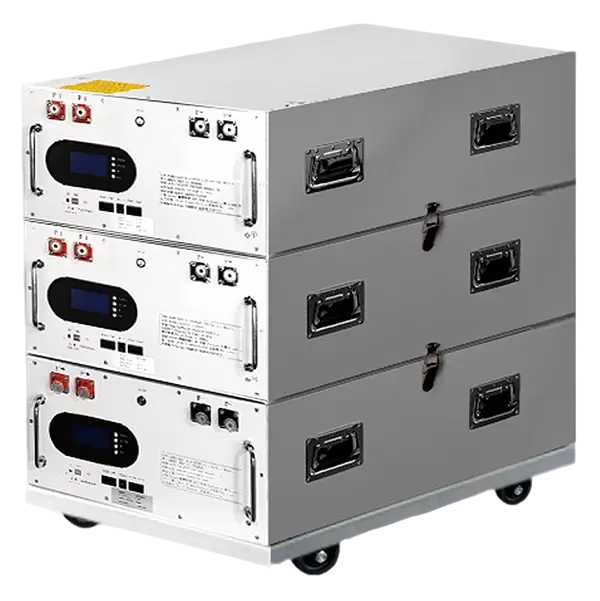
Over the past few years, telecom operators have started to rethink how backup power systems are designed. Instead of relying purely on fixed battery cabinets, more projects are shifting toward modular architectures, especially 51.2V stackable telecom battery systems.
This change is not driven by marketing. It comes from repeated field experience, especially around system expansion limits, maintenance pressure, and the increasing power demand of modern telecom networks.
Older telecom sites were built around stable assumptions. Power loads were predictable, equipment upgrades were slow, and backup requirements rarely changed after deployment. That model worked when networks were simpler.
Today, that assumption no longer reflects real operations.
A single base station often goes through multiple stages of evolution. A site that starts as a basic 4G deployment can gradually turn into a more complex system with additional radio units, transmission equipment, and sometimes edge computing hardware. Power demand does not increase in a smooth curve. It changes in steps.
In real projects, this creates a practical challenge. The original backup system may still function, but it no longer matches the actual load requirement. Expanding capacity is not always straightforward because space, cooling, and cabinet limitations were never designed for continuous upgrades.
Lead-acid batteries are still widely used in existing telecom infrastructure. They are familiar, easy to deploy, and supported by long-established maintenance practices. However, field experience shows their limitations become more obvious under modern operating conditions.
One of the most common issues is performance degradation in high-temperature environments. Outdoor telecom cabinets rarely operate under ideal conditions. Continuous heat exposure, irregular grid supply, and frequent cycling all contribute to faster aging.
In many regions, operators begin to notice reduced backup runtime within just a few years of operation. This leads to more frequent replacement cycles and higher maintenance pressure, especially for remote sites where every visit requires logistics planning and transportation cost.
The real issue is not only technical degradation. It is operational inefficiency at scale.
| Factor | Lead-Acid Battery | Lithium Telecom Battery |
|---|---|---|
| Cycle stability | Moderate | High |
| Temperature performance | Weak | Strong |
| Maintenance demand | High | Low |
| Weight | Heavy | Lighter |
| Expansion flexibility | Limited | Modular |
| Lifecycle predictability | Low | High |
In telecom networks, predictability is often more valuable than theoretical performance.
The shift toward lithium systems is not simply about better technical specifications. It is about reducing operational complexity across large distributed networks.
When operators manage hundreds or thousands of base stations, even small improvements in maintenance efficiency can create significant cost reduction over time. Lithium systems help reduce site visits, stabilize discharge performance, and improve long-term reliability under cycling conditions.
However, the more important change is not just the battery chemistry itself. It is how the system is structured and deployed.
This is where modular design becomes critical.
Most telecom power systems are still based on a 48V DC architecture. This standard has been widely used for decades because it is stable and compatible with existing rectifiers and distribution systems.
The 51.2V lithium configuration fits directly into this environment without requiring a major system redesign. That compatibility is one of the main reasons adoption has been relatively smooth in real-world deployments.
Operators do not want to rebuild entire power architectures just to upgrade battery technology. They prefer solutions that integrate into existing systems with minimal disruption.
The most important shift in telecom backup power is not just lithium adoption. It is the move from fixed-capacity systems to modular expansion models.
Traditional battery cabinets assume that capacity is defined at the time of installation. Once deployed, increasing capacity usually requires additional cabinets or system replacement. In practice, this is often inefficient.
Telecom sites rarely remain static. Equipment is added, traffic increases, and network upgrades happen continuously. This creates a mismatch between original design assumptions and long-term operational reality.
Stackable telecom battery systems solve this by allowing incremental expansion. Instead of replacing the system, operators can add modules as demand increases.
This approach aligns more closely with how telecom infrastructure actually evolves in the field.
| Constraint | Real-world impact |
|---|---|
| Limited space | Rooftop or compact shelters restrict expansion |
| Cooling capacity | Additional equipment increases thermal load |
| Site accessibility | Remote locations increase maintenance costs |
| Budget staging | Investment happens in phases |
| Network evolution | Load increases over time |
These constraints explain why modular systems are becoming more common in modern deployments.
In actual telecom projects, stackable systems are not just a theoretical improvement. They solve very practical problems that appear repeatedly during site upgrades.
One of the most noticeable benefits is flexibility in expansion. Instead of redesigning infrastructure, operators can scale capacity gradually based on actual demand. This reduces upfront investment risk and avoids overbuilding at early deployment stages.
Another important advantage is maintenance simplicity. In modular systems, issues can often be isolated to individual units rather than affecting the entire battery bank. This reduces downtime and simplifies repair procedures.
Over time, these operational improvements accumulate into significant cost savings across large networks.
In practice, telecom sites rarely follow their original design assumptions. A base station may begin with a relatively simple configuration, but over time additional equipment is introduced as network demand grows.
At some point, operators may find that backup runtime is no longer sufficient. However, replacing the entire system is often not practical due to cost, downtime risk, or physical limitations at the site.
In these situations, modular stackable battery systems provide a more realistic upgrade path. Capacity can be increased gradually without disrupting ongoing operations.
This reflects how telecom infrastructure actually evolves rather than how it is initially planned.
In the past, procurement decisions were often driven by initial purchase price. That approach is becoming less relevant as telecom networks grow in scale.
Operators now evaluate systems based on long-term operational cost, including maintenance frequency, replacement cycles, and site accessibility.
When viewed across a full network lifecycle, lithium-based stackable systems often provide better overall cost efficiency, even if the initial investment is higher.
The key shift is from short-term procurement thinking to long-term operational planning.
In remote telecom deployments, solar integration is becoming more common as operators look to reduce dependence on diesel generators. These hybrid systems require batteries that can handle frequent cycling and variable energy input.
Lithium systems perform better under these conditions because they maintain more stable efficiency over repeated charge and discharge cycles. This makes them more suitable for off-grid telecom towers where energy availability is not constant.
Modern telecom batteries are no longer passive storage units. They are integrated into the broader network management system.
Many 51.2V stackable telecom battery systems now support communication protocols such as RS485 and CAN, enabling real-time monitoring of system status, temperature, charge cycles, and fault conditions.
This improves maintenance planning by reducing unnecessary site visits and allowing operators to identify issues before they become critical.
Telecom backup power systems are no longer static infrastructure components. They are evolving alongside the networks they support.
The shift toward 51.2V stackable telecom battery systems reflects a broader change in telecom infrastructure thinking. The focus is no longer only on capacity or cost, but on adaptability over time.
In modern telecom environments, the ability to scale, maintain, and adapt is becoming just as important as raw technical performance.


Compact, quiet, and powerful, it keeps your essentials running during outages and lets you charge anywhere with solar power or grid power.
Perfect for renters who need flexibility without compromise.
Our estimator is only set up to provide preliminary estimates and installer information to residents of single family homes.