
 Email Us
 Contact us
 Whats App
Single family home

A growing number of homeowners invest in battery storage only to discover that the battery and inverter refuse to communicate properly after installation. The battery powers on, the inverter detects it, yet charging stops unexpectedly, the state of charge remains frozen, or error messages appear without any obvious hardware failure. In many cases, neither product is defective. The real issue is home battery inverter compatibility, something that is often overlooked during product selection.
Compatibility is frequently misunderstood because many buyers focus on voltage, capacity, or battery chemistry while assuming that products sharing similar specifications will naturally work together. Modern residential energy storage systems are far more sophisticated than that. The battery management system (BMS), communication protocol, inverter firmware, and control logic all influence how efficiently a battery charges, discharges, balances its cells, and protects itself over thousands of operating cycles.
This is why experienced installers rarely ask, "Which battery should I buy?" Their first question is usually, "Which inverter will this battery be connected to?" That single detail often determines whether a project operates smoothly from the first day or requires repeated troubleshooting after installation.
If you are selecting equipment for a new solar project, replacing an aging battery bank, or sourcing products for OEM distribution, understanding home battery inverter compatibility before placing an order can eliminate expensive delays and prevent problems that are difficult to solve once the system has been commissioned.
· Home battery inverter compatibility depends on communication, not simply battery voltage.
· A quality BMS and verified firmware support are often more important than battery capacity alone.
· Hybrid inverter manufacturers use different communication protocols, so compatibility should always be confirmed before purchasing.
· Choosing products that have already been tested together reduces installation time and long-term maintenance costs.
One of the most common assumptions in residential energy storage is that batteries sharing the same nominal voltage can be connected to any hybrid inverter. From an electrical perspective, this sounds reasonable. A 51.2V home battery and another 51.2V lithium battery appear to have identical specifications, and many buyers naturally expect them to perform the same way.
In practice, however, professional installers know that voltage is only one small part of the system. Modern lithium batteries constantly exchange operating data with the inverter. Information such as battery temperature, remaining capacity, maximum charging current, discharge limits, alarm status, and cell balancing is transmitted hundreds of times during normal operation. If that communication cannot be interpreted correctly, the inverter has no reliable way to manage the battery, even if the voltage itself is perfectly acceptable.
This is why two batteries with almost identical specification sheets may produce completely different installation results. One battery immediately establishes communication, reports accurate state-of-charge information, and charges normally. Another may power the inverter but display inaccurate battery percentages, limit charging current, or repeatedly trigger protection mode because the communication language between the battery and inverter is different.
For homeowners, these symptoms often appear to be hardware failures. For engineers, they are usually communication problems.
Several years ago, residential battery systems operated much more like traditional backup power supplies. As long as voltage remained within a safe operating range, many systems functioned adequately with limited communication between components.
Today's hybrid energy storage systems work very differently.
A modern inverter continuously adjusts charging current based on battery temperature, remaining capacity, charging history, load demand, and solar production. During a sunny afternoon, it may rapidly increase charging current to capture excess solar generation. Later in the evening, it may reduce discharge power to preserve emergency backup capacity if severe weather is forecast. None of these decisions rely on voltage alone.
Instead, they depend on accurate information provided by the battery management system.
Without reliable communication, the inverter loses visibility into the battery's operating condition. To protect the battery, many inverters automatically reduce charging performance or operate under conservative safety limits. While this prevents damage, it also means homeowners never achieve the performance they expected when investing in a residential energy storage system.
In other words, the battery may still work, but it no longer works intelligently.
That distinction becomes increasingly important as households install larger PV systems, electric vehicle chargers, heat pumps, and other high-demand electrical equipment. The more complex the household energy profile becomes, the more valuable proper communication becomes.
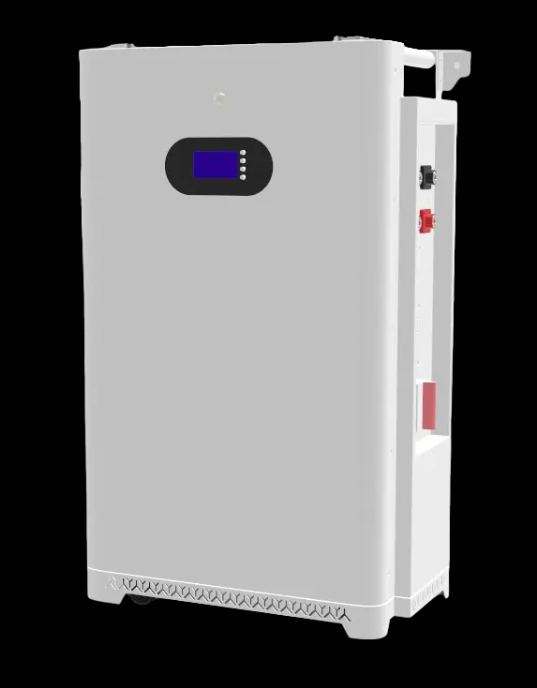
From the outside, residential batteries often look remarkably similar. Aluminum housings, wall-mounted designs, LCD displays, and standard communication ports create the impression that most products are interchangeable.
The real differences are hidden inside the battery.
The BMS is responsible for monitoring every lithium cell, calculating available energy, balancing cell voltages, recording fault information, communicating with the inverter, and protecting the battery under abnormal operating conditions. It acts as the central controller for the entire battery pack rather than simply serving as a safety device.
Because every BMS manufacturer develops its own software architecture, communication methods, and operating logic, compatibility depends largely on software rather than hardware. Even products using identical LiFePO4 cells can behave very differently if their BMS software has been developed for different inverter platforms.
Firmware also plays a larger role than many buyers realize. Manufacturers regularly release firmware updates that improve inverter communication, support new battery models, optimize charging algorithms, or resolve compatibility issues discovered after product release. Installers therefore pay close attention not only to the battery model but also to firmware versions on both the battery and inverter before commissioning a project.
This explains why experienced engineering teams never evaluate compatibility solely from specification sheets. Instead, they verify the complete communication environment before approving products for delivery.
Specification sheets rarely explain what happens before a battery is declared compatible with a particular inverter. From a manufacturing perspective, compatibility validation is a lengthy engineering process rather than a simple laboratory measurement.
Development usually begins with the engineering team building a dedicated test platform using commercially available hybrid inverters from different manufacturers. Instead of testing only charging and discharging functions, engineers observe how both devices exchange information throughout different operating conditions.
A battery that communicates correctly while charging at room temperature may behave differently after repeated deep discharge cycles or under elevated temperatures. Likewise, firmware updates released by inverter manufacturers can introduce new communication logic that requires additional verification before products are shipped to customers.
Because of this, compatibility testing often continues well beyond the initial product development stage. Production samples are periodically revalidated whenever major firmware revisions are released, ensuring that newly manufactured batteries remain compatible with supported inverter platforms.
Rather than relying on theoretical compatibility, reputable manufacturers build compatibility databases based on repeated verification using actual equipment. These records become valuable references for distributors, installers, and OEM customers selecting products for different regional markets.
Many installation issues originate long before products arrive on site. Procurement teams sometimes compare batteries based primarily on capacity, warranty, or unit price, assuming compatibility can be confirmed later during installation.
Experienced buyers generally approach the process differently.
Before requesting quotations, they usually identify the inverter brands that will be supported within their target market. Once those platforms have been confirmed, suppliers are asked to provide compatibility documentation, firmware information, communication protocol details, and records of previous installation projects involving the same inverter models.
That approach significantly reduces uncertainty because compatibility has already been verified before equipment reaches the installation site.
Price remains an important consideration, but it rarely becomes the deciding factor once labor costs, technical support, delayed commissioning, and customer satisfaction are included in the overall project cost. A slightly lower purchase price offers little advantage if engineers spend several days resolving communication problems that could have been avoided during supplier selection.
For distributors building their own product portfolios, verified compatibility often becomes a stronger selling point than additional battery capacity or cosmetic product features. Customers purchasing residential energy storage systems are investing in reliable long-term operation rather than individual hardware components. They expect every part of the system to function together without unnecessary complexity.
Installers often describe battery compatibility as either "working" or "not working," but the reality is more nuanced. A battery and inverter can establish a connection while still operating with reduced performance because certain communication parameters are incomplete or interpreted differently.
One example is inaccurate state-of-charge (SOC) reporting. Homeowners may see the battery remain at 100% for an unusually long time or suddenly drop from 40% to 15% within a short period. The battery cells themselves are usually healthy, but the inverter is calculating capacity based on data that does not fully match the battery's BMS logic.
Charging behavior is another common issue. Some systems repeatedly stop charging before the battery reaches full capacity, while others restrict charging current to a fraction of the expected value. In many cases, the inverter enters a protective mode because it cannot continuously receive reliable information about battery temperature or charge limits.
Parallel battery expansion introduces another layer of complexity. As homeowners increase storage capacity over time, every battery module must communicate not only with the inverter but also with the other batteries in the system. Differences in firmware versions or communication settings can cause one module to charge faster than the others, leading to imbalance and unnecessary service calls months after installation.
These situations illustrate an important point: compatibility is not simply about whether the system starts up. It is about whether every component continues to operate together efficiently over years of daily cycling.
One overseas distributor planned to supply complete residential solar systems for detached homes. The selected solution combined a hybrid inverter with a 51.2V home battery because both products met the required electrical specifications and certifications.
Initial testing appeared successful. The inverter recognized the battery immediately, and charging began without alarms. However, after several days of operation, technicians noticed that battery capacity readings fluctuated significantly, and discharge power became inconsistent during evening peak loads.
Instead of replacing hardware, engineers compared communication logs between the inverter and the battery management system. The analysis showed that the inverter firmware supported an earlier communication protocol, while the battery had already been updated to a newer protocol revision. After both devices were synchronized and the communication parameters were reconfigured, charging efficiency stabilized, SOC reporting became accurate, and the system operated normally throughout extended cycling tests.
The project demonstrated an important lesson for future installations: electrical compatibility alone is never enough. Software versions, communication protocols, and validation records deserve the same attention as battery capacity and voltage during product selection.
Whether purchasing a single residential system or sourcing products for distribution, asking the right technical questions before placing an order saves considerable time later. The conversation should go beyond battery capacity and warranty terms.
Before confirming a supplier, buyers should clarify:
· Which inverter brands and firmware versions have already been tested with this battery?
· Which communication protocols are supported, such as CAN or RS485?
· Can multiple battery modules operate in parallel without additional controllers?
· Will future firmware updates maintain compatibility with existing installations?
These questions help distinguish suppliers that have completed real compatibility verification from those relying only on specification comparisons.
Item | Why It Should Be Confirmed |
Inverter model | Different brands use different communication logic. |
Battery firmware | Updated firmware may improve or change compatibility. |
Communication protocol | CAN and RS485 are not automatically interchangeable. |
BMS software version | Determines how charging and protection data are exchanged. |
Parallel expansion support | Important if additional battery capacity may be added later. |
Technical documentation | Confirms approved inverter models and installation settings. |
A checklist like this takes only a few minutes to review but can prevent costly troubleshooting after commissioning.
Residential energy storage systems today rarely consist of a battery and inverter alone. Solar panels, EV chargers, heat pumps, smart energy management platforms, backup generators, and home automation systems increasingly operate as one integrated network.
As this ecosystem expands, the battery becomes more than an energy storage device. It acts as an intelligent energy hub that continuously exchanges information with multiple devices. The quality of that communication directly affects charging efficiency, backup performance, energy scheduling, and long-term battery health.
Manufacturers have therefore invested heavily in expanding compatibility with mainstream hybrid inverter brands while simplifying firmware management and remote diagnostics. For installers, broader compatibility reduces commissioning time. For distributors, it lowers technical support costs. For homeowners, it means a more reliable system with fewer interruptions over the battery's service life.
This shift also explains why compatibility has become a deciding factor in many purchasing decisions. A battery with slightly higher capacity offers little practical advantage if it cannot communicate reliably with the inverter that controls the entire system.
No. Even if two products share the same nominal voltage, successful operation depends on communication between the battery management system and the inverter. Manufacturers often support different protocol versions, firmware structures, and operating logic. Compatibility should always be verified before installation.
Both are widely used in residential energy storage. CAN generally provides faster data transmission and is commonly adopted in modern hybrid inverter systems, while RS485 remains reliable for many established platforms. The important factor is whether the inverter and battery support the same protocol rather than which protocol is considered superior.
Incorrect SOC readings are usually related to communication settings rather than battery capacity. Firmware differences, unsupported protocol versions, or incorrect BMS configuration may prevent the inverter from interpreting battery data accurately.
Yes. Many manufacturers release firmware updates to support additional inverter models, optimize charging strategies, or correct communication issues discovered after product launch. Both the inverter and battery firmware should be checked before assuming a hardware problem exists.
Absolutely. Parallel battery expansion requires every battery module to communicate consistently with both the inverter and each other. Planning for expansion during the initial purchase helps avoid compatibility issues when additional storage is added in the future.
Yes. Confirming inverter models, communication protocols, firmware support, and testing records before requesting quotations reduces project risk and makes supplier comparisons more meaningful than evaluating battery specifications alone.
Battery capacity, warranty period, and cycle life all matter when evaluating a residential energy storage system, but none of them can compensate for poor home battery inverter compatibility. Reliable communication allows the inverter to make intelligent charging decisions, protects battery health, and ensures that every component operates as a coordinated system rather than as independent pieces of hardware.
For installers, compatibility reduces commissioning time and service visits. For distributors, it lowers technical support costs across multiple projects. For homeowners, it delivers the stable performance expected from a long-term investment in renewable energy.
Selecting a battery that has been thoroughly validated with the intended inverter platform is therefore not simply a technical preference—it is one of the most effective ways to improve system reliability throughout its entire operating life.


Compact, quiet, and powerful, it keeps your essentials running during outages and lets you charge anywhere with solar power or grid power.
Perfect for renters who need flexibility without compromise.
Our estimator is only set up to provide preliminary estimates and installer information to residents of single family homes.