
 Email Us
 Contact us
 Whats App
Single family home

Solar photovoltaic (PV) systems have transformed how homeowners consume electricity, making renewable power more accessible and affordable than ever. Yet, without an efficient home battery, much of the energy generated during the day can go unused.
Choosing the right home battery is crucial to ensure your system performs efficiently, providing backup power, lower energy bills, and greater independence from the grid. The ideal battery should integrate seamlessly with your solar PV setup, offer long lifespan, and ensure optimal safety under all conditions.
This article explores how to select the best battery for your solar system—focusing on compatibility, performance, and the innovative technologies behind modern energy storage.
For homeowners seeking reliable and advanced solar storage solutions, Solar Battery Factory offers professional-grade systems designed for residential use.
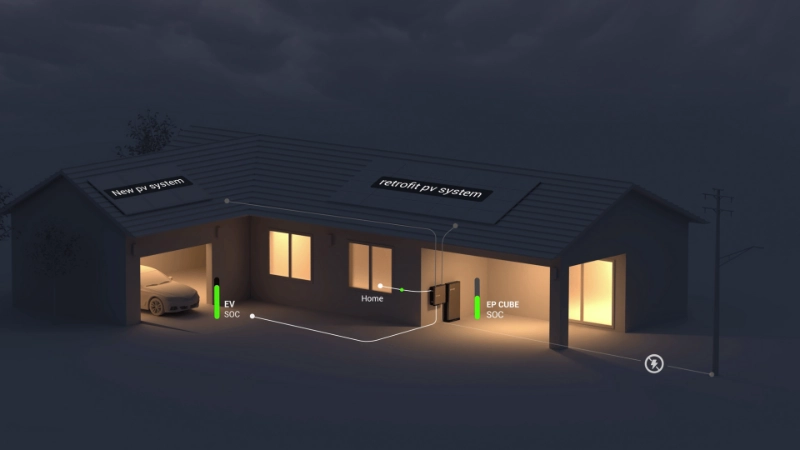
A home battery serves as the heart of a solar energy system. While solar panels generate electricity only during daylight, the battery ensures continuous power supply—storing surplus energy and delivering it at night or during outages.
Energy Storage: Retains excess electricity generated by solar panels.
Backup Power: Automatically activates during grid failures.
Load Shifting: Supplies power during high-demand periods to reduce dependency on the grid.
Self-Consumption Optimization: Enables homeowners to use their own solar-generated energy around the clock.
Unlike generators, modern home batteries are silent, fuel-free, and maintenance-free, offering an eco-friendly approach to energy reliability.
Battery compatibility is one of the most critical factors when pairing a storage unit with a solar system. The right match ensures maximum energy efficiency and system longevity.
Most residential systems operate at 48V, which is ideal for compatibility with hybrid inverters. Ensuring your battery matches the system voltage prevents power losses and communication errors.
Modern batteries and inverters exchange data through communication protocols like CAN or RS485. A compatible inverter allows for smart monitoring of charging, discharging, and temperature control.
For smart homes, the battery should integrate seamlessly with Energy Management Systems (EMS)—allowing you to track consumption patterns, automate charging, and optimize solar utilization.
Choosing the right chemistry affects lifespan, safety, and efficiency. LiFePO₄ (Lithium Iron Phosphate) batteries are currently the most popular due to their:
Excellent thermal stability
Long cycle life (up to several thousand cycles)
Safe, non-flammable composition
Consistent discharge performance
These attributes make LiFePO₄ batteries ideal for modern solar PV applications.
Battery capacity (kWh) determines how much energy it can store, while power rating (kW) defines how much can be delivered at once. For whole-house applications, systems with scalable capacity ensure flexibility for future needs.
DoD indicates how much stored energy can be used before recharging. A higher DoD allows you to use more of the battery’s capacity efficiently. LiFePO₄ systems typically offer 90–95% DoD, maximizing value and lifespan.
Cycle life measures how many charge and discharge cycles a battery can perform before its capacity declines. Long-lasting LiFePO₄ cells can endure over 6,000 cycles, ensuring years of stable operation.
Always select batteries certified under MSDS, UN38.3, CE, RoHS, and FCC standards. These ensure compliance with international safety and environmental requirements.
For growing households or increasing power demands, modular and stackable batteries allow for simple system upgrades without major rewiring.
Guangdong Beineng New Energy Co., Ltd. is a trusted manufacturer specializing in LiFePO₄ battery packs, lithium-ion polymer cells, and energy storage systems. With 20 years of expertise, Beineng has developed a strong technological foundation and earned the confidence of customers worldwide.
Intelligent Power Management: Automatically detects power outages and switches to battery mode in seconds.
Solar Integration: Stores sunlight-generated energy for multi-day home use.
Silent Operation: No fuel, no noise, no emissions—only clean energy.
Sustainability Commitment: Supports global carbon reduction goals through eco-friendly materials and manufacturing.
Versatile Applications: Suitable for off-grid systems, RVs, solar streetlights, medical devices, and backup power.
Whether used as a standalone system or paired with other storage products, Beineng batteries provide stable, clean, and resilient power—empowering households to manage electricity efficiently day and night.
| Battery Type | Chemistry | Lifespan | Maintenance | Recommended For |
|---|---|---|---|---|
| LiFePO₄ | Lithium Iron Phosphate | 10–15 years | None | Home & off-grid systems |
| Lithium-Ion (NMC/NCA) | Nickel-based lithium | 8–12 years | Low | Compact solar setups |
| Lead-Acid (AGM/GEL) | Lead-based | 3–5 years | Regular | Small-scale backup |
| Flow Battery | Liquid electrolyte | 15+ years | Moderate | Large installations |
As seen above, LiFePO₄ technology stands out for its balance of performance, cost-efficiency, and environmental safety, making it the top choice for residential solar storage.
To maximize system efficiency and return on investment, focus on these core performance metrics:
Round-Trip Efficiency: Measures how much energy can be retrieved after charging. LiFePO₄ batteries achieve up to 95% efficiency, reducing energy losses.
Temperature Range: Ensure the system can operate in both hot and cold climates without degradation.
Charge Rate (C-rate): Determines how quickly a battery can charge/discharge. A balanced C-rate ensures longevity and performance stability.
Battery Management System (BMS): Advanced BMS monitors voltage, current, and temperature, preventing overcharging or short-circuits.
When integrating a battery with your solar PV system:
Consult a certified installer to assess your power needs.
Ensure proper ventilation and protection against moisture or extreme temperatures.
Verify compatibility with existing solar inverters.
Monitor system performance regularly via mobile or cloud applications.
Beineng’s all-in-one energy systems simplify installation, offering pre-engineered configurations with built-in inverters and smart monitoring capabilities. You can explore such systems at Solar Battery Factory.
By combining solar power generation with Beineng’s LiFePO₄ storage systems, homeowners achieve:
Significant carbon emission reduction
Improved energy self-sufficiency
Minimal maintenance and material waste
Long-term contribution to global renewable energy goals
This aligns with Beineng’s mission to encourage sustainable living and responsible energy consumption.
Q1. Can I install a home battery without solar panels?
Yes. Batteries can store energy from the grid during off-peak hours and discharge it during peak demand periods.
Q2. How long can a Beineng home battery power my house?
Depending on capacity and load, it can supply power for several hours or even days—especially when paired with a solar PV system.
Q3. What makes LiFePO₄ batteries better than lead-acid alternatives?
They last longer, charge faster, and provide greater safety without requiring maintenance.
Q4. Can the system detect power outages automatically?
Yes. Beineng batteries are designed to sense power loss and immediately switch to backup mode, ensuring uninterrupted electricity.
Selecting the right home battery for your solar PV system is about balancing performance, compatibility, and reliability. With advanced LiFePO₄ technology, intelligent management systems, and robust safety certifications, Beineng New Energy delivers solutions that redefine home energy resilience.
By integrating a reliable battery with your solar panels, you not only ensure power security but also contribute to a cleaner, more sustainable world.
For professional solar storage solutions and expert consultation, visit Solar Battery Factory — your trusted partner in renewable energy innovation.


Compact, quiet, and powerful, it keeps your essentials running during outages and lets you charge anywhere with solar power or grid power.
Perfect for renters who need flexibility without compromise.
Our estimator is only set up to provide preliminary estimates and installer information to residents of single family homes.