
 Email Us
 Contact us
 Whats App
Single family home

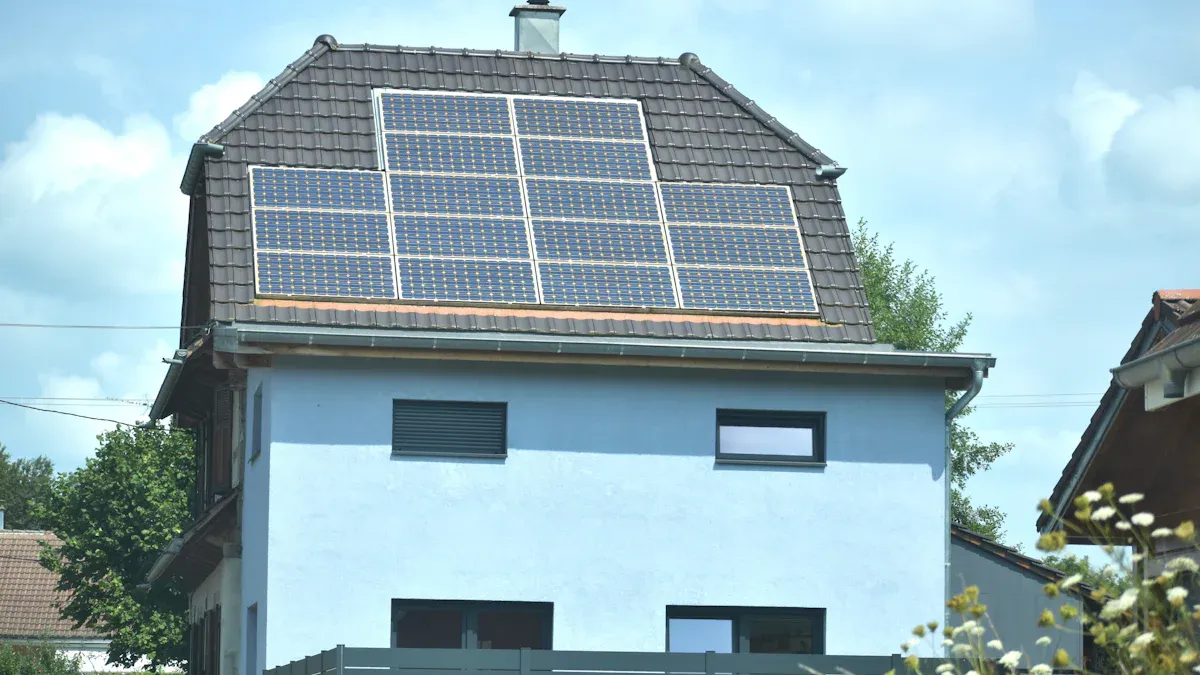
Residential solar batteries help you save solar energy for later. This gives you more control over your power. You can spend less money and keep your lights on if the power goes out. You can also help the planet by using less carbon. Right now, only about 2% of U.S. homeowners use these batteries. But many people want to be more independent and have backup power. New systems like BEINENG Home ESS make it simple to use your energy. You can also add EV charging and use less power from the grid. You will get clear answers to your questions here.
Residential solar batteries keep extra energy from solar panels. You can use this energy later. They give backup power when the lights go out.
Solar batteries can help you save a lot of money. Many people save between $700 and $1,100 each year.
Buying solar batteries can make your house worth more. This can help if you want to sell your home.
Picking the right battery size and type is very important. Lithium-ion batteries work better and last longer than lead-acid ones.
The government gives incentives and tax credits for solar batteries. These can help lower the first cost and make them cheaper.
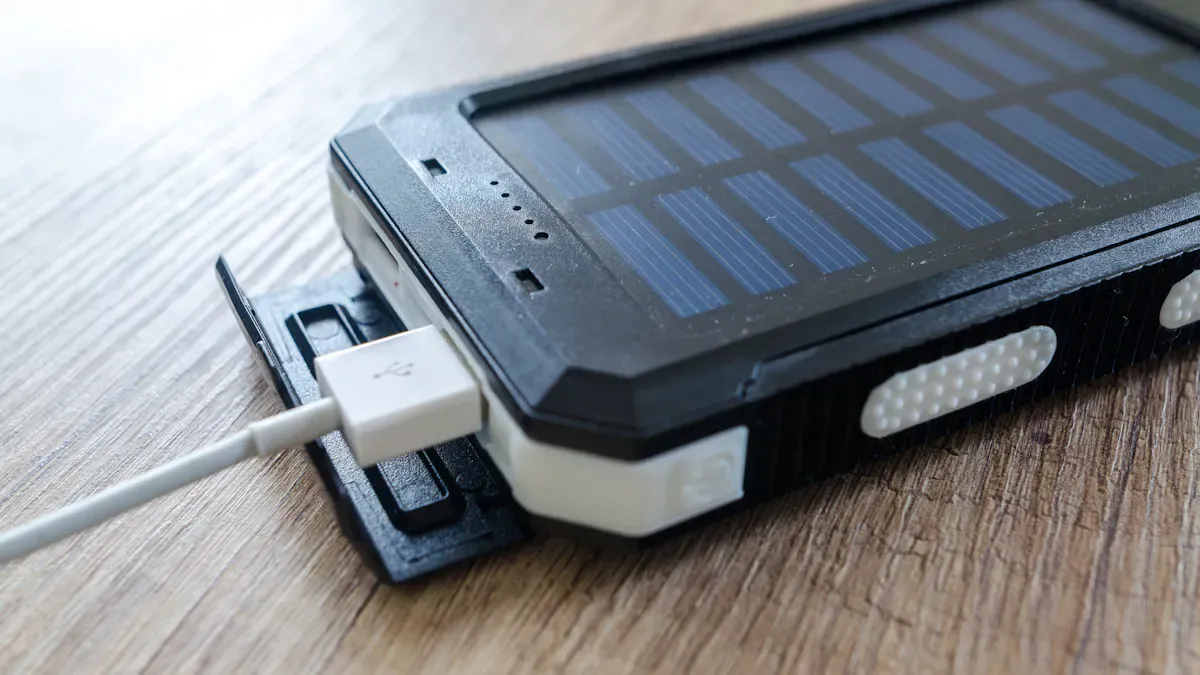
Residential Solar Batteries let you keep energy from your solar panels. When your panels make more power than you need, the batteries save it. You can use this saved energy later, like at night or when it is cloudy. This helps your home work well all the time.
Modern battery systems control how electricity moves. They put extra energy into storage and give it back when you need it. You do not have to turn anything on or off. The system does everything by itself. Big batteries can store power from your solar panels or even from the grid. You can use this power when your panels are not making enough.
Here are the main parts of a solar battery system:
Battery unit: Most systems use lithium batteries. These batteries keep energy inside closed cells.
Inverter or converter: Solar panels make direct current (DC), but your house uses alternating current (AC). The inverter changes DC to AC so you can use the power.
Battery management system (BMS): This system checks the battery’s temperature, voltage, and charge. It keeps the battery safe and helps it last longer.
Tip: A battery system can keep your lights on if the power goes out. You can also save money by using stored energy when prices are high.
You should care about Residential Solar Batteries because they give you more control over your energy. You can keep extra solar power and use it when you need it. This means you do not have to use as much power from the grid. You can keep your home working during blackouts, which is good if you lose power often.
Here are some reasons why these batteries are important:
You can save extra solar energy for later or for outages.
You can use less power from the grid.
You can keep important things running during blackouts.
You can use more of the energy you make.
You can be more independent and pay less for energy.
Many people worry about the price and if it is worth it. Battery prices have dropped, and you can save money on your bills. Some people think batteries are just for backup, but they also help you use energy better and spend less. You might think solar panels are enough, but batteries let you use solar power even when there is no sun. Some people worry about safety, but new batteries are safer now.
Residential Solar Batteries can also make your home worth more. Homes with solar and battery systems often sell for higher prices. Look at the table below to see how solar batteries can change your home’s value:
Evidence Type | Value Impact |
|---|---|
Energy Cost Savings | $20 added to home value per $1 saved annually |
Annual Savings Example | $700 savings leads to $14,000 increase |
Resale Price Premium | 6.5% higher for solar-equipped homes |
You can see that adding a battery system can make your home more appealing to buyers. You can save money now and sell your home for more later.
Residential Solar Batteries act like a smart energy tank for your house. Here is what happens: First, your solar panels catch sunlight and turn it into direct current (DC) electricity. If your panels make more power than you need, the extra goes into the battery. The battery keeps this energy as chemical energy. When it gets dark or cloudy, your system takes the stored energy and turns it back into alternating current (AC) for your home. This means you can use solar power even when there is no sun. You do not have to worry about losing power at night or in bad weather.
Tip: A battery lets you use more of your own solar energy and depend less on the grid.
There are two main types of solar battery systems you can pick. Grid-tied systems connect to your local power grid. These usually cost less and give you backup power if the electricity goes out. Off-grid systems do not connect to the grid at all. You must use your own solar panels, batteries, or maybe a generator. Off-grid systems cost more because they need bigger batteries and sometimes other power sources.
Grid-tied systems cost less and give backup power.
Off-grid systems cost more and need bigger batteries.
Off-grid homes often use generators for extra power.
A normal home solar battery system has a few main parts:
Battery unit: Stores energy as chemicals, often with lithium cells.
Inverter: Changes DC power from your panels into AC for your house.
Battery Management System (BMS): Checks the battery’s temperature, voltage, and charge to keep it safe and working well.
You can use a smart app to control and watch your system. This makes it easy to see how much energy you have saved and used. This setup helps you get the most from your solar system.
Solar batteries help your house when the power goes out. If the grid fails, your solar system turns off from the grid to stay safe. The battery backup starts working almost right away. This fast change keeps your lights and fridge working. Even medical devices can keep running. You can pick which things to power, depending on your battery size. Solar panels can fill up your batteries again during the day. This gives you more backup time.
Tip: With a good setup, your home can work well even if the power is out for a long time.
Solar batteries give you power right away during blackouts.
You can choose to run the most important things first.
Solar panels can refill batteries in the sun, so you get more backup.
Solar batteries can help you save a lot of money on bills. Many people save between $700 and $1,100 every year. You use more of your own solar power and buy less from the grid. This helps you skip high prices when everyone uses power. You also get more out of your solar panels because you use the energy you make instead of sending it away.
Residential Solar Batteries help you make less pollution. Most electricity in the US comes from burning coal and gas. When you use stored solar energy, you use less of this dirty power. This means you help the Earth by using more clean energy.
In 2024, about 60% of US electricity came from fossil fuels.
Using a battery lets you use more clean energy at home.
There are some problems with solar batteries you should know. Some types cost a lot at first, especially new ones. Lead-acid batteries need care and do not last as long. Flow and saltwater batteries are big and hard to find. All batteries lose some energy when you use them, so you do not get all the power back. Some systems need special parts or upgrades, which can cost more. If you rent or have strict home rules, you might not be able to put in a battery system.
Many battery types cost a lot at first.
Some batteries need care or must be replaced.
Big batteries need more space.
Not all systems fit every home.
You cannot use all the energy you store because of losses.
You might wonder how much a solar battery system costs. Prices can vary a lot. The starting price for a basic system is around $20,000. If you want more storage, each extra battery costs about $15,000. Some larger systems can cost over $100,000. Most homes use systems that cost between $9,000 and $18,000 after incentives.
The size of your system and the number of batteries you need will affect the total price. Here are some examples:
A 5 kWh battery costs about $6,500 before taxes.
A 13.5 kWh system costs around $17,550 before taxes.
Higher capacity batteries cost more.
The number of batteries depends on your energy needs.
More batteries mean a higher total cost.
If your home uses 15–25 kWh of energy each day, you may need a 10 kW system. Bigger batteries give you more backup power and help you become more independent.
Note: You should think about your daily energy use and how much backup power you want before choosing a system size.
You can save money on your solar battery system with incentives and tax credits. The federal government offers a 30% tax credit. This credit lowers the total cost of your system. For example, if your system costs $17,550, you can get a tax credit of about $5,265. You claim this credit when you file your taxes.
Here is how the federal tax credit affects the price:
System Cost | Tax Credit | Net Cost |
|---|---|---|
$13,000 | $3,900 | $9,100 |
$19,000 | $5,700 | $13,300 |
Many states also offer extra incentives. Here are some examples:
California SGIP: Up to $1,000 per kWh for qualifying systems.
Massachusetts ConnectedSolutions: $275–$375 per kW in seasonal payments.
New York NYSERDA: $350 per kWh incentive.
Hawaii: Up to $5,000 rebate for battery systems.
You can see more details about incentives in the table below:
Incentive Type | Description | Expiration |
|---|---|---|
Section 25D | 30% tax credit for consumers purchasing battery storage | Ends January 1, 2026 |
Section 48E | 30% tax credit for installation companies | Available through 2032 |
Tip: Incentives and tax credits can make Residential Solar Batteries much more affordable.
You need to plan for installation and maintenance costs. These costs depend on the size of your system and where you live. Here is a table showing typical costs:
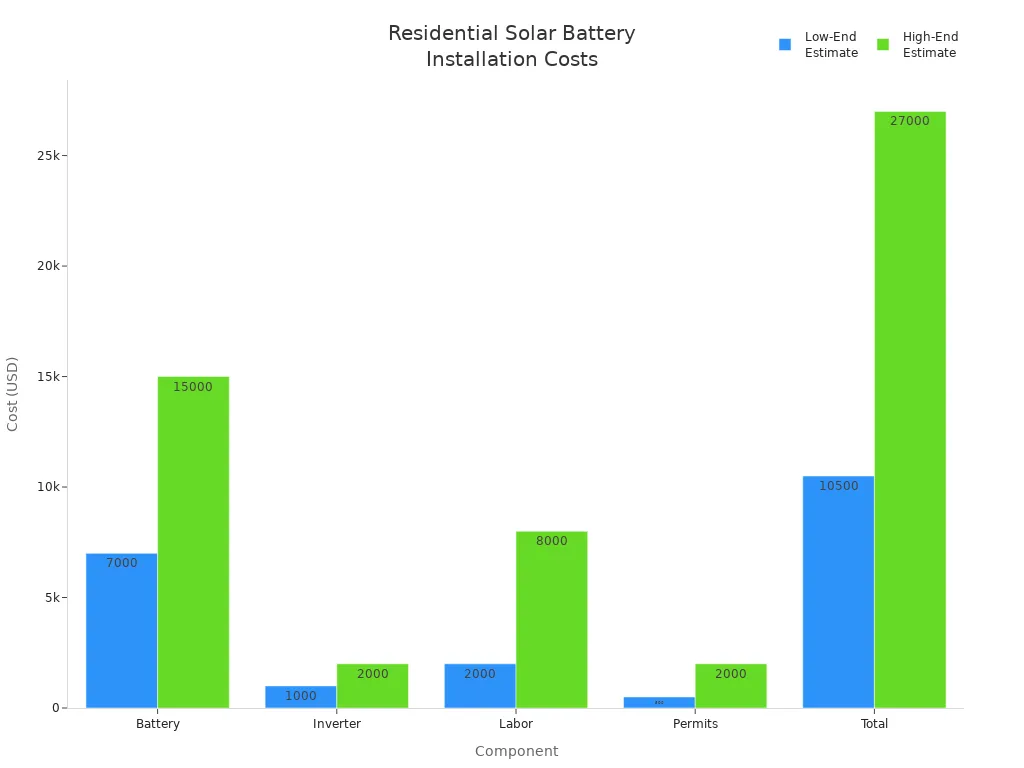
You may need to pay for permits and labor. Maintenance costs are usually low, but you should check your system every year. Most batteries last 10–15 years. You can use apps to monitor your system and keep it running smoothly.
Tip: Regular maintenance helps your battery system last longer and work better.
When you pick solar batteries for your house, you will see two main choices: lithium-ion and lead-acid. These batteries store energy in different ways. They also last for different amounts of time. Lithium-ion batteries work better and last longer. Lead-acid batteries cost less at first, but you must replace them sooner.
Here is a table to help you compare:
Feature | Lithium-Ion (LFP) | Lead-Acid |
|---|---|---|
Lifespan | 15-20 years | 3-7 years |
Efficiency | Highest | Moderate |
Lithium-ion batteries give you more years of use. They waste less energy. Most new systems use lithium-ion. They are smaller and lighter. They need less care.
You might hear about other battery types, like flow batteries or saltwater batteries. Flow batteries use liquid to store energy. They last a long time and can handle many charge cycles. Saltwater batteries use safe, non-toxic materials. These options are not common in homes yet. They cost more and take up more space. Most people pick lithium-ion because it fits better and works well with solar panels.
All-in-one battery systems, like BEINENG Home ESS and BEINENGStor, do more than just store energy. You can manage your energy. You can charge your electric car. You can control everything with an app. These systems help you use more solar power. They keep your home running during outages.
Here is a quick look at the main pros and cons:
Advantages | Disadvantages |
|---|---|
Enhanced energy reliability | High initial costs |
Cost savings | |
Environmental sustainability |
Note: The high upfront cost can make it hard for some people to start. The price of lithium and other materials can change the total cost. How often you use your battery and how deeply you drain it affects its lifespan.
Residential Solar Batteries come in many types. Most homeowners pick lithium-ion for the best mix of life, safety, and savings. All-in-one systems like BEINENG Home ESS make it easy to manage your energy and enjoy new features.
You must choose the right battery size for your house. First, make a list of things you want to keep on if the power goes out. Think about how many hours you want backup power to last. If you want more backup time, you will need more batteries. Check how much power each thing uses. Make sure your solar panels can charge the batteries enough. Many experts say to use the "20% rule." This means your battery should cover at least 20% of what you use each day. For example, if your house uses 20 kWh daily, a 4 kWh battery gives basic backup. The BEINENG Home ESS makes it easy to pick the right size. You can add more batteries later if you need them.
List what you want to power during blackouts.
Decide how long you want backup to last.
Figure out how much power each thing needs.
Match battery size to what your solar panels make.
Tip: Do not drain batteries all the way. This helps them last longer.
Most lithium-ion batteries last between 10 and 20 years. Lead-acid batteries last about 3 to 7 years. Batteries lose about 1–2% of their power each year. After ten years, you still have 80–90% of the starting power. Keeping batteries cool helps them last longer. For example, homes in places like Orange County get better battery life. You should get new batteries when they drop to 60–70% power. The BEINENG Home ESS uses smart battery management to help them last longer.
Use Case | Description |
|---|---|
Backup Power | Keeps your lights and devices on when the power is out. |
Off-Grid Living | Lets you use solar energy even if you are not connected to the grid. |
Energy Independence | Stores extra solar energy for later, so you use less from the grid. |
Residential Solar Batteries work like energy tanks. You can save solar energy during the day. You can use it at night or when the power goes out. This gives you more control and helps you save money.
You should pick brands and installers with good reputations. Look at reviews and ratings online. Make sure installers answer your questions fast. Choose companies with lots of experience and the right certificates. Look for good customer feedback and support from makers. Pick brands that have many products and have been around for years. Compare prices and quality to get the best deal. The BEINENG Home ESS is a good choice because it is easy to use and has smart features.
Note: A good installer helps your system work well and last longer.
You might want a residential solar battery for backup power, saving money, or more control over your energy. Think about how much energy you use, how much money you can spend, and how much room you have at home. Here are some important things to know:
Solar batteries help you keep the lights on, save money, and help the planet.
They can cost a lot at first and need space.
Some systems, like BEINENG Home ESS, let you add more batteries later and make upgrades easy.
To get the best setup, ask an expert for help. Use online guides, tools, and advice to pick the right system for what you want.
Resource Type | Description |
|---|---|
Buyer’s Guide | Shows you how to pick the best battery and system |
Financial Info | Tells you about tax credits, rebates, and how much you can save |
Technical Support | Explains how to connect, check, and take care of your battery |
Most solar batteries last 10 to 15 years. You can help your battery last longer by keeping it cool and checking it each year. Modern systems like BEINENG Home ESS use smart controls to protect your battery.
Yes, you can add more batteries if you need more power. Many systems, like BEINENG Home ESS, let you expand easily. This helps you match your energy storage to your growing needs.
Your solar battery gives you backup power right away. You can keep your lights, fridge, and important devices running. You choose what to power based on your battery size.
Tip: Check your system’s app to see how much backup time you have left.
You do not need to do much. Most batteries need a yearly check. Use your system’s app to watch battery health. Clean around the battery to keep it safe.
Yes, you can save money by using stored solar energy when prices are high. Many people save $700 to $1,100 each year. You also use less power from the grid.


Compact, quiet, and powerful, it keeps your essentials running during outages and lets you charge anywhere with solar power or grid power.
Perfect for renters who need flexibility without compromise.
Our estimator is only set up to provide preliminary estimates and installer information to residents of single family homes.