
 Email Us
 Contact us
 Whats App
Single family home

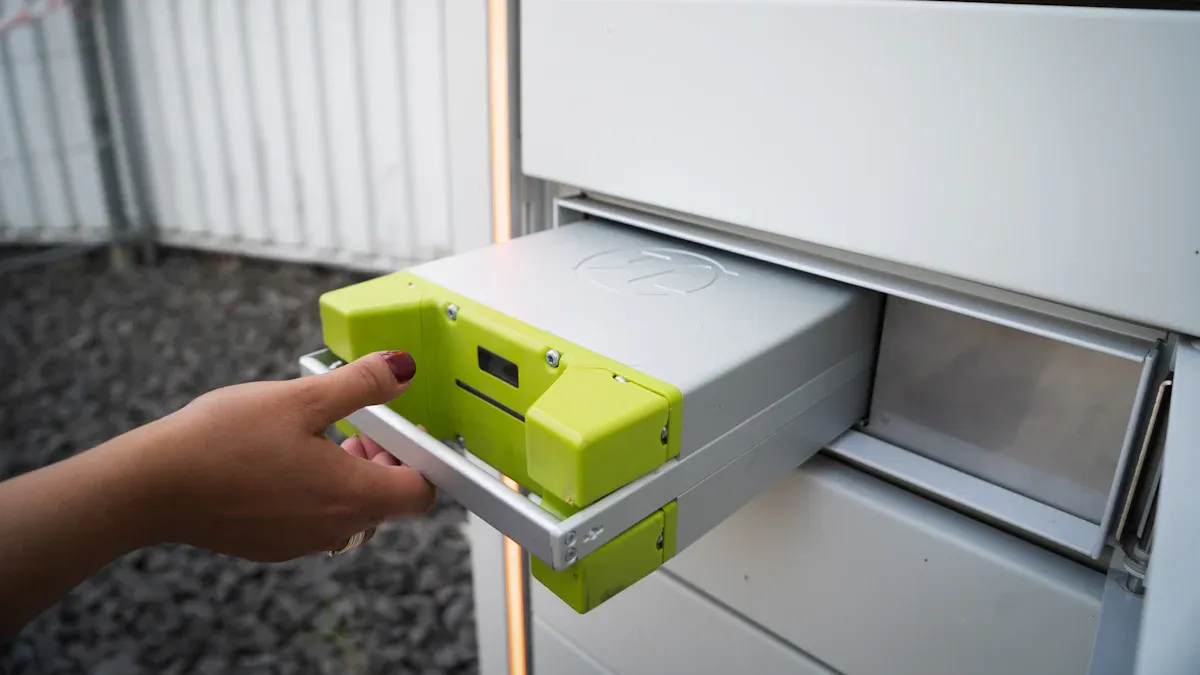
When you search for the best solar batteries for your house, you will find names like BEINENG Home ESS, Tesla Powerwall, Bluetti EP900, BYD, Enphase, and FranklinWH. Lithium-ion and LiFePO₄ batteries are popular in residential energy storage because they last a long time and work well. Many governments now give rebates to help you save money when you buy a new system. Choosing the right home battery gives you energy freedom, backup power, and lower bills. You should think about how much energy you use and how to make your storage ready for the future.
Pick lithium-ion or LiFePO₄ batteries. They are safe and last long. They work well and are efficient.
Check your energy needs. Look at your electricity bills. Notice how much power you use.
Find government rebates. These can help you save money. Rebates lower the cost of solar batteries.
Think about smart features. App control can help you manage energy better.
Prepare for backup power. Learn your battery's capacity. Know what your battery can and cannot do.
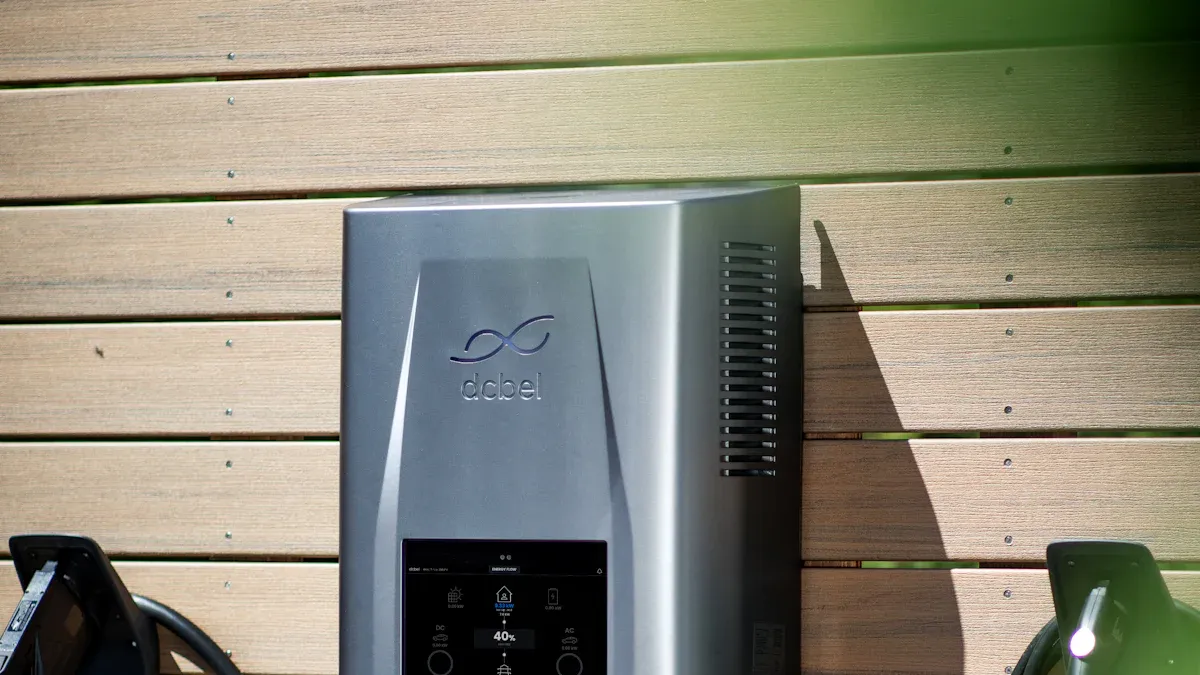
When you want a solar battery for your home, you have many choices. Some popular ones are:
Tesla Powerwall
Bluetti EP900
BYD Battery-Box
Enphase IQ Battery
FranklinWH
Sungrow
Each battery has something special. Some are easy to use. Some last a long time. Others give backup power if the lights go out. Let’s look at the main types and see what makes them different.
Lithium-ion batteries are very common in homes. You can find them in the Tesla Powerwall, Enphase IQ Battery, and BYD Battery-Box. These batteries changed how people use solar energy at home. Many people pick them because they are:
Safe
Reliable
Efficient
These batteries meet safety needs and last through many uses. They save you money over time. People like them because they are stable and do not overheat easily. Some do not use cobalt, so they are even safer.
If you want a battery that works well every day and lasts years, lithium-ion is a good choice. You can count on these batteries to store solar energy and power your home when needed.
LiFePO₄ batteries are a special kind of lithium battery. You can find them in the BEINENG Home ESS and Bluetti EP900. These batteries are getting more popular because they offer:
Great safety
Long life
Good for daily use
They are stable and do not overheat. They also do not use cobalt. This makes them a good pick for families who want safety and batteries that last. The BEINENG Home ESS is special because it can store solar energy and charge electric cars. You can use the myBeineng app to control it, which makes it easy to manage your energy.
LiFePO₄ batteries work well and help you save money over time. If you want a battery that lasts many years and keeps your home running, this type is a smart choice.
There are other kinds of solar batteries too. Some people use lead-acid, saltwater, or flow batteries. Each type has good and bad points. Here is a quick look:
Battery Type | Advantages | Disadvantages |
|---|---|---|
Lead-Acid | Cheap, Easy to Replace, Works in Heat | Heavy, Big, Needs Care, Shorter Life |
LiFePO₄ | Efficient, Lasts Long, Saves Money | Costs More at First |
Flow | Can Get Bigger, Lasts Long | Best for Big Projects |
Saltwater | Safe, Good for Nature | Stores Less Energy, Hard to Find |
Lead-acid batteries are cheap and work in hot places, but they are heavy and do not last long. Saltwater batteries are safe and good for the earth, but they are hard to find and store less energy. Flow batteries last a long time and can be made bigger, but they are mostly for big jobs, not homes.
Most people choose lithium-ion or LiFePO₄ batteries for their homes. These types are safe, work well, and are a good value. You get a battery that fits your home and helps you use your solar panels better.
Solar batteries store extra energy from your solar panels. When the sun shines, your panels make electricity. Sometimes you make more than you need. The battery saves this extra energy for later. You can use it at night or if the power goes out. This helps your home use solar power better and makes it more efficient.
Solar batteries connect to your solar panels and your home's electrical system. Here’s how they work together:
The battery keeps extra energy from your solar panels.
The Battery Management System checks the battery’s health and safety.
The inverter changes solar energy from DC to AC power. It also controls how energy moves between your panels, battery, and home.
With a good energy storage system, you get backup power if the grid fails. Your lights and important appliances stay on. Smart charging and energy management help you use energy wisely.
Solar batteries charge and discharge every day. Charging happens when your panels send extra energy to the battery. Discharging is when your home uses that stored energy. Each cycle affects how long the battery lasts and how well it works. If you drain the battery deeply, it will not last as many cycles. Look at this table to see how depth of discharge changes cycle life:
Depth of Discharge (DoD) | Estimated Cycle Life |
|---|---|
20% | ~12,000 cycles |
50% | ~6,000 cycles |
80% | ~3,500 cycles |
100% | ~2,000 cycles |
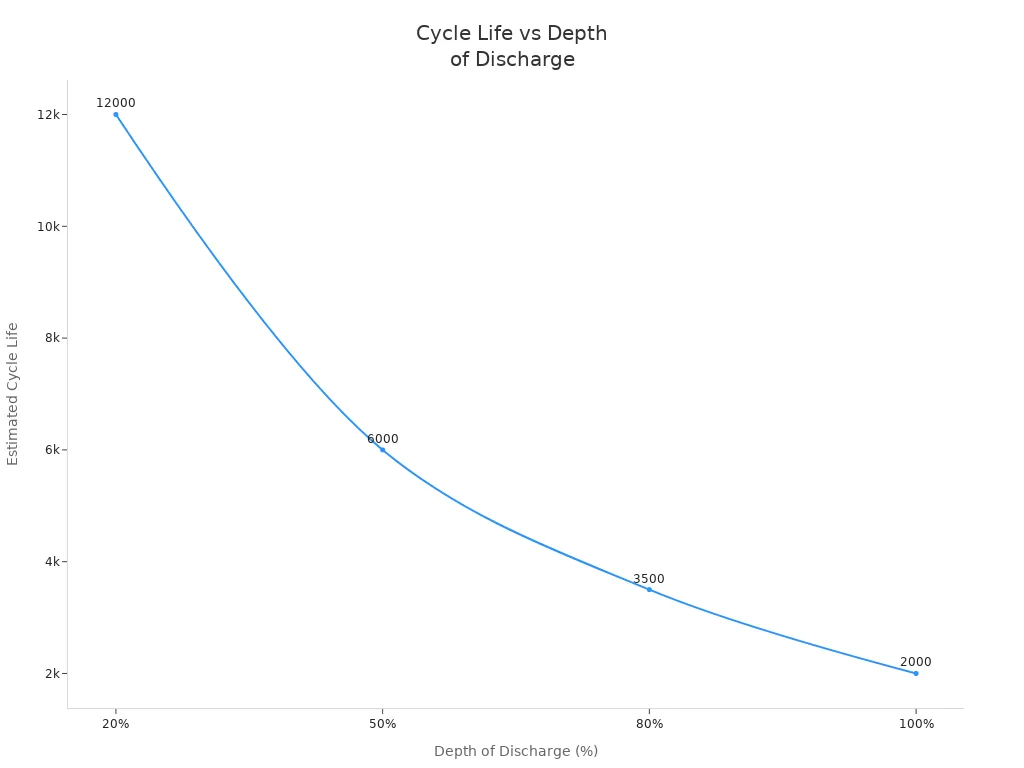
Every time you charge and discharge, the battery wears down a little. Choosing a good home battery gives you better efficiency and longer-lasting energy storage.
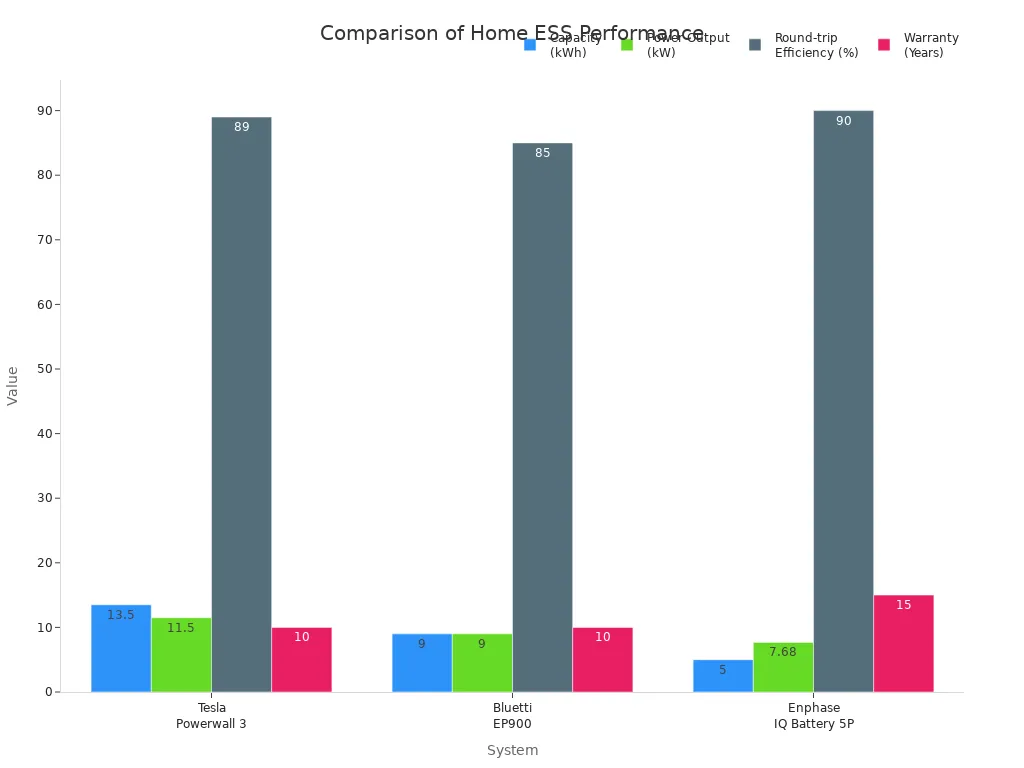
When you pick a solar battery, you want it to work well. High efficiency helps you use your solar panels better and save money. Here is a simple look at how some top batteries compare:
System | Capacity (kWh) | Power Output (kW) | Round-trip Efficiency (%) | Warranty (Years) | Modularity | Customer Support |
|---|---|---|---|---|---|---|
Tesla Powerwall 3 | 13.5 | 11.5 | 89 | 10 | Limited | Moderate |
Bluetti EP900 | 9 - 39.6 | 9 | 85 | 10 | High | Moderate |
Enphase IQ Battery 5P | 5 | 7.68 | 90 | 15 | Not Modular | Excellent |
The BEINENG Home ESS is special because it has everything in one system. You can use an app to control it and see your energy use live. It can switch between solar, battery, and grid power by itself. The system uses AI to help you use energy smarter and keeps your home safe with built-in safety features.
You want your battery to last a long time and not need much care. Most lithium-ion batteries, like BEINENG, Tesla, and Enphase, last from 5 to 15 years. They need simple care, like keeping them cool and not charging too much. Lead-acid batteries do not last as long and need more work, like cleaning and charging often.
Tip: Keep your battery in a dry, cool place. This helps it last longer and work better.
The price of a battery system depends on its size, features, and brand. Here is a simple table to compare:
System | Capacity | Price Range (Installed) | Features |
|---|---|---|---|
Tesla Powerwall 3 | 13.5 kWh | $13,000 - $17,000 | 10-year warranty, high efficiency, popular choice |
Enphase IQ Battery 5P | 5 kWh | $7,000 - $9,000 | Compact design, good solar integration |
Bluetti EP900 | 9-39.6 kWh | See website | Modular, 9 kW output, 10-year warranty |
The BEINENG Home ESS has smart features like app control, cloud monitoring, and easy use with EV chargers. You get strong performance, high efficiency, and smart energy management. This makes it a great choice for home energy storage.
You want your battery to match your energy habits. Start by looking at your electricity bills. Notice when you use the most power and if your needs change with the seasons. Think about how much energy you use during the day and at night. Ask yourself:
Do you want backup power for your whole home or just a few key devices?
How much solar energy do you produce?
Do you plan to add more solar panels or an electric car later?
Choosing the right battery capacity helps you avoid overspending and makes sure you have enough power when you need it.
You probably want the best value for your money. Here’s a simple way to figure out what works for you:
Check your energy usage and pick the battery capacity that fits.
Compare different solar batteries and see what features they offer.
Set your budget and look for a system that balances cost and performance.
Look at how reliable each brand is and what other users say.
Check for smart features, like app control or backup power, and see what warranty comes with the battery.
A good battery system gives you strong efficiency and helps you save on energy bills over time.
You need to make sure your new battery works with your solar setup. Some batteries fit best with new solar systems, while others are easy to add to what you already have. Here’s a quick look:
Feature | DC-Coupled System | AC-Coupled System |
|---|---|---|
Efficiency | Higher | Lower |
Best Use Case | New installations | Adding to existing solar |
Complexity | More complex | Easier to retrofit |
Keep your battery in a cool, dry spot with good airflow. This helps with efficiency and safety. Most installations need permits, so check with your local office before you start.
You want your battery to last and have help if something goes wrong. Warranties can be different for each brand. Here’s a quick comparison:
Product | Warranty Details | Support Options |
|---|---|---|
Tesla Powerwall 3 | Unlimited cycle warranty | Limited customer support |
Enphase IQ Battery 5P | 15-year warranty | 24/7 live chat |
Bluetti EP900 | 10-year warranty, 80% capacity guarantee | Not specified |
A strong warranty and good support give you peace of mind. Always ask about these before you buy your whole home battery.
Tip: Think about your long-term goals. The right residential energy storage choice today can help you save money and boost your home’s efficiency for years.
When the power goes out, you want your home to keep running. Solar batteries give you backup power so you can keep your lights on and your fridge cold. Many top battery systems, like BEINENG Home ESS, Tesla Powerwall, Bluetti EP900, BYD, Enphase, and FranklinWH, help you stay comfortable during blackouts. Each energy storage system has its own strengths. Some offer more capacity or higher power output, which means you can run more devices at once.
Here’s a quick look at how some popular solar batteries perform during blackouts:
Product | Capacity Options | Power Output | Warranty | Efficiency | Depth of Discharge |
|---|---|---|---|---|---|
Bluetti EP900 | Up to 39.6 kWh | 9 kW (18 kW with two systems) | 10 years | 85% | 90% |
Tesla Powerwall 3 | 13.5 kWh | 11.5 kW | 10 years | Not specified | Not specified |
You can use a single battery to power basic needs, like lights and Wi-Fi. If you want to run heating or cooling for a long time, you may need two or three batteries. That means you might need 30 to 40 kWh of backup power for your whole home. Medical equipment, like nebulizers, can use up to 10 kWh quickly, so plan your energy storage carefully.
Tip: Use your app to check your battery level during a blackout. This helps you manage your energy and avoid surprises.
Solar batteries give you peace of mind, but you should know their limits. Every battery system has a maximum power output. The inverter controls how much energy you can use at once. If you try to run too many things, you might hit that limit.
Here are some things to think about:
Inverter power limits mean you can’t run every device at the same time.
The cost to install a battery system can be high at first.
You need to plan your energy use. Focus on the most important devices during a blackout.
Limitation | Description |
|---|---|
Inverter Power Limits | The inverter can only handle a certain number of kilowatts, which limits total power. |
Initial Investment Costs | Batteries and inverters cost a lot up front, which can make backup power expensive. |
Energy Usage Planning | You need to plan which devices to power so your battery lasts through the blackout. |
If you want your solar power setup to cover your whole home, you need to size your energy storage system right. Think about your needs and talk to an installer. That way, you get the best efficiency and backup power for your family.
You want your solar batteries to last a long time. Most lithium-ion batteries work well for 6 to 10 years. LiFePO₄ batteries can last even longer. They often last 10 to 15 years and handle many cycles. Some LiFePO₄ batteries keep working for over ten years. You can use them every day and they still last. Lead-acid batteries do not last as long. They usually need to be replaced after 3 to 5 years. If you take care of your battery, it will last longer. Avoid deep discharges to get the best efficiency.
You may wonder if solar batteries help the planet. Making batteries uses materials like lithium and cobalt. This process can cause water pollution and hurt habitats. Manufacturing also creates greenhouse gases. Using home energy storage helps lower fossil fuel use. It also cuts air pollution. Solar batteries store clean energy for later use. This helps reduce greenhouse gas emissions and supports a cleaner grid. Recycling your battery at the end of its life helps protect the environment even more.
Taking care of your battery is easy but important. Keep your battery charged when you can. Store it in a cool, dry place to avoid damage. Clean your battery sometimes to keep it working well. Check for signs of wear or damage. If you find problems early, you can fix them fast. Good maintenance keeps your solar batteries efficient and ready for backup power. Most modern systems, like BEINENG Home ESS, let you monitor your battery with an app. This way, you always know how your energy storage is doing.
Choosing the right battery for your home starts with knowing your energy needs. Top picks like BEINENG Home ESS and Tesla Powerwall stand out for strong performance and smart features. You get more control over your bills and peace of mind during outages. Use tools like the myBeineng app to track your solar batteries and keep your system running smoothly. Talk with a pro and check for rebates to make your energy upgrade easier.
You have backup power if the grid stops working. The battery keeps your lights, fridge, and Wi-Fi on. You can use an app to check your battery level. This helps you pick which devices to use first.
Yes, you can get help with costs! Many states give rebates or incentives for solar batteries. These deals make energy storage cheaper for you.
Emergency backup means your battery runs your home when the grid is off. Regular use lets you save solar energy for nighttime or busy hours. Both ways help you feel safe and save money.
You do not need solar panels, but they help a lot. With solar, you can charge your battery for free. You can use stored energy anytime you want. This setup is good for backup and daily savings.


Compact, quiet, and powerful, it keeps your essentials running during outages and lets you charge anywhere with solar power or grid power.
Perfect for renters who need flexibility without compromise.
Our estimator is only set up to provide preliminary estimates and installer information to residents of single family homes.